Artwork
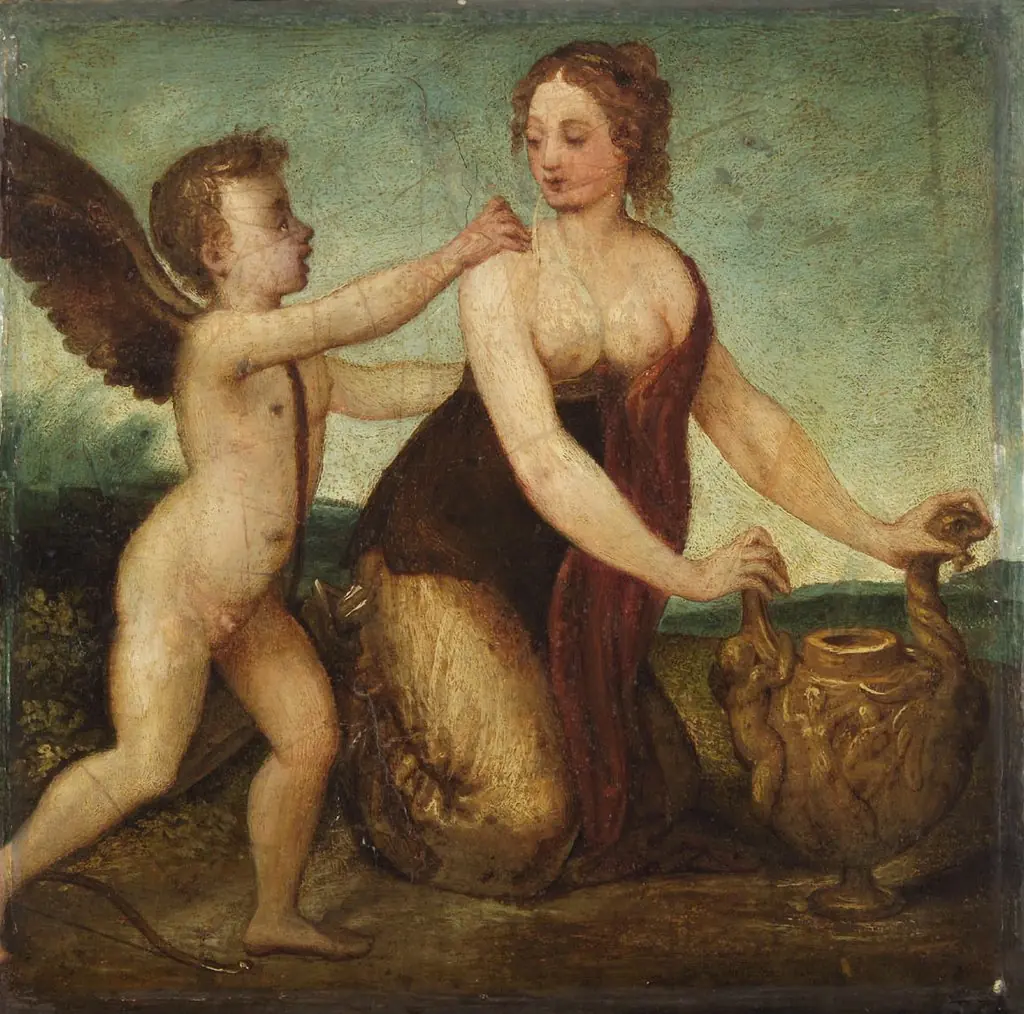
Venus and Cupid in a Landscape
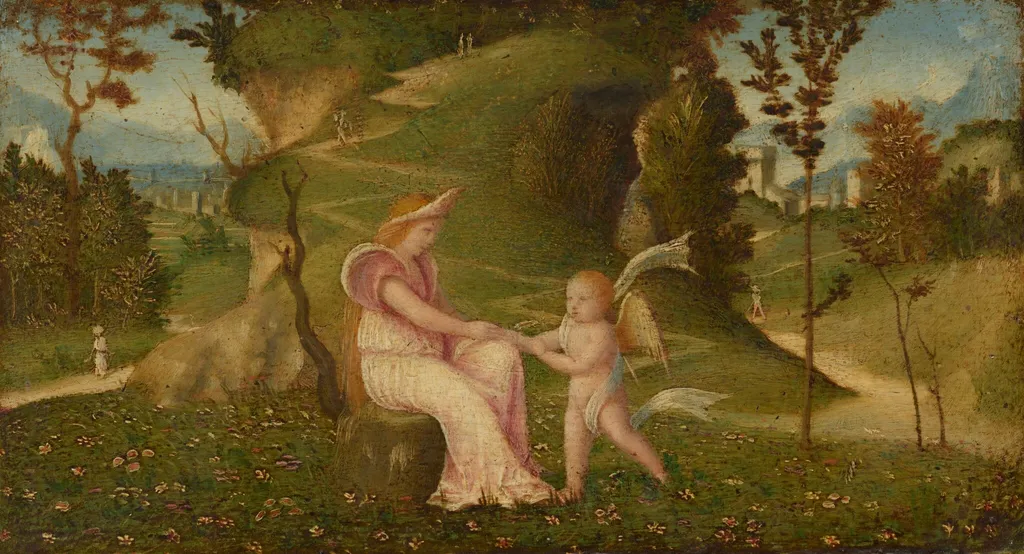
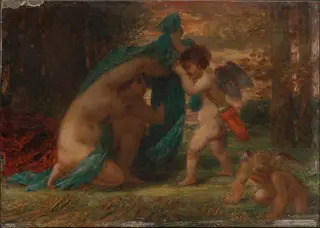
Venus and Cupid in a Landscape is an oil painting by the High Renaissance artist Circle of Giorgione. It dates from 1510 and is held in the collection of the National Gallery of Art.
About this work
Technique & Style
The work measures 11 units in height and 20 units in width, presenting a compact format for its depiction of Venus and Cupid within a landscape setting.
Executed in 1505, this mythological painting utilizes oil paint applied to a wooden panel support. The work measures 11 units in height and 20 units in width, presenting a compact format for its depiction of Venus and Cupid within a landscape setting. While the specific handling of the brushwork and the current physical condition of the surface are not detailed in the available records, the material composition is firmly established as oil on panel.
The piece is classified as a painting within the mythology genre, attributed to an anonymous artist with historical associations to Giorgione. The formal qualities suggest a small-scale devotional or private viewing object, consistent with the dimensions and subject matter typical of the early sixteenth century.
History & Provenance
The panel, dated 1505, was first recorded in the collection of the Contessa Falier in Asolo, Italy, according to Kress records held in the National Gallery of Art curatorial files. It subsequently passed into the hands of Count Alessandro Contini Bonacossi, whose holdings spanned Florence and Rome. In 1932 the work was sold to the Samuel H. Kress Foundation in New York, an acquisition documented in the Kress Collection Digital Archive.
Seven years later, in 1939, the foundation placed the painting in the National Gallery of Art in Washington, D.C., as part of the Kress Collection gift, where it has remained.
Venus and Cupid in a Landscape is held in the permanent collection of the National Gallery of Art in Washington, D.C., as part of the Samuel H. Kress Collection. The work entered the museum's inventory in 1939 as a gift from the Samuel H. Kress Foundation, following its acquisition by the foundation in 1932. Prior to these transfers, the painting was recorded in the possession of Contessa Falier in Asolo, Italy, and later Count Alessandro Contini Bonacossi in Florence and Rome.
The artwork is cataloged within the Kress Collection Digital Archive under object number 2425. While the collection is well-documented, the provided sources do not list specific dates or titles of past exhibitions for this particular painting.
Context
Dated to 1505, this oil on panel measures 11 × 20 cm and portrays Venus and Cupid within a landscape, classified as a mythological painting. The work is attributed to an anonymous artist linked to Giorgione and entered the National Gallery of Art through the Samuel H. Kress Collection, gifted in 1939 after its 1932 acquisition from the Contessa Falier in Asolo, Italy. Its inclusion in the Kress collection has made it a reference point for studies of early‑16th‑century Venetian mythological subjects.
Overview
This oil on panel painting, titled "Venus and Cupid in a Landscape," presents a serene outdoor setting. It features the Roman goddess of love, Venus, alongside her son, Cupid, amidst a tranquil natural environment. The composition emphasizes a sense of calm, with the figures integrated into a lush landscape under a clear sky.
Subject & Meaning
The artwork portrays Venus, the classical deity associated with love, beauty, and fertility, in the company of Cupid, her son and the embodiment of desire. While Cupid is often depicted as a mischievous figure who incites romantic entanglements, here he appears within a peaceful scene. This juxtaposition might invite contemplation on the various facets of love, from its tranquil aspects to its more disruptive influences.
Artist & collection
Artist