Artwork
Black Madonna
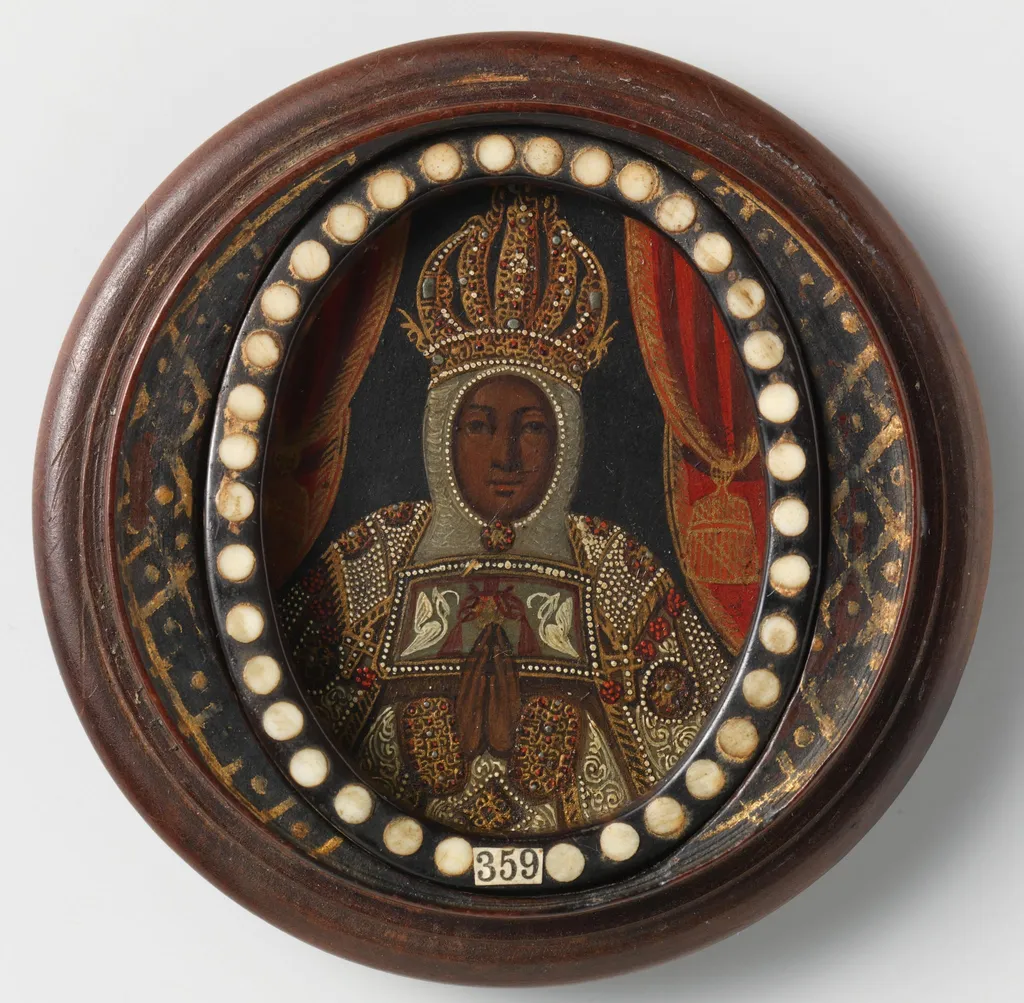
Black Madonna is an unspecified painting by Unknown. It dates from 1516 and is held in the collection of the Rijksmuseum.
About this work
Overview
The image, confined to the upper torso, is enclosed within the lid’s interior, designed to be carried and protected.
A small, circular reliquary box contains a painted bust of the Black Madonna, crafted for intimate devotion. The image, confined to the upper torso, is enclosed within the lid’s interior, designed to be carried and protected. The box’s exterior remains unadorned, emphasizing the private nature of the object. Its scale suggests personal use, not public display, aligning with devotional practices of portable sacred imagery.
Subject & Meaning
The Black Madonna, depicted with dark skin and a golden halo, represents a venerated Marian archetype associated with protection and mystery. Her calm, direct gaze invites quiet contemplation rather than grandeur. As a bust rather than a full figure, the image is stripped of narrative detail, focusing attention on presence rather than story. Such images were often carried by pilgrims as spiritual talismans, believed to offer divine safeguarding on journeys.
Technique & Style
The painting employs subtle tonal transitions, particularly in the modeling of the face and halo, suggesting an early use of sfumato-like effects. Shadows blend softly into the background, avoiding harsh outlines. The gold halo is rendered with minimal pigment, its luminosity achieved through careful layering rather than metallic leaf. The limited palette and restrained brushwork reflect a devotional aesthetic prioritizing reverence over ornamentation.
History & Provenance
The inscription on the lid, though faded, indicates the object was once owned and maintained by a devotee. Its survival suggests continuous handling over generations, likely passed within a family or community. The box’s construction and paint condition imply it was not a commissioned altarpiece but a privately owned object, possibly acquired during pilgrimage or gifted as a token of faith.
Context
In late medieval Europe, portable images of the Black Madonna were common among pilgrims and lay devotees, especially in regions with strong Marian cults. These objects bridged the sacred and the everyday, offering spiritual comfort outside church walls. Their small size and concealable form reflect a culture where faith was practiced in private moments, not only in public ritual.
Legacy
This object exemplifies how religious devotion manifested in intimate, tactile forms. Its survival underscores the endurance of personal piety in an era dominated by institutional religion. Though unassuming, it preserves the quiet continuity of belief, carried in pockets, held in hands, and passed down through silence rather than spectacle.
Artist & collection









 Epitafium Agnieszki Błoniowskiej, z kościoła Mariackiego w Krakowie
 Head of an African
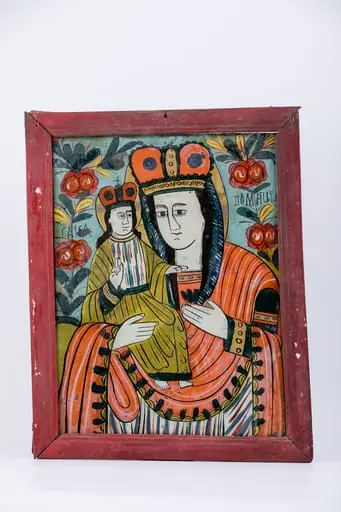 Maica Domnului este înveșmântată în maforiom roșu vermillon, cu interiorul albastru ceruleum cu dungulițe subțiri albe, cu franjuri verzi-galbene, cu aureolă aurie împodobită cu coroană orange de Împărăteasa Cerurilor. Sacos-ul Maicii Domnului este alb cu dungi roșii-albaste. Pruncul Iisus Hristos este înveșmântat în ocru-kaki-verde olive și are, de asemenea, coroană și aureolă aurie. Pruncul Iisus Binecuvântează cu mâna dreaptă, și arată înspre Maica Domnului cu mâna stângă. Fondul icoanei este albastru bleu-ciel senin, în registrul superior și galben-ocru, în registrul inferior. Întreaga tematică iconografică este încadrată de un chenar decorativ fitomorf, format dintr-o ghirlandă de bujori-trandafiri, 4 ruje roșii, mari, cu frunze verzi smarald și galbene. Cromatica este armonioasă: roșu vermillon, roz-trandafiriu, galben-ocru, crem, bej, verde brad, smarald, alb, negru. Inscripția din româno-chirilică se traduce Maica Domnului. Icoana este din Nicula.
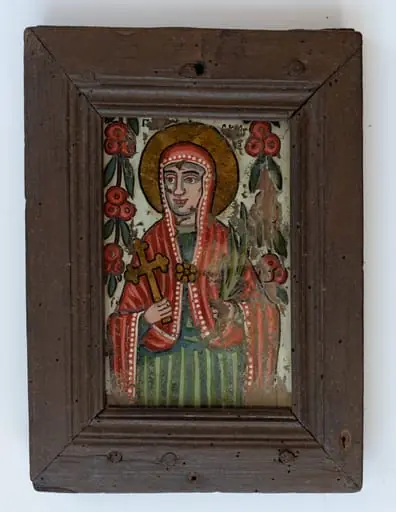 Sfânta Parascheva
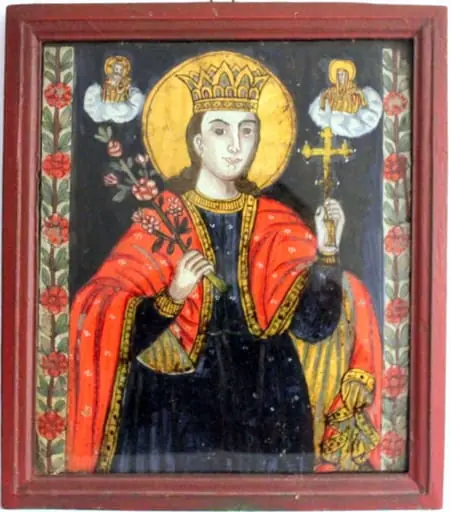 Sf. Paraschiva
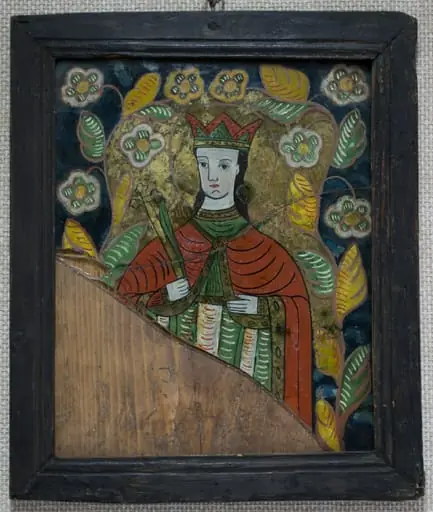 Icoana este pictată "în oglindă", pe un suport de glajă de formă dreptunghiulară în ax vertical.Cuvioasa Parascheva, redată din ușor semiprofil, ține în mâna dreaptă o ramură verde și o cruce. Fața pătrățoasă, expresivă, ochii mari, negri, gura mică, strânsă, părul , lung, negru, lăsat pe spate..Pe cap coroană împărătească. Este înveșmîntată cu o mantie roșie cu galon aurit cu decor geometric. Câmpul este realizat din foiță aurie în interiorul unei arcade formate din două tulpini sinuase de floare. În afara arcadei albastrul oliv creează un contrast surprinzător.Accentul cade pe chipul sfintei, pus în valoare de contrastul alb/negru/auriu. Desenul este simplu, linia fină, precisă, paleta cromatică bogată , culorile vii. Contrastele cromatice creează perspectivă Rama subțire profilată, din lemn de brad, pictată cu cafeniu, Dos din scândură de brad. Aproximativ un sfert din icoană lipsește. Țăranii considerau că sfânta Parascheva păzește de grindină și de dureri de cap.
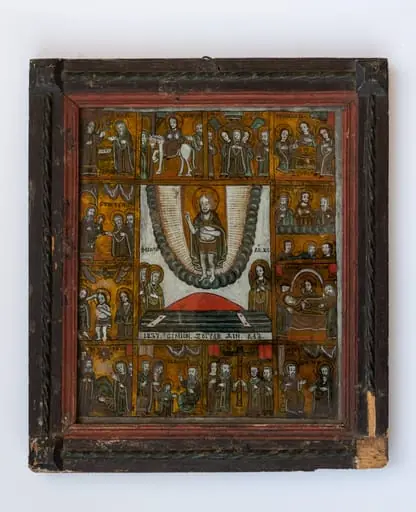 Învierea lui Isus încadrată de praznice
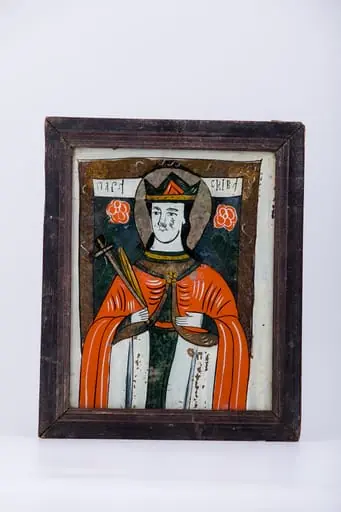 Sfânta Mare Cuvioasă Parascheva de la Iași are crucea brun-bronzie și o ramură de finic galbenă în mâna dreaptă. Este îmbrăcată în veșmânt roșu vermillon, cu interiorul căptușit cu albastru-gri-antracit și brun-bronziu. Sacosul este alb-zinc cu danteluță și guleraș verde-galben. Sfânta Cuvioasă are părul negru lung, lăsat pe umeri, coroană roșie cu verde-brad și aureolă. Fondul icoanei este cerul albastru ultramarin bleu-marin întunecat. Întreaga compoziție iconografică este încadrată de un chenar decorativ geomatrizant brun-bronziu, cu linia șerpuitoare, specifică centrului de la Nicula. Fondul de ansamblu al icoanei este alb-zinc. Inscripția din româno-chirilică se traduce Paraschiva. Cromatica este armonioasă: roșu vermillon, albastru ultramarin bleumarin, verde forest, bej-crem, bronziu, negru, alb zinc. Icoana este din Nordul Transilvaniei, Nicula.
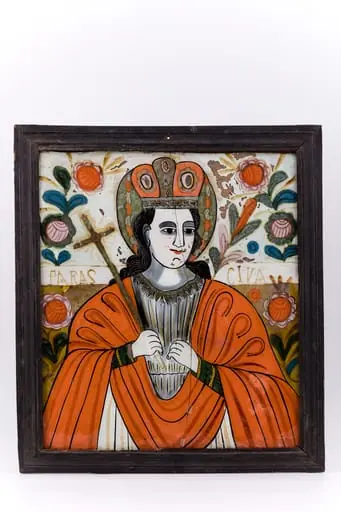 Sfânta Mare Cuvioasă Parascheva de la Iași are crucea în mâna dreaptă și ramură de finic verde brad, cu frunze roz și roșii în mâna stângă. Este îmbrăcată în veșmânt roșu vermillon, cu interiorul căptușit cu verde și galben, cu sacosul alb ivoriu, cu dungi crem-bej. Sacosul este alb ivoriu crem-bej, cu danteluță și guleraș galben. Sfânta Cuvioasă are părul negru lung, ondulat, lăsat pe umeri, coroană roșie și aureolă. Fondul icoanei este cerul albastru bleu-ciel-alburiu senin, în registrul superior și un câmp înalt luminos de grâu galben-copt, în registrul mediu și inferior, de culoare ocru-muștar. Întreaga compoziție iconografică este încadrată de un chenar decorativ fitomorf, format dintr-o ghirlandă de 6 ruje - trandafiri sălbatici și bujori roșii, cu petale și pistil alternativ colorate cu albastru cobalt, roz și roșu vermillon. Ghirlanda excelează prin delicatețea desenului și bogăția cromatică armonioasă. Inscripția din româno-chirilică se traduce Paraschiva. Cromatica este armonioasă: roșu vermillon, roz, albastru bleu-ciel, cobalt, verde forest, bej-crem, negru, galben chihlimbar, ocru, muștar, negru, alb. Icoana este din Nordul Transilvaniei, Nicula.
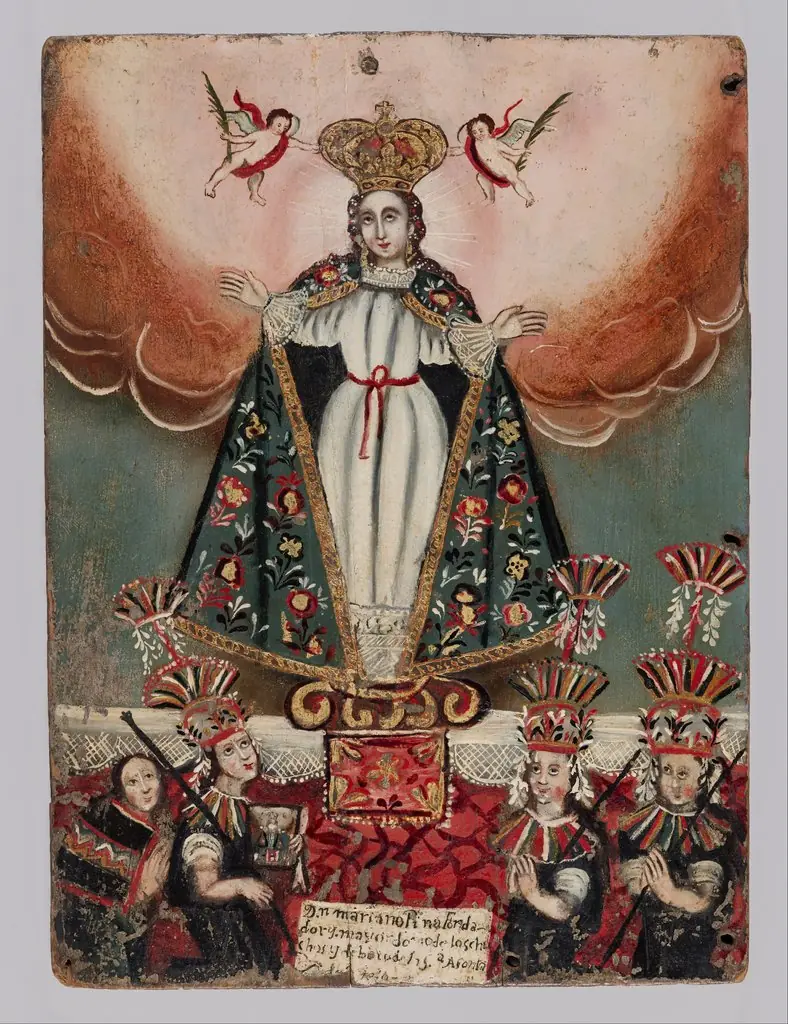 The Virgin Mary with Indigenous (Aymara) Donors
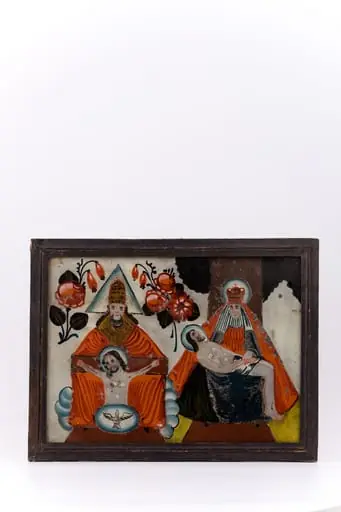 Icoana are o tematică iconografică foarte rară: în cea dintâi parte, este Sfânta Treime: Mântuitorul Iisus Hristos Răstignit pe brațele Lui Dumnezeu-Tatăl și ținut în veșmântul roșu al Pătimirii și Jertfei. Dumnezeu-Tatăl, Împărat al Cerurilor, are pe cap coroană și aureolă triunghiulară, reprezentând Sfânta Treime. Sfântul Duh este reprezentat prin porumbelul alb. Sfânta Treime are în registrul inferior o mandorlă de nouri rotunzi albi-albaștri și în registrul superior o ghirlandă din trandafiri și ramuri cu măceșe, simbolizând Grădina Raiului. În cea de-a doua parte, în dreapta, este Maica Domnului Împărăteasă ținând în brațe pe genunchi Trupul Mântuitorului Iisus Hristos, coborât de pe Cruce, plâns, jelit. Este asemenea unei Piete. Icoana este deosebită și foarte rară, prin compoziția tematică și viziunea iconografică greco-catolică. Fondul icoanei este alb-ivoriu-crem, în registrul superior și galben-solar, în registrul inferior. Cromatica este armonioasă: roșu vermillon-trandafiriu, brun-roșcat-acajou, galben-solar, albastru bleu-ciel, gri, alb , negru. Icoana este din Nordul Transilvaniei, Nicula.
- Madonna