Artwork
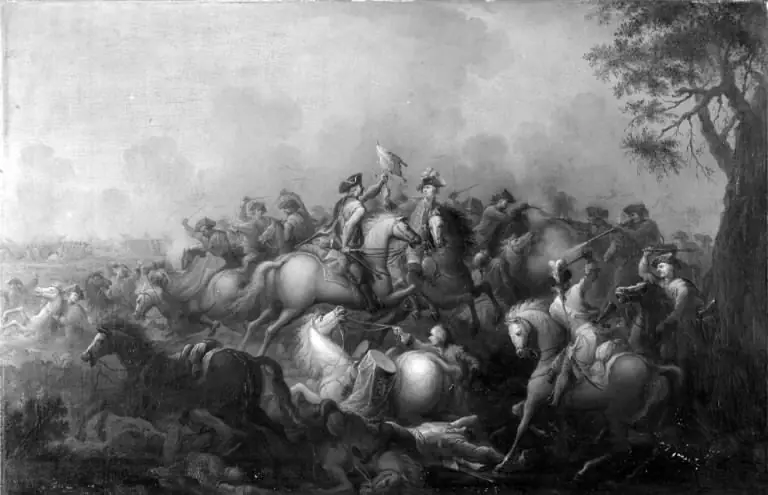
Udfaldet på Amager under Københavns belejring 1659
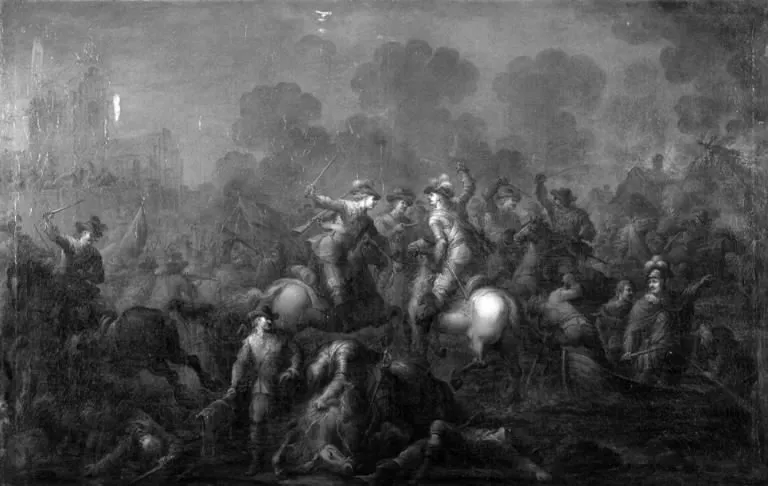
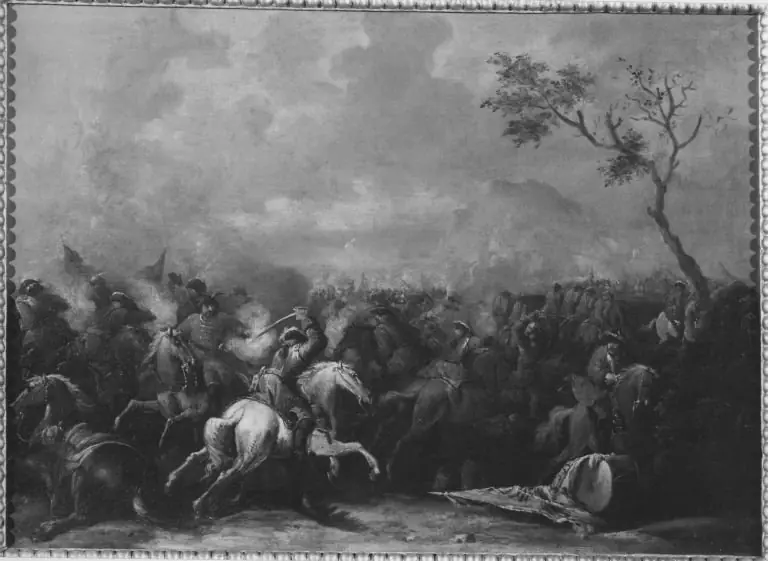
Udfaldet på Amager under Københavns belejring 1659 is an oil painting by the Rococo painting artist Anthon Christoffer Rüde. It dates from 1794 and is held in the collection of the Statens Museum for Kunst.
About this work
Subject & Meaning
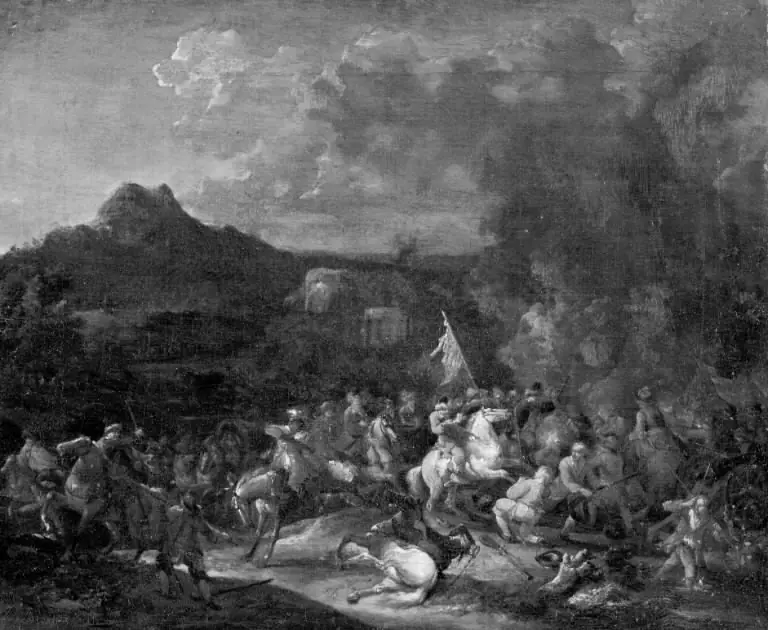
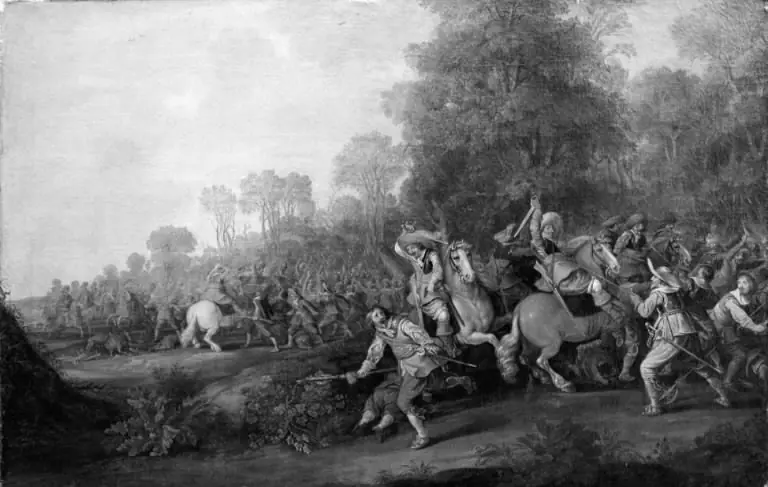
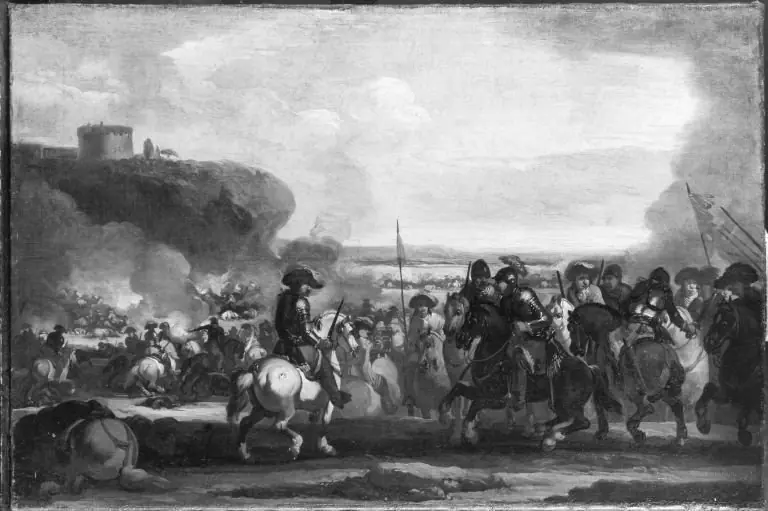
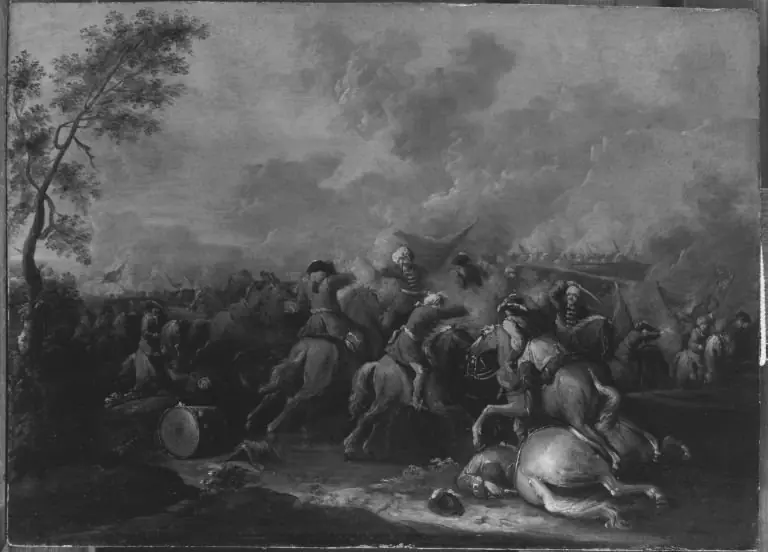
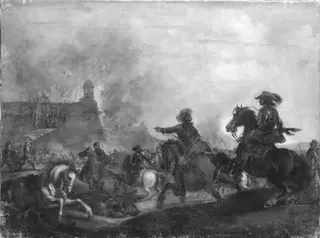
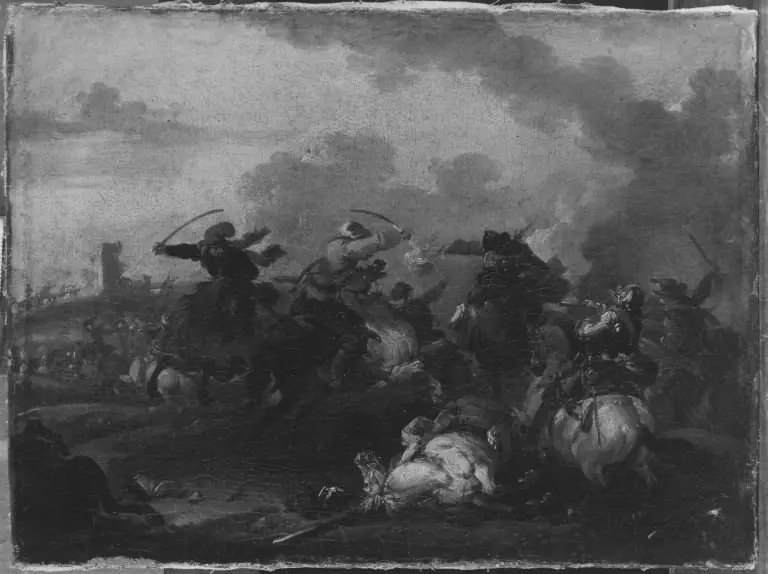
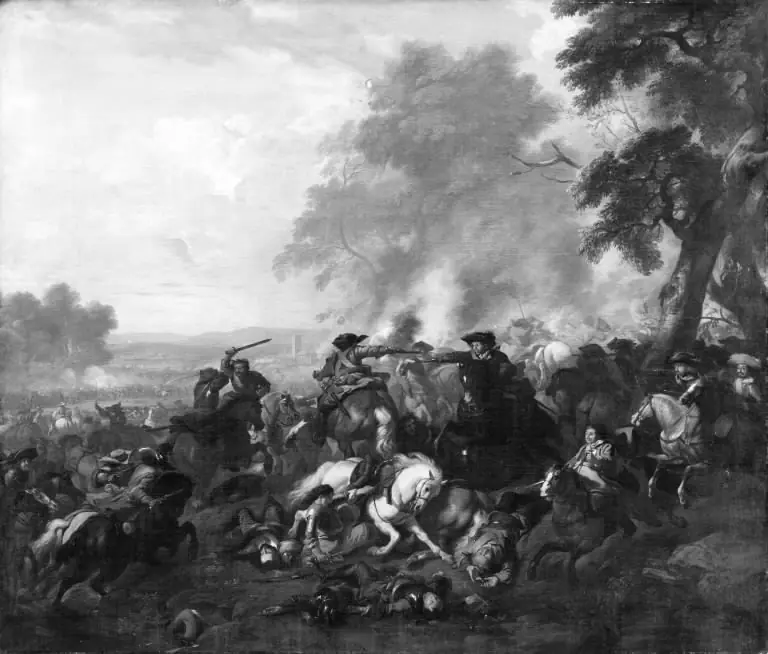
The painting depicts a dramatic moment from the 1659 Swedish siege of Copenhagen, showing a group of figures including a mounted warrior brandishing a sword amidst the turmoil of battle. Symbolically, it commemorates Denmark's defense against Swedish forces during the historical conflict known as the Charles X Gustav campaign, reflecting national resilience and martial valor through its heroic composition and martial iconography. Executed in oil on canvas in 1788 by Anthon Christoffer Rüde, the work belongs to the history_painting genre and is housed in the Statens Museum for Kunst, where it remains part of the museum's collection of Danish artistic representations of military events.
Technique & Style
No specific condition notes are recorded in the available sources.
Udfaldet på Amager under Københavns belejring 1659 is an oil painting executed on canvas, a combination of medium and support consistent with the history-painting tradition of late eighteenth-century Danish art. The work is classified as a history painting and, more specifically, a battle painting, indicating a compositional approach oriented toward the depiction of organized group action.
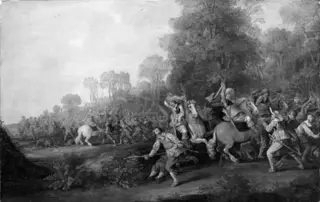
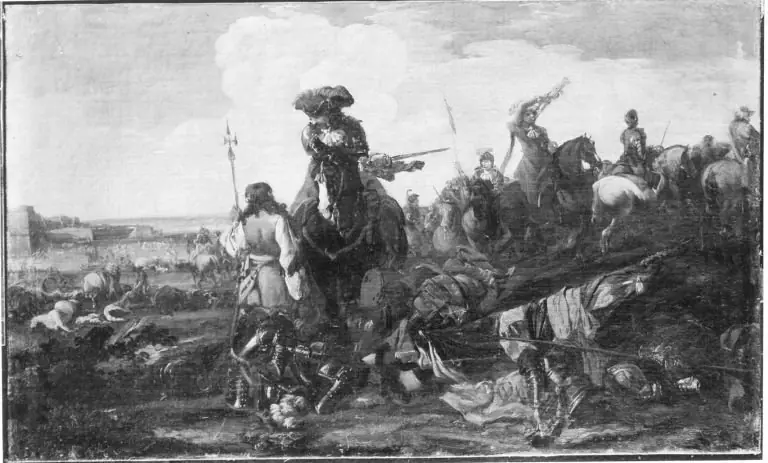
Stylistically, the canvas engages with the conventions of the battle genre through its subject matter: a group of humans, horses, and swords, signaling a dynamic, multi-figure arrangement rather than a static portrait or landscape. The handling of these elements reflects the painterly priorities of the battle tradition, in which figures and animals are coordinated to convey the movement and violence of combat.
The painting is held in the collection of the Statens Museum for Kunst, where it is preserved as part of the institution's holdings of Danish historical imagery. No specific condition notes are recorded in the available sources.
History & Provenance
The painting was created by Anthon Christoffer Rüde in 1788, executed in oil on canvas as a history painting depicting the 1659 sortie on Amager during the siege of Copenhagen.
The work is held in the collection of the Statens Museum for Kunst, where it remains located. No information about a specific commissioner, prior ownership chain, or intermediate provenance is recorded in the available sources.
The painting is held in the collection of Statens Museum for Kunst, Copenhagen, where it is catalogued under the institution’s holdings of 18th‑century battle paintings.
It has been exhibited by the museum as part of its Danish historical works displays, most recently in the permanent installation dedicated to 1700–1850 Danish art.
Legacy
The historical scene depicting the 1659 Swedish assault on Copenhagen was painted in 1788 by Anthon Christoffer Rüde. Executed in oil on canvas, it entered the collection of the National Gallery of Denmark where it remains on view. Contemporary accounts praised its dramatic portrayal of collective action, and 19th-century art historians later cited the piece as an early example of nationalistic historical painting in Denmark.
Today the work is frequently referenced in scholarship on 18th-century Danish art and is reproduced in exhibitions exploring the nation’s maritime memory. Its composition continues to inform studies of how 19th-century artists interpreted earlier conflicts.
Overview
An oil painting completed in 1794 by Anthon Christoffer Rüde, titled Udfaldet på Amager under Københavns belejring 1659, portrays a violent clash on the Danish island of Amager during the 1659 siege of Copenhagen. The work is part of the collection of the Statens Museum for Kunst and measures the intensity of a historic military encounter through a densely packed composition.
Context
The 1659 siege of Copenhagen was a pivotal episode in the Dano‑Swedish wars, and Amager, an island close to the capital, suffered heavily. Rüde’s depiction aligns with contemporary Enlightenment‑era efforts to document national events through art, providing a visual narrative that complements written accounts of the conflict.
Artist & collection
Artist
Anthon Christoffer Rüde (1744–1815) was an artist, born in Copenhagen.