Artwork
Centaur at the Village Blacksmith
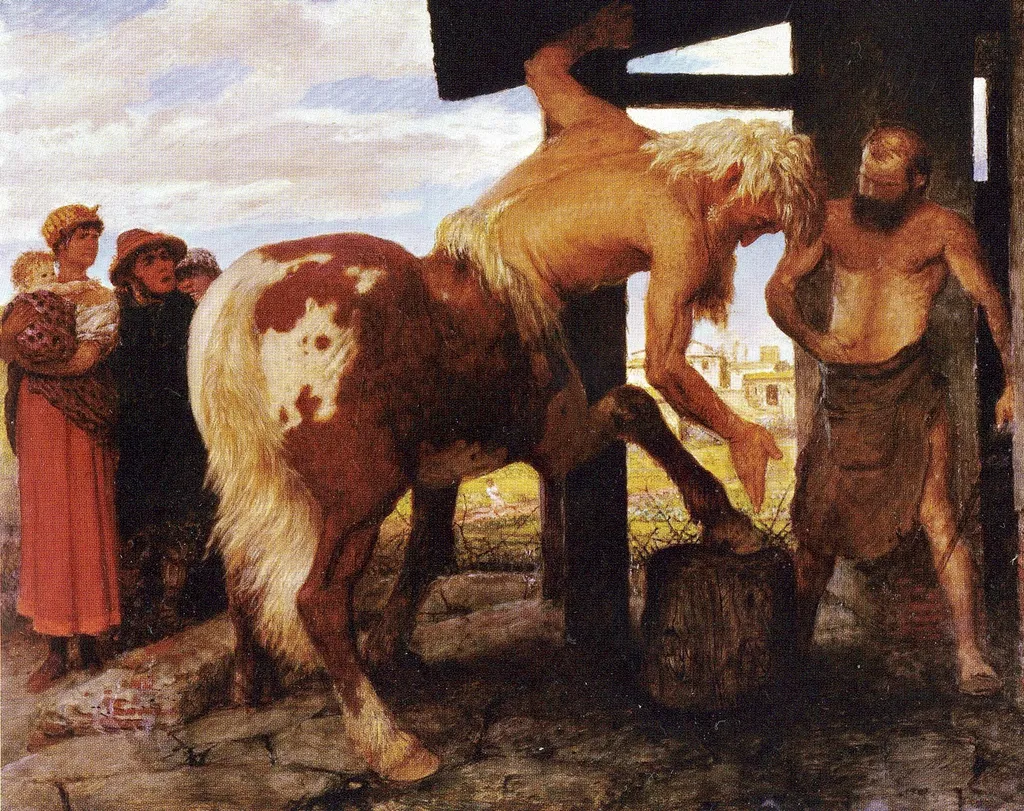
Centaur at the Village Blacksmith is an oil painting by the Symbolist artist Arnold Böcklin. It dates from 1894 and is held in the collection of the Hungarian National Gallery.
About this work
Overview
Arnold Böcklin’s oil on canvas, completed in 1894, presents a solitary centaur positioned before a modest village blacksmith’s workshop. The work resides in the collection of the Hungarian National Gallery. The composition balances the mythic figure with a quotidian setting, inviting viewers to contemplate the juxtaposition of legend and everyday labor.
Subject & Meaning
The central figure is a centaur, human torso merged with a horse’s body, caught in profile, poised as if about to step forward. Its gaze is directed inward, suggesting contemplation amid the tools and anvil of the smithy, perhaps reflecting on the intersection of the fantastical and the mundane.
Technique & Style
Böcklin renders the centaur with meticulous attention to musculature and the sheen of equine coat, employing a realistic approach that grounds the creature in physicality. The surrounding workshop is depicted in muted, earthy tones, allowing the figure to emerge subtly from a subdued rural backdrop, creating a calm, reflective atmosphere.
History & Provenance
Painted toward the end of Böcklin’s career, the piece entered the Hungarian National Gallery’s holdings, where it remains on display. Its acquisition date and prior ownership are not extensively documented, but the work exemplifies the artist’s late‑period interest in mythological subjects placed within contemporary landscapes.
Own this work as a print
Artist & collection
Artist
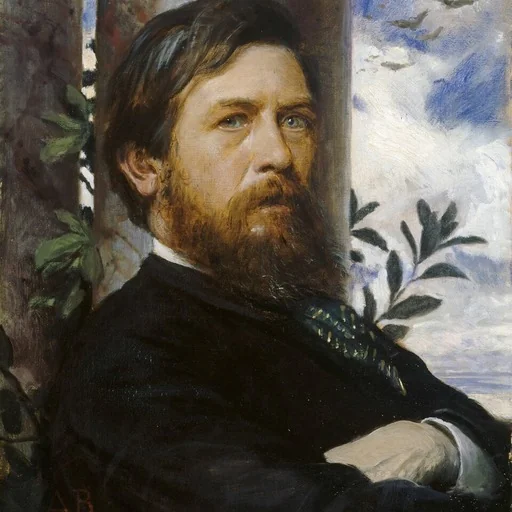
Arnold Böcklin was a Swiss Symbolist painter. His five versions of the Isle of the Dead inspired works by several late Romantic composers.