Artwork
Jonathan Sturges
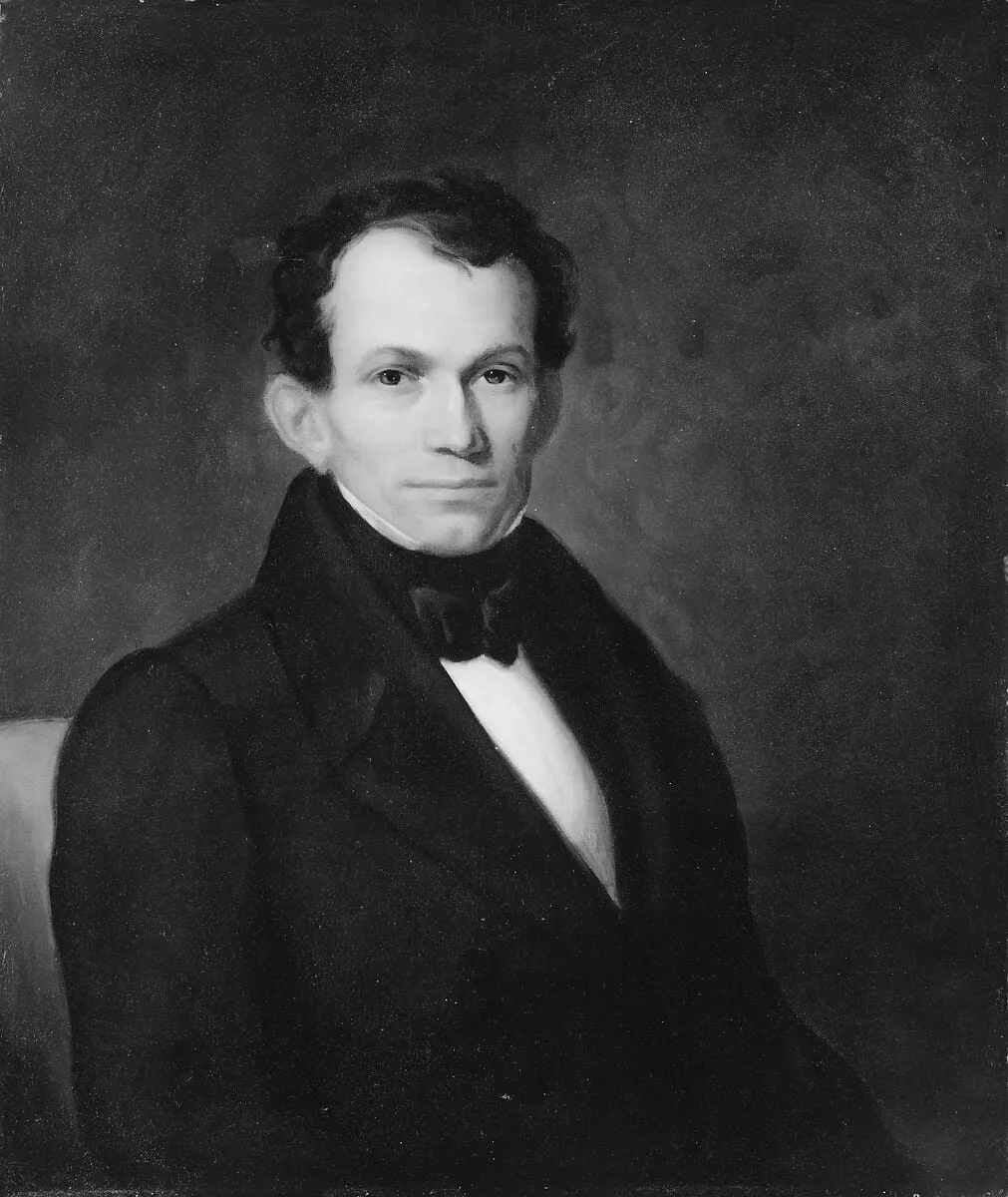
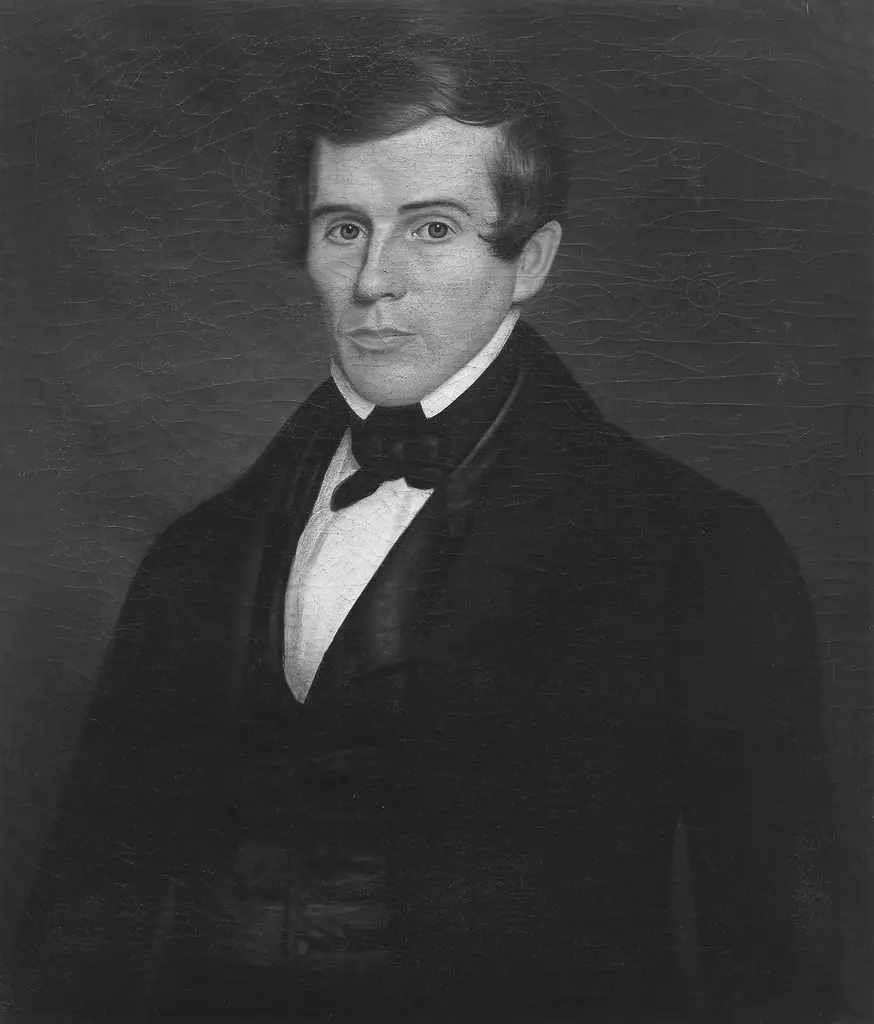
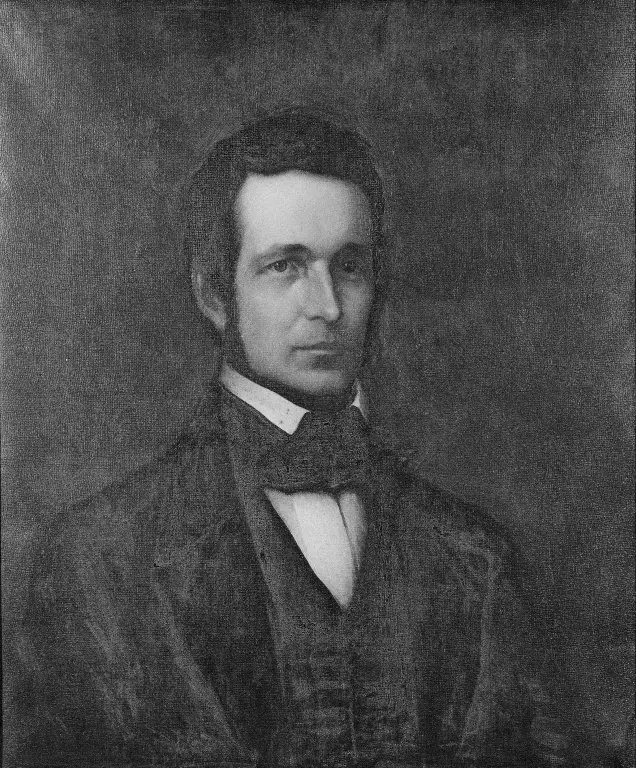
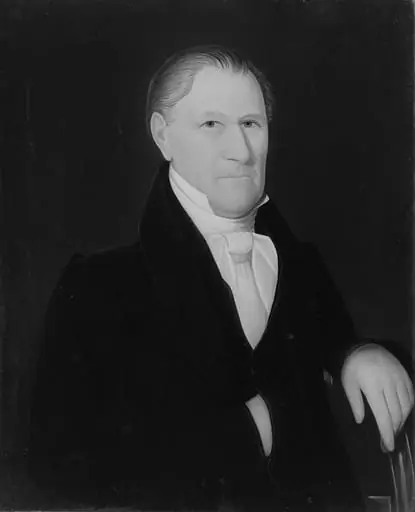
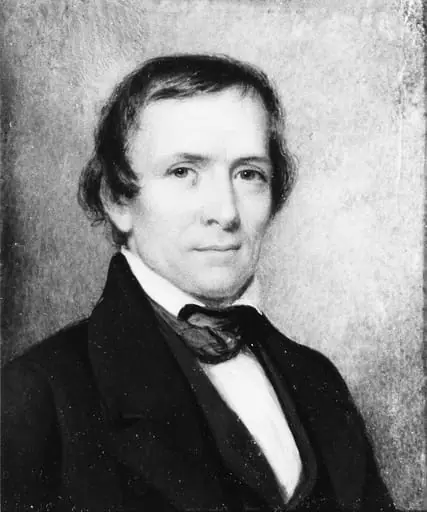
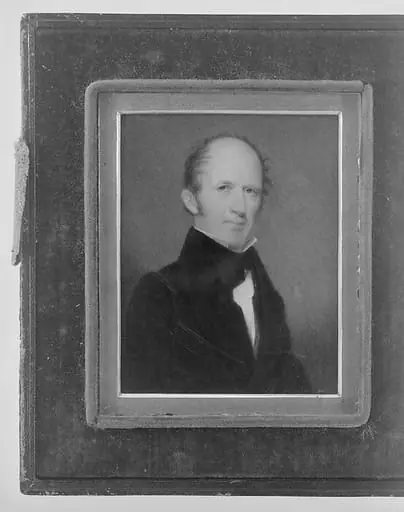
Jonathan Sturges is an oil painting by the Hudson River School artist Asher Brown Durand. It dates from 1840 and is held in the collection of the Metropolitan Museum of Art.
- Accession no.
- 1977.342.1
- Credit line
- Bequest of Frederick Sturges Jr., 1977
About this work
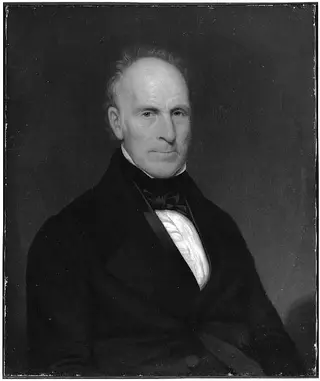
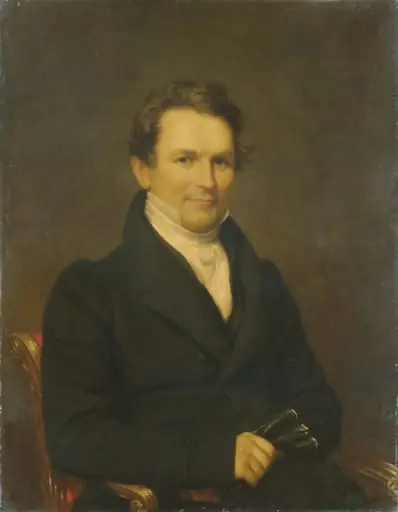
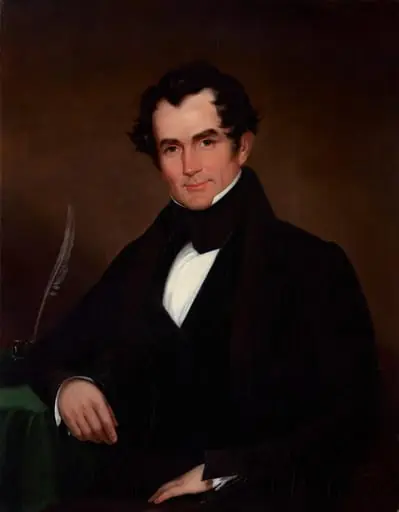
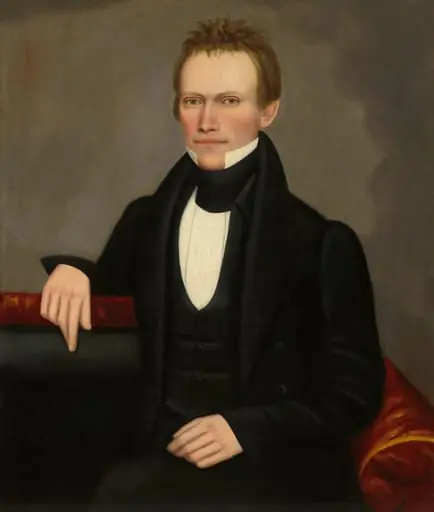
A man in a dark suit sits against a plain background, his face softly lit, his look calm and thoughtful, as if caught mid-conversation. Where portraits of 1840 often turned stiff and formal, Durand let the relaxed pose and natural light make him feel real. The brushwork is so smooth it nearly disappears, keeping the eye on his face.
Technique & Style
The portrait of Jonathan Sturges is executed in oil on canvas, a standard support for mid-19th-century American portraiture.
The portrait of Jonathan Sturges is executed in oil on canvas, a standard support for mid-19th-century American portraiture. It was painted by Asher Brown Durand, who employed the conventional techniques of his era, applying thin layers of oil paint to achieve realistic skin tones and fine detailing of facial features. The handling of light and shadow reflects the academic realism favored in the 1840s, and the formal qualities, balanced composition, precise rendering of texture, and a restrained palette, are characteristic of formal portrait commissions of the period.
History & Provenance
Asher Brown Durand executed the oil-on-canvas portrait of Jonathan Sturges in 1840. The work was commissioned by the sitter himself and subsequently passed within his family to Frederick Sturges. It is now held in the Metropolitan Museum of Art in New York, where it is associated with the museum's American Wing.
The finished portrait measures 77.5 cm in height and 63.5 cm in width. The available sources record that the subject was both sitter and original patron, and that the piece remained in the Sturges family before entering the museum's holdings, but they document no exhibition record or accession number.
Context
Jonathan Sturges (1840) is a portrait by Asher Brown Durand, better known as a leading landscape painter, that exemplifies mid-nineteenth-century American portraiture. The oil on canvas measures 77.5 × 63.5 cm and was commissioned by the sitter, remaining in the Sturges family before entering the collection of the Metropolitan Museum of Art, where it is associated with the American Wing. Its inclusion in a major museum underscores recognition of Durand's role in shaping a distinctively American visual language and highlights the work's significance as a documented example of elite patronage and portrait conventions of the period.
Legacy
The 1840 oil portrait of Jonathan Sturges by Asher Brown Durand is part of the Metropolitan Museum of Art's collection, where its display reflects the painting's recognized importance in the study of early American portraiture. Originally commissioned by Jonathan Sturges, the work later passed to Frederick Sturges, illustrating a documented family lineage that contributed to its historical standing. The painting's inclusion in the museum's collection has made it a reference point in discussions of 19th-century American portraiture.
Overview
Asher Brown Durand's 1840 oil on canvas, Jonathan Sturges, depicts the American merchant and art patron seated in a dark suit against a neutral, shadowed background. The composition focuses tightly on the sitter, utilizing soft, naturalistic lighting to illuminate his face and hands while leaving the surrounding space in deep shadow. Sturges is portrayed with a calm, contemplative expression, his posture relaxed rather than rigid, suggesting a moment of quiet reflection or paused conversation.
Executed during the height of the Hudson River School movement, this work marks a significant departure from the stiff, formal conventions of earlier American portraiture. While Durand is best known for his landscape paintings, this portrait demonstrates his mastery of the human form and his ability to capture psychological depth. The painting reflects the artist's commitment to truth to nature, a core tenet of his artistic philosophy, applied here to the characterization of a contemporary figure.
It stands as a notable example of mid-19th-century American portraiture that balances formal dignity with an emerging sense of individual personality and naturalism.
Artist & collection
Artist
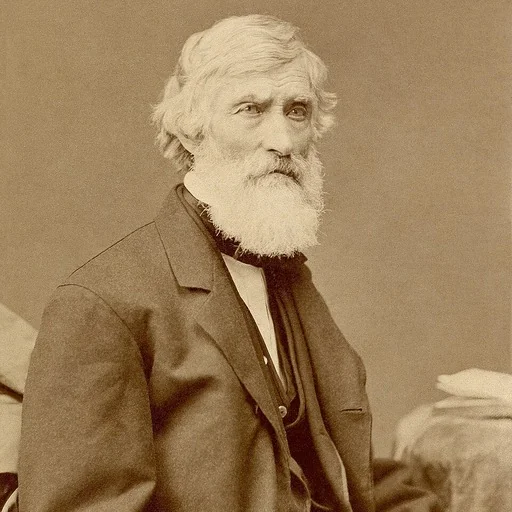
Asher Brown Durand spent his life in the rolling hills of New Jersey, where the forests and farmland shaped his quiet, deliberate way of seeing.