Artwork
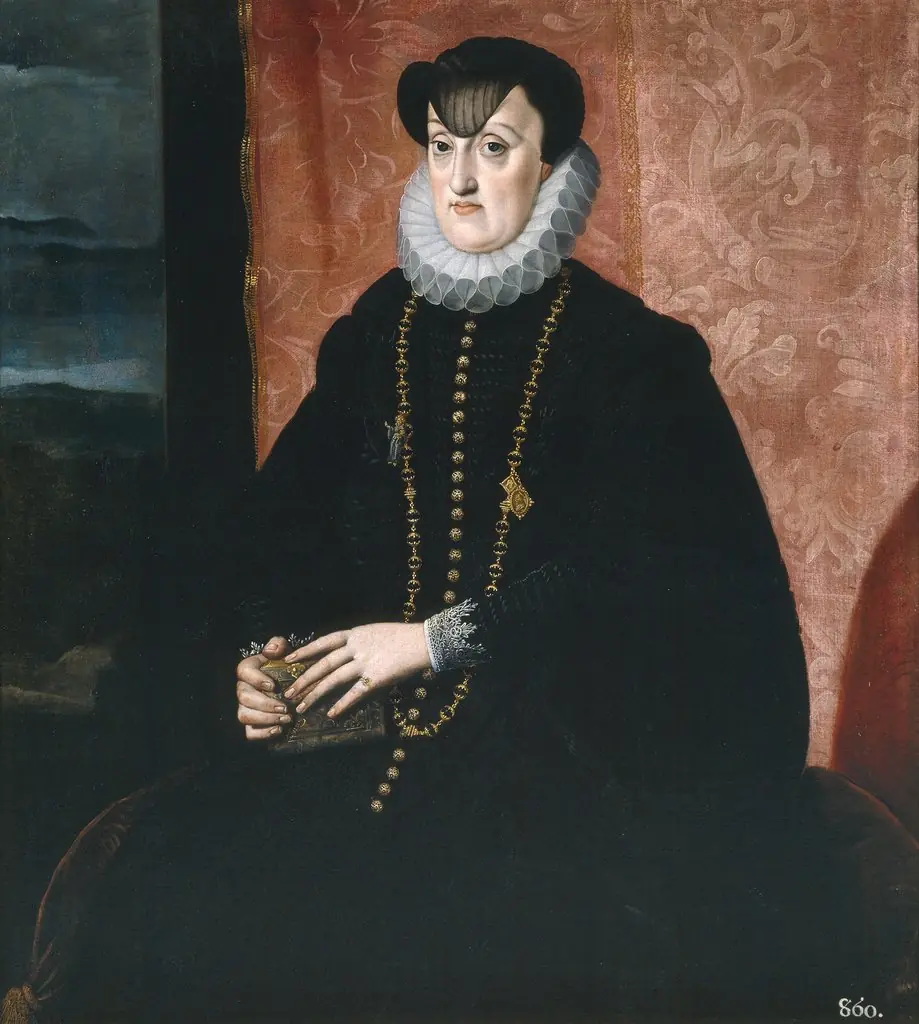
Queen Anne of Austria, fourth Wife of Philip II
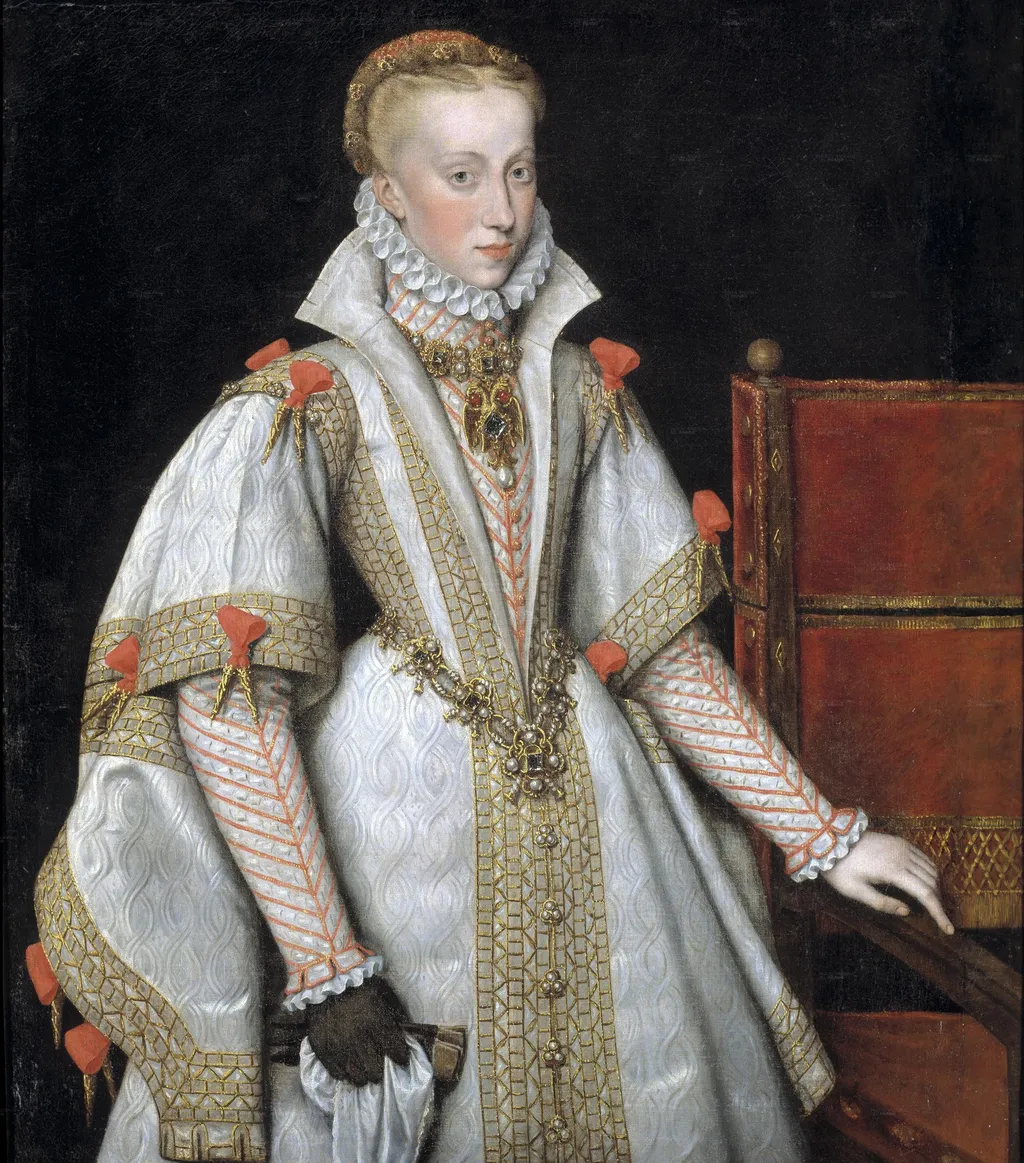
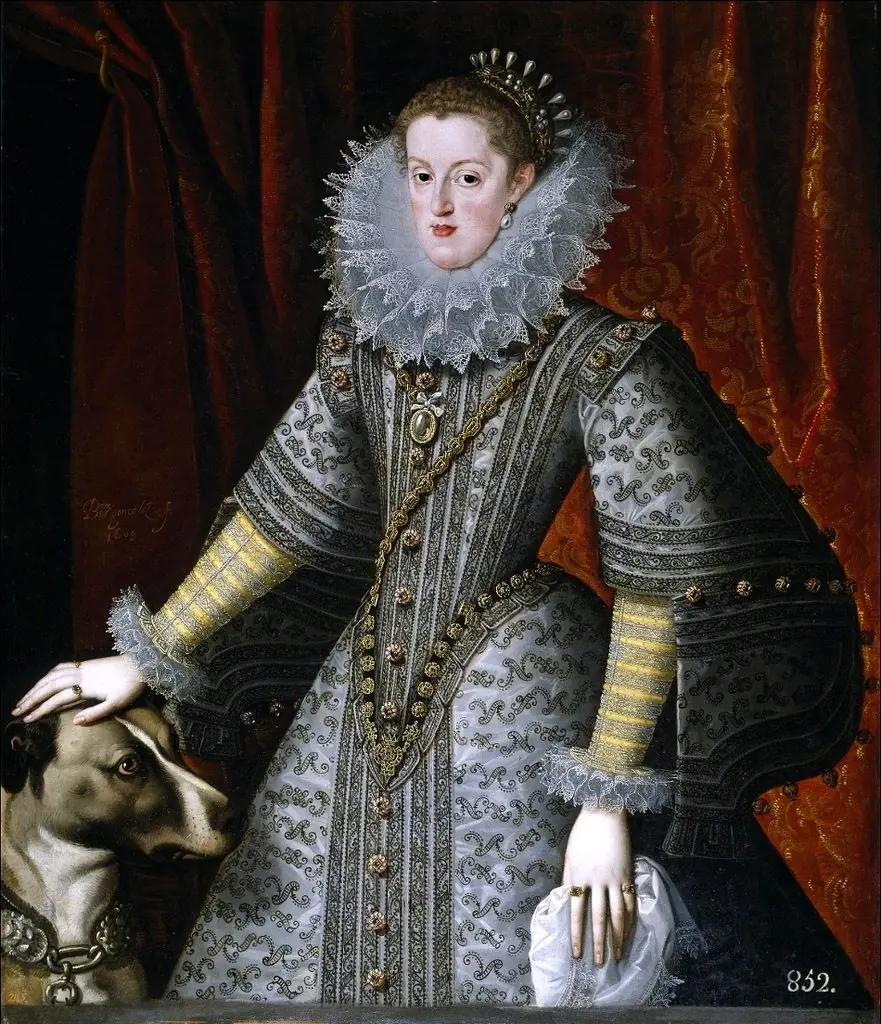
Queen Anne of Austria, fourth Wife of Philip II is an oil painting by the Early Baroque Italian artist Bartolomé González y Serrano. It dates from 1616 and is held in the collection of the Museo del Prado.
About this work
Subject & Meaning
The portrait shows Anna of Austria, Queen of Spain, wearing a glove and a gemstone, symbols that underscore her royal status and dynastic significance.
The portrait shows Anna of Austria, Queen of Spain, wearing a glove and a gemstone, symbols that underscore her royal status and dynastic significance. Painted in 1616 by Bartolomé González y Serrano, the work functions as a visual assertion of legitimacy within the Spanish Habsburg lineage. Its composition emphasizes regal authority through attire and jeweled ornamentation, reflecting contemporary expectations of queenship.
The painting is housed in the Museo del Prado in Madrid, where it remains part of the permanent collection.
The subject’s portrayal aligns with Habsburg propaganda, using iconography to reinforce political continuity and marital alliance.
Technique & Style
The portrait is executed in oil paint on canvas, a standard support for Spanish court portraiture of the period. According to the catalogue record, the canvas measures 108.5 cm in height by 87 cm in width, yielding a vertical format suited to a half- or three-quarter-length royal likeness.
Stylistically, the work belongs to the portrait tradition associated with Bartolomé González y Serrano, court painter to Philip III and Philip IV of Spain, whose depictions of the royal family emphasized dignified, restrained presentations of the sitters. The composition focuses on Queen Anne of Austria, with attributes including a glove and gemstone included as identifiers of her royal status.
History & Provenance
The portrait Queen Anne of Austria, fourth Wife of Philip II was painted in 1616 by Bartolomé González y Serrano, as recorded in the artist’s dated inscription.
The work entered the collection of the Museo del Prado, where it remains held today. Its provenance within the Prado’s holdings is documented from the institution’s inception, reflecting the museum’s long-standing custodianship of works by González, a court painter active in Madrid during the early 17th century.
The portrait of Queen Anne of Austria, fourth Wife of Philip II, by Bartolomé González y Serrano is held by the Museo del Prado, where it belongs to the museum's collection. Painted in oil on canvas, the work measures 108.5 by 87 cm and depicts Anna of Austria, Queen of Spain, alongside attributes such as a glove and gemstone.
No specific inventory or accession number is recorded in the available sources, and no exhibition history is documented.
Overview
Bartolomé González y Serrano, an early‑17th‑century Spanish painter associated with the Baroque movement, executed a portrait of Queen Anne of Austria in 1616. The work, rendered in oil on canvas, presents the queen in elaborate attire and is presently part of the Museo del Prado’s collection.
Context
The portrait continues the lineage of court portraiture established by artists such as Alonso Sánchez Coello and Juan Pantoja de la Cruz. By combining Renaissance compositional conventions with Baroque lighting and texture, González y Serrano reflects the transitional aesthetic of early 1600s Spain, where royal imagery served both diplomatic and propagandistic purposes.
Own this work as a print
Artist & collection
Artist
Bartolomé González y Serrano (1564–1627) was a Spanish Baroque painter specializing in portraits that represent a continuation of Renaissance court portrait types practiced by Alonso Sánchez Coello and especially by Juan Pantoja de la Cruz.