Artwork
Margaret of Austria, Consort of Philip III
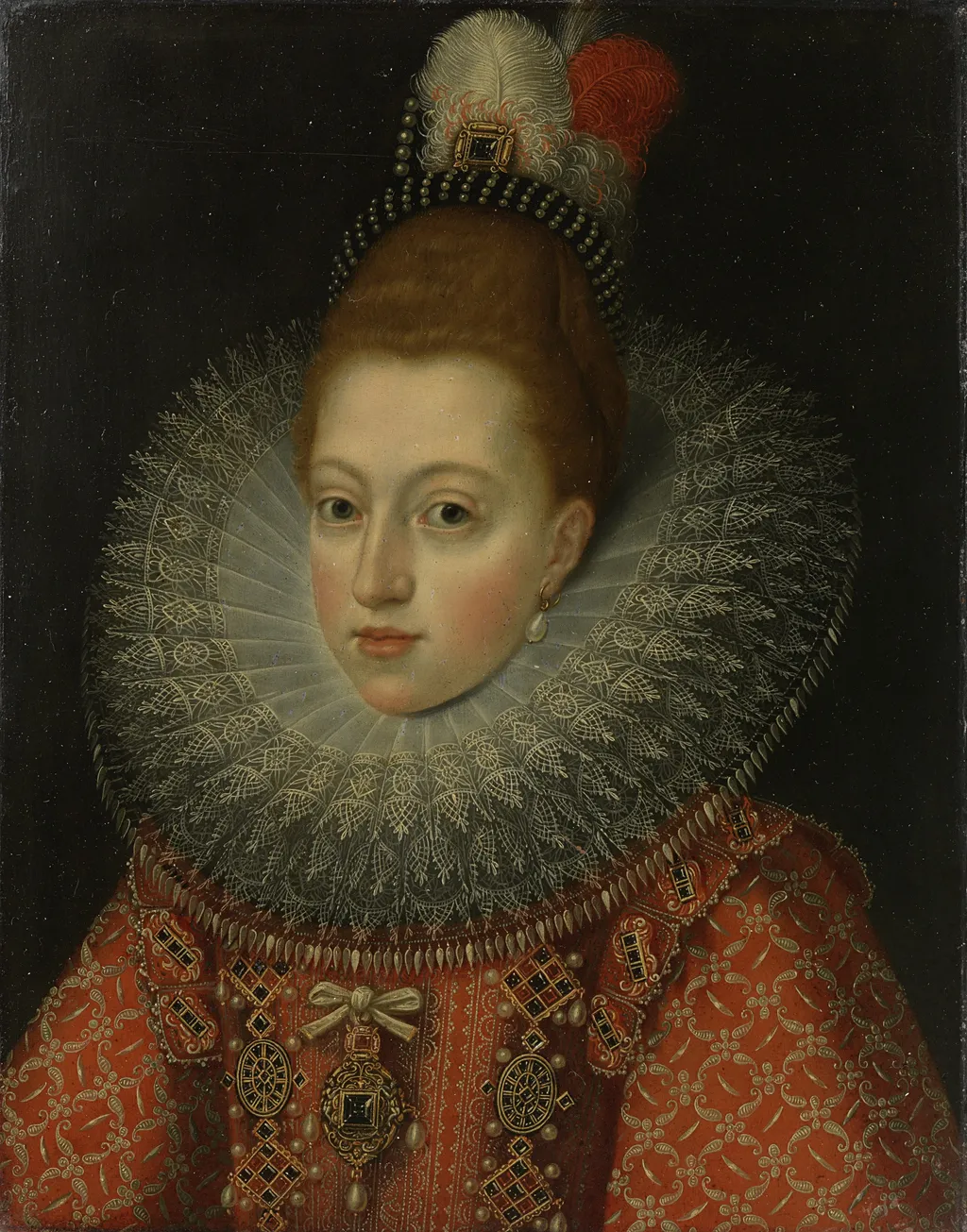
Margaret of Austria, Consort of Philip III is an oil painting. It dates from 1600 and is held in the collection of the Rijksmuseum.
About this work
Subject & Meaning
The portrait shows Margaret of Austria, Queen of Spain, in regal attire that signals her high status and diplomatic role. Her pose and direct gaze convey authority and poise, while the rich clothing and jewelry underscore her noble lineage and the political alliance she represents. The work functions as both a personal likeness and a visual statement of power within the Habsburg court.
Technique & Style
The surface retains its original sheen, with only minor craquelure noted in the background, indicating stable condition.
The work is executed in oil on copper, measuring 28.5 by 22.5 centimeters. The portrait shows Margaret of Austria, Queen of Spain, rendered with fine brushwork that emphasizes delicate facial features and rich drapery, reflecting the formal elegance typical of early 17th-century Netherlandish court portraiture. The surface retains its original sheen, with only minor craquelure noted in the background, indicating stable condition.
History & Provenance
The portrait of Margaret of Austria, Consort of Philip III, was created in 1600 in the Southern Netherlands on a copper support, employing oil paint. It was produced by Frans (II) Pourbus and entered the collection of the Rijksmuseum, where it remains on display.
Legacy
Later scholarship and museum displays have highlighted Margaret of Austria, Consort of Philip III, as an early example of court portraiture that blends formal authority with personal likeness, influencing how female regents were visualized in the Spanish Habsburg sphere. The work’s survival on copper and its presence in a national collection have contributed to renewed interest in women’s visual representation during the Counter-Reformation, positioning it as a reference point in studies of gender and power in early modern European art.
Overview
The work is a copper portrait of Margaret of Austria, consort of Philip III, rendered in oil on a metal support. The composition centers the sitter, whose pale complexion and tightly gathered light‑brown hair are framed by a feathered hat and a high white collar edged with lace. She is dressed in a red garment richly embroidered with gold thread, set against a dark, unadorned background that heightens the contrast.
Context
Created at a time when portraiture served both personal commemoration and political propaganda, the image aligns with contemporary Spanish court conventions that emphasized regal attire, modest demeanor, and the display of familial insignia. The use of copper as a substrate reflects a broader trend among court painters seeking a luminous base for detailed surface treatment.
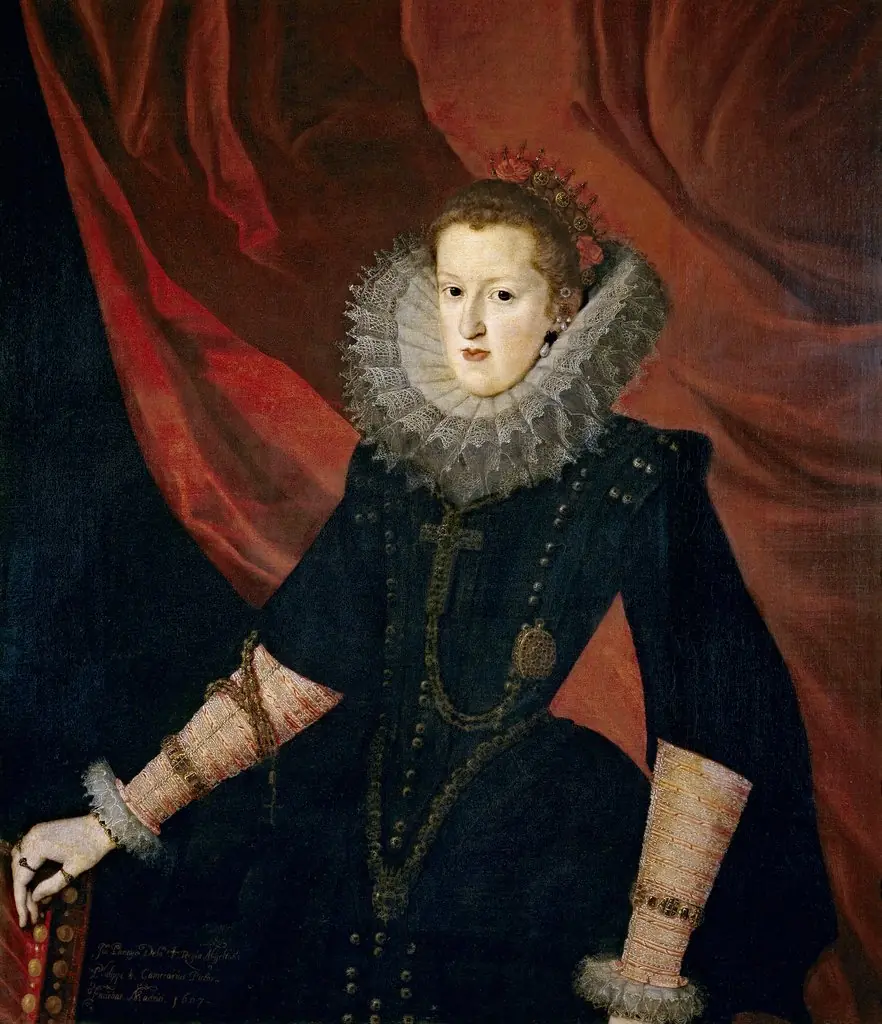
Artist & collection

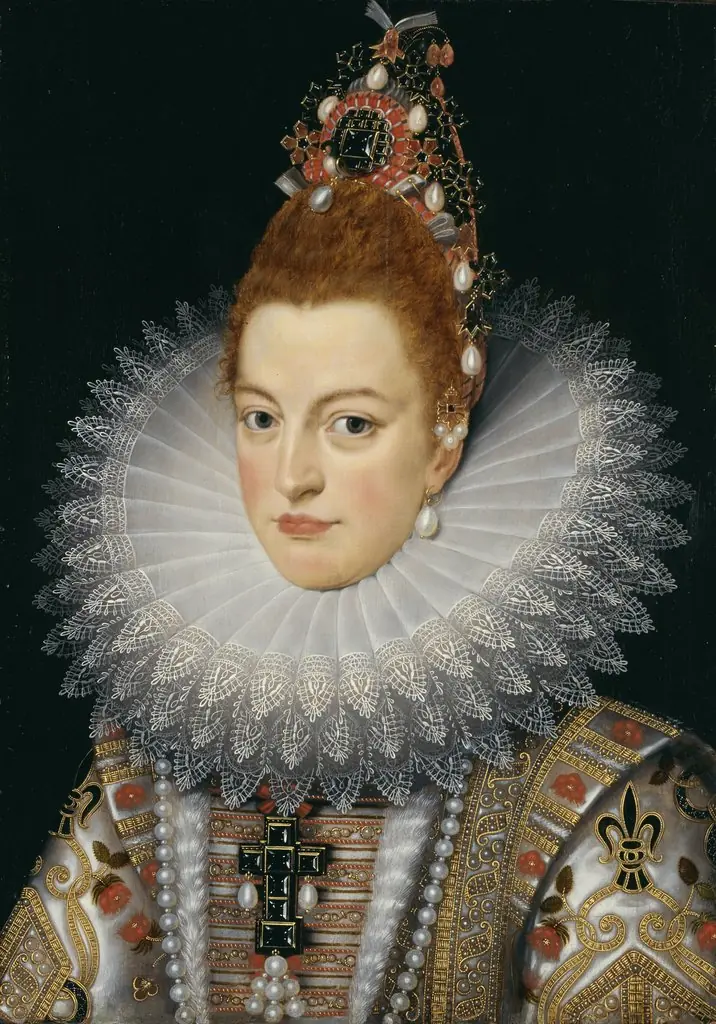 Portrait of Archduchess Isabella
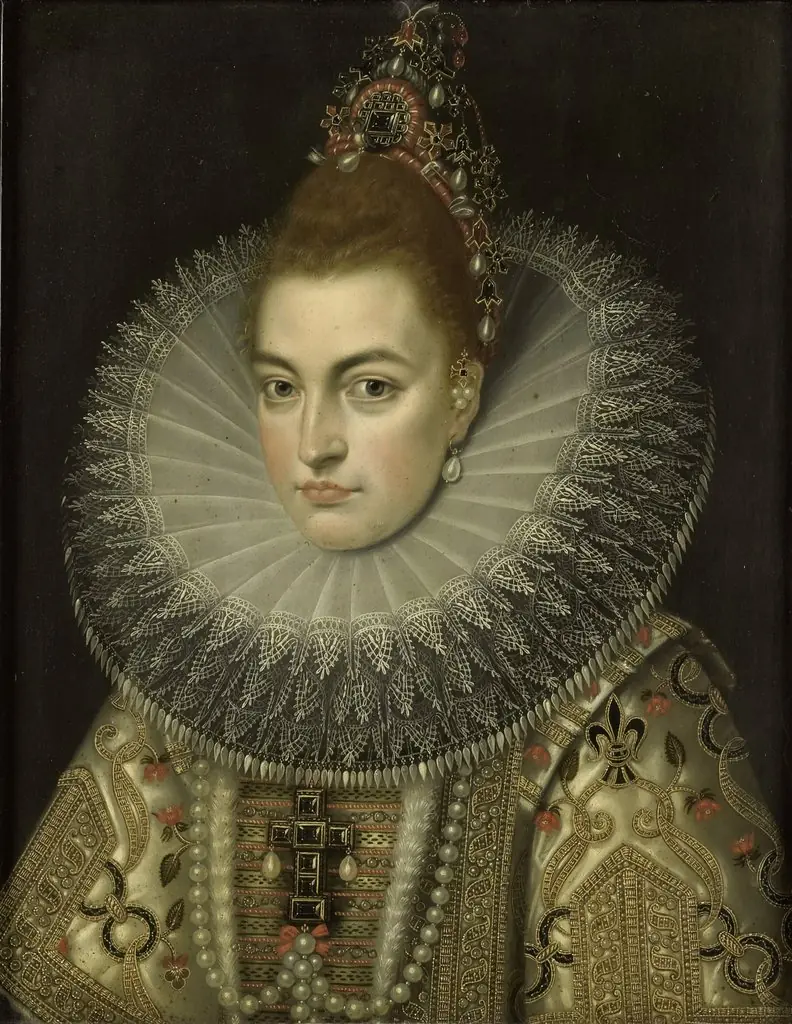 Isabella Clara Eugenia, Consort of Archduke Albert VII
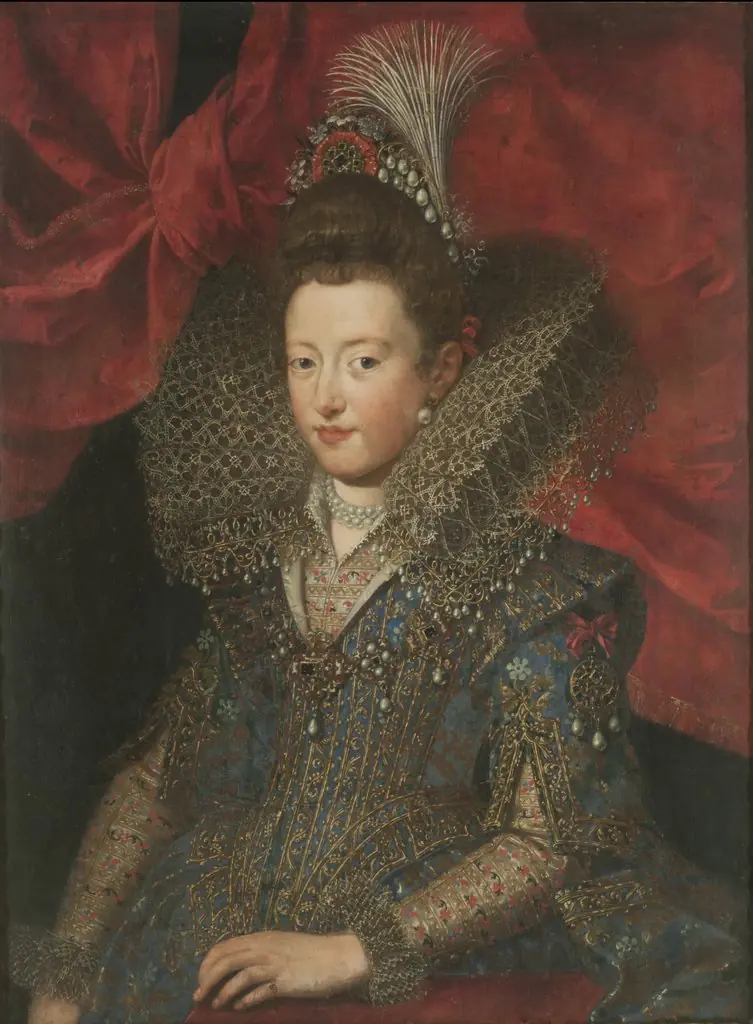 Portrait of Margarita Gonzaga
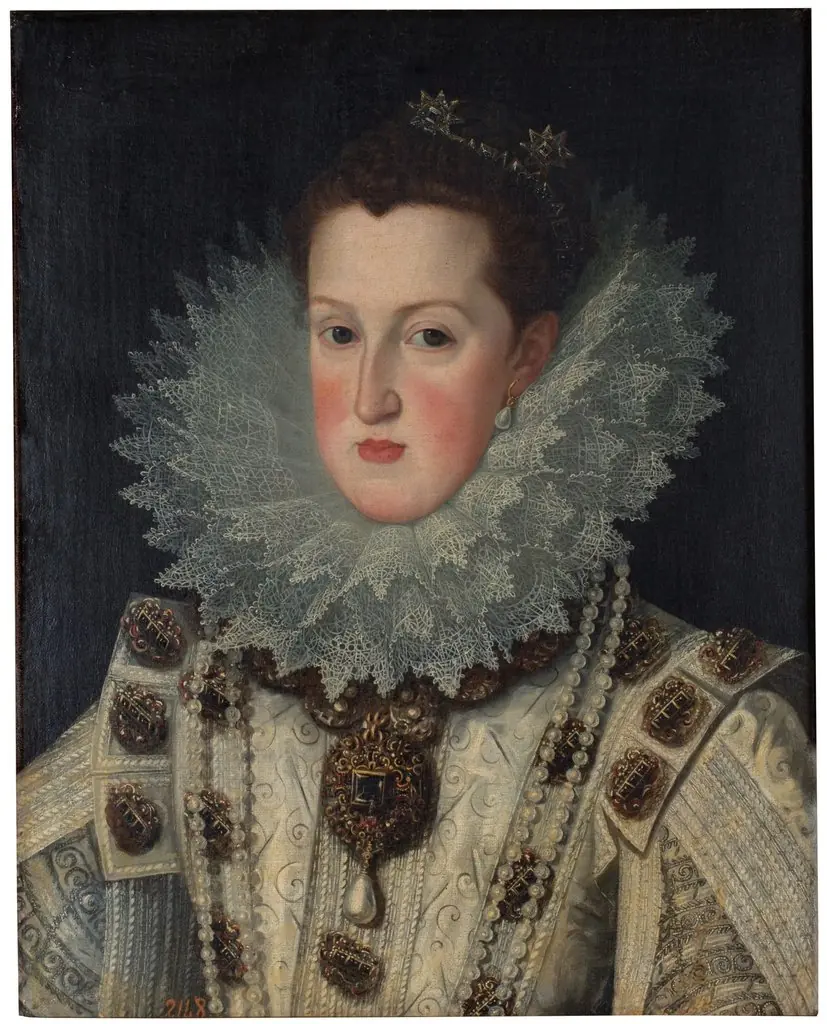 Margarita de Austria, reina de España
 Portrait of a Young Woman
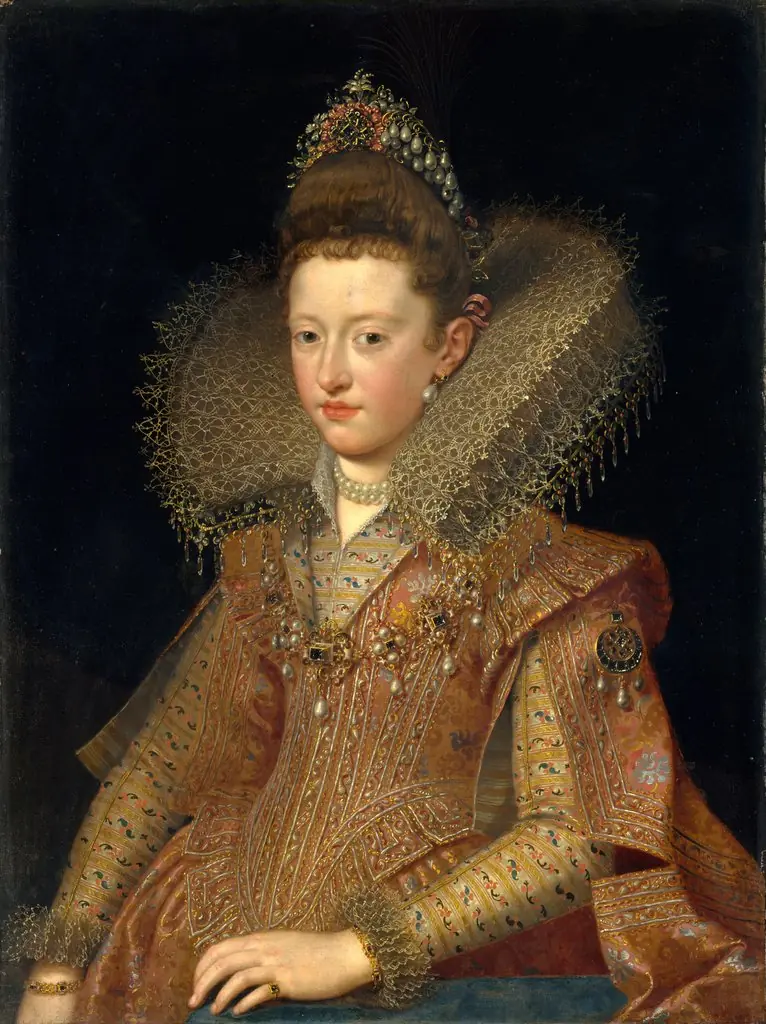 Margherita Gonzaga (1591–1632), Princess of Mantua
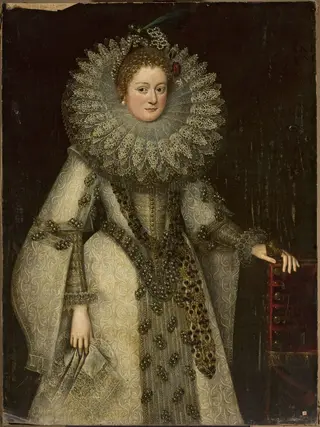 Portrait of a lady in a rich costume leaning on the armchair
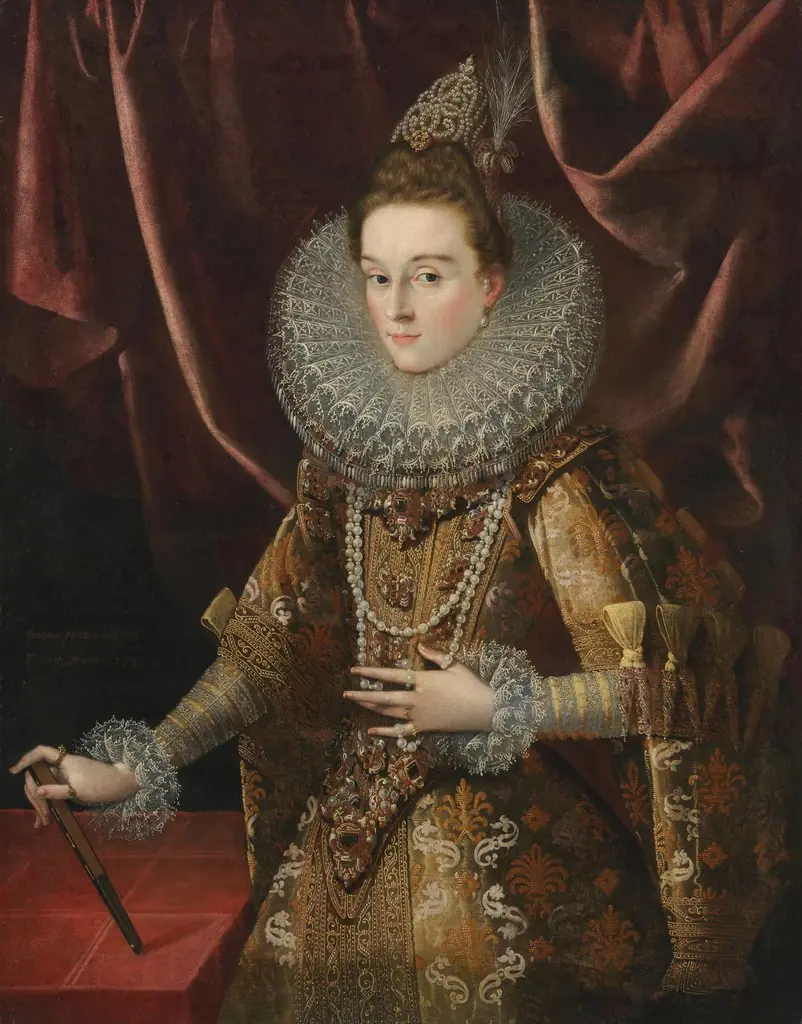 Isabella Clara Eugenia by Juan Pantoja de la Cruz
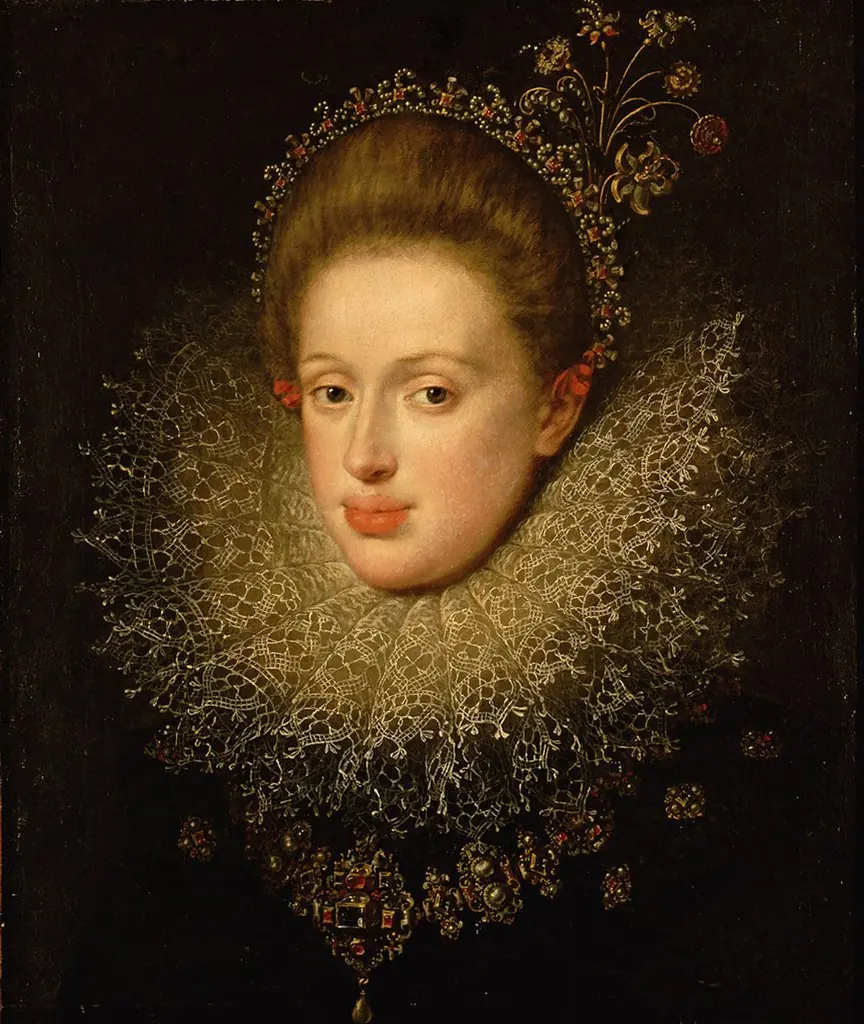 Anna of Tyrol
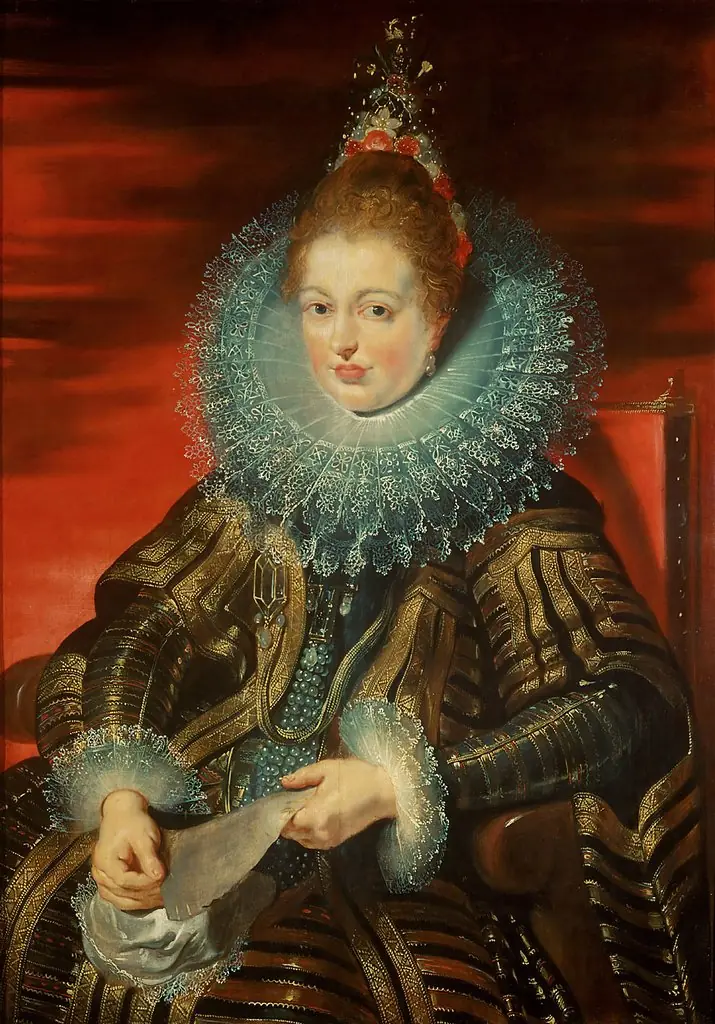 Isabella Clara Eugenia, wife of Albrecht VII