Artwork
Saint Justina of Padua
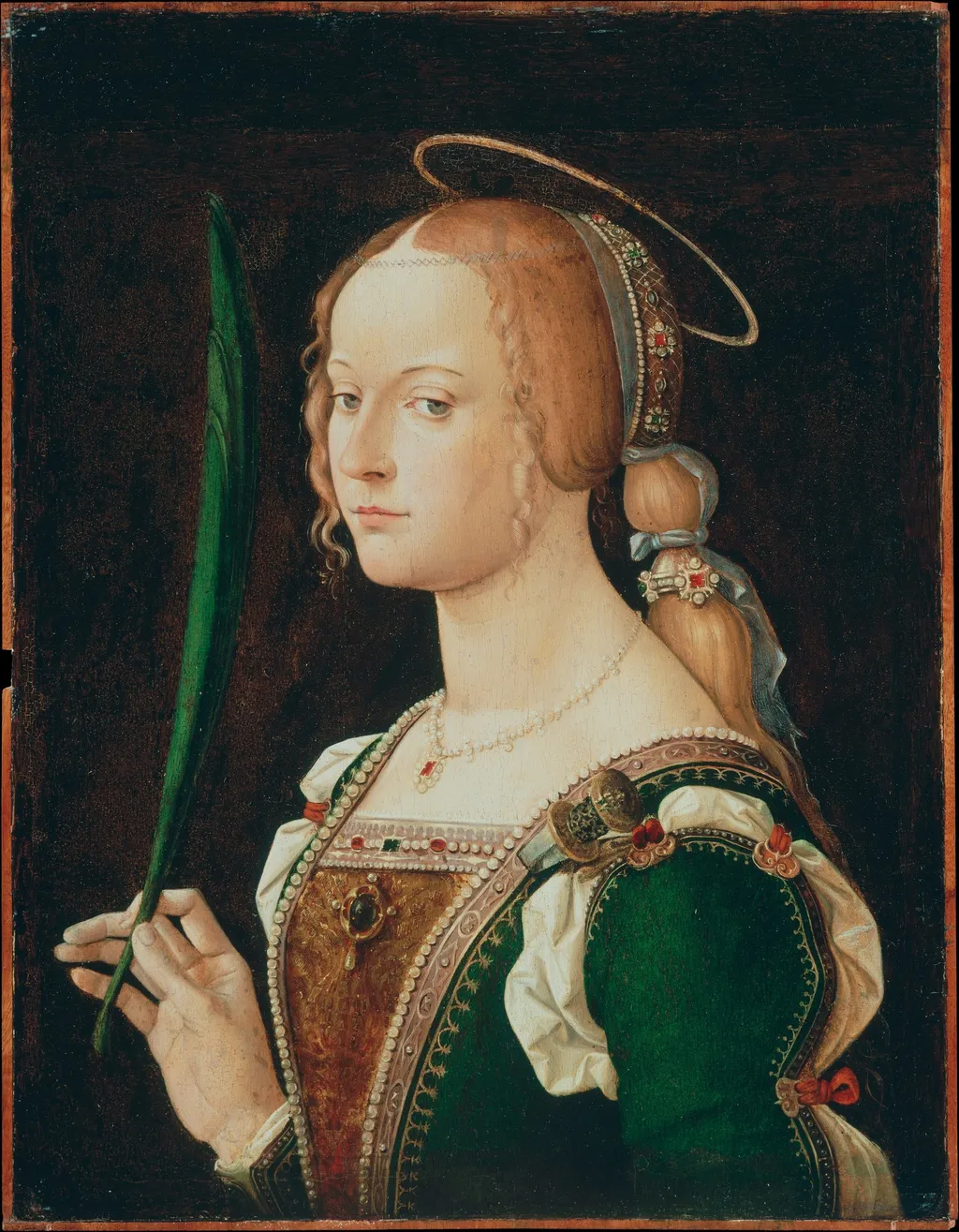
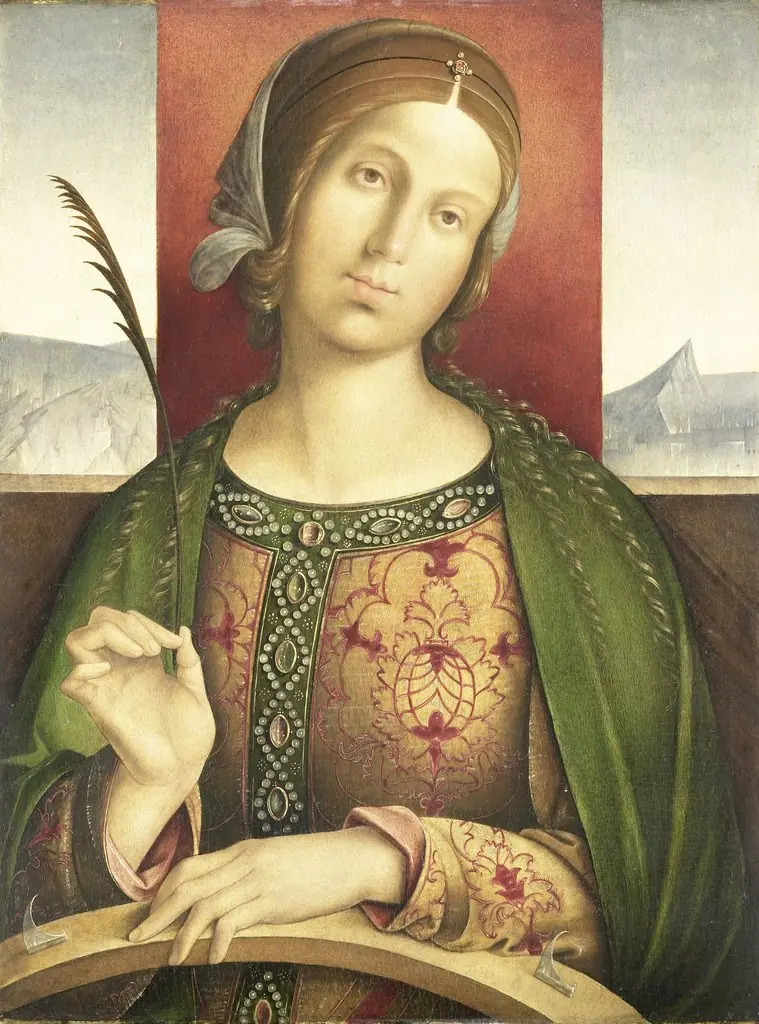
Saint Justina of Padua is an oil painting by the Venetian Renaissance artist Bartolomeo Montagna. It dates from 1496 and is held in the collection of the Metropolitan Museum of Art.
About this work
Technique & Style
The medium's luminous transparency allows for subtle layering, evident in the delicate glazes defining the saint's flesh tones and drapery folds.
Bartolomeo Montagna's Saint Justina of Padua (1496) is executed in oil paint on a wooden panel support, measuring 48.6 × 37.5 cm. The medium's luminous transparency allows for subtle layering, evident in the delicate glazes defining the saint's flesh tones and drapery folds.
Stylistically, the work reflects the Quattrocento Venetian tradition, characterized by meticulous linear precision and a harmonious balance between figure and space. The handling is refined, with fine brushwork delineating intricate details such as the gold embroidery on Justina's robe and the delicate rendering of her attributes, including the martyr's palm and dagger. The composition's serene symmetry and restrained palette underscore the devotional clarity typical of Montagna's religious works.
History & Provenance
Saint Justina of Padua is dated to 1496. It was acquired by Benjamin Altman and subsequently bequeathed to the Metropolitan Museum of Art as part of the Altman Collection in 1913. The work has remained in the museum's holdings since that transfer, with no intervening ownership changes documented.
Overview
Bartolomeo Montagna's Saint Justina of Padua, painted in 1496, is an oil on panel work characteristic of the Venetian Renaissance. This painting depicts a female saint, identified as Justina of Padua, rendered with the artist's distinctive approach to form and detail. It is currently housed in the collection of The Metropolitan Museum of Art, representing a significant example of Montagna's religious output.
Subject & Meaning
The painting presents a solemn female figure, likely Saint Justina of Padua, distinguished by a halo and a serious gaze directed to the left. She wears a green gown with a white collar and a gold necklace, her hair neatly pulled back with a headband. In her right hand, she holds a slender green object, an attribute that helps identify her. The dark background emphasizes her presence, contributing to the work's overall devotional character.
Context
Bartolomeo Montagna was an Italian painter primarily active in Vicenza during the late 15th century, though he also received commissions in Venice, Verona, and Padua. His oeuvre frequently explored religious themes, including numerous depictions of the Madonna. Montagna's work is recognized for its careful attention to architectural elements, often featuring elaborate marble details, alongside his characteristic treatment of human forms.
Own this work as a print
Artist & collection

Artist
Bartolomeo (or Bartolommeo) Montagna (UK: , US: , Italian: ; 1450?– 11 October 1523) was an Italian Renaissance painter who mainly worked in Vicenza.

 Saint Catherine of Alexandria
 Saint Catherine
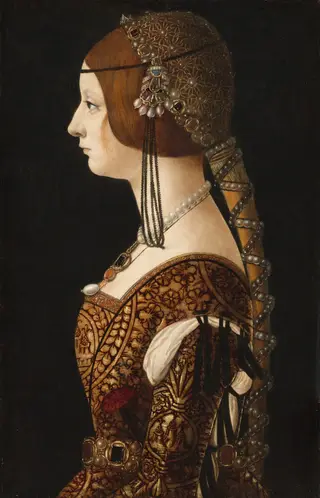 Bianca Maria Sforza
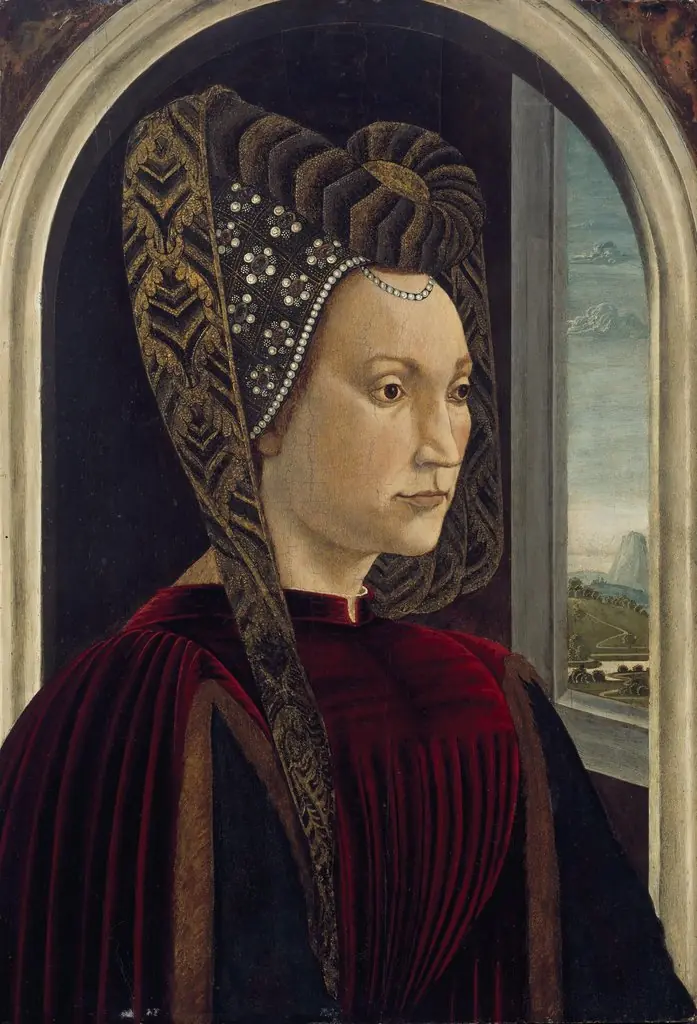 Presumed Portrait of Clarice Orsini, Wife of Lorenzo the Magnificent
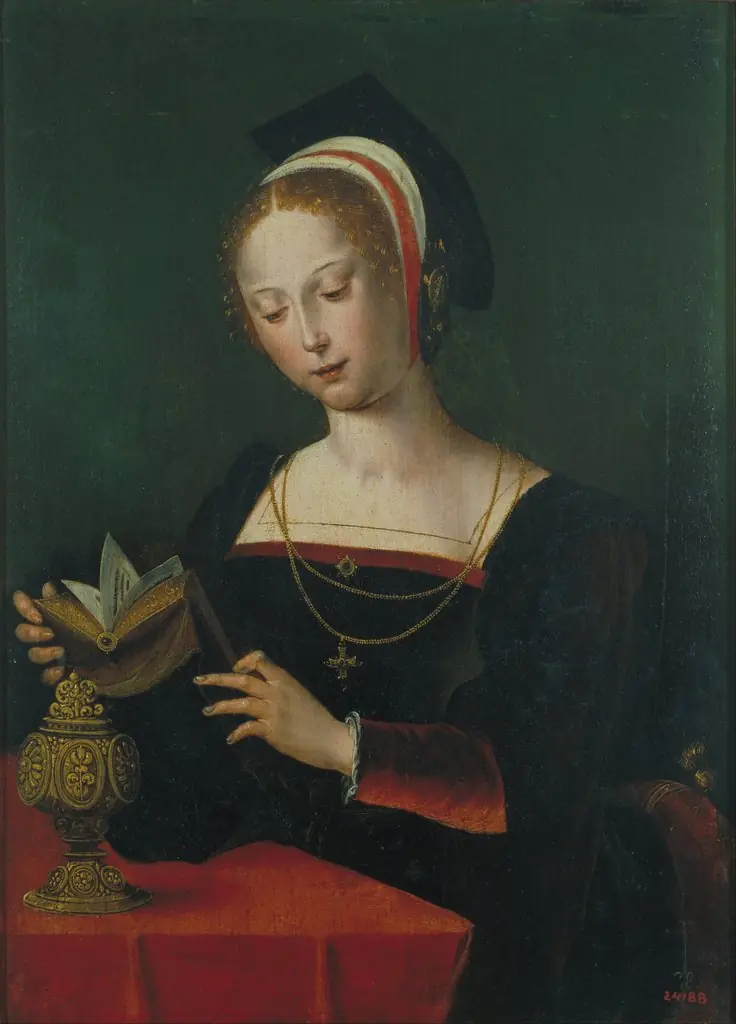 Saint Mary Magdalene
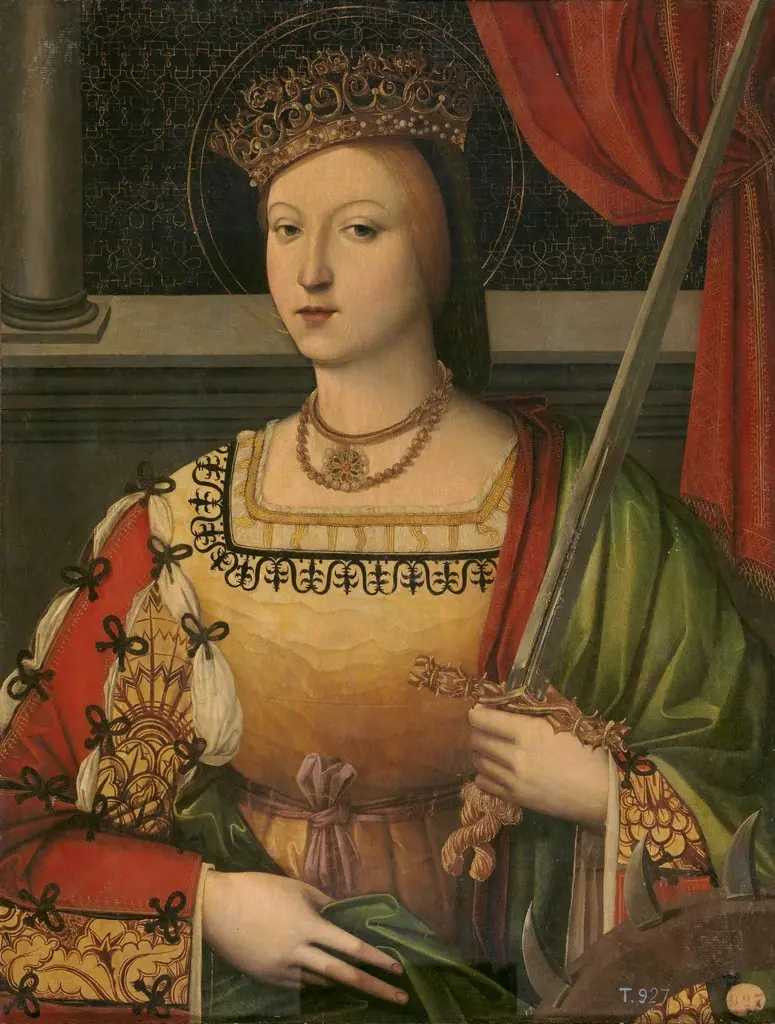 Catalina de Austria reina de Portugal como Santa Catalina
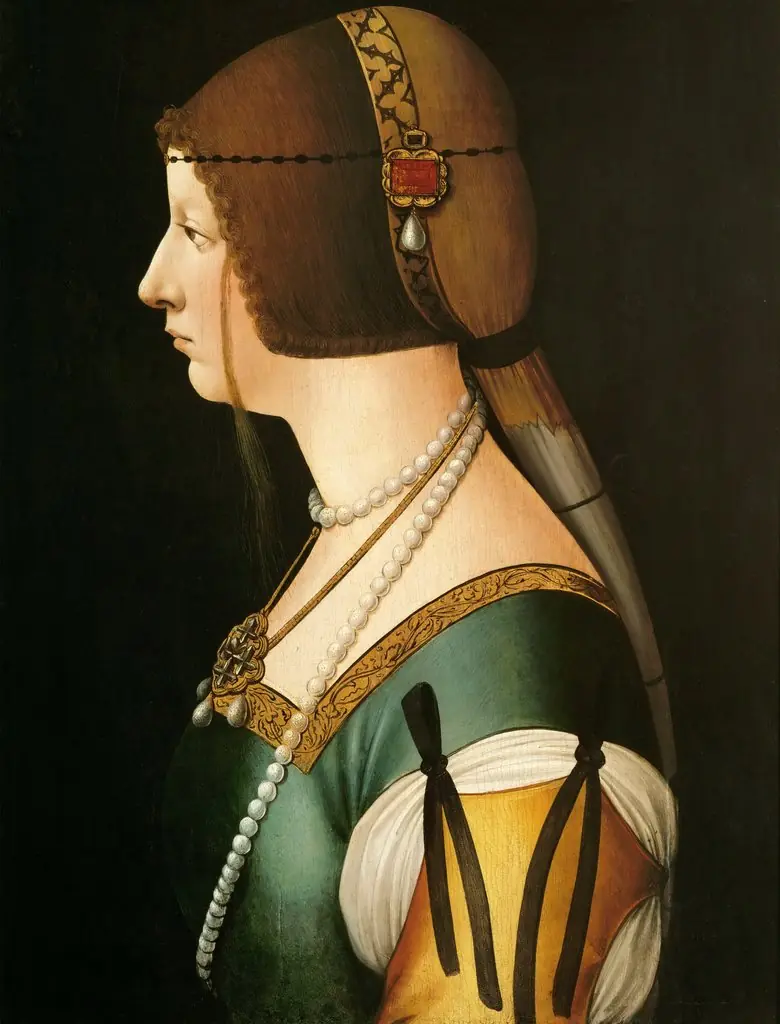 Bianca Maria Sforza
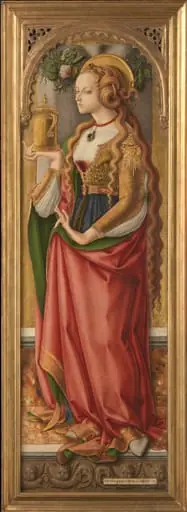 Maria Magdalena
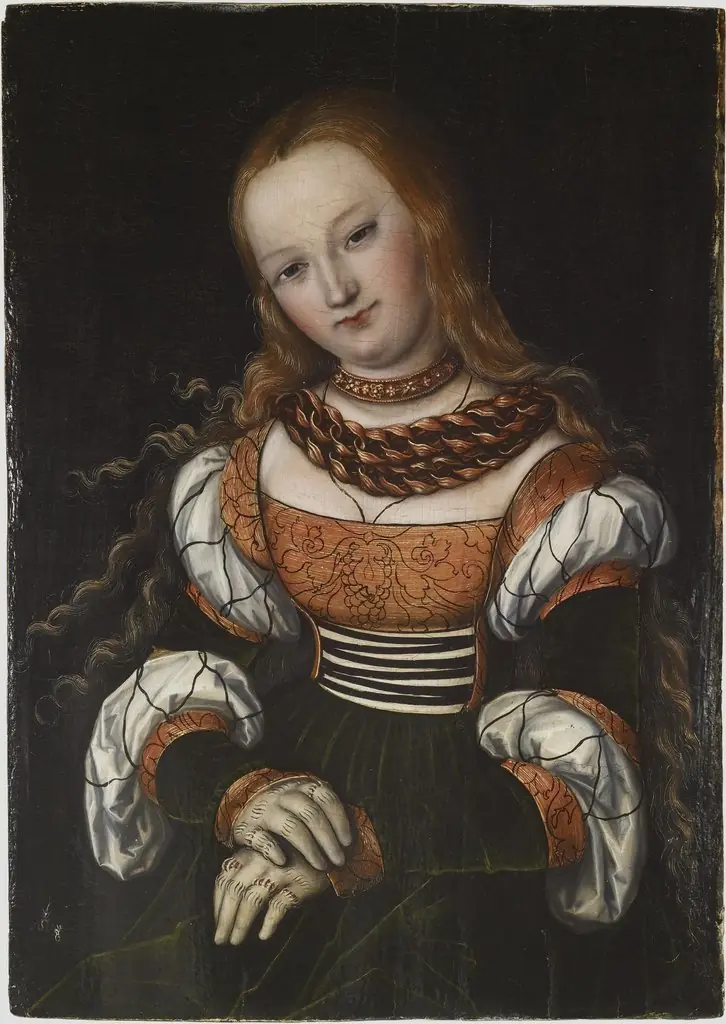 Portrait of a young woman
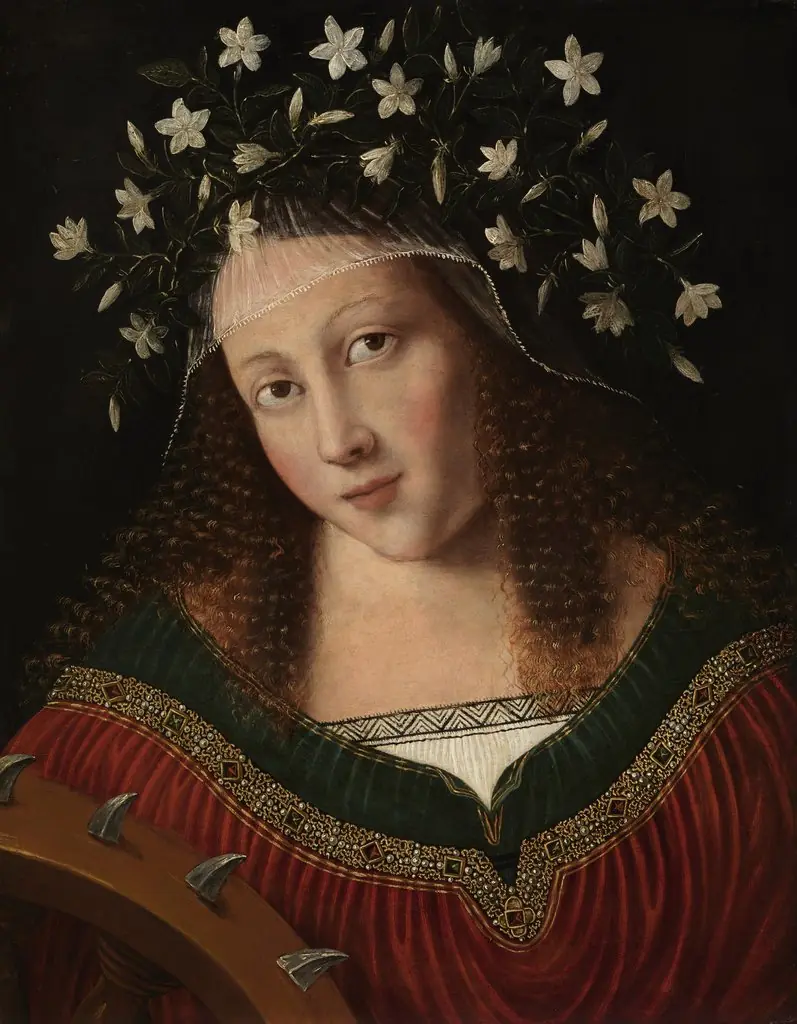 Saint Catherine
 Portrait in profile of a Woman
- Mary Magdalen