Artwork
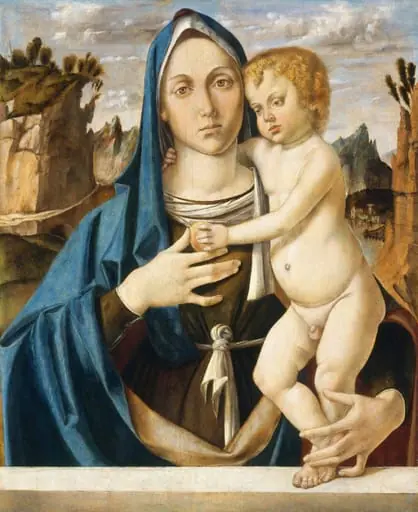
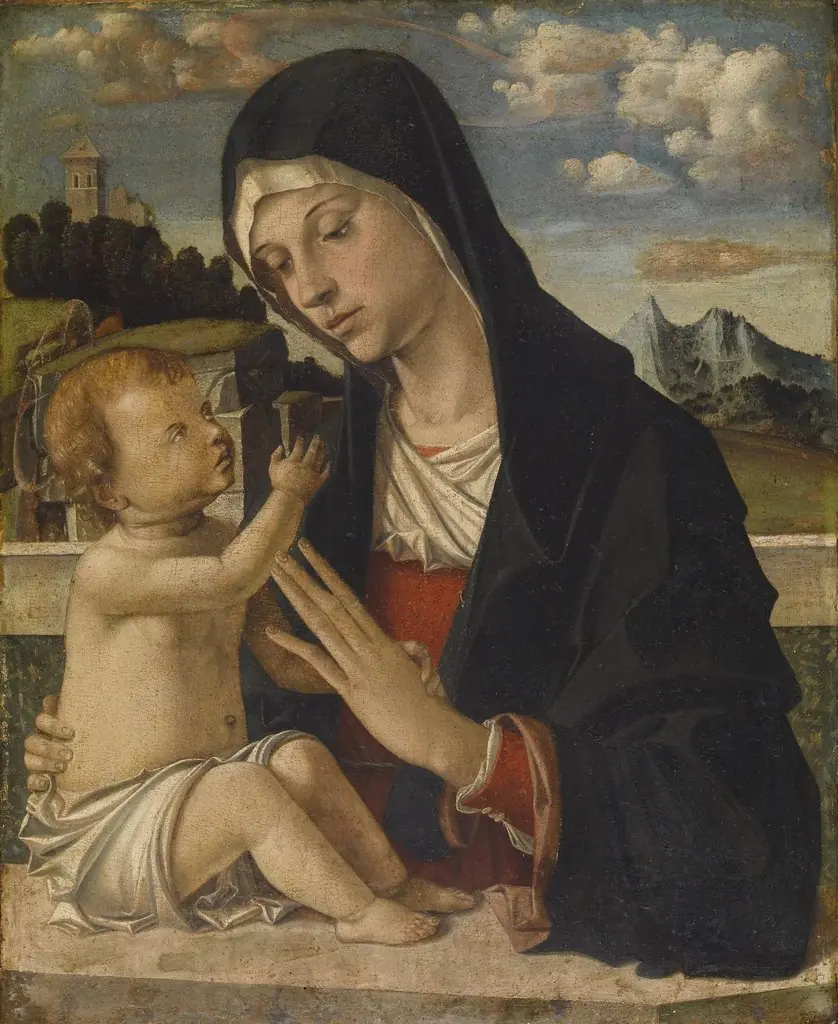
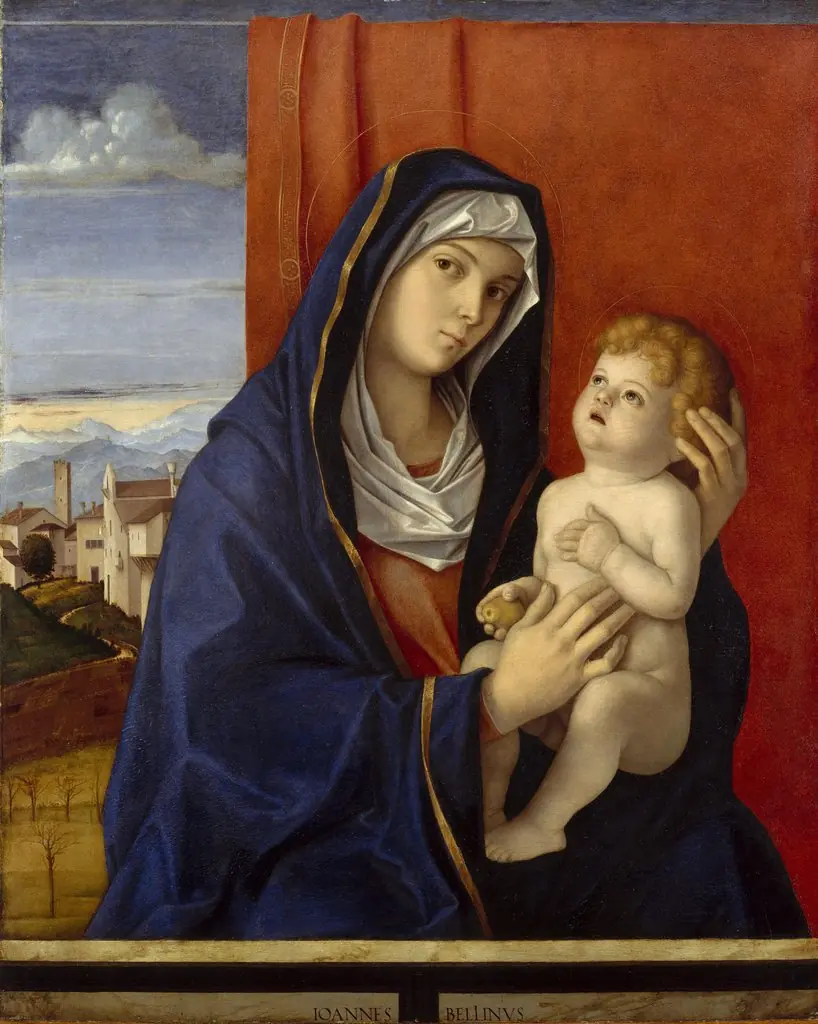
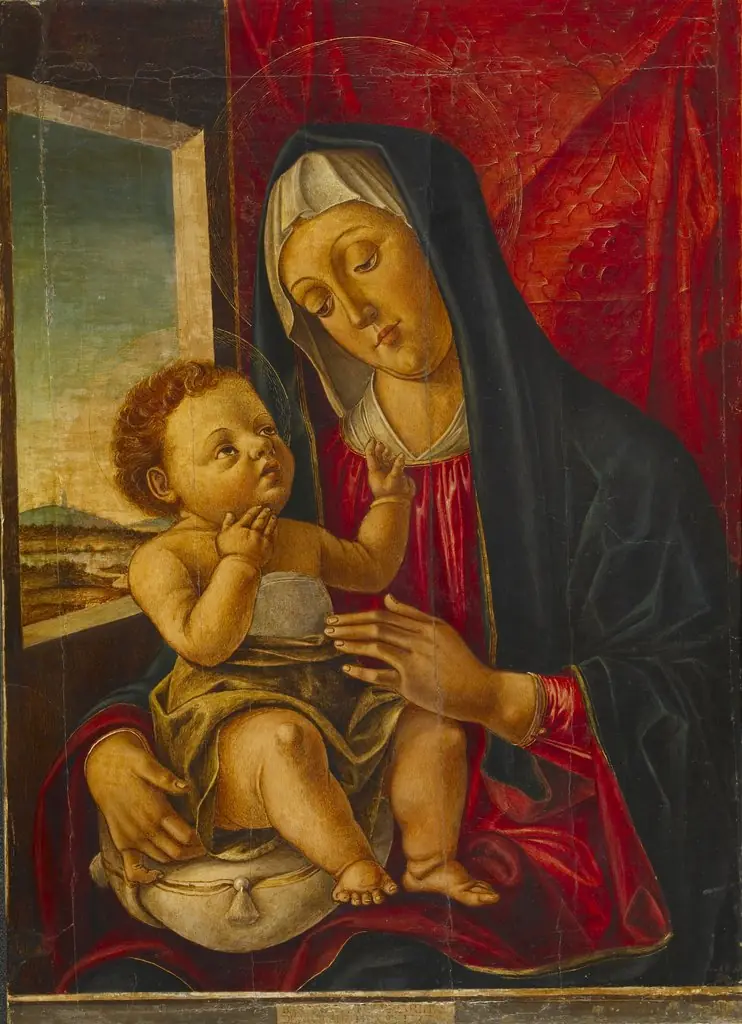
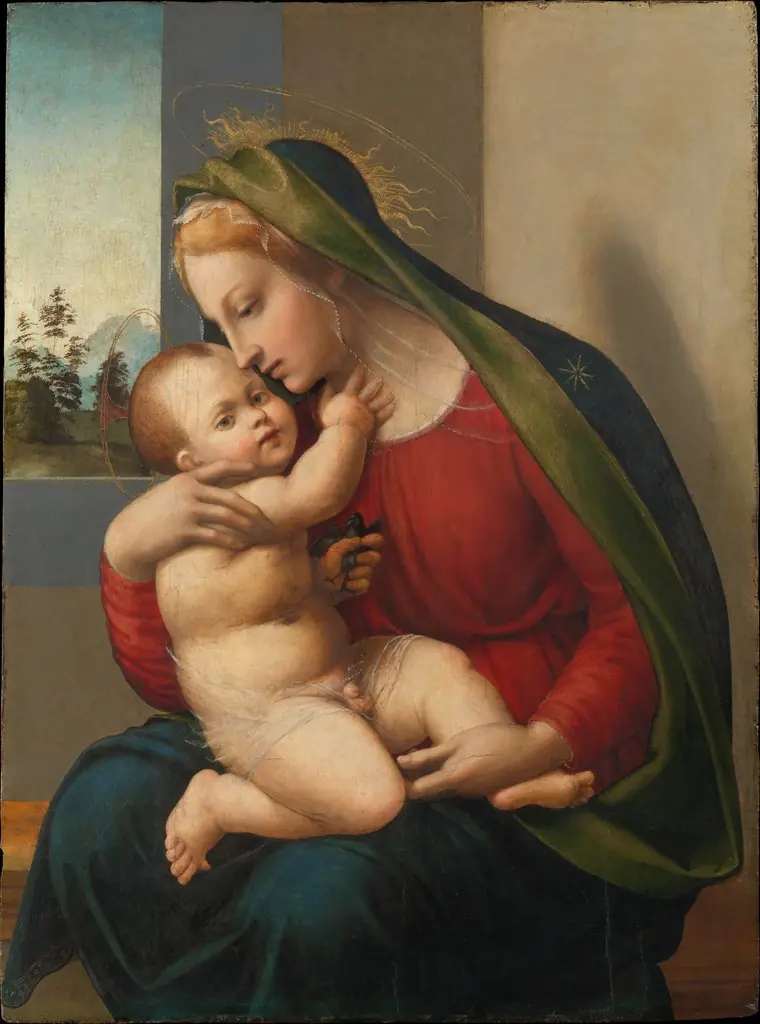
Madonna Adoring the Child
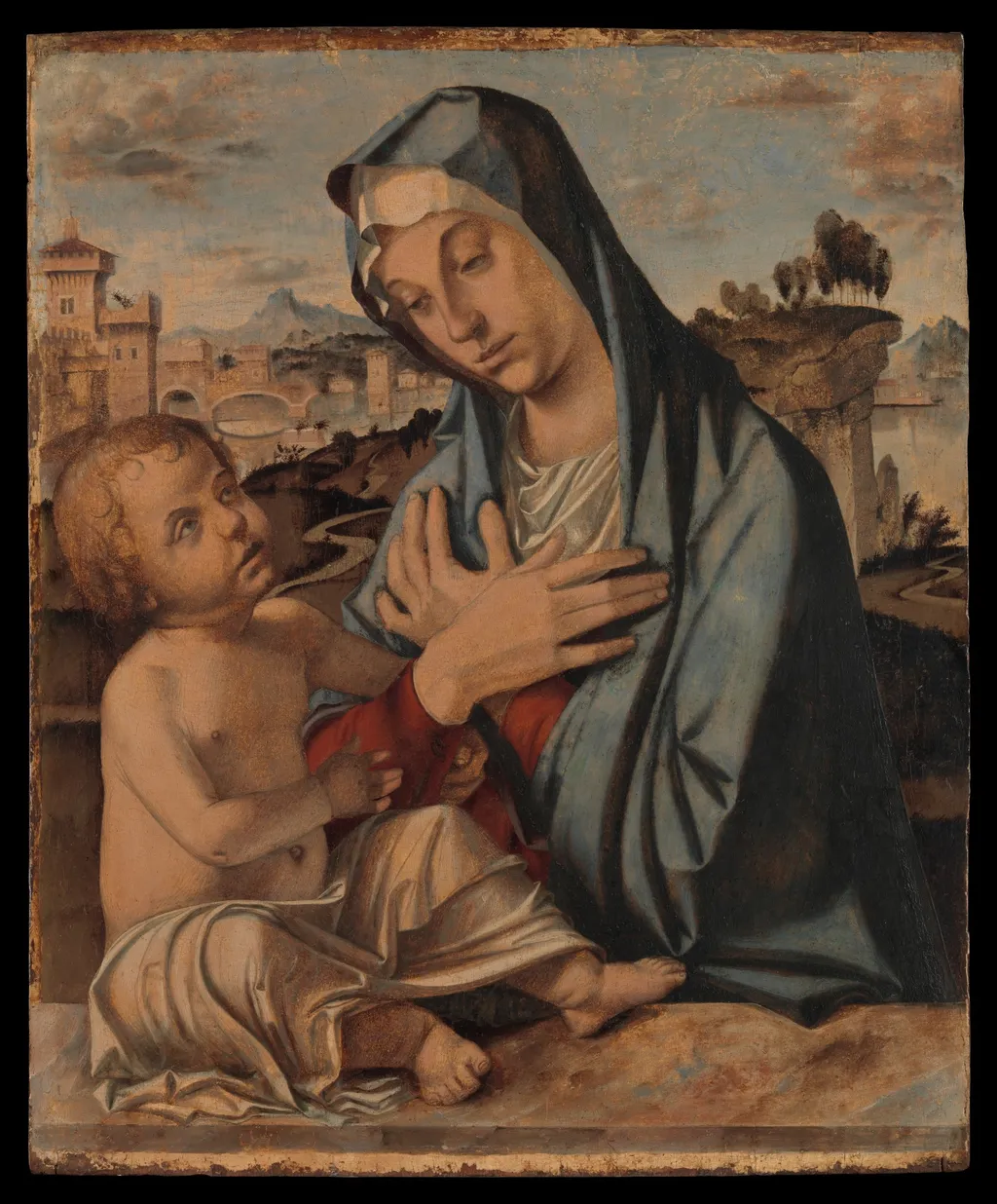
Madonna Adoring the Child is an unspecified painting by the Venetian Renaissance artist Bartolomeo Montagna. It dates from 1501 and is held in the collection of the Metropolitan Museum of Art.
About this work
Subject & Meaning
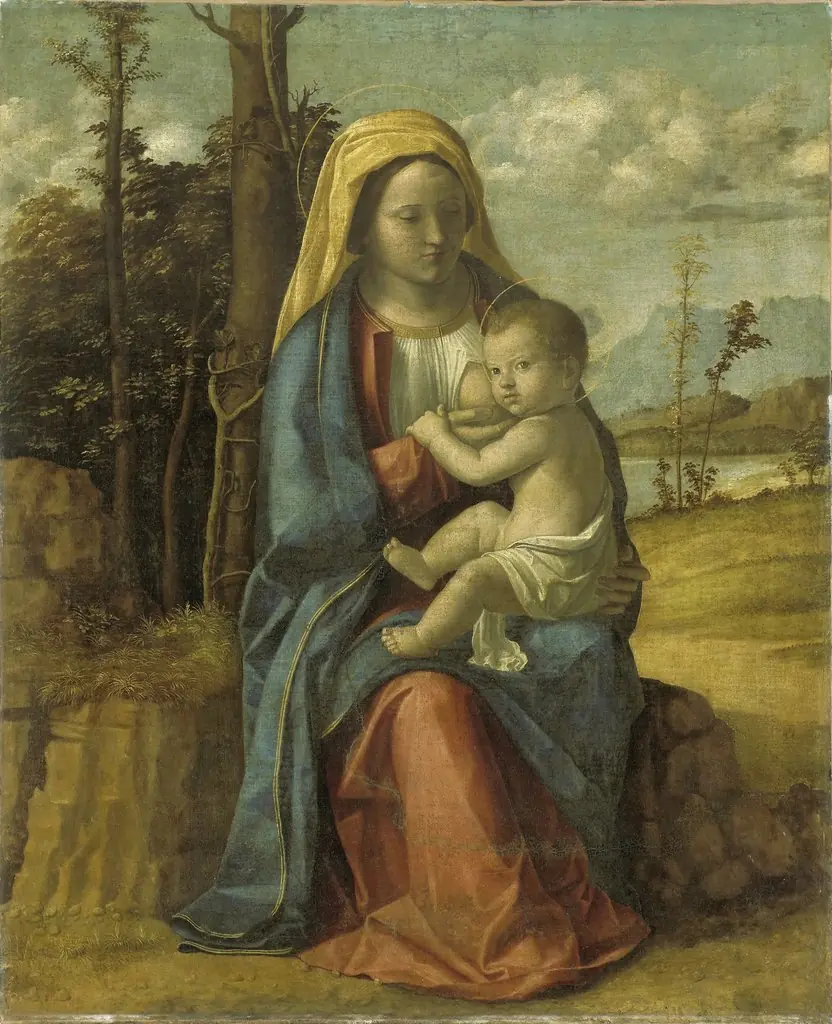
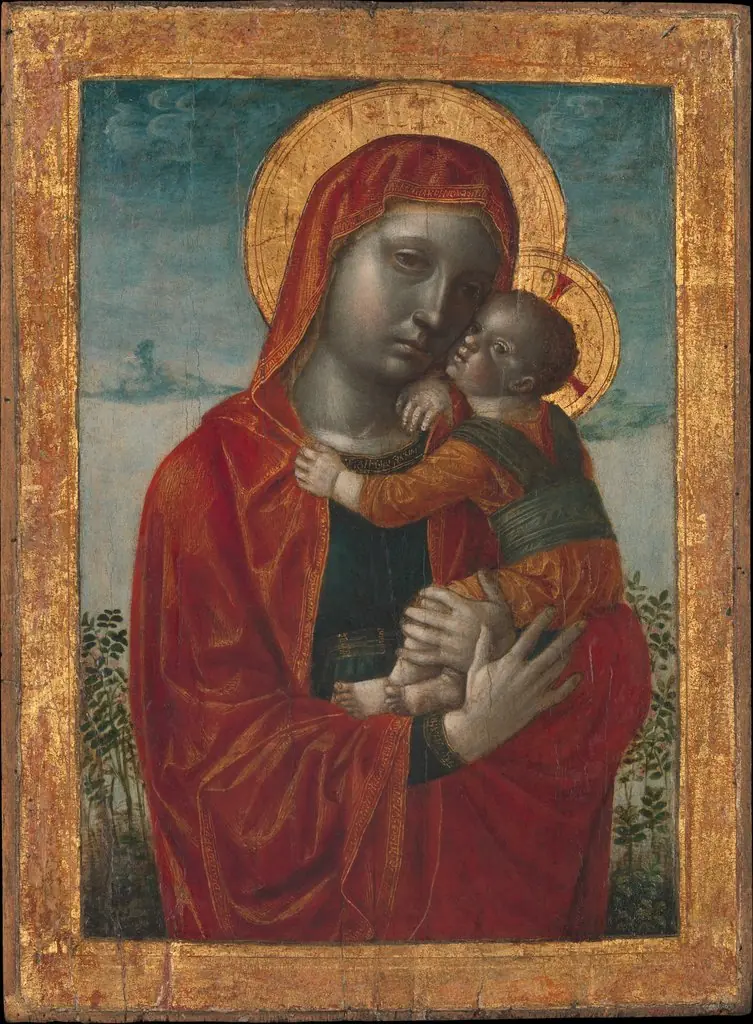
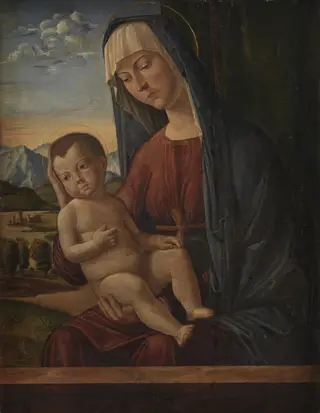
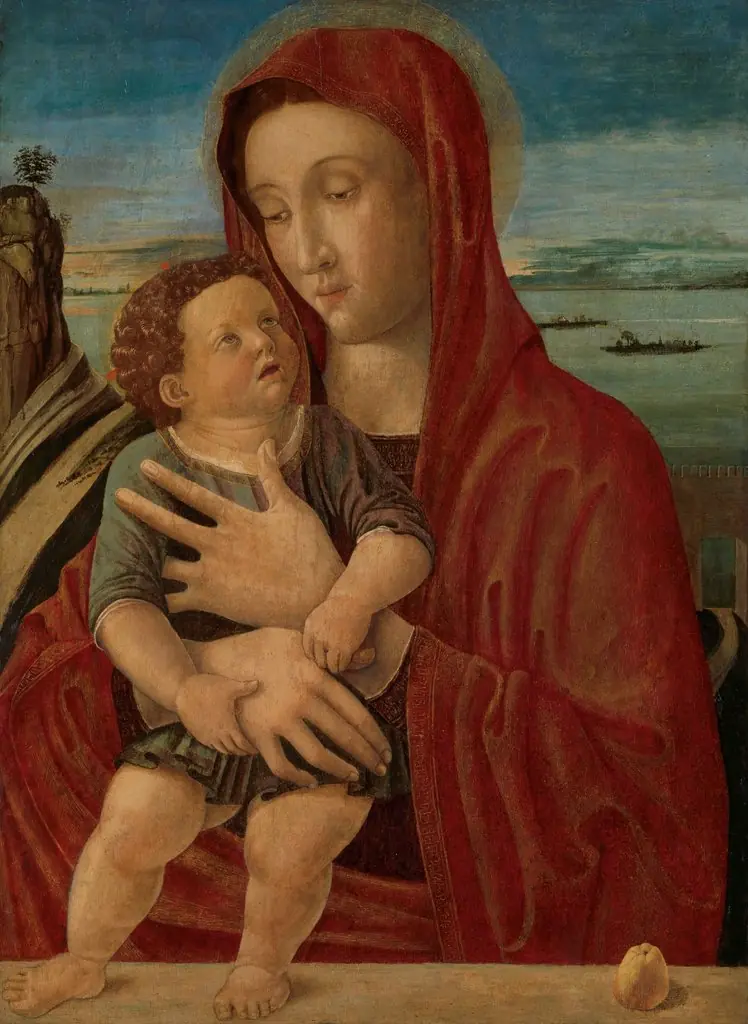
The work shows the Virgin Mary gently holding the infant Christ, a composition that emphasizes maternal tenderness and the human dimension of the divine.
The work shows the Virgin Mary gently holding the infant Christ, a composition that emphasizes maternal tenderness and the human dimension of the divine. In this half‑length devotional image the Madonna is presented with a modest gaze and clasped hands, underscoring her role as intercessor and protector. The intimate setting, typical of early sixteenth‑century Venetian altarpieces, invites contemplation of the sacred relationship between mother and child.
By portraying the holy pair in a naturalistic space, the painting conveys theological themes of incarnation and redemption, while the surrounding stillness reinforces the sacred mystery.
History & Provenance
Madonna Adoring the Child is a religious painting attributed to Bartolomeo Montagna, executed in 1501. The work, measuring approximately 62.9 × 52.1 cm, portrays the Virgin Mary tenderly holding the infant Christ. It entered the collection of the Metropolitan Museum of Art, where it remains on public view.
The painting’s provenance traces its ownership to the museum’s holdings, with no earlier private owners documented in the available records. Its creation is documented by contemporary attributions to Montagna and confirmed by scholarly catalogues, establishing 1501 as the likely date of execution.
Madonna Adoring the Child by Bartolomeo Montagna, dated 1501, is held in the collection of the Metropolitan Museum of Art. The work measures 62.9 cm in height by 52.1 cm in width. No specific accession number, acquisition details, or exhibition history are documented in the available sources.
Overview
Bartolomeo Montagna's Madonna Adoring the Child, painted in 1501, exemplifies a religious theme prevalent in the Venetian Renaissance. This oil painting depicts the Virgin Mary with the infant Jesus, a frequent subject for Montagna, an Italian artist primarily active in Vicenza. His works often feature figures rendered with gentle contours set within detailed architectural environments, reflecting the artistic trends of his era. The piece is part of The Metropolitan Museum of Art's collection.
Technique & Style
Montagna's characteristic approach is evident in the softly modeled forms of the figures, a technique that lends them a lifelike quality. The artist employs chiaroscuro, a method of contrasting light and shadow, to define the contours and expressions of Mary and Jesus, creating depth and emotional resonance. This handling of light, along with the detailed, often marble-like architectural elements frequently found in his Madonnas, suggests an influence from artists like Giovanni Bellini, with whom Montagna may have studied around 1470.
Own this work as a print
Artist & collection

Artist
Bartolomeo (or Bartolommeo) Montagna (UK: , US: , Italian: ; 1450?– 11 October 1523) was an Italian Renaissance painter who mainly worked in Vicenza.