Artwork
Maria Magdalena
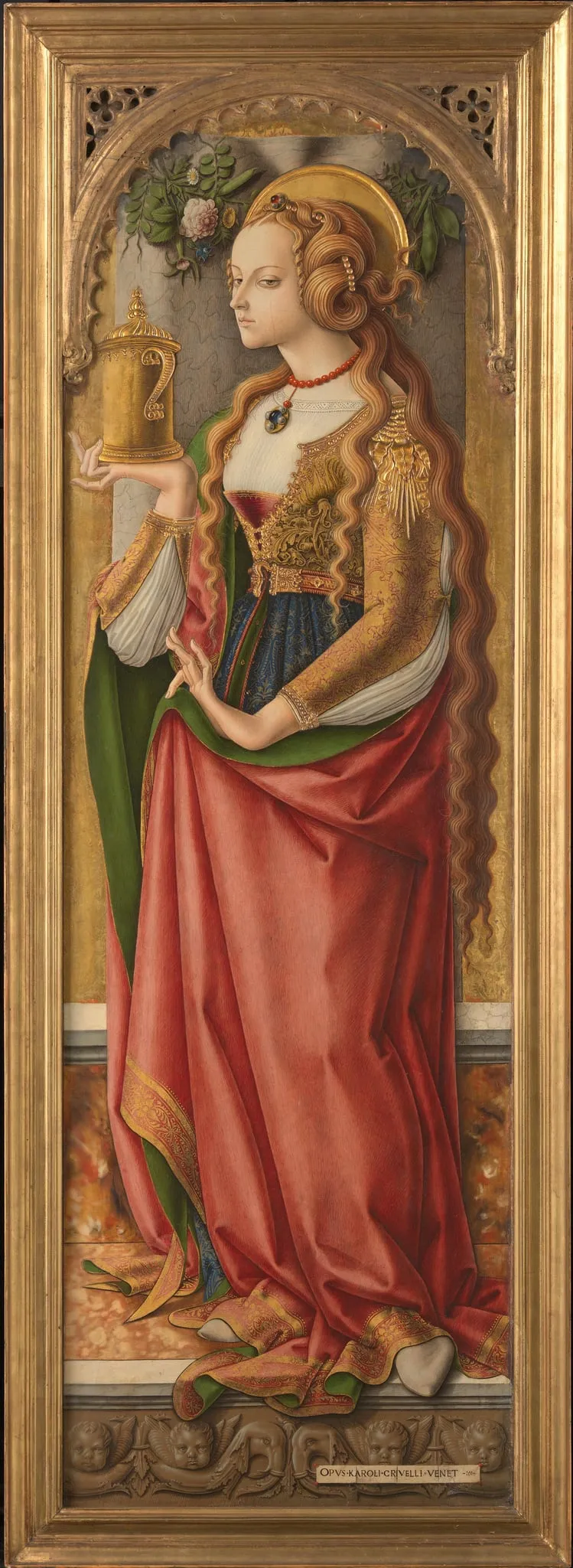
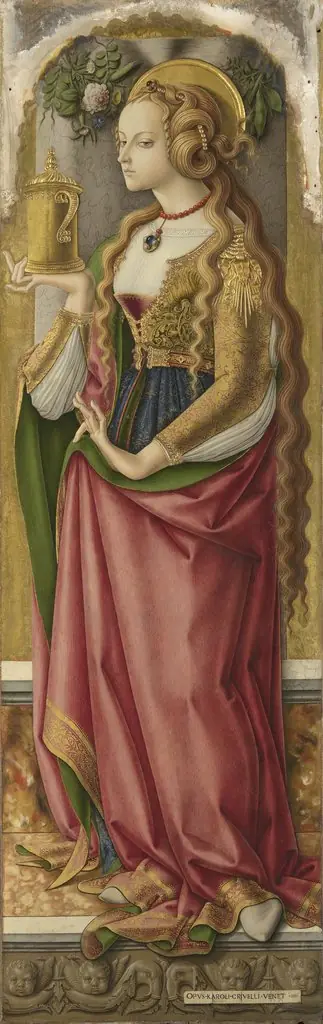
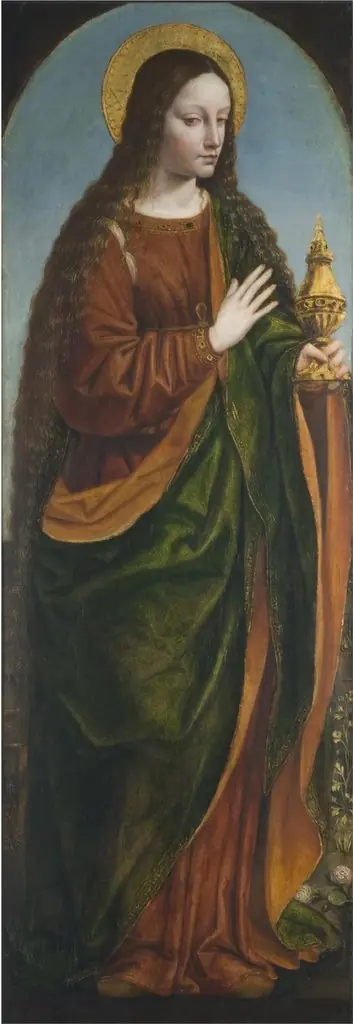
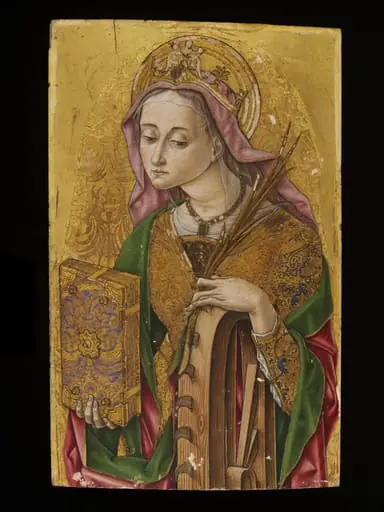
Maria Magdalena is an unspecified painting by the Gothic painting artist Carlo Crivelli. It dates from 1480 and is held in the collection of the Rijksmuseum.
About this work
Technique & Style
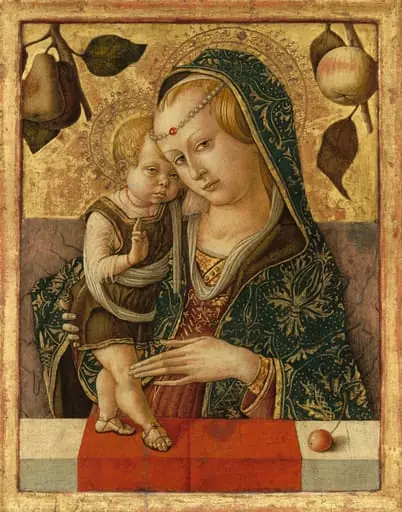
Maria Magdalena is painted in tempera on a rigid wooden panel, consistent with Crivelli’s lifelong medium choice despite the mid-Quattrocento shift toward oil.
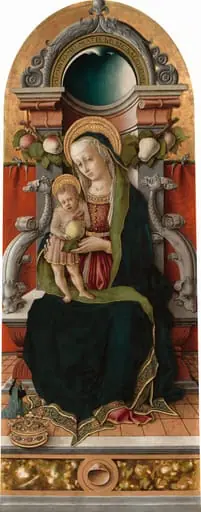
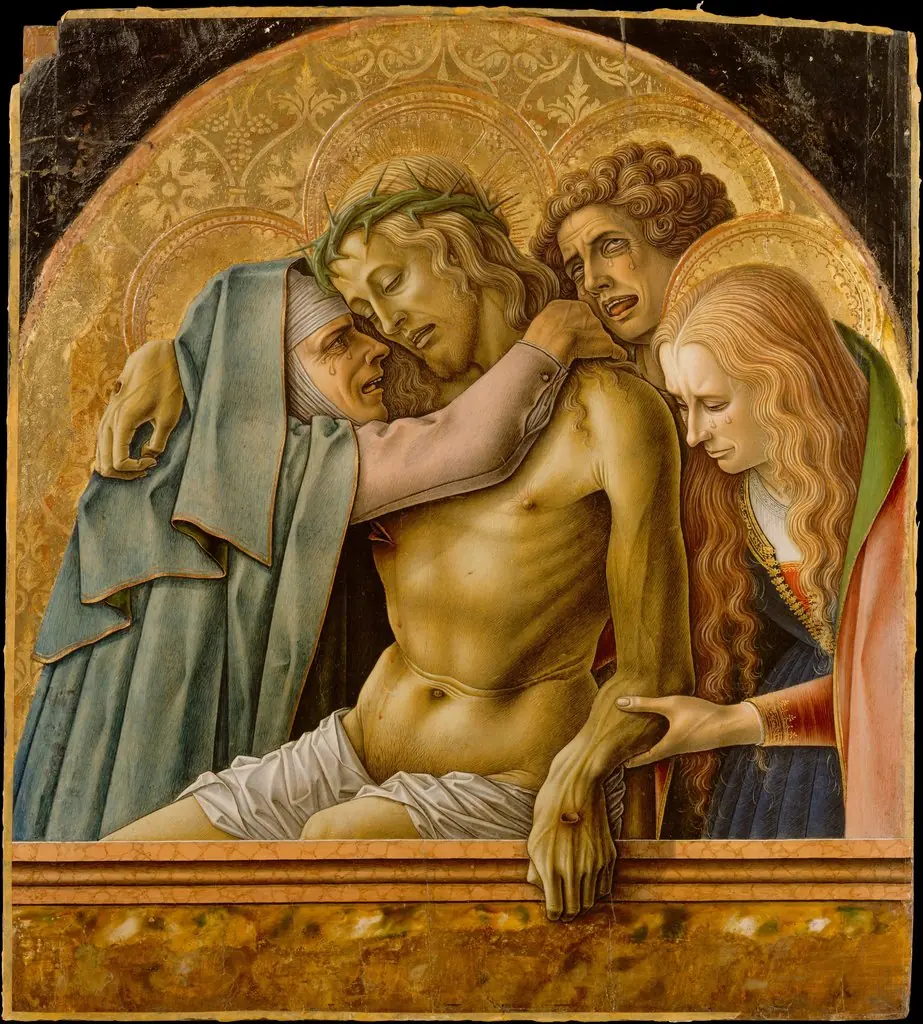
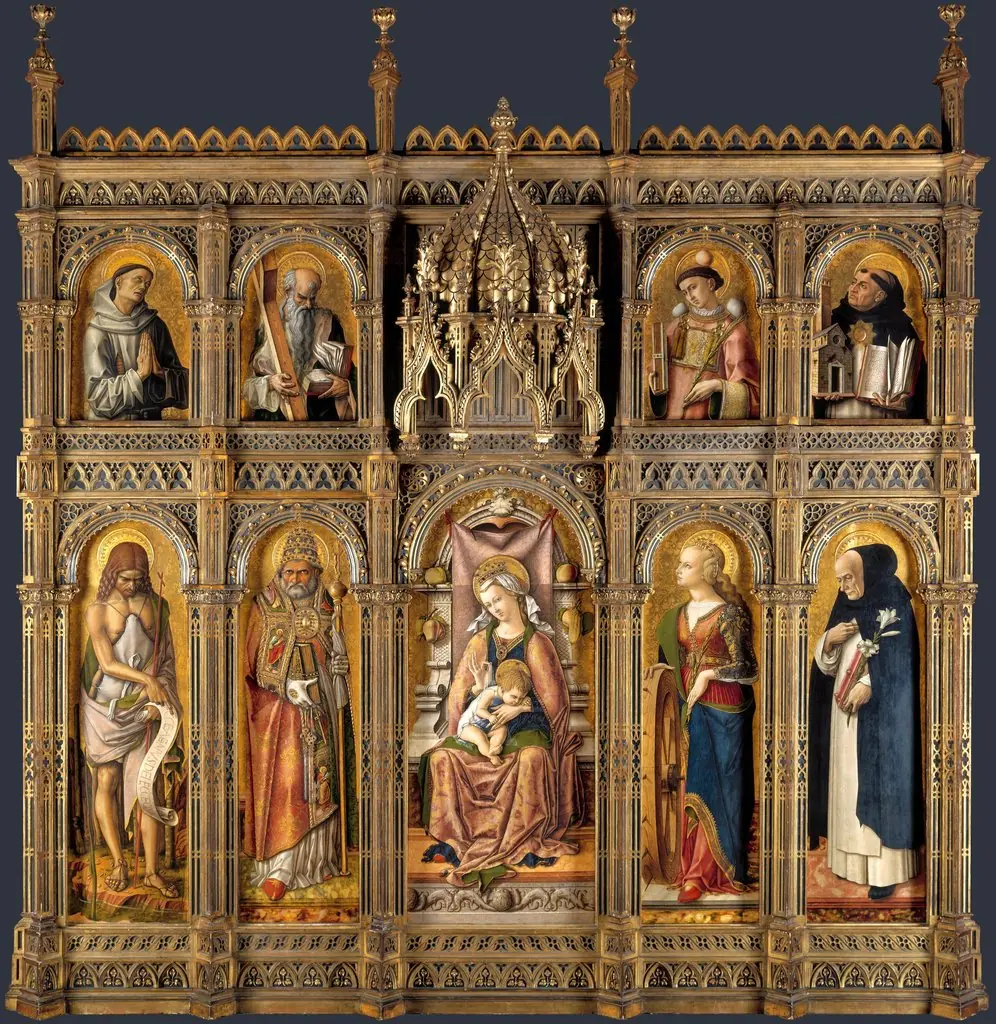
Maria Magdalena is painted in tempera on a rigid wooden panel, consistent with Crivelli’s lifelong medium choice despite the mid-Quattrocento shift toward oil. The composition is organized by a sharp, linear delineation that flattens the figure into crisp contours, a hallmark of his Gothic-inflected style. Crivelli renders the Magdalene’s drapery with dense folds and jewel-like accents, while the gilded background, punched with decorative motifs, anchors the image in a jewel-like, almost architectural plane. Vertical emphasis is balanced by a shallow, patterned landscape that recedes through stacked bands of foliage and architecture, evoking the decorative spatiality typical of his Marchigian works.
Context
Carlo Crivelli’s Maria Magdalena (c. 1480) sits within a late Gothic decorative idiom that the artist sustained in the Marche region, where he worked after leaving Venice and Padua. His reputation was eclipsed soon after his death, notably omitted by Vasari, and later critics often dismissed his jewel-like surfaces and gilded punchwork as provincial or grotesque. A revival in late-nineteenth-century Britain, led by figures such as Edward Burne-Jones, reframed Crivelli as a preciosity-driven precursor to High Victorian taste. Contemporary reassessments align the panel’s hyper-detailed naturalism and trompe-l’œil effects with the International Gothic tradition, positioning it as a deliberate alternative to the soft modeling and atmospheric space favored by Venetian contemporaries like Giovanni Bellini.
Legacy
After Crivelli’s death around 1495, his work fell into obscurity; Giorgio Vasari omitted him from the 1550 and 1568 editions of *Lives of the Most Excellent Painters, Sculptors, and Architects*, reflecting the Florentine bias against his Late Gothic manner. A revival began in the 19th century when Pre-Raphaelite artists, notably Edward Burne-Jones, praised his jewel-like surfaces, gilded backgrounds, and intricate detail. Interest waned after the movement’s decline, but a modern resurgence followed the National Gallery, London’s reinstallation of Crivelli’s works, which renewed scholarly and public attention.
In 1992, Susan Sontag cited Crivelli’s paintings in *Notes on "Camp"*, praising their trompe-l’œil insects, gilded textures, and meticulous masonry cracks as exemplars of camp aesthetics. Contemporary reassessments emphasize his singular synthesis of International Gothic decoration with Renaissance linear precision, securing his place as a distinctive voice outside mainstream Florentine developments.
Artist & collection
Artist
Carlo Crivelli (c. 1430 – c. 1495) was an Italian Renaissance painter of conservative Late Gothic decorative sensibility, who spent his early years in the Veneto, where he absorbed influences from the Vivarini,…