Artwork
The Miraculous Draught of Fishes
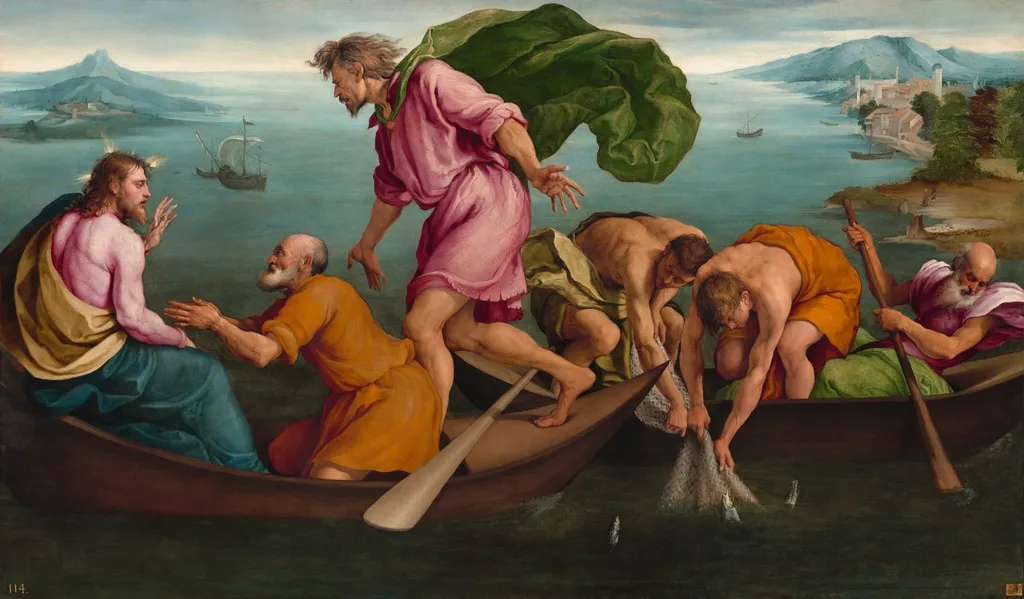
The Miraculous Draught of Fishes is an oil painting by the Early Baroque Italian artist Jacopo Bassano. It dates from 1545 and is held in the collection of the National Gallery of Art.
About this work
Subject & Meaning
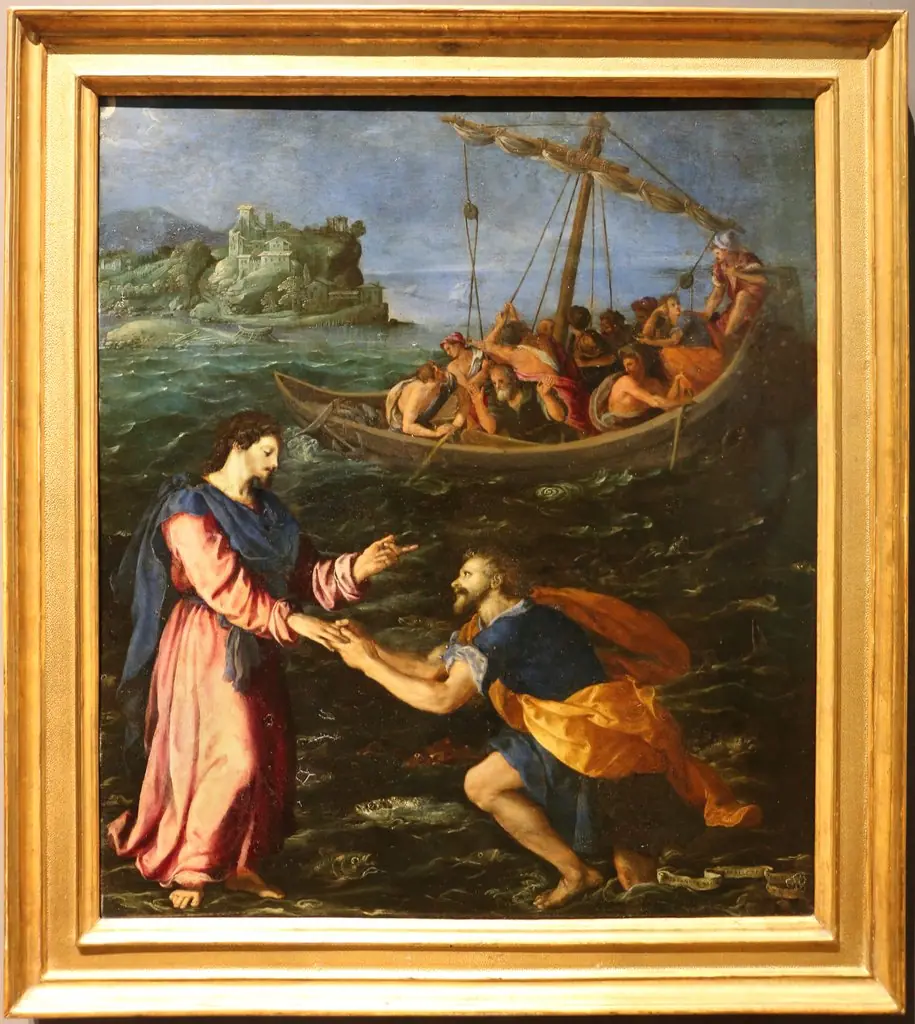
The painting depicts the Miraculous Draught of Fishes, a New Testament episode in which the resurrected Christ appears to his disciples on the Sea of Galilee and directs them to a miraculous catch. As a religious work, the scene carries standard Christian iconography: the boat, the nets overflowing with fish, and the figure of Christ all serve as recognizable symbols of divine power and the calling of the apostles to be "fishers of men." The subject emphasizes themes of faith, revelation, and the abundance of grace, with the miraculous catch traditionally symbolizing the fruitful harvest of souls in Christian teaching.
History & Provenance
Jacopo Bassano's The Miraculous Draught of Fishes was executed in 1545 and commissioned that year by Pietro Pizzamano of Venice.
Jacopo Bassano's The Miraculous Draught of Fishes was executed in 1545 and commissioned that year by Pietro Pizzamano of Venice. The painting entered a private collection in Rome before moving to a private collection in London by 1989. It was sold in 1997 through the Matthiesen Gallery in London to the National Gallery of Art in Washington, D.C., where it currently resides. The work measures 143.5 cm by 243.7 cm.
Context
The Miraculous Draught of Fishes (1545) exemplifies Jacopo Bassano's religious oeuvre, combining Venetian colorism with narrative vigor. Executed in oil on canvas, the work depicts the biblical miracle of the catch of fish, a subject that allowed Bassano to explore communal labor and divine providence. Originally commissioned by Pietro Pizzamano and later recorded in a private Roman collection, the painting entered the National Gallery of Art, Washington, D.C., via the Matthiesen Gallery in 1997.
Its inclusion in a major American museum underscores scholarly recognition of Bassano's role in bridging High Renaissance naturalism and the genre scenes of the Baroque.
Overview
Jacopo Bassano's 1545 oil on canvas painting, titled The Miraculous Draught of Fishes, captures a pivotal moment from the New Testament. This religious work illustrates the biblical account of Jesus instructing his disciples to cast their nets, resulting in an unexpectedly abundant catch. The composition centers on the figures within a boat, set against a naturalistic backdrop, characteristic of the period's artistic trends.
Technique & Style
This work exemplifies the artistic principles of the Renaissance, a period marked by a renewed focus on naturalism and meticulous observation. Bassano's approach to rendering the figures, their expressions, and the environmental details reflects the era's commitment to realism. The careful depiction of light, shadow, and the human form, along with the detailed background elements, underscores the period's emphasis on creating believable and engaging visual narratives within a sacred context.
Artist & collection

Artist
Jacopo Bassano was an Italian Renaissance painter of the Venetian school. He was born and died in Bassano del Grappa, and took the village as his surname. Having trained in the workshop of his father, Francesco the…