Artwork
Three Soldiers and a Dog
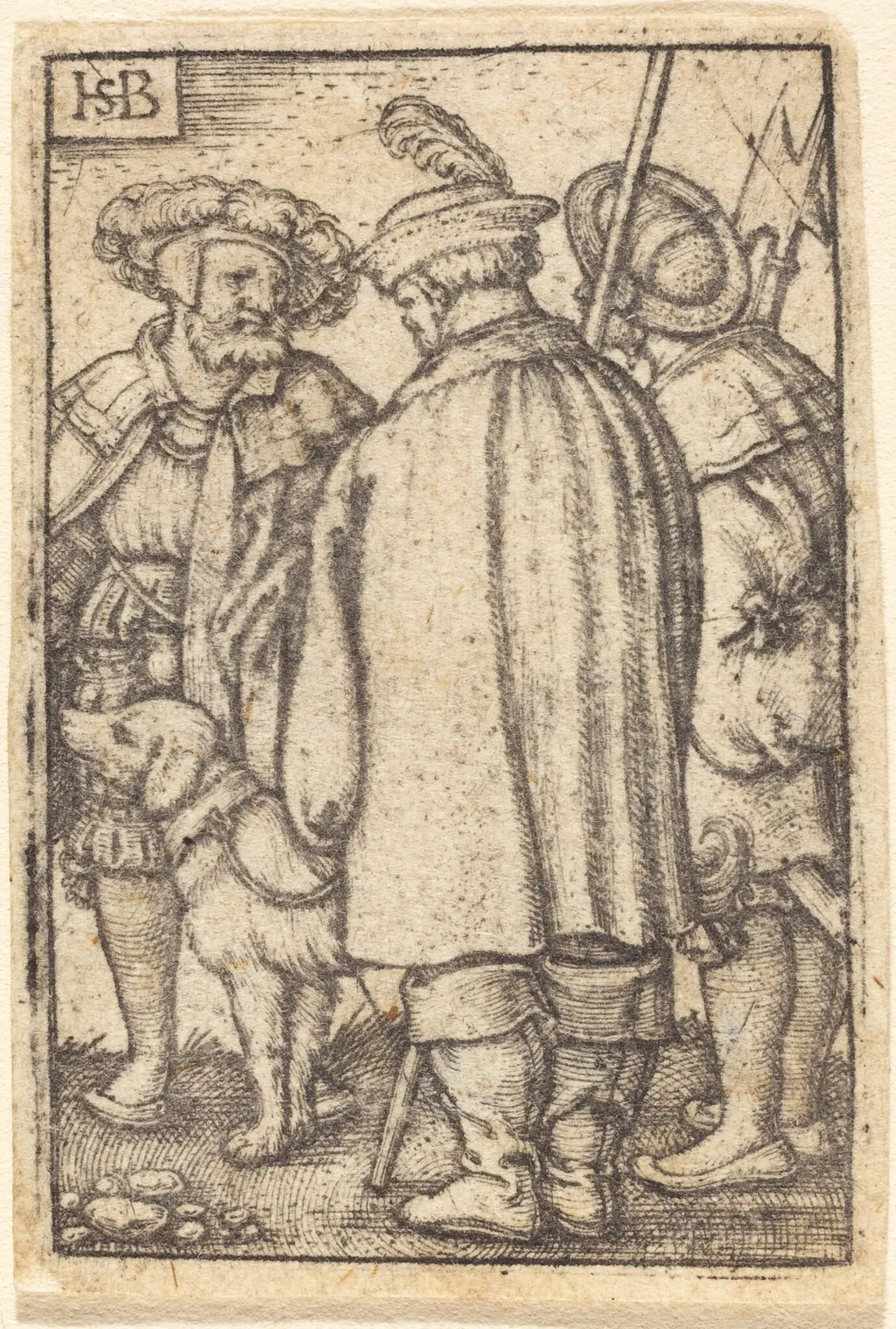
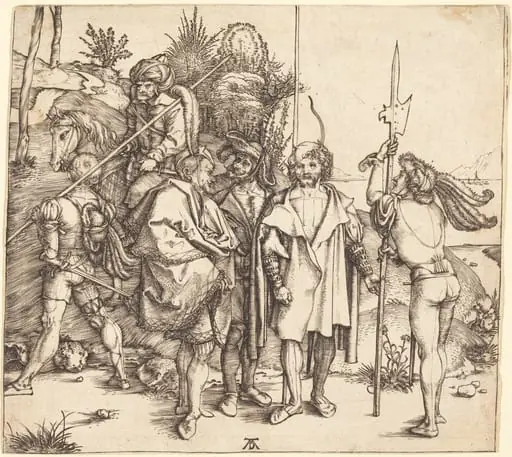
Three Soldiers and a Dog is an ink print by the Renaissance artist Sebald Beham. It dates from 1544 and is held in the collection of the National Gallery of Art.
About this work
Overview
Sebald Beham, a Nuremberg-born printmaker active in the sixteenth century, executed Three Soldiers and a Dog as an engraving circa 1544. Part of the so-called Little Masters, Beham specialized in small-scale, finely detailed prints. His output included hundreds of engravings, etchings, and woodcuts, many produced after relocating to Frankfurt later in his career.
Subject & Meaning
Each soldier is equipped with period-specific weaponry and helmets, while the dog rears on its hind legs, directing attention toward the group.
The composition centers on three armored figures and a small dog. Each soldier is equipped with period-specific weaponry and helmets, while the dog rears on its hind legs, directing attention toward the group. Though the scene lacks explicit narrative, the juxtaposition of military figures with a domesticated animal may suggest themes of loyalty, vigilance, or the intersection of martial and civilian life.
Technique & Style
Beham’s engraving demonstrates precise linework, capturing textures from polished armor to fur. Minute details, rivets on breastplates, individual hairs on the dog, reveal his technical mastery. The dense cross-hatching and controlled burin strokes create tonal depth, a hallmark of the Little Masters’ approach to printmaking, which favored meticulous craftsmanship over expansive scale.
History & Provenance
Produced in Frankfurt during the mid-1540s, the print reflects Beham’s mature period. Like much of his graphic work, it circulated among collectors and connoisseurs of Northern Renaissance prints. Its survival in multiple impressions attests to its popularity, though specific early owners remain unrecorded. Today, examples reside in major print rooms and museum collections.
Context
The engraving emerges from a period marked by military conflict in Europe, yet it avoids overt political or religious symbolism. Instead, Beham’s focus on everyday subjects, mercenaries, peasants, or animals, aligns with the Little Masters’ preference for genre-like scenes. Such works catered to a growing market for affordable, refined prints among urban elites and educated patrons.
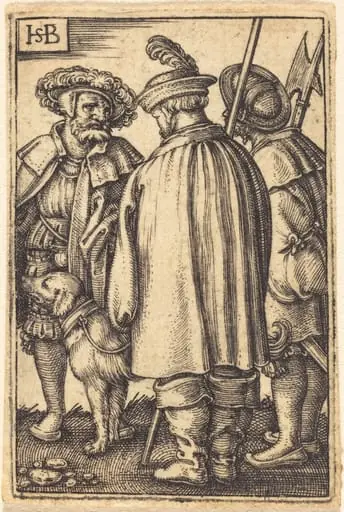
Own this work as a print
Artist & collection
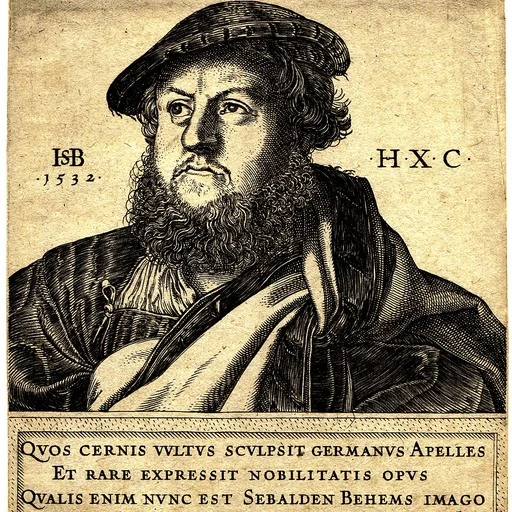
Artist
Sebald Beham (1500–1550) was a German painter and printmaker, mainly known for his very small engravings.