Artwork
Sixteen East Gay Street
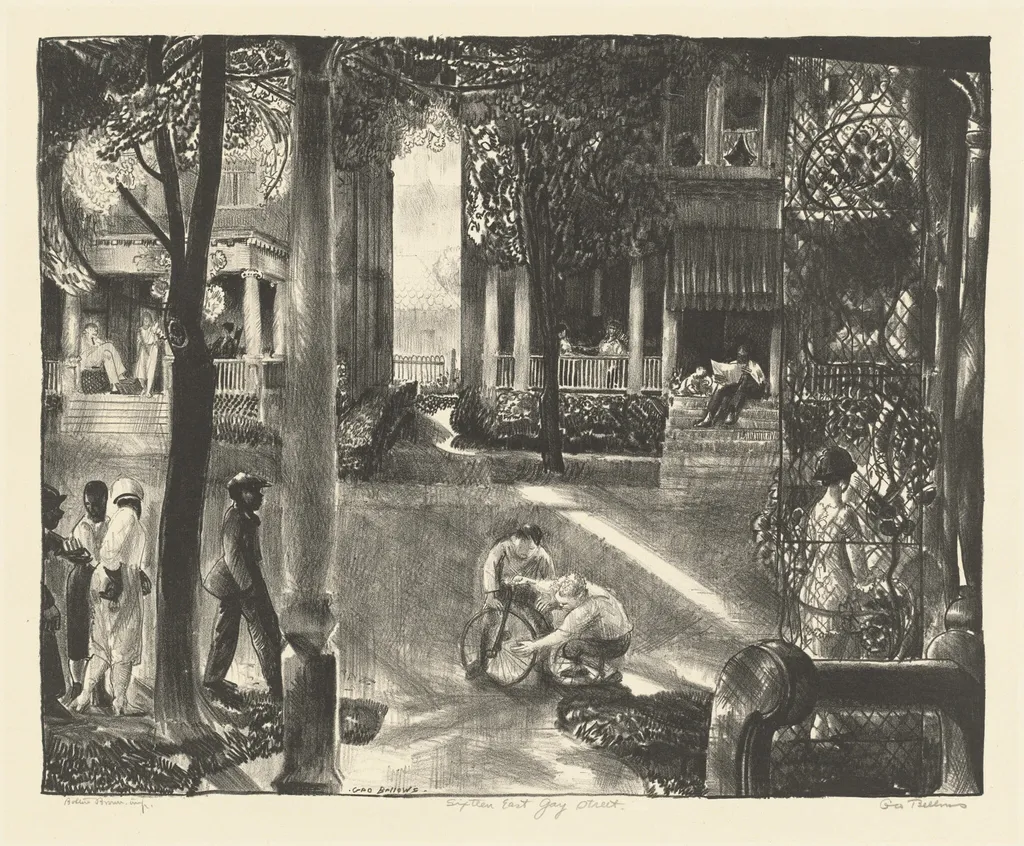
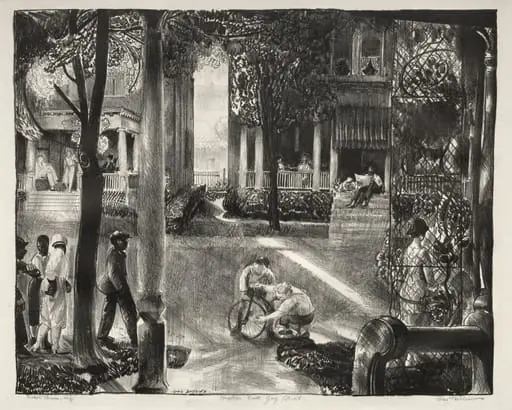
Sixteen East Gay Street is an ink print by George Bellows. It dates from 1924 and is held in the collection of the National Gallery of Art.
- Inscription
- Inscribed:lower left in graphite: Bolton Brown.imp.; lower center in graphite: Sixteen East Gay Street.; lower right in graphite: Geo Bellows; lower center in plate: .Geo Bellows.
About this work
Overview
Bellows employs bold, expressive lines and stark contrasts between light and shadow to define the architectural forms and the quiet activity of the figures.
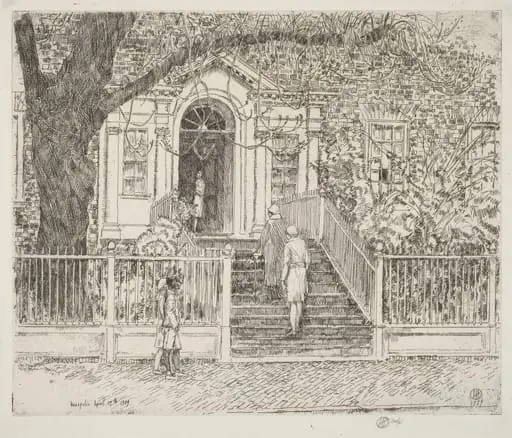
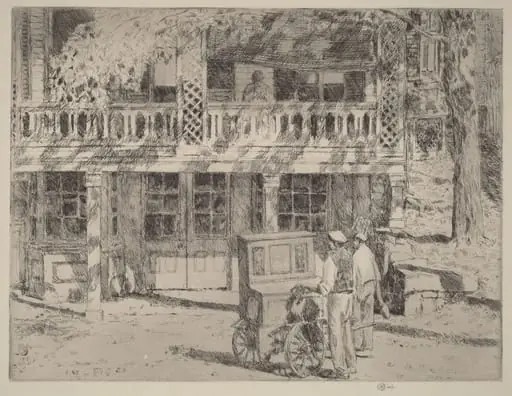
Sixteen East Gay Street is a 1924 lithograph by George Bellows, a central figure in the Ashcan School and American Realism. Executed in black ink on paper, the work captures a mundane urban scene on a residential street corner. The composition centers on a man seated on the sidewalk, attending to a bicycle, while another figure leans casually against a nearby building facade.
In the background, a porch hosts two figures and a resting dog, adding depth and a sense of domestic stillness to the streetscape. Bellows employs bold, expressive lines and stark contrasts between light and shadow to define the architectural forms and the quiet activity of the figures. Created late in the artist's career, shortly before his death, this print reflects his enduring interest in the rhythms of everyday American life.
Unlike his earlier, more dynamic depictions of sports or crowded city scenes, Sixteen East Gay Street demonstrates a contemplative approach to the ordinary, utilizing the lithographic medium to achieve a graphic clarity that emphasizes the structural integrity of the environment and the unposed nature of its inhabitants.
Subject & Meaning
The print depicts a sidewalk where a man works on a bicycle while another individual leans against a building. In the distance, a porch hosts a standing figure, a seated companion, and a dog resting on the steps, together evoking a moment of ordinary, unhurried activity within the city’s fabric.
Technique & Style
Bellows employs the lithographic process to achieve strong, decisive lines and pronounced chiaroscuro, creating depth without the aid of color. The contrast between dark shadows and illuminated areas emphasizes the architectural forms and the figures’ silhouettes, while the crisp edge of the street‑name inscription anchors the scene.
History & Provenance
Created in 1924, Sixteen East Gay Street is among Bellows’ later prints, produced during a period when he explored urban subjects through printmaking. The work bears the artist’s signature in the lower corner, indicating its authenticity and original authorship.
Context
The lithograph reflects Bellows’ interest in the everyday rhythms of American city life, a theme he pursued in both painting and print. By focusing on a specific address, the piece situates itself within the broader narrative of early twentieth‑century urban experience, highlighting ordinary moments often overlooked in grander historical accounts.
Own this work as a print
Artist & collection
Artist
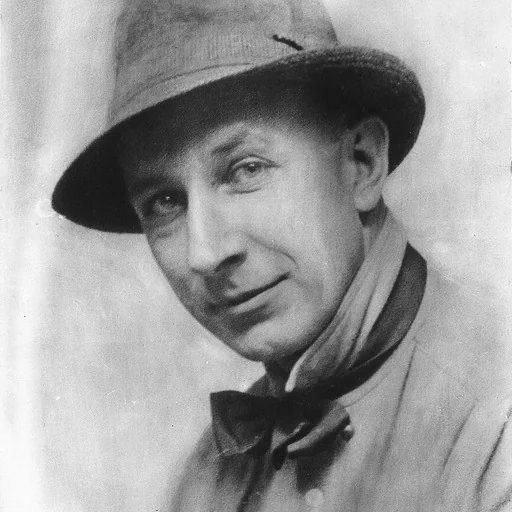
George Wesley Bellows (August 12 or August 19, 1882 – January 8, 1925) was an American realist painter, known for his bold depictions of urban life in New York City.