Artwork
Susurrements, poèsies par Hébert-Milnard
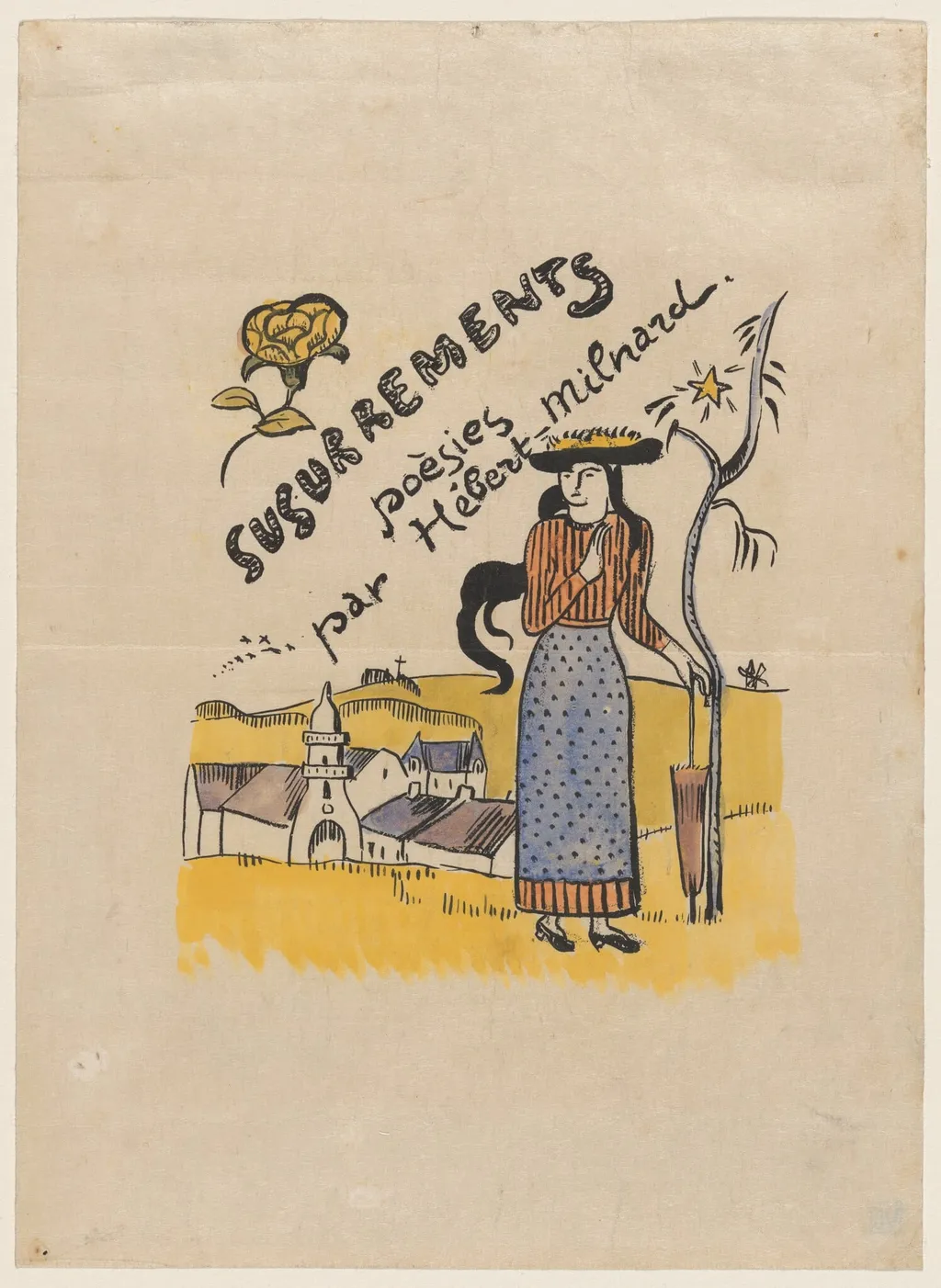
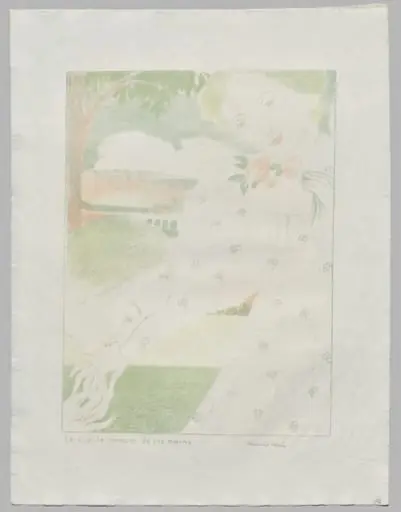
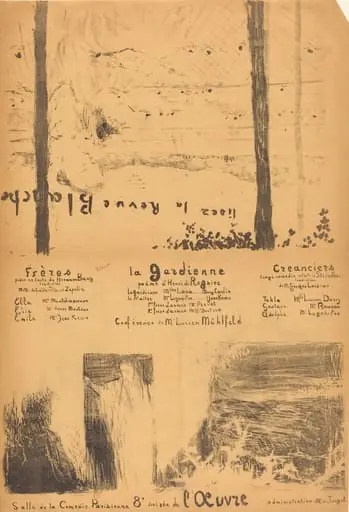
Susurrements, poèsies par Hébert-Milnard is an ink print by the Impressionist artist Émile Bernard. It dates from 1890 and is held in the collection of the National Gallery of Art.
- Inscription
- Inscribed:recto: in matrix: Susurrements / poèsies / par Hébert-Milnard.; verso: none
- Markings
- Marked:recto: none; verso: Virginia & Iris Jackson (Lugt 5734)
About this work
Overview
Created in 1890, Susurrements, poèsies par Hébert-Milnard is a print that reproduces a woodcut and is finished with hand‑applied color on Japanese paper.
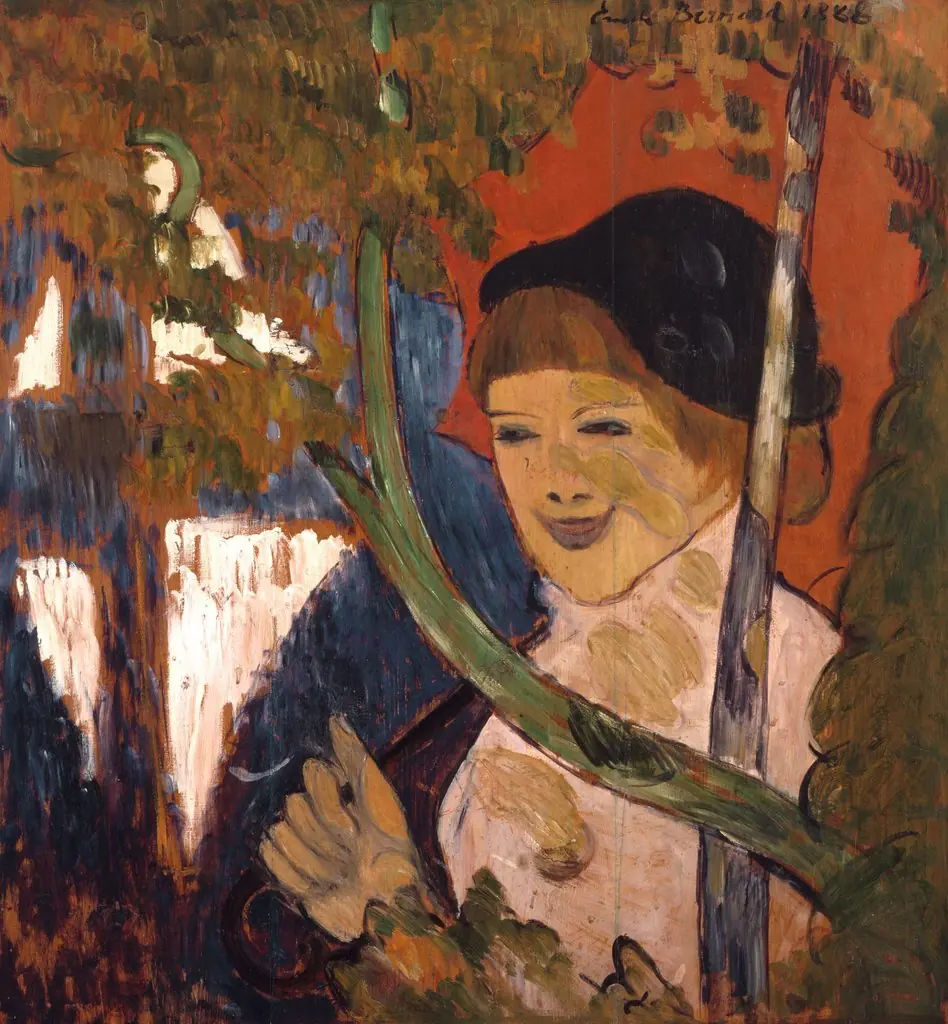
Created in 1890, Susurrements, poèsies par Hébert-Milnard is a print that reproduces a woodcut and is finished with hand‑applied color on Japanese paper. The work presents a solitary woman in a rural landscape, holding a tall plant crowned with a star‑shaped blossom, while a modest village and church rise in the distance. Its palette is restrained, emphasizing muted tones that set the figure apart from the soft background.
Subject & Meaning
The composition centers on a lone female figure dressed in a blue, polka‑dot gown and a black hat edged with yellow, suggesting a moment of quiet contemplation amid everyday surroundings. The plant she grasps, topped with a stylized flower, may symbolize a connection between humanity and nature, while the distant village hints at a simple, perhaps idealized, rural life.
Technique & Style
Bernard employed a photomechanical process to replicate the original woodcut, preserving the characteristic line work and texture of the carved matrix. After printing, he added hand‑coloring on washi, a Japanese paper known for its strength and translucency. The resulting image balances the graphic clarity of the woodcut with subtle, muted hues, reflecting influences from Cloisonnism’s bold outlines and Synthetism’s flat color fields.
History & Provenance
Émile Henri Bernard, a French painter linked to the post‑Impressionist circles of Van Gogh and Gauguin, produced this piece during a period when he explored printmaking alongside painting. The work was likely circulated among his contemporaries and collectors interested in avant‑garde reproductions. Its survival on Japanese paper indicates careful handling, and it remains documented as part of Bernard’s broader output beyond his canvases.
Context
The late nineteenth century saw a surge of interest in Japanese materials and aesthetics among European artists, a trend known as Japonisme. Bernard’s choice of washi and the woodcut medium aligns with this fascination, while his association with Cloisonnism and Synthetism situates the print within movements that emphasized decorative surface treatment and symbolic content over naturalistic detail.
Own this work as a print
Artist & collection
Artist
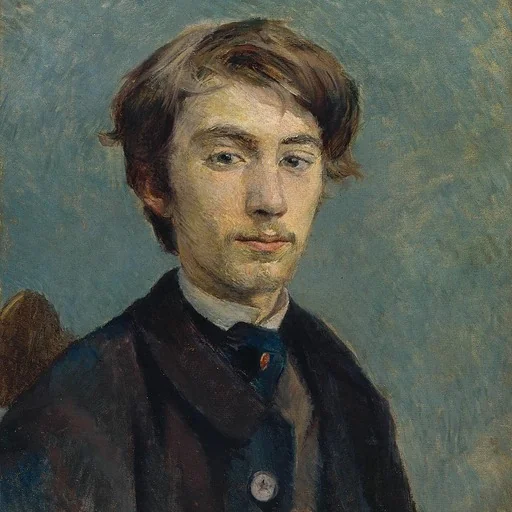
Émile Henri Bernard (French pronunciation:; 28 April 1868 – 16 April 1941) was a French Post-Impressionist painter and writer, who had artistic friendships with Vincent van Gogh, Paul Gauguin and Eugène Boch, and at a later time, Paul…