Artwork
The Martyrdom of Saint Stephen
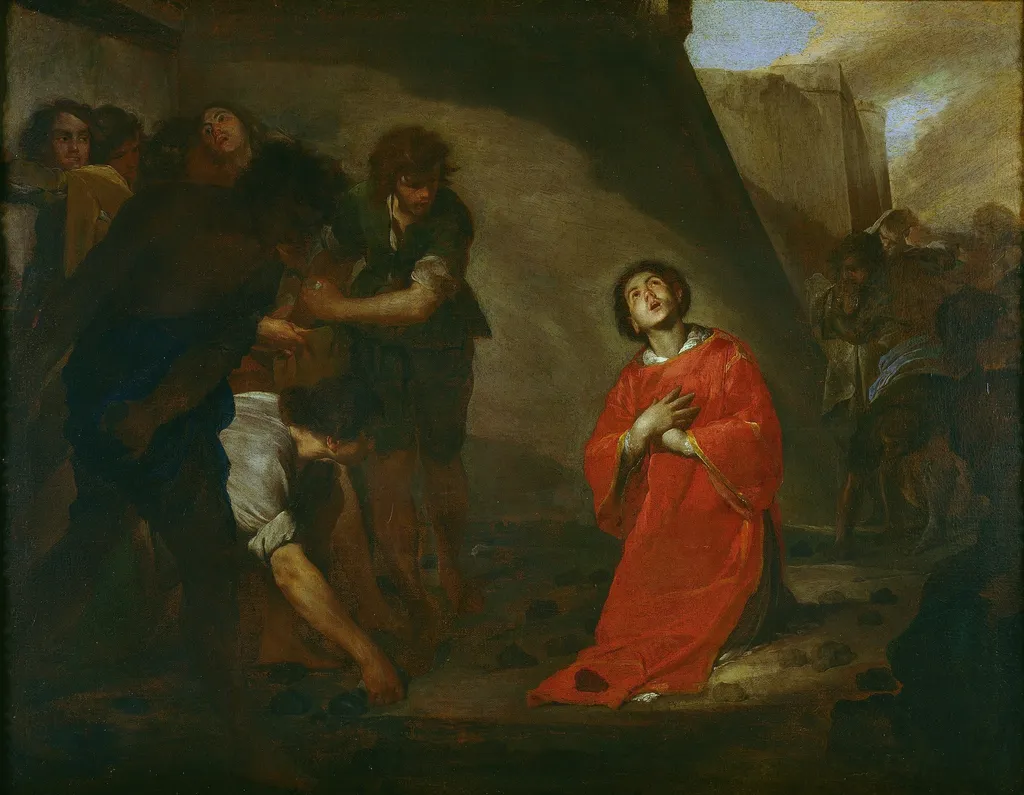
The Martyrdom of Saint Stephen is an oil painting by the Early Baroque Italian artist Bernardo Cavallino. It dates from 1645 and is held in the collection of the Museo del Prado.
About this work
Subject & Meaning
The scene illustrates Stephen, identified as one of the seven deacons, kneeling alone before a wall while being pelted with stones by unseen executioners.
Bernardo Cavallino's painting depicts the stoning of Saint Stephen, the first Christian martyr, based on the narrative in the Acts of the Apostles. The scene illustrates Stephen, identified as one of the seven deacons, kneeling alone before a wall while being pelted with stones by unseen executioners. He wears a vivid red deacon's dalmatic and is shown with hands crossed over his chest, his head bowed yet his face turned upward toward the heavens, intensely illuminated.
This iconography captures the moment of his prayer for God not to hold the sin of his executioners against them, a detail from the biblical account where Saul of Tarsus was present as a witness. The work represents a serene and emotional sacred instant, emphasizing the spiritual transcendence of the deacon-martyr during his violent death.
Technique & Style
The painting is an oil on canvas work measuring 70 cm by 90 cm, created around 1645. It depicts Saint Stephen in the moment of martyrdom, his face illuminated as he gazes toward heaven while being stoned, with onlookers positioned on either side. The composition emphasizes a serene yet poignant expression, reflecting the sacred narrative of the first Christian martyr.
The artwork is housed in the Museo del Prado in Madrid, where it has been part of the collection since 1989 following its donation by the Fundación Amigos del Museo del Prado.
History & Provenance
The Martyrdom of Saint Stephen was painted by Bernardo Cavallino in 1645 as an oil on canvas work measuring 70 cm by 90 cm. It entered a private collection in Birmingham around 1950, was acquired by Xavier de Salas Bosch in 1954 and later authenticated and catalogued by Alfonso Pérez Sánchez, who placed its execution between 1645 and 1650. In 1989 the painting was donated to the Museo del Prado by the Fundación Amigos del Museo del Prado. The work has been exhibited in Madrid in 1970 and 1985.
The Martyrdom of Saint Stephen is held in the Museo del Prado in Madrid. It entered a private collection in Birmingham around 1950 and was acquired in 1954 by Xavier de Salas Bosch, later donated to the museum by the Fundación Amigos del Museo del Prado in 1989. The work was first attributed to Bernardo Cavallino and published by Alfonso Pérez Sánchez, who dated it to 1645–1650.
It has been exhibited in Madrid in 1970 and 1985. The painting measures 70 cm by 90 cm and was created in 1645.
Context
Bernardo Cavallino's painting remained in a private collection in Birmingham, United Kingdom, around 1950. In 1954, Xavier de Salas Bosch acquired the work and attributed it to Cavallino. Alfonso E. Pérez Sánchez subsequently published the painting for the first time, establishing its chronological placement between 1645 and 1650, a dating that has not faced subsequent scholarly disagreement. Pérez Sánchez further analyzed the artwork in a dedicated 1989 study.
The painting is regarded as one of the artist's most beautiful inventions, offering a serene, emotive, and delicate sacred snapshot of the first Christian martyr. It illustrates a deeply traditional Christian iconographic subject based on the Acts of the Apostles, depicting the saint in a red deacon's dalmatic, illuminated while kneeling in prayer amid his executioners' stones. Alongside Saint Lawrence, Saint Stephen belongs to the group of martyred deacon saints.
Legacy
Bernardo Cavallino's The Martyrdom of Saint Stephen has been recognized as one of the artist's most beautiful inventions, noted for its emotional serenity and delicate execution. The work's attribution to Cavallino was established by Xavier de Salas Bosch in 1954, with Alfonso Pérez Sánchez subsequently refining its chronology to the period between 1645 and 1650. Since its acquisition by the Museo del Prado in 1989 via a donation from the Foundation Friends of the Museo del Prado, the painting has been featured in significant exhibitions, including those held in Madrid in 1970 and 1985. These scholarly publications and museum presentations have solidified its standing within the canon of 17th-century Neapolitan painting.
Overview
Created in 1645 by Neapolitan artist Bernardo Cavallino, this oil painting portrays the martyrdom of Saint Stephen. Executed during the early Baroque period, the work is part of the Prado Museum’s collection. It presents a dramatic moment in which the saint, dressed in a vivid red garment, kneels amid a group of distressed onlookers.
Own this work as a print
Artist & collection
Artist
Bernardo Cavallino (25 August 1616 – 1656) was an Italian painter and draughtsman.

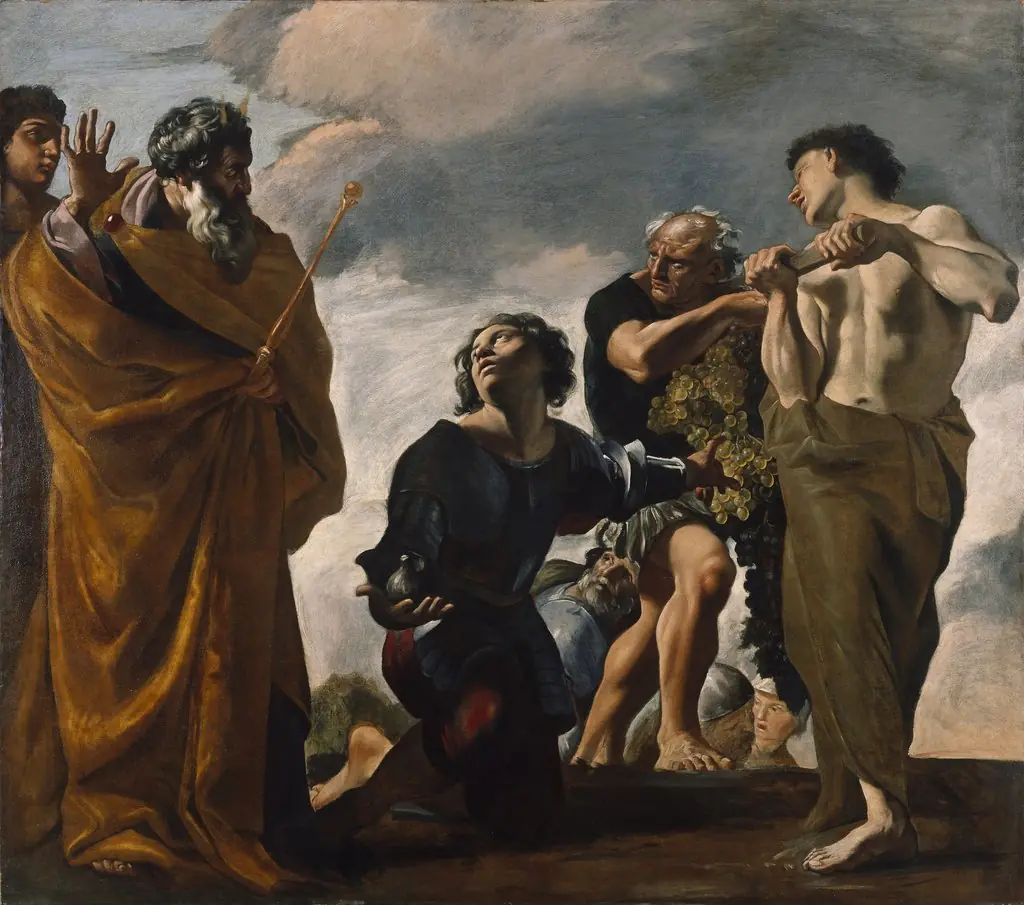 Moses and the Messengers from Canaan
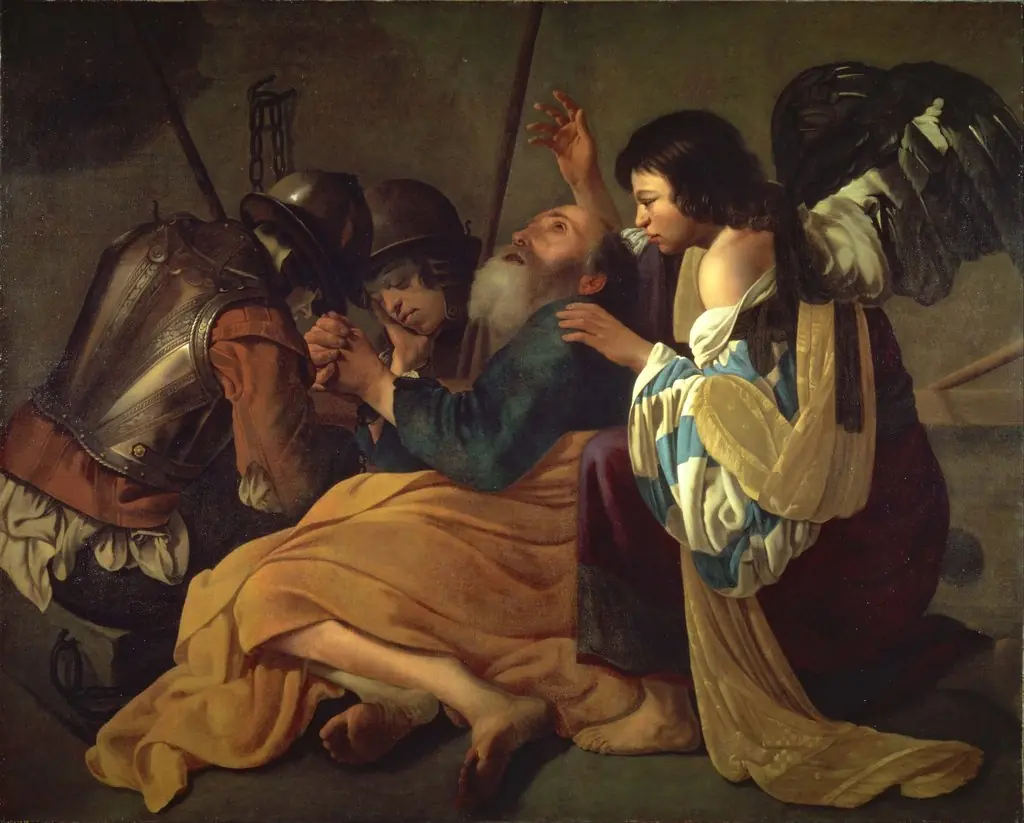 The Liberation of St. Peter
 Massacre of the Innocents
 Saint John the Baptist says goodbye to his Parents
 Christ and the Adulteress
 Christ on the way to Calvary and Saint Veronica
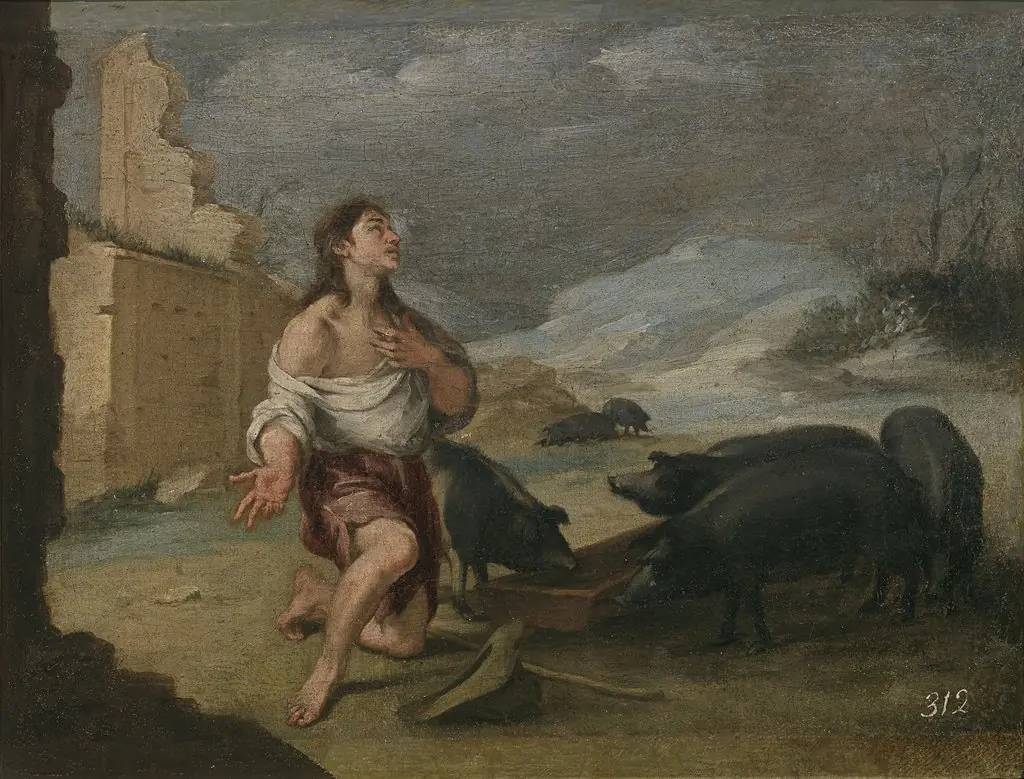 The Prodigal Son among the Pigs
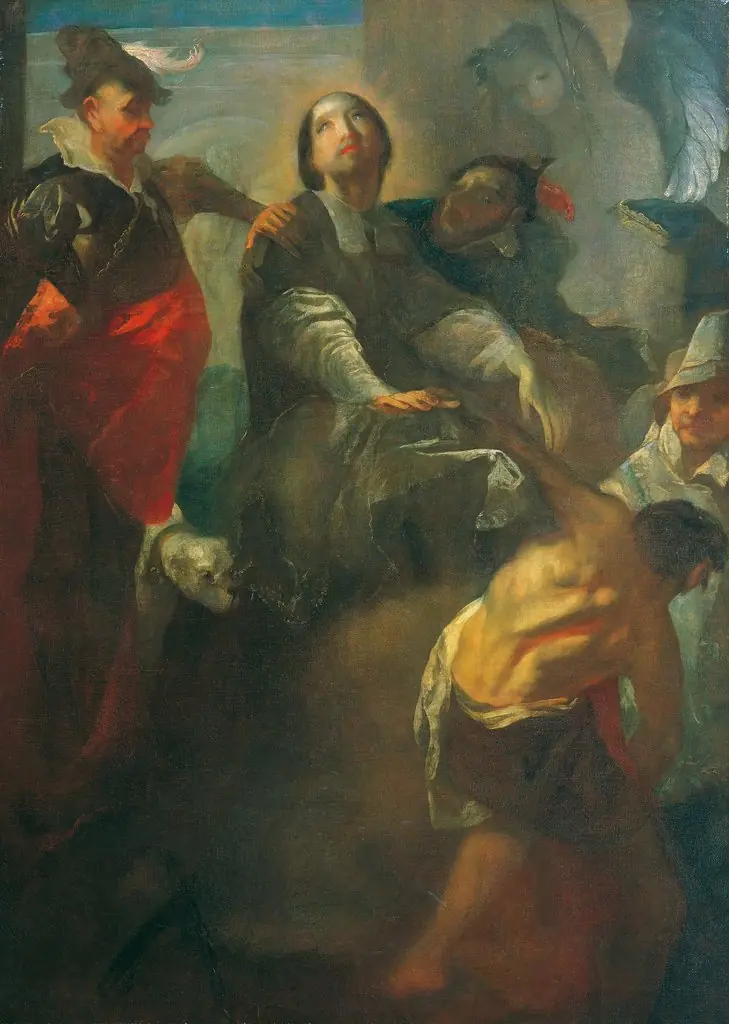 The Capture of St. John of Nepomuk
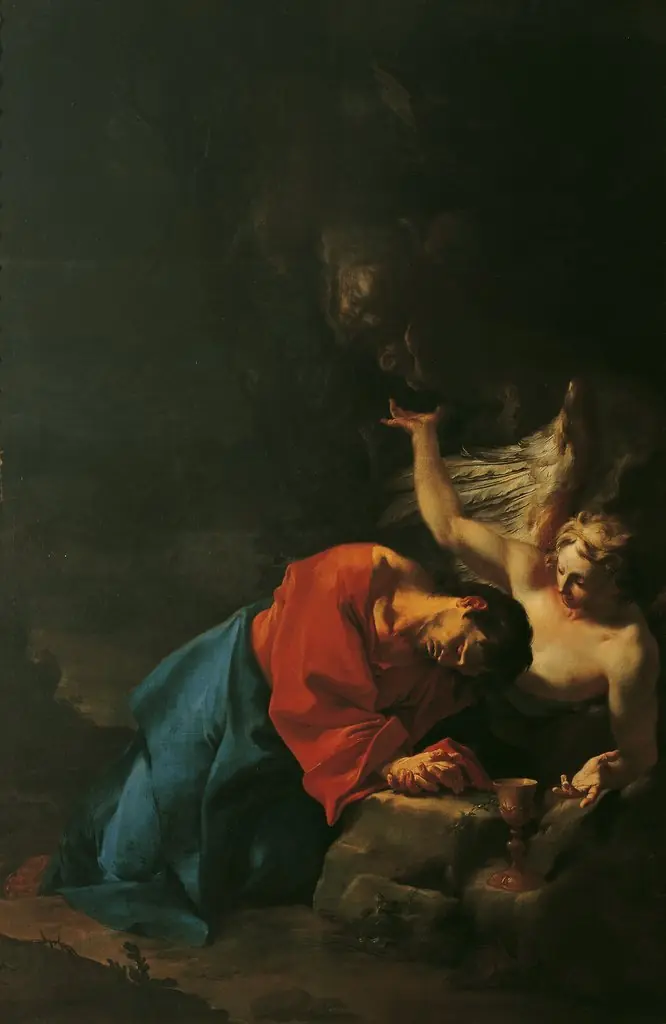 Christ on the Mount of Olives
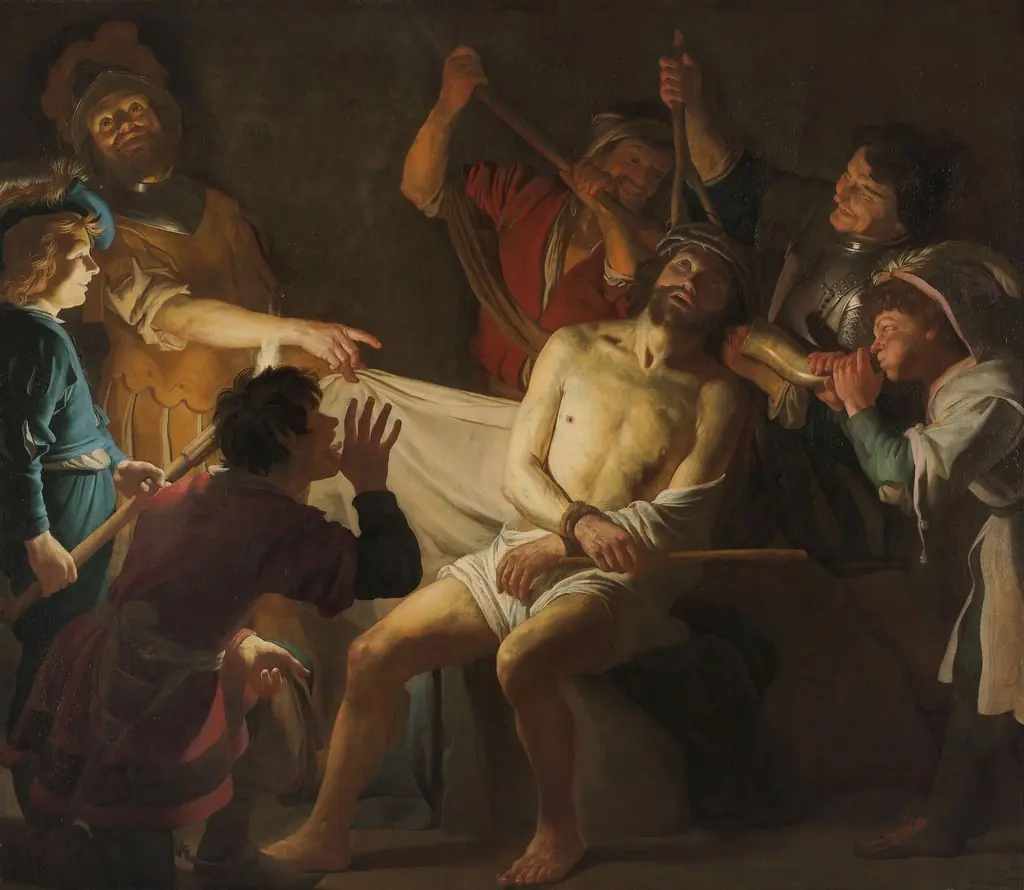 Christ Crowned with Thorns
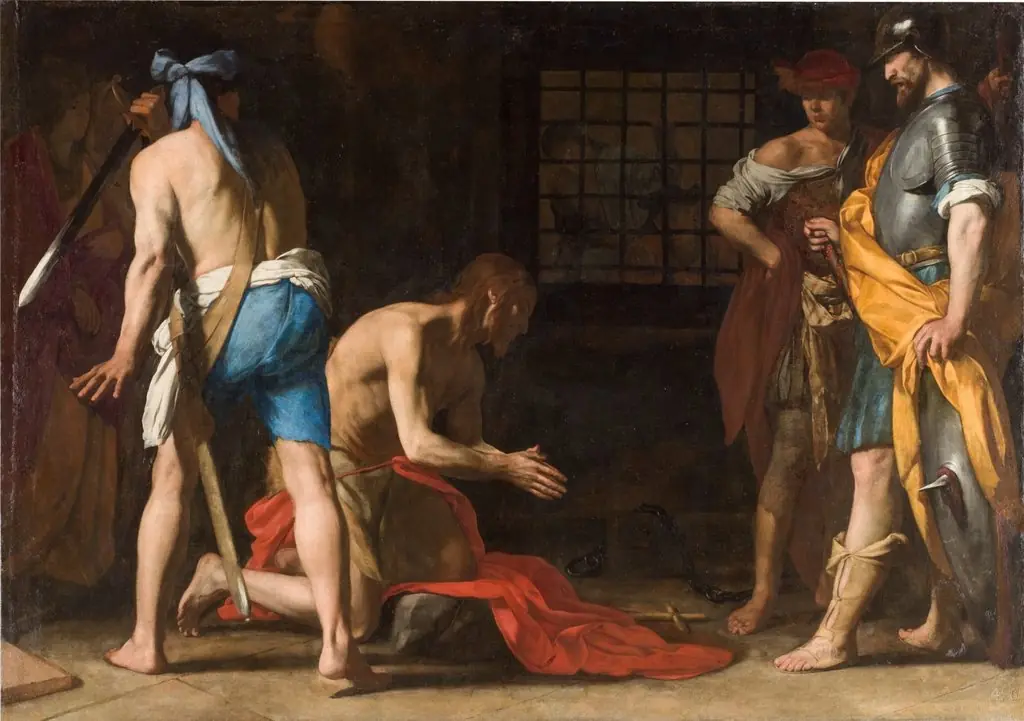 The Beheading of Saint John the Baptist
- The Martyrdom of Saint Stephen