Artwork
The Nativity and the Annunciation to the Shepherds
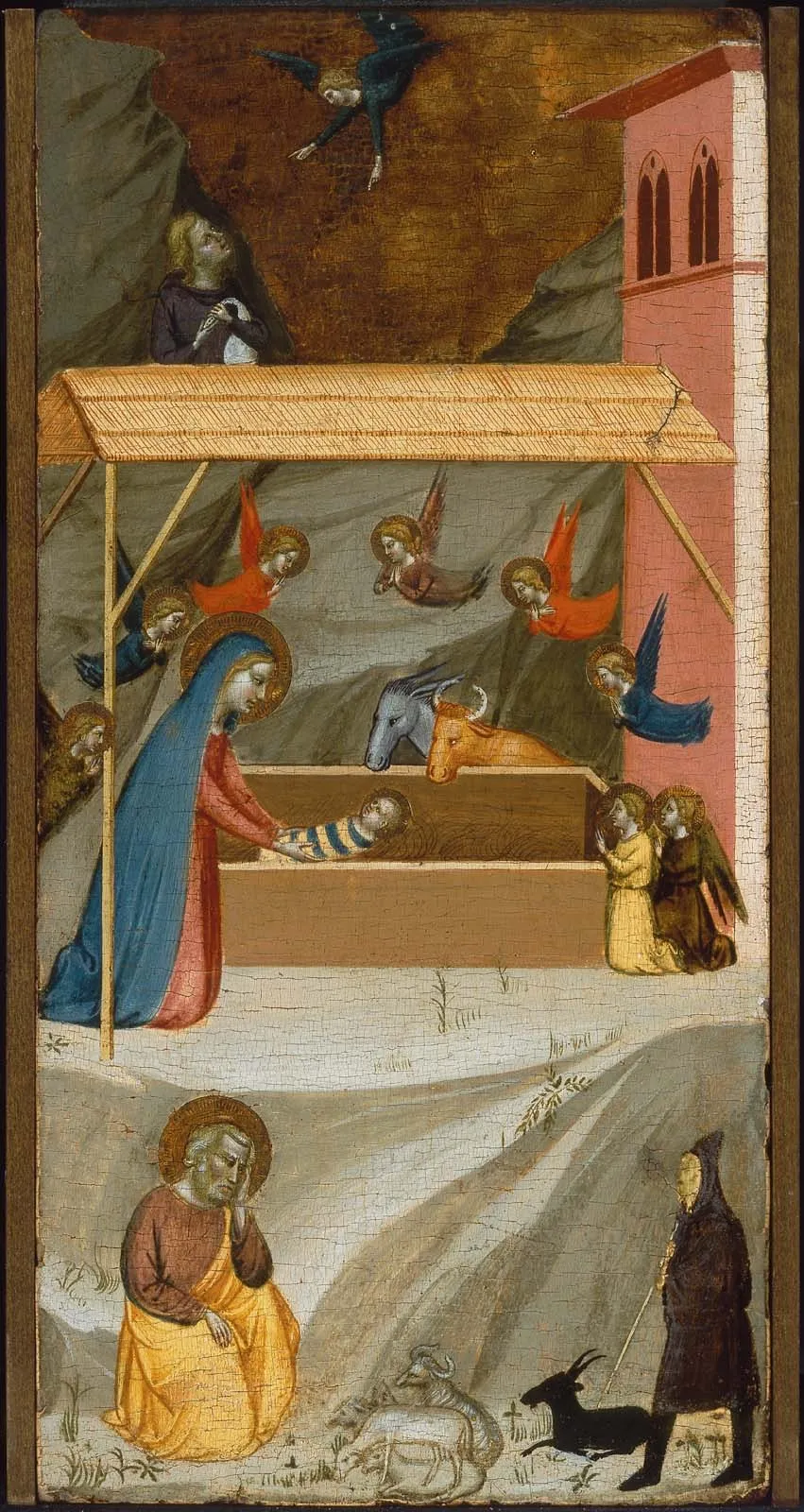
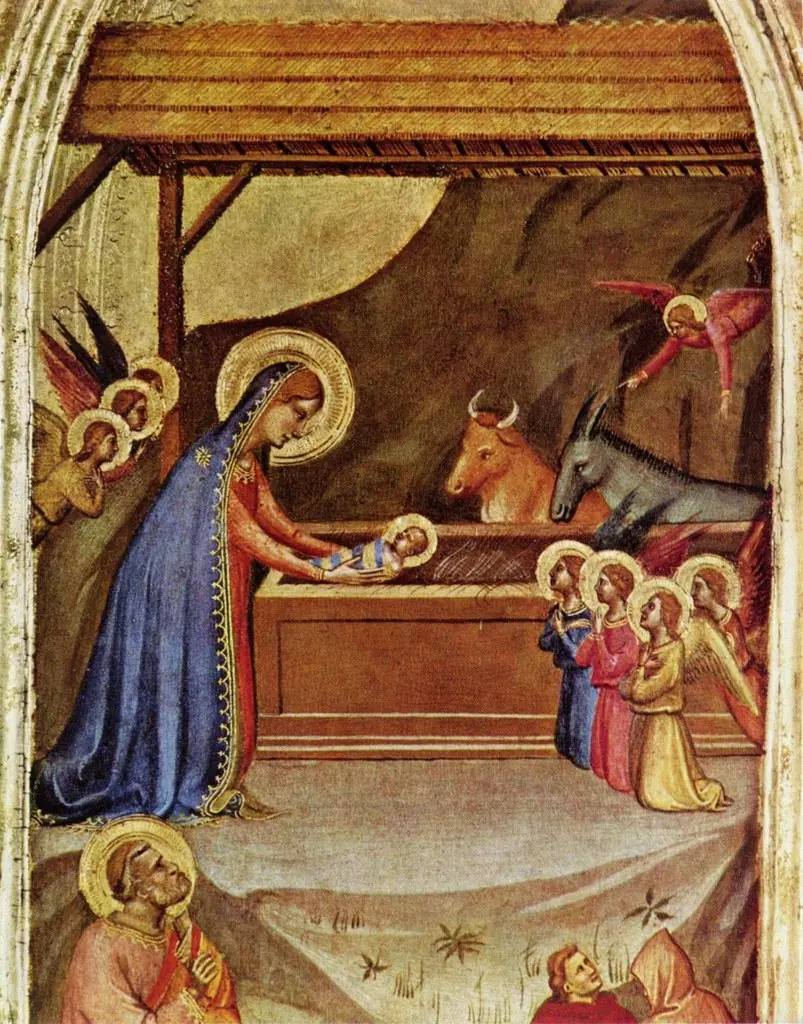
The Nativity and the Annunciation to the Shepherds is a tempera painting by the Sienese School artist Bernardo Daddi. It dates from 1336 and is held in the collection of the Museum of Fine Arts Boston.
About this work
Overview
Bernardo Daddi, an early Florentine painter active in the first half of the 14th century, completed the tempera panel The Nativity and the Annunciation to the Shepherds in 1336. The work is now part of the collection of the Museum of Fine Arts in Boston and exemplifies the devotional imagery typical of the Sienese school.
Subject & Meaning
Below, a shepherd in dark garb holds a staff, and a figure in yellow stands beside a donkey and a sheep, emphasizing the humble witnesses to the event.
The composition combines two biblical episodes: the birth of Christ in a modest stable and the angelic announcement to the shepherds. A swaddled infant lies in a wooden manger beneath a blue‑clad Virgin, while winged angels hover above, gesturing toward the child. Below, a shepherd in dark garb holds a staff, and a figure in yellow stands beside a donkey and a sheep, emphasizing the humble witnesses to the event.
Technique & Style
Executed in egg tempera, the painting displays the medium’s characteristic matte finish and fine linear detail. Daddi employs a relatively flat application of bright pigments, particularly gold, blue, and yellow, against a night‑time backdrop, while the figures are rendered with simple drapery and halos that echo the decorative conventions of the Sienese tradition.
History & Provenance
Created during a period when Florentine artists were beginning to explore more naturalistic representation, the panel reflects Daddi’s role in the early Renaissance shift toward greater realism. After remaining in private hands for several centuries, the work entered the Museum of Fine Arts, Boston, where it has been displayed as part of the museum’s medieval European holdings.
Context
Daddi’s oeuvre is noted for small‑scale devotional pieces and portable altarpieces, a format suited to private worship. This panel illustrates his ability to integrate narrative complexity within a compact composition, aligning with contemporary trends that favored intimate, contemplative scenes of Christ’s life.
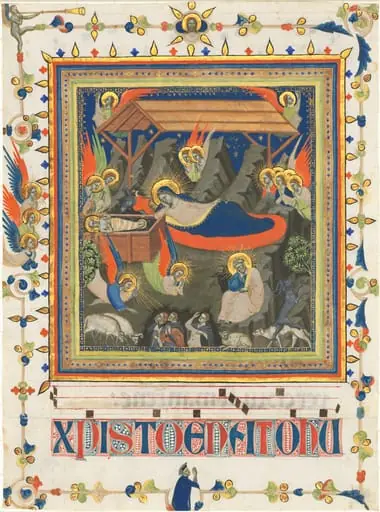
Artist & collection
Artist
Bernardo Daddi (c. 1280 – 1348) was an early Italian Renaissance painter and the leading painter of Florence of his generation. He was one of the artists who contributed to the revolutionary art of the Renaissance,…

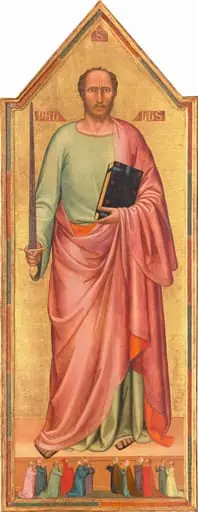
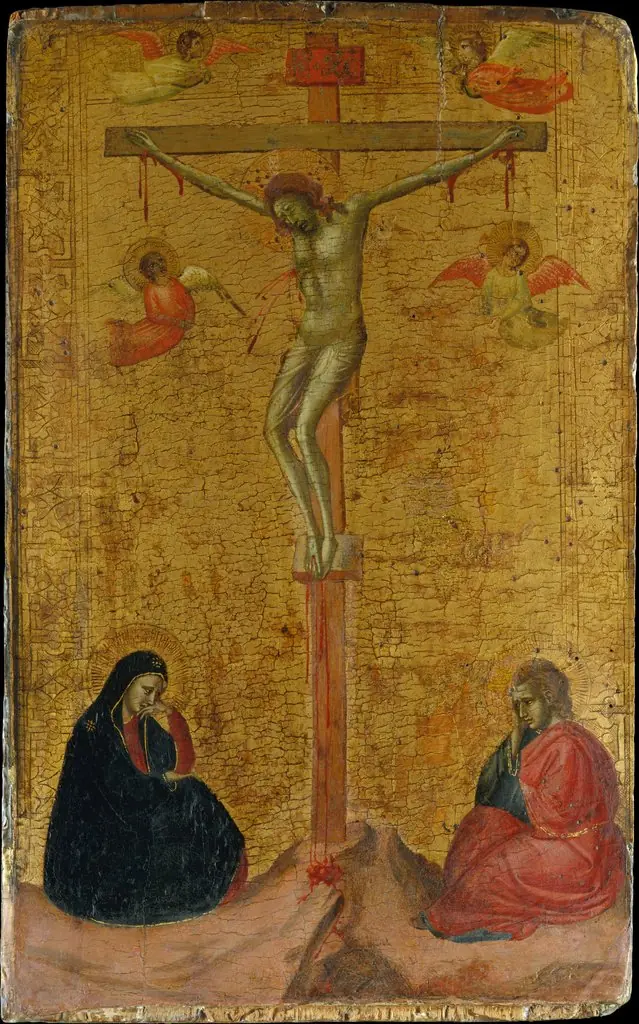
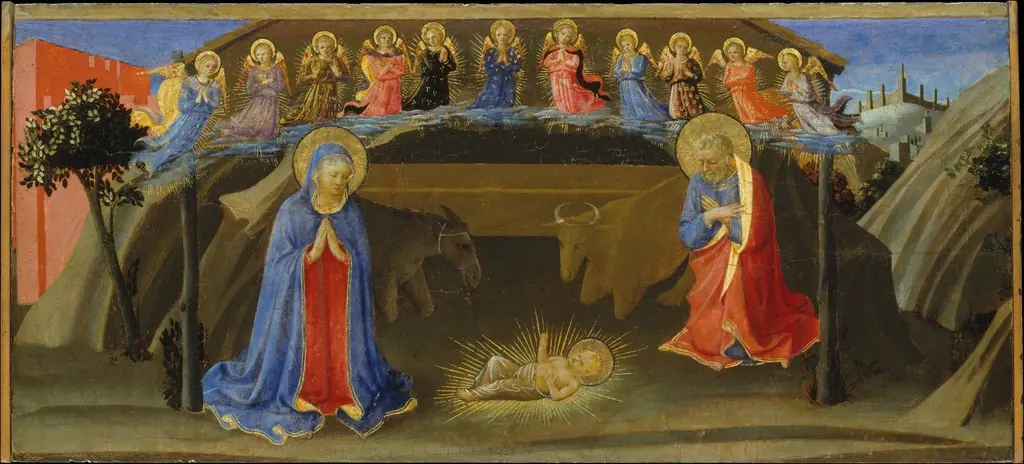 The Nativity
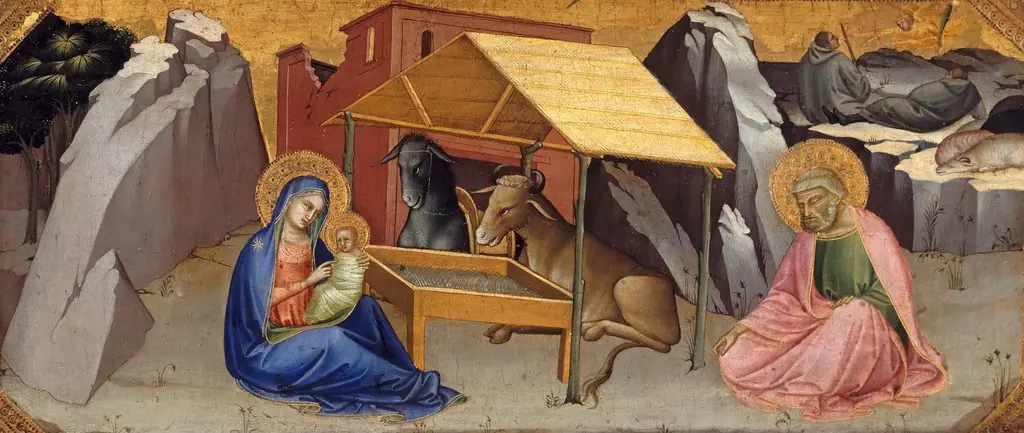 Nativity
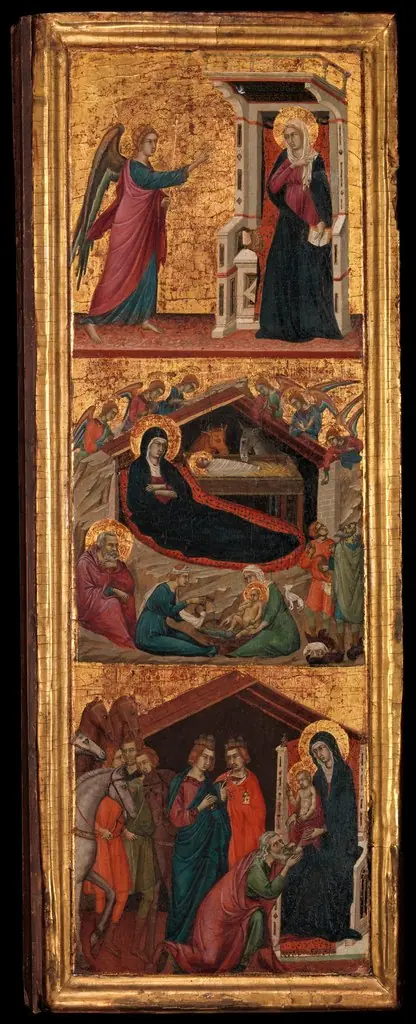 Saints and Scenes from the Life of the Virgin
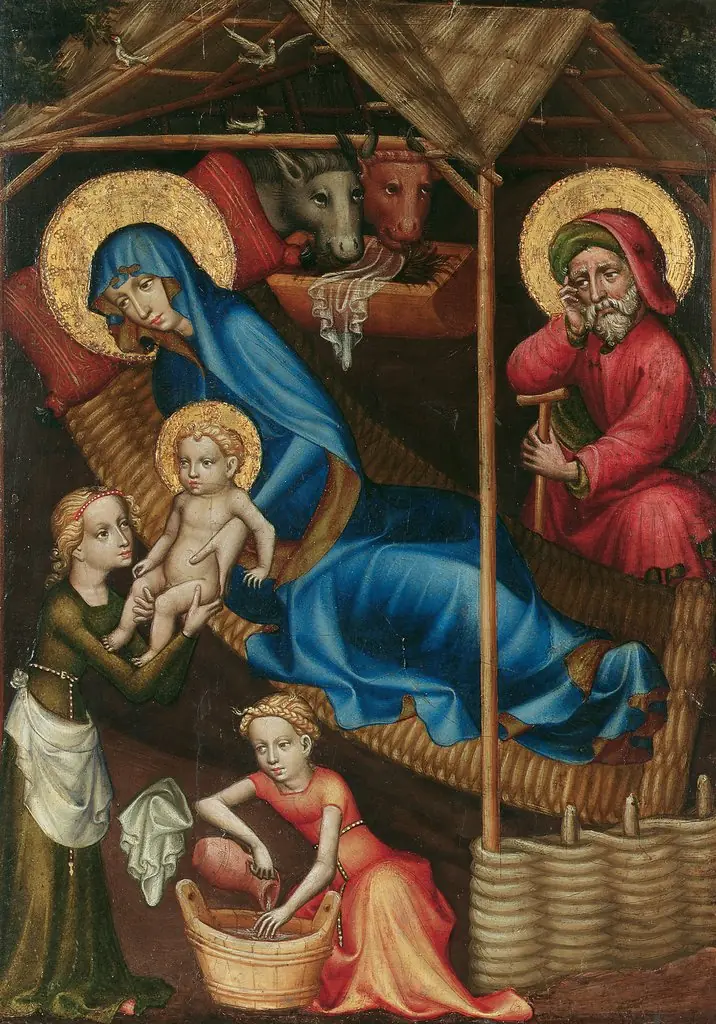 Geburt Christi
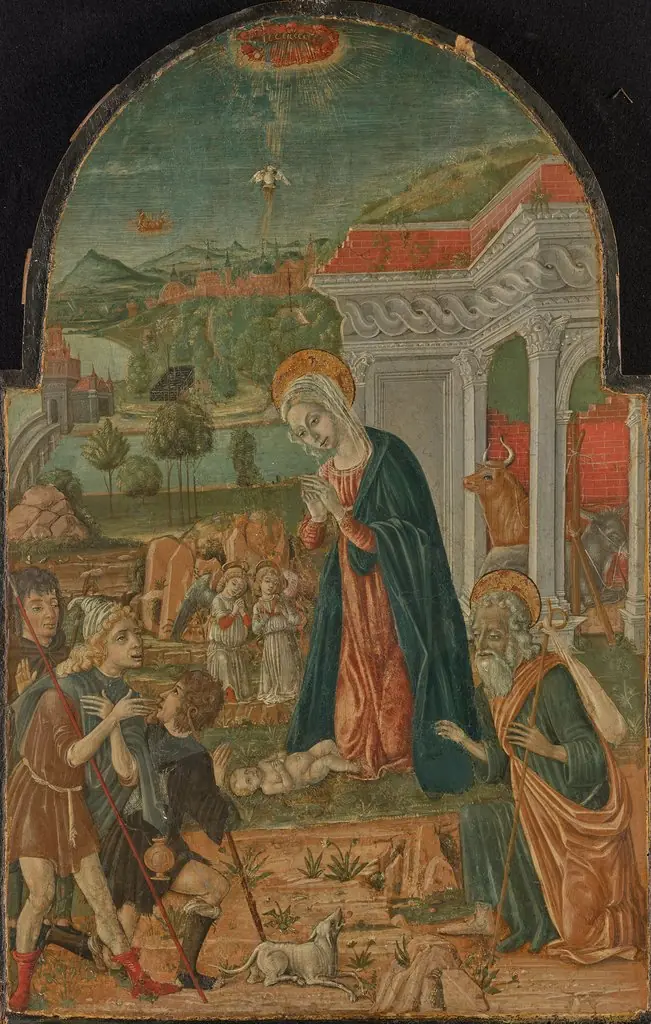 The adoration of the Shepherds
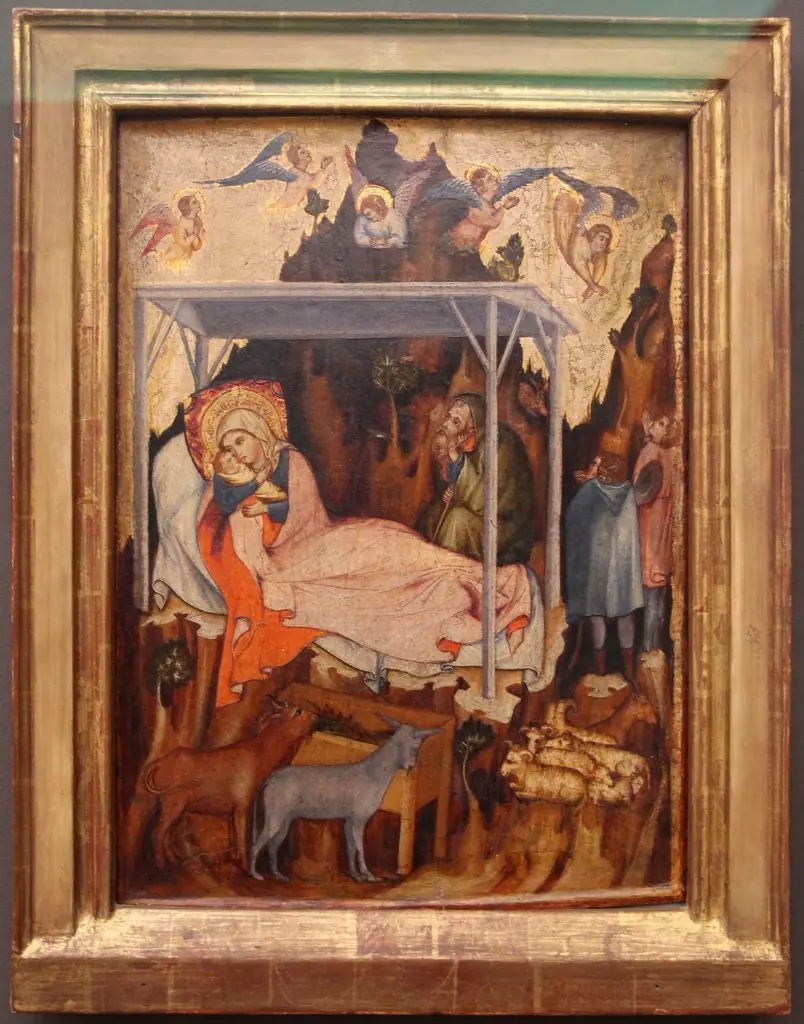 The birth of Christ
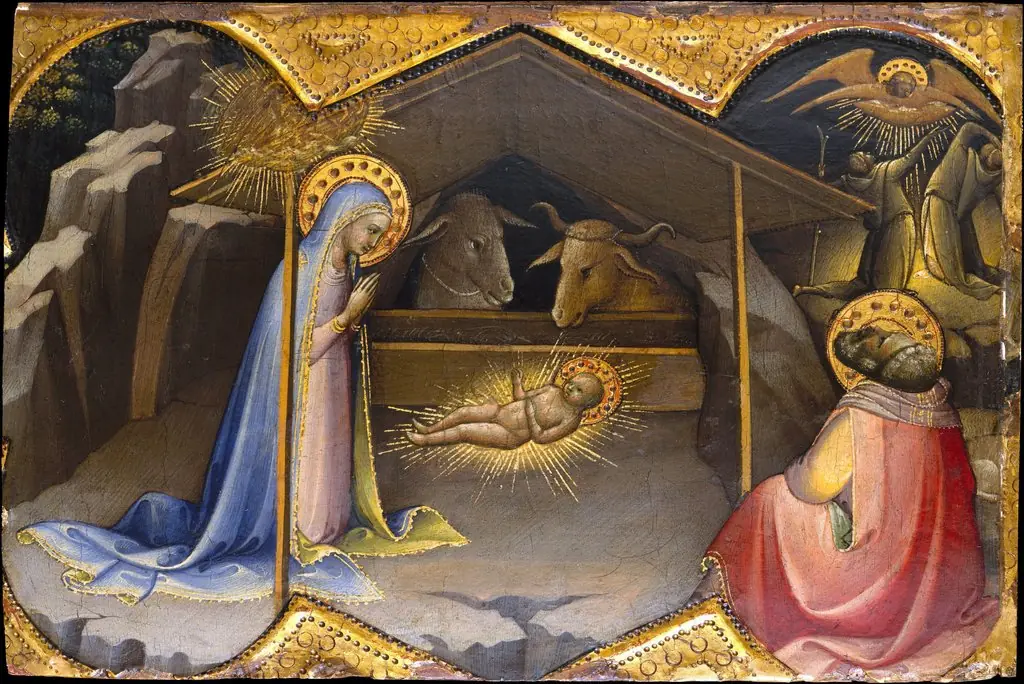 The Nativity
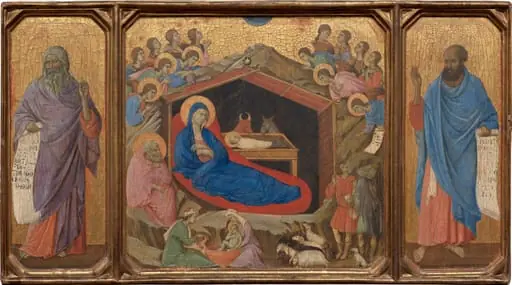 The Nativity with the Prophets Isaiah and Ezekiel
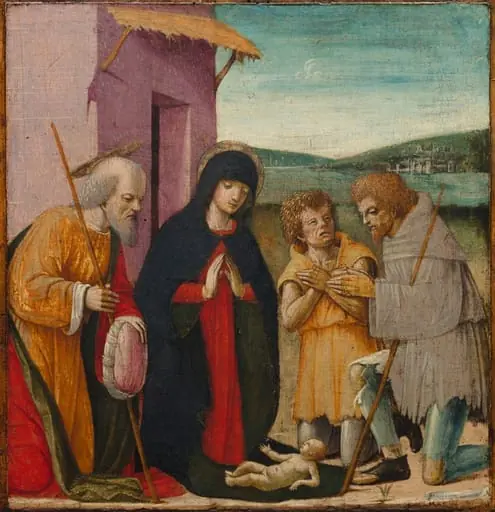 Adoration of the Shepherds
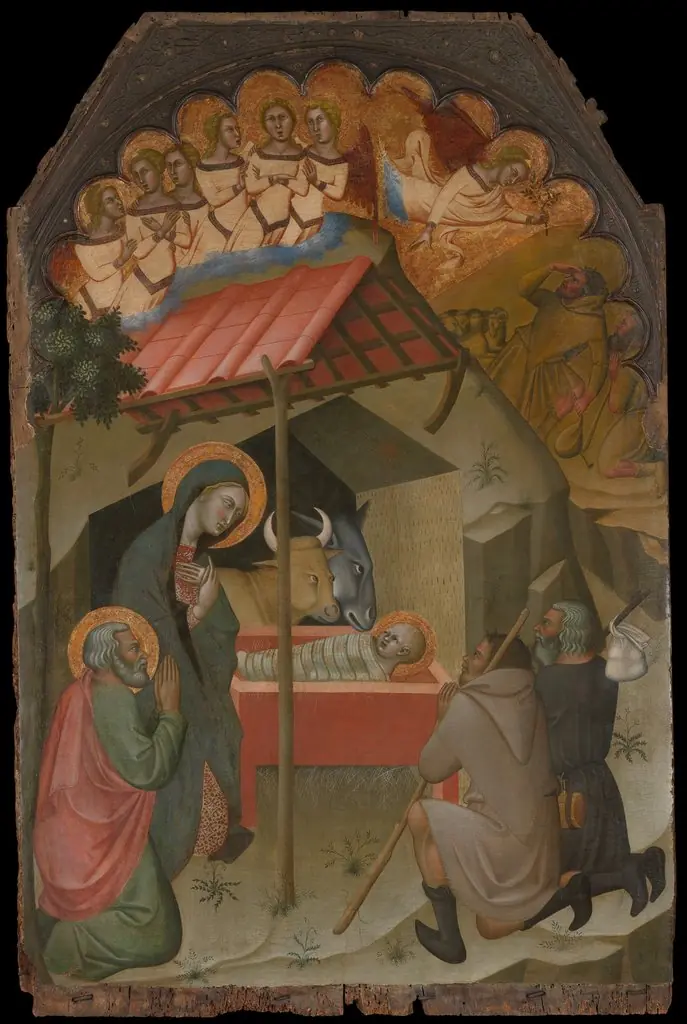 Adoration of the Magi
- The Nativity with the Annunciation to the Shepherds
 Birth of Christ