Artwork
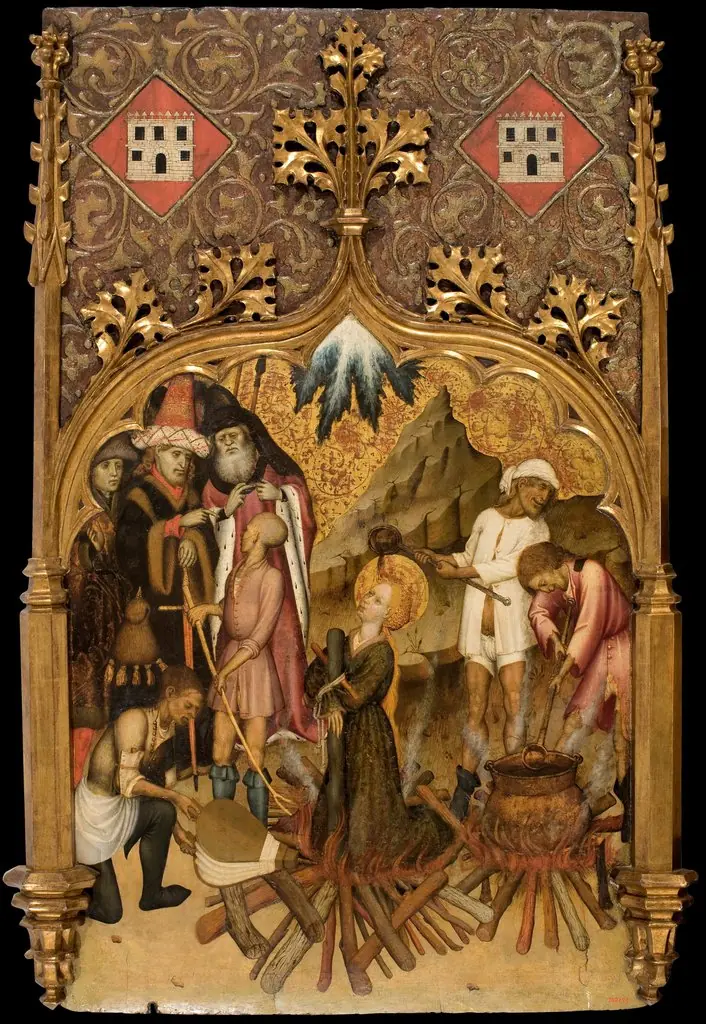
Martyrdom of St. Lucy
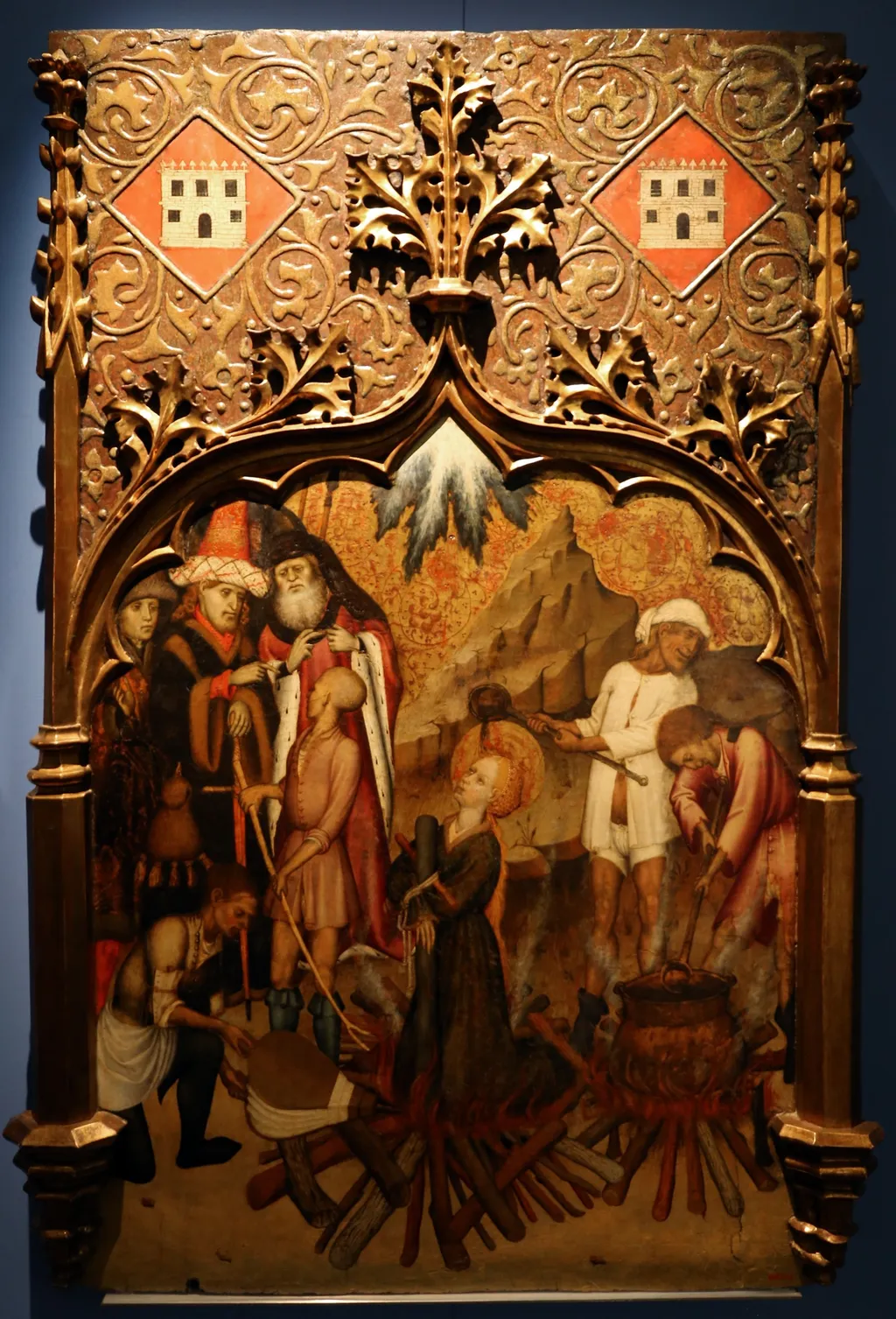
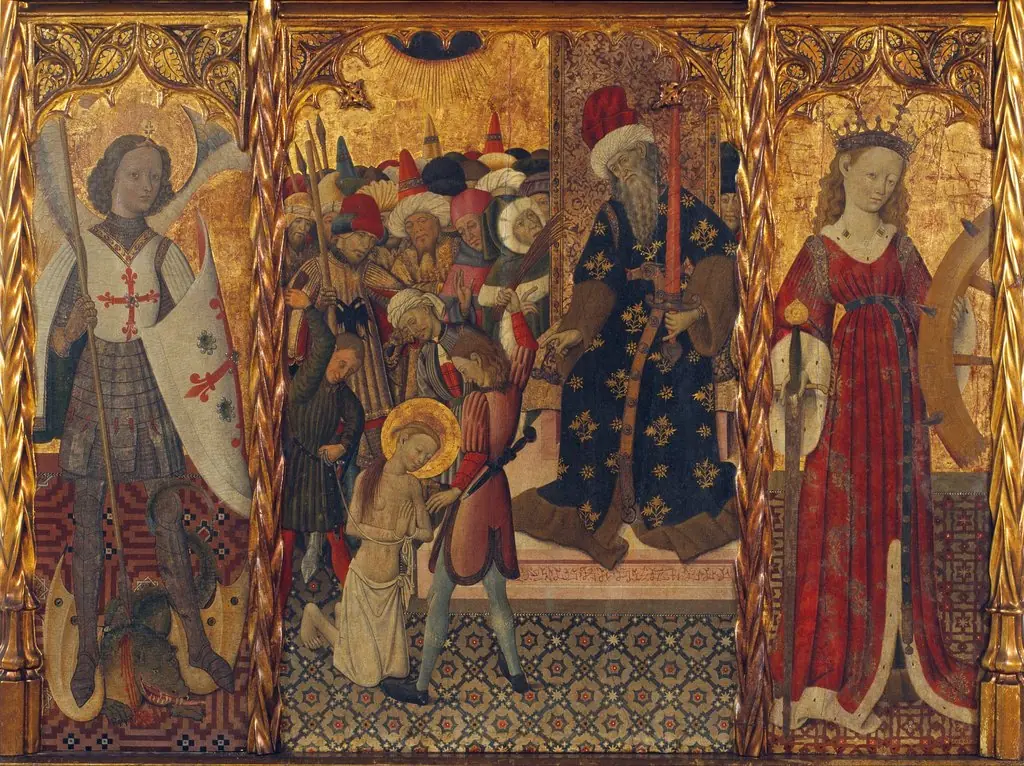
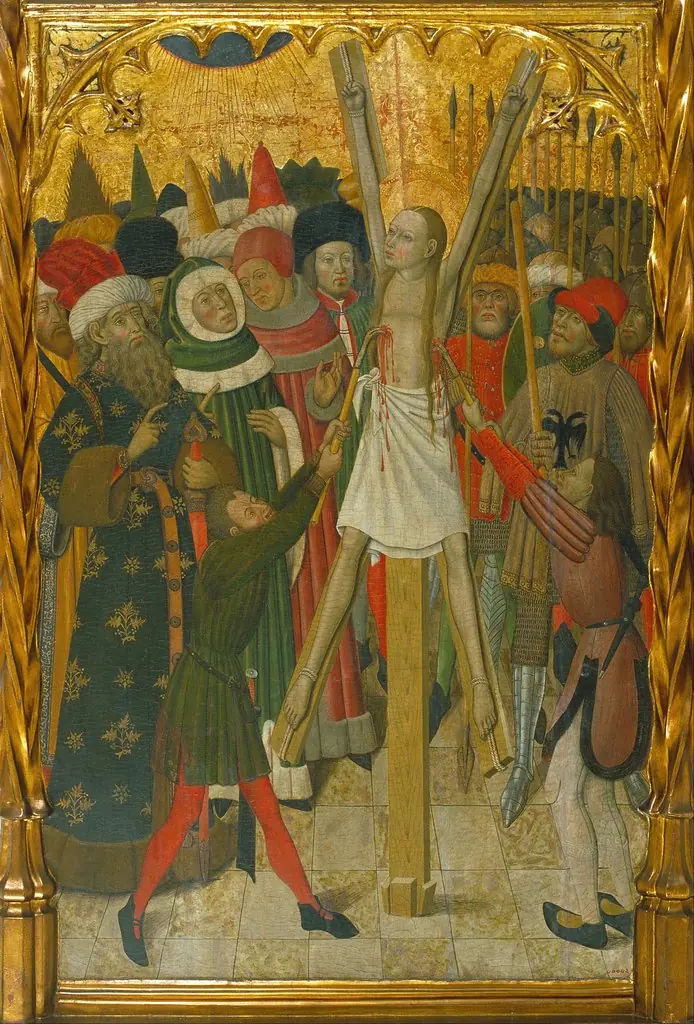
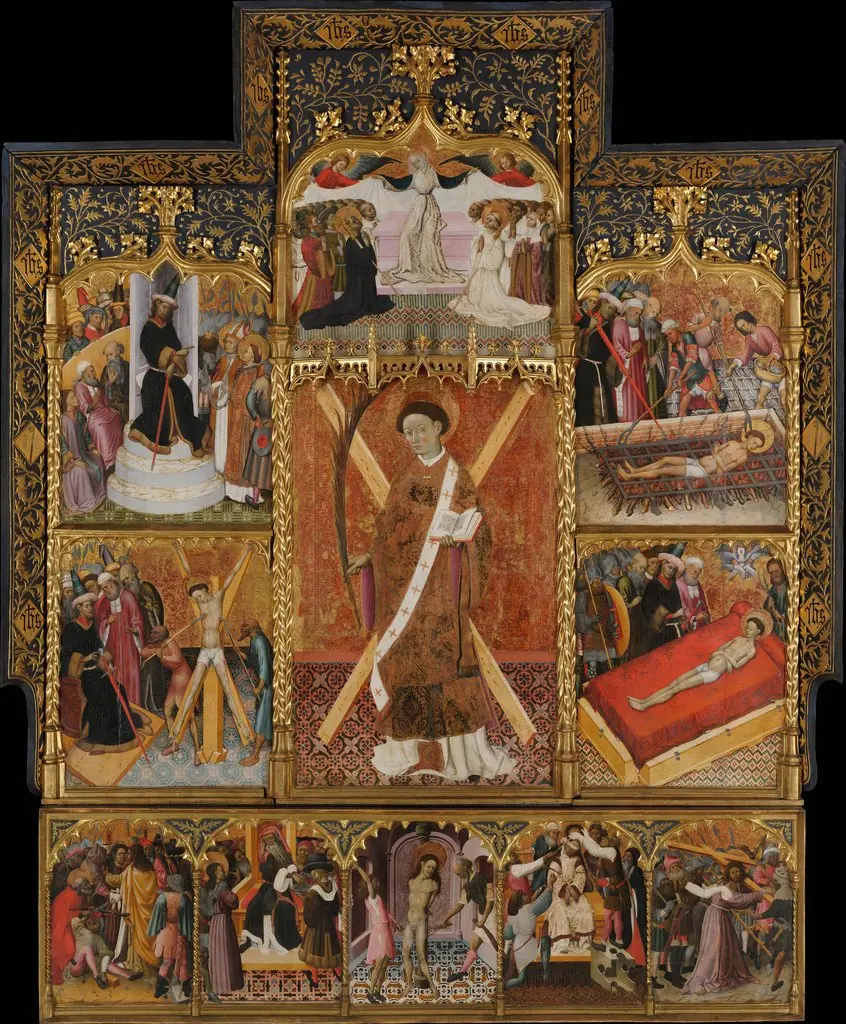
Martyrdom of St. Lucy is an unspecified painting by the Early Renaissance artist Bernat Martorell. It dates from 1435 and is held in the collection of the Museu Nacional d'Art de Catalunya.
About this work
Overview
Martorell employs a refined palette and meticulous attention to textile patterns and facial expressions, hallmarks of his mature period.
Bernat Martorell's Martyrdom of St. Lucy, executed in 1435, is a seminal panel painting of the International Gothic style in Catalonia. The work illustrates the final moments of Saint Lucy, depicting her standing centrally while an executioner strikes her with a sword and another figure prepares to sever her head. The composition is characterized by a dense arrangement of figures within a shallow, stage-like space, set against a backdrop of stylized flames and a rocky landscape that emphasizes the narrative drama.
Martorell employs a refined palette and meticulous attention to textile patterns and facial expressions, hallmarks of his mature period. Created during the height of his career, this altarpiece panel demonstrates the artist's ability to blend the decorative elegance of the Gothic tradition with a growing interest in naturalistic detail and emotional intensity. The painting stands as a key example of 15th-century Catalan religious art, reflecting the devotional practices and artistic sophistication of the region under the influence of the Crown of Aragon.
Subject & Meaning
The painting illustrates the legendary death of Lucy, a Christian virgin who suffered execution for her faith. Martorell emphasizes the moment of beheading, with an executioner poised to strike and another figure holding the severed head, underscoring themes of sacrifice, steadfast belief, and the triumph of spiritual conviction over earthly persecution.
Technique & Style
Martorell employs a vivid palette of reds and ochres, contrasting the bright flames behind the figures with the darker mountainous landscape. Careful modeling of light and shadow gives the scene a three‑dimensional quality, while the tight arrangement of characters creates a tense, almost theatrical atmosphere characteristic of late Gothic narrative painting.
History & Provenance
The panel has remained in Catalonia since its creation, eventually entering the national museum’s holdings in the early twentieth century. Documentation traces its ownership through ecclesiastical collections before its acquisition by the Museu Nacional d'Art de Catalunya, where it has been displayed as a key example of Martorell’s religious oeuvre.
Own this work as a print
Artist & collection

Artist
Bernat Martorell was the leading painter of Barcelona, in modern-day Spain. He is considered to be the most important artist of the International Gothic style in Catalonia. Martorell painted retable panels and…