Artwork
Melancholy (Mélancolie)
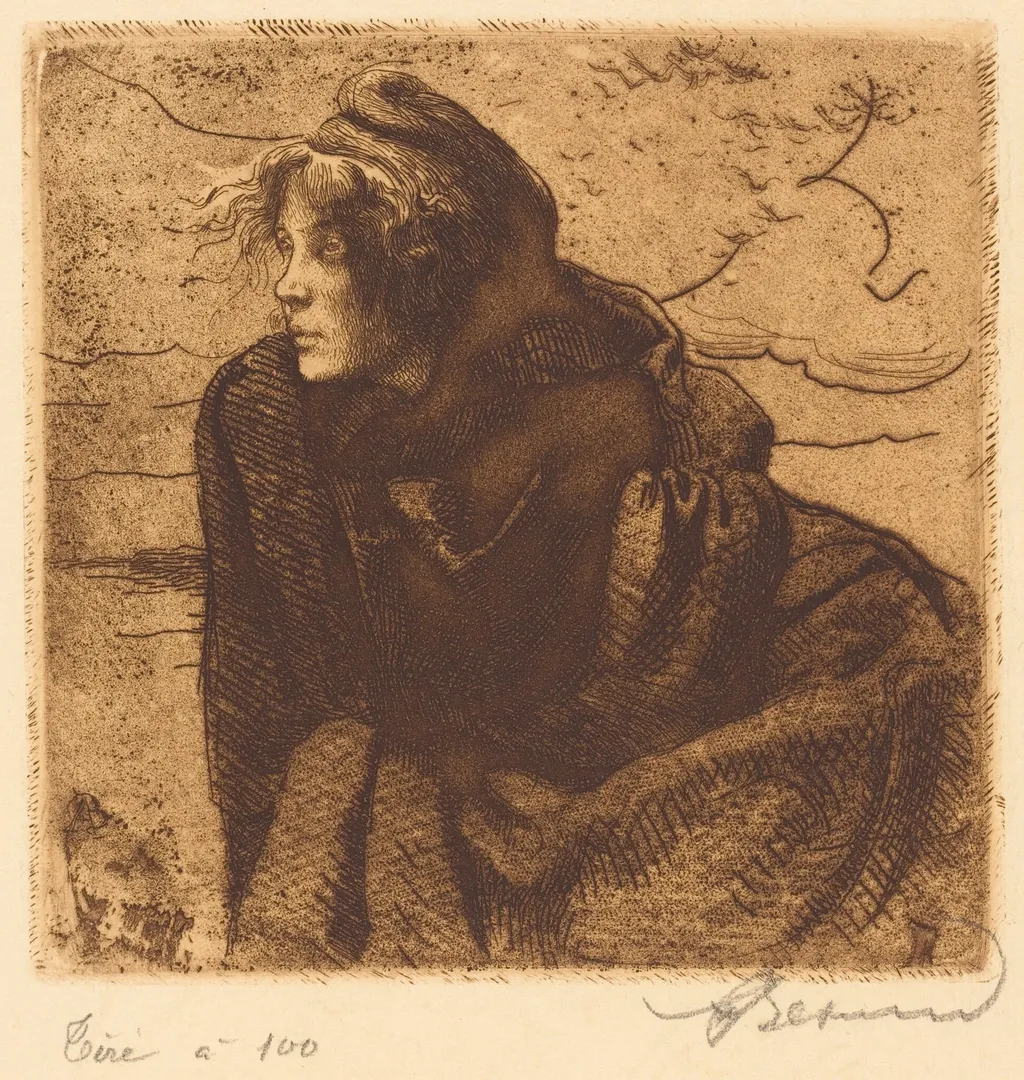
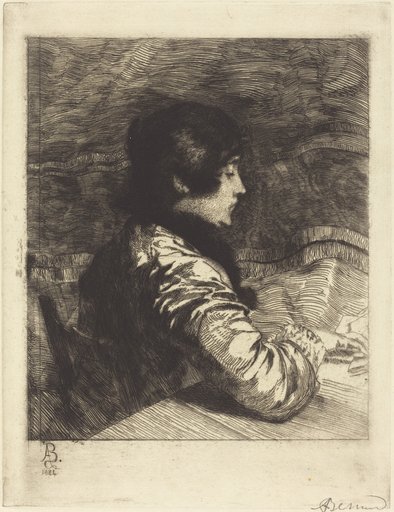
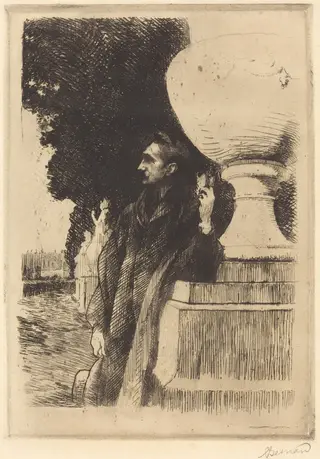
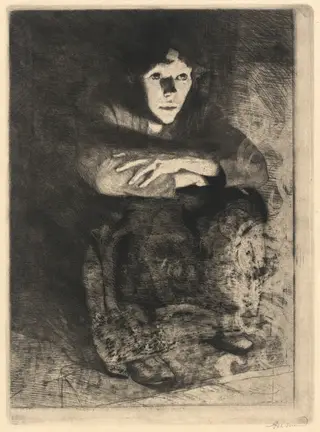
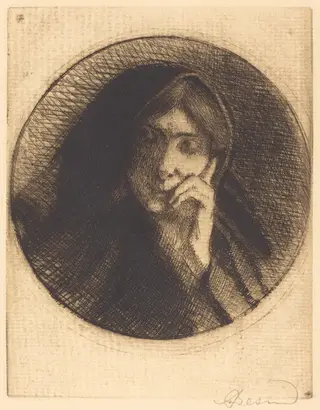
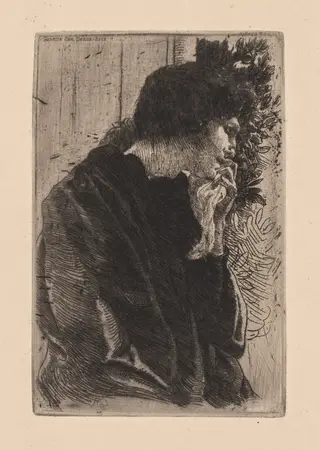
Melancholy (Mélancolie) is an ink print by the Impressionist artist Albert Besnard. It dates from 1888 and is held in the collection of the National Gallery of Art.
- Inscription
- Inscribed:lower right in graphite: ABesnard; lower left in graphite: Tiré à 100; by later hand, upper center verso in graphite: Mélancolie / 75
- Markings
- Marked:None.
About this work
Overview
Albert Besnard’s 1888 print titled Melancholy (Mélancolie) is executed in brown ink on Arches laid paper using both traditional etching and soft‑ground techniques. The composition centers on a solitary woman cloaked in a dark shawl, her profile turned left, against a subdued, earthy background that hints at a distant landscape.
Subject & Meaning
The figure’s contemplative pose and the muted palette convey an introspective mood, suggesting a moment of quiet reflection or sorrow. The gentle movement of her hair, caught by an implied breeze, adds a subtle dynamism that contrasts with the overall stillness, reinforcing the theme of personal melancholy.
Technique & Style
Besnard combines line etching with soft‑ground etching, allowing for both precise facial detailing and softer, textured areas such as the shawl and background. The brown tonal range and delicate line work create depth without relying on strong contrasts, characteristic of late‑19th‑century French printmaking that favored atmospheric effects.
History & Provenance
Created in 1888, the print belongs to the later period of Besnard’s career, when he explored print media alongside his painting. While specific ownership records are limited, the work has appeared in several catalogues of his graphic output and is held in public and private collections that focus on French etchings of the era.
Context
Melancholy aligns with contemporary interests in everyday emotional states, a concern shared by Impressionist and Symbolist artists of the 1880s. Though not overtly Impressionist in brushwork, the piece reflects the period’s shift toward capturing fleeting moods and the inner lives of ordinary subjects.
Own this work as a print
Artist & collection