Artwork
Untitled
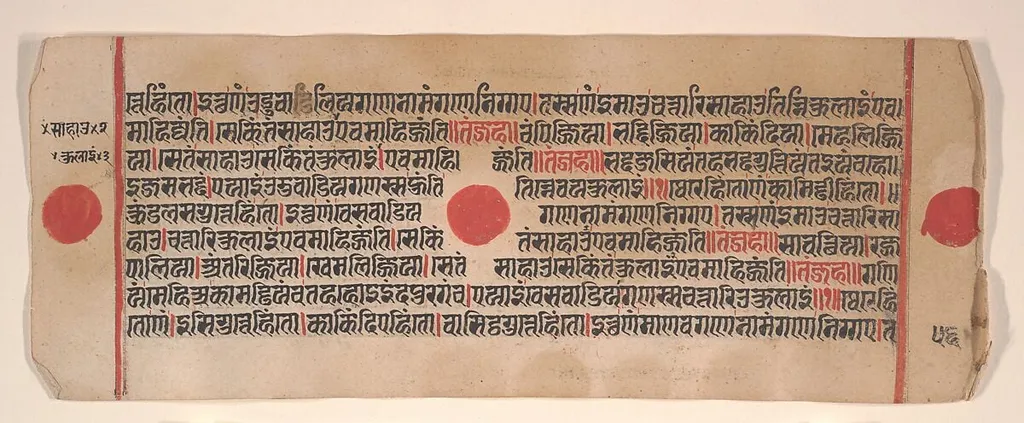
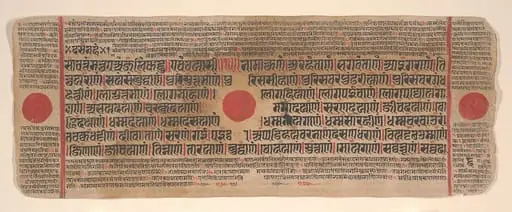
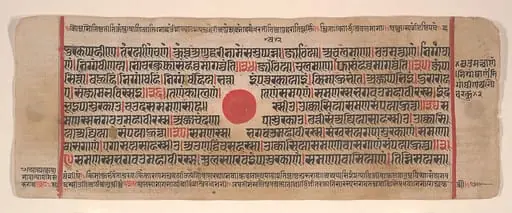
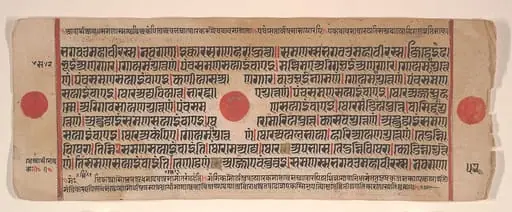
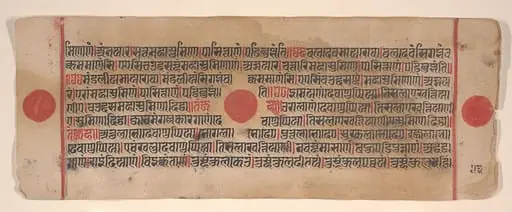
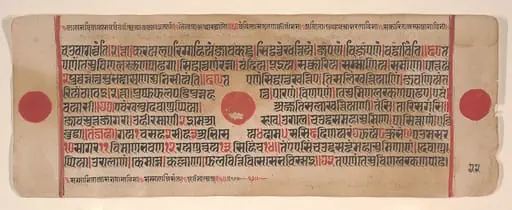
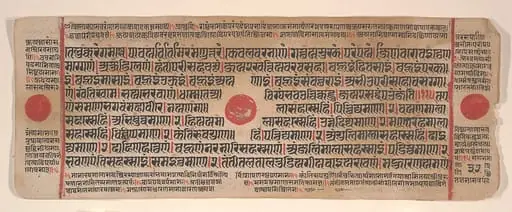
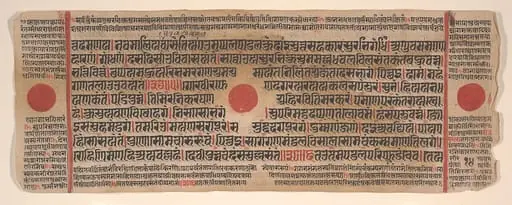
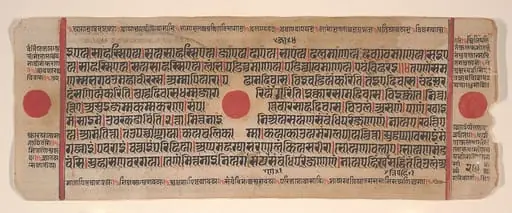
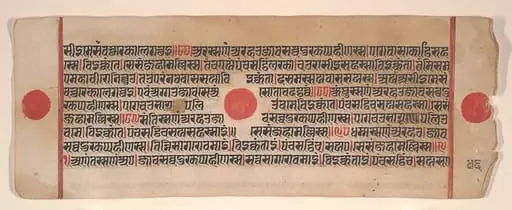
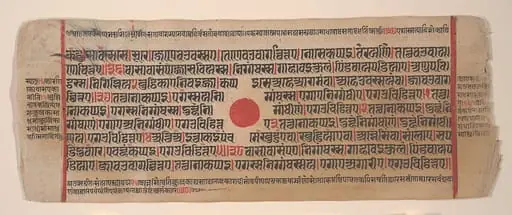
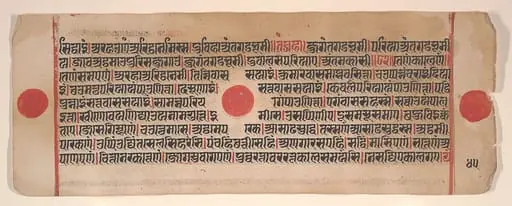
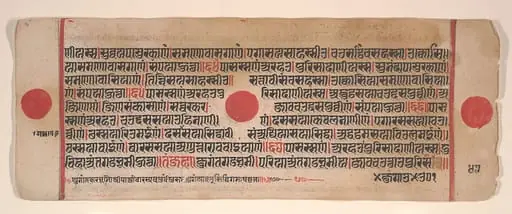
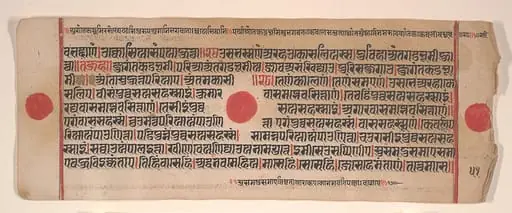
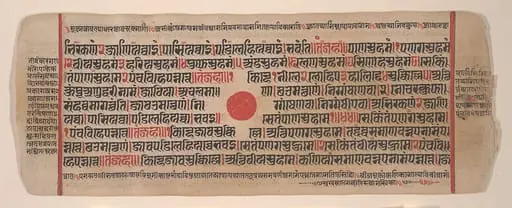
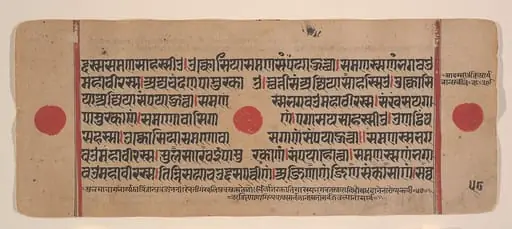
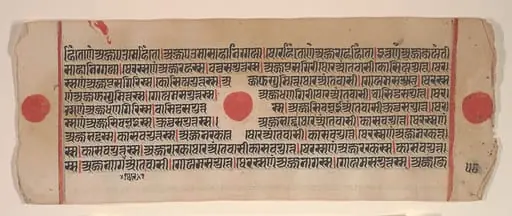
Untitled is a watercolor painting by the Indian Miniature artist Bhadrabahu. It dates from 1449 and is held in the collection of the Metropolitan Museum of Art.
About this work
Subject & Meaning
The painting depicts Jain religious iconography and symbolism consistent with a 15th-century Jain manuscript illustration.
The painting depicts Jain religious iconography and symbolism consistent with a 15th-century Jain manuscript illustration. The work is attributed to Bhadrabahu, a figure associated with Jain artistic traditions, and is dated 1449, aligning with the late medieval period of Jain manuscript painting in India. The subject matter reflects Jain themes, emphasizing the religion’s tenets and iconographic conventions.
The use of gold and opaque watercolor, typical of Jain manuscript art, underscores the sacred nature of the depicted content, likely illustrating a narrative or doctrinal scene central to Jain practice.
Technique & Style
The work Untitled by Bhadrabahu, dated 1449, is executed in ink, opaque watercolor and gold leaf on paper, a technique typical of Jain manuscript painting. The support is a single sheet of paper, handled as a folio within the Metropolitan Museum of Art’s collection. Formal qualities include fine, linear contours, restrained tonal modulation and strategic applications of gold that accent sacred figures, creating a luminous, hierarchical composition.
Stylistically the piece belongs to the religious art genre, depicting Jain iconography with a muted palette that emphasizes spiritual symbolism over naturalism. Its condition is not detailed in the available records, but the material integrity remains intact as recorded in the museum’s catalog.
History & Provenance
This untitled work by Bhadrabahu is dated to 1449, a creation date established through the associated Wikidata record and consistent with the dating noted in the museum's cataloguing. The painting was produced in India, executed in ink, opaque watercolor, and gold on paper. It depicts a religious subject related to Jainism.
The work is held in the collection of the Metropolitan Museum of Art, where it is identified by the accession number 57.51.38.58, indicating that it entered that institution's holdings by 1957. Beyond the attribution to Bhadrabahu, the year of production, and its current placement in the Metropolitan Museum of Art, the available sources do not document an earlier ownership chain, commission circumstances, or intermediate provenance prior to the museum's acquisition.
The painting is held by the Metropolitan Museum of Art, where it is listed in the museum's collection. According to the documentation, the work is part of the museum's holdings and is identified as a religious painting depicting Jainism. The available records indicate its creation in India in 1449, with dimensions of approximately 11.4 cm by 28.9 cm. No specific accession number is provided in the sources, and there is no recorded exhibition history for this piece within the referenced materials.
Overview
This untitled work from 1449, created by Bhadrabahu, is a religious painting rendered in ink, opaque watercolor, and gold on paper. It portrays a serene scene central to Jainism, featuring a monk in contemplation. As a small-scale piece, it was originally part of a larger Jain manuscript, designed for intimate viewing and spiritual reflection within a sacred text.
Context
This painting originated as a page within a Jain manuscript, a type of sacred book intended for personal devotion and study. Its small dimensions, roughly the size of a human palm, indicate it was meant to be held and viewed closely. Such works were integral to religious practice, providing visual aids for meditation and illustrating spiritual narratives within the textual tradition.
Artist & collection