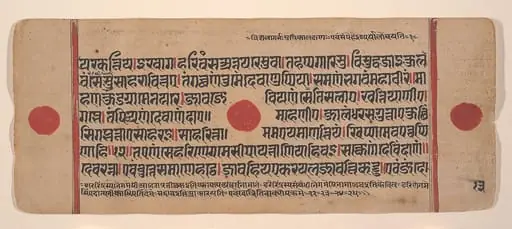
Artwork
Untitled
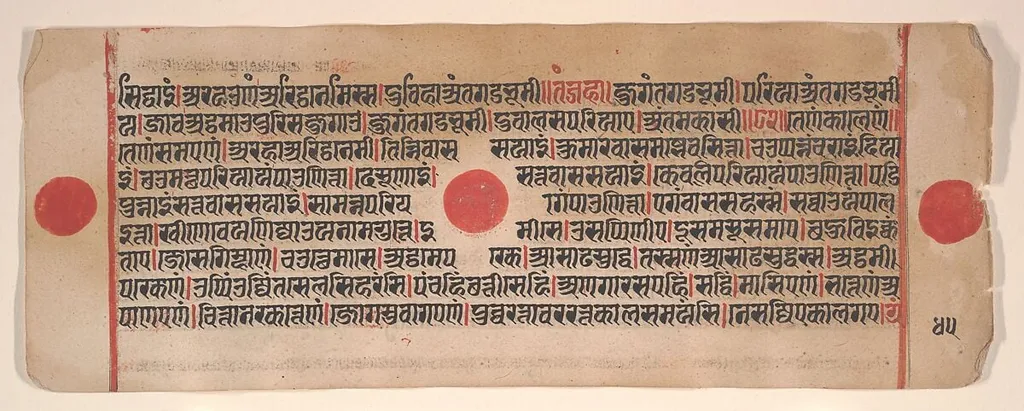
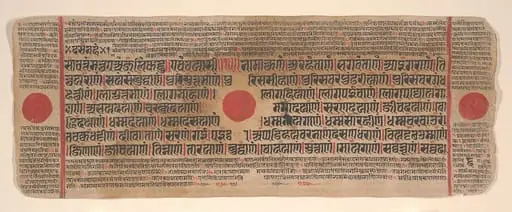
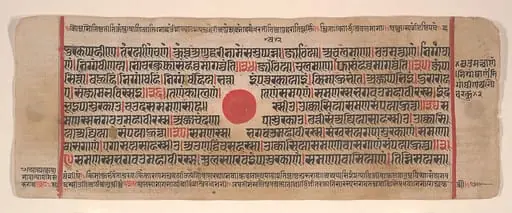
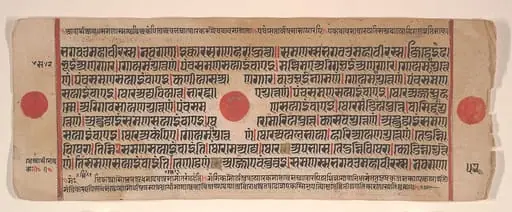
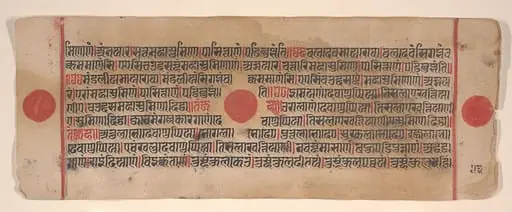
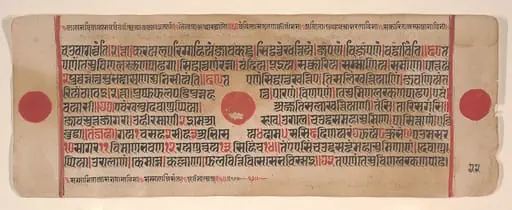
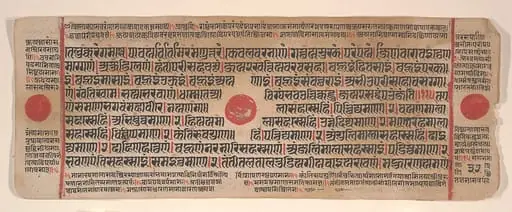
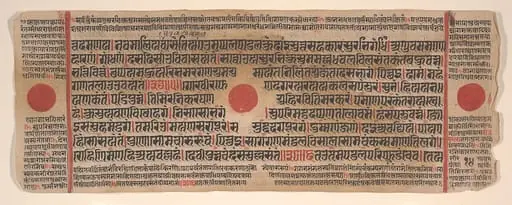
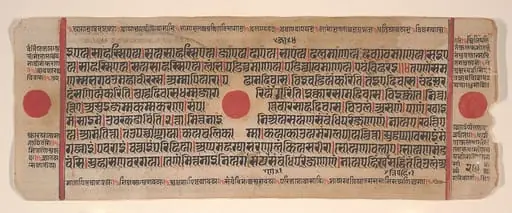
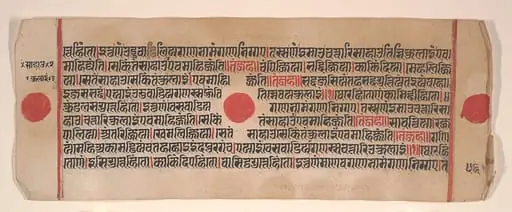
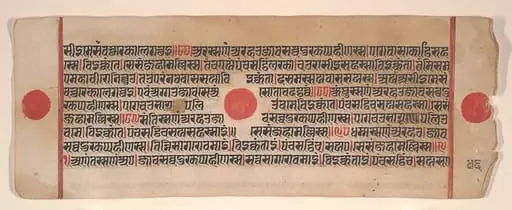
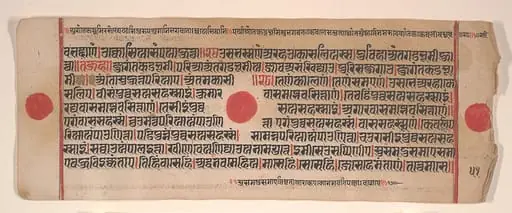
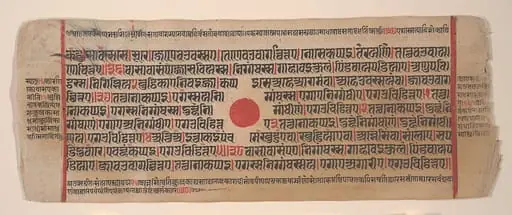
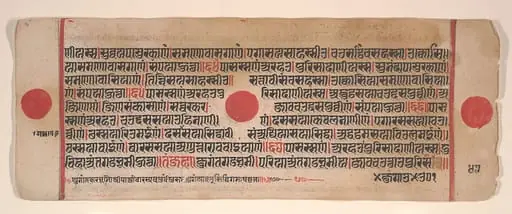
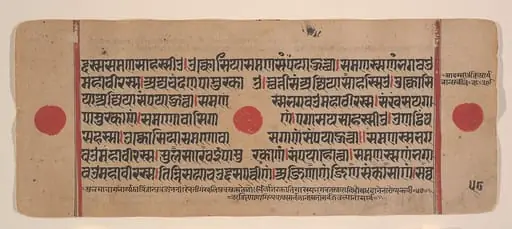
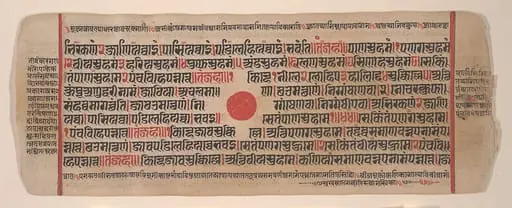
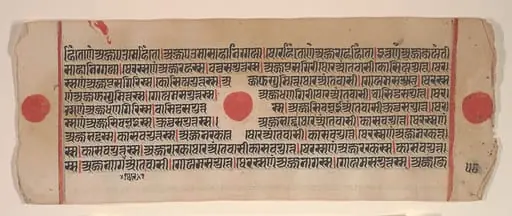
Untitled is a watercolor painting by the Indian Miniature artist Bhadrabahu. It dates from 1449 and is held in the collection of the Metropolitan Museum of Art.
About this work
Subject & Meaning
This work belongs to the religious genre and depicts a Jain subject, situating it within the devotional visual tradition of that faith.
This work belongs to the religious genre and depicts a Jain subject, situating it within the devotional visual tradition of that faith. Created in 1449, the painting uses ink, opaque watercolor, and gold on paper, materials consistent with manuscript and devotional panels intended to honor Jain sacred subjects. The combination of gold leaf with mineral-based pigments was a standard means of signaling sanctity and reverence in Jain pictorial culture, where images functioned as aids to contemplation and veneration rather than as purely narrative illustrations.
Although the surviving documentation does not specify a particular iconographic episode or figure, the work's classification and subject matter align it with the broader corpus of Jain religious art produced in India during the fifteenth century, a period of significant manuscript patronage.
Technique & Style
Untitled is a Jain religious painting rendered in ink, opaque watercolor and gold leaf on a paper support. The work measures approximately 11.4 cm in height by 28.9 cm in width, as recorded in the Metropolitan Museum of Art catalogue. Its execution combines fine ink outlines with layered washes of opaque watercolor, while selective areas of gold leaf provide decorative emphasis typical of Indian manuscript illumination of the fifteenth century.
The composition follows conventional iconographic schemes associated with Jain narrative art, emphasizing flat spatial depth and stylized figuration.
History & Provenance
The work, titled Untitled, was created in 1449 in India. Executed in ink, opaque watercolor, and gold on paper, this religious painting depicting a Jain subject measures 11.4 by 28.9 centimeters. It is held in the collection of the Metropolitan Museum of Art in New York, where it is cataloged under the accession number 57.51.38.49.
The painting is the work of an anonymous artist; commission details and the immediate ownership chain prior to its arrival at the museum are not detailed in the available records. Exhibition history for this artwork is not recorded in the sources consulted.
Overview
This untitled painting, created by Bhadrabahu in 1449, utilizes ink, opaque watercolor, and gold on paper. It is a religious work depicting a scene central to Jainism, a faith originating in India. The artwork offers insight into the devotional practices and artistic traditions of the period, particularly in the Gujarat region where it was produced.
Context
Originating from Gujarat, India, this painting reflects the principles of Jainism, a religion emphasizing non-violence and disciplined living. The depiction of a monk engaged in textual transcription underscores the importance of sacred texts within the faith. Such detailed and contemplative scenes are characteristic of Jain manuscript painting, serving both devotional and educational purposes.
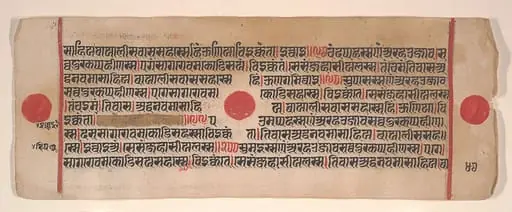
Artist & collection