Artwork
Untitled
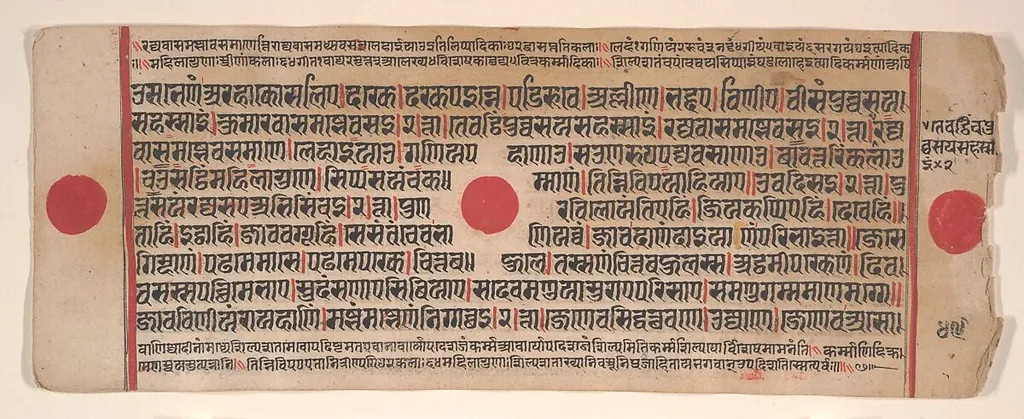
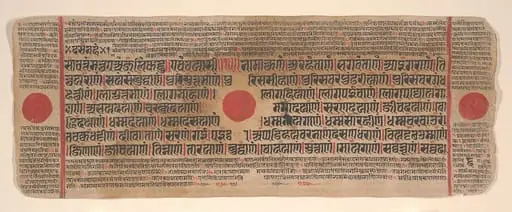
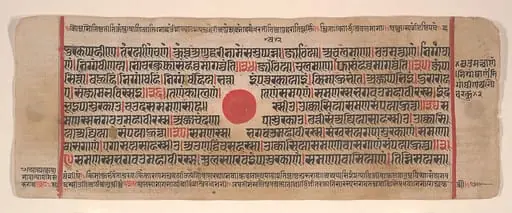
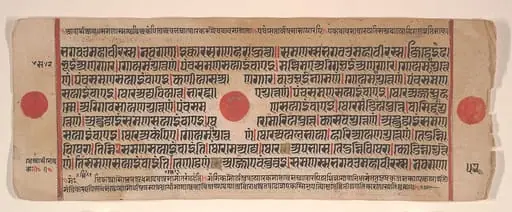
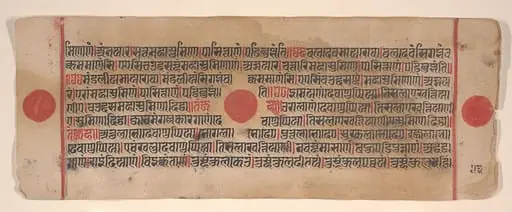
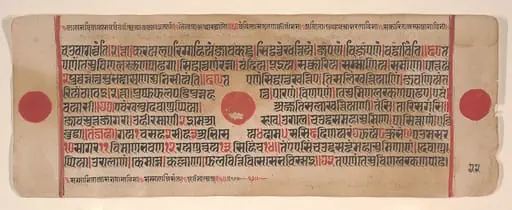
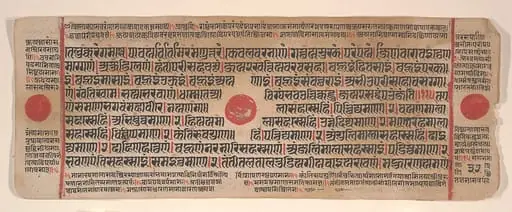
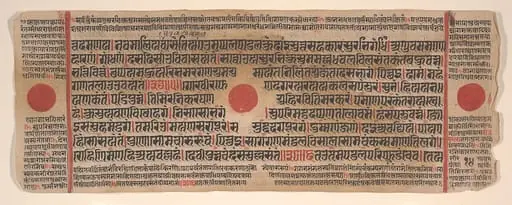
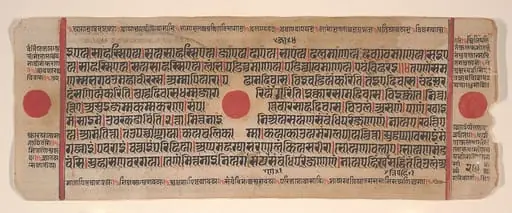
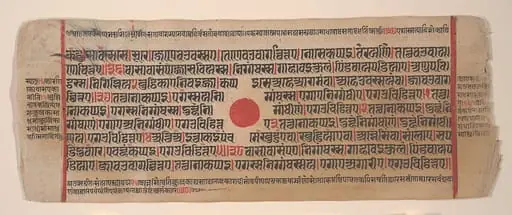
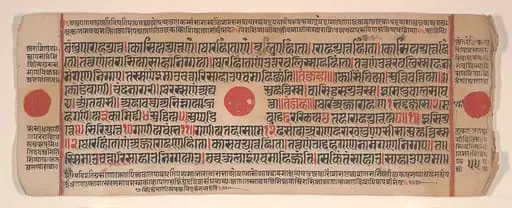
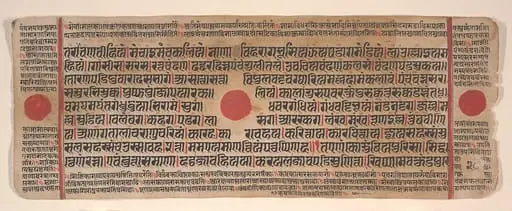
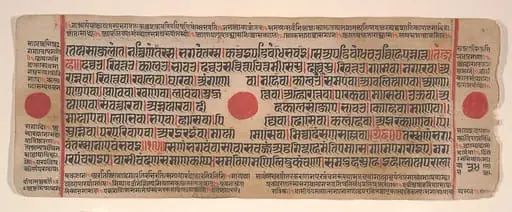
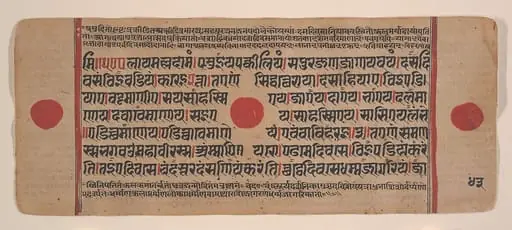
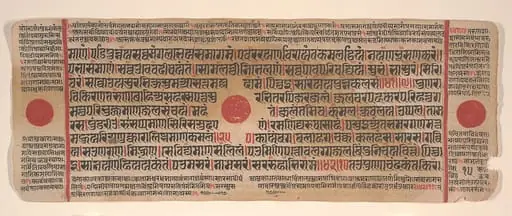
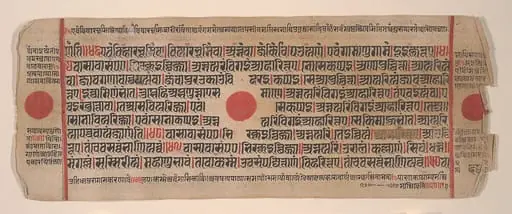
Untitled is a watercolor painting by the Indian Miniature artist Bhadrabahu. It dates from 1449 and is held in the collection of the Metropolitan Museum of Art.
About this work
Subject & Meaning
The work portrays a central figure identified as Bhadrabahu, a revered Jain ascetic, rendered in ink, opaque watercolor and gold on paper.
The work portrays a central figure identified as Bhadrabahu, a revered Jain ascetic, rendered in ink, opaque watercolor and gold on paper. His austere posture and simple robe convey renunciation and spiritual authority. The painting's composition reflects the narrative tradition of Jain doctrine, with its emphasis on non-violence and ascetic discipline.
As a religious painting from 1449, it situates the figure within the broader iconographic program of Jain manuscripts, where ascetics are depicted to illustrate the path toward liberation.
Technique & Style
The work is executed in ink, opaque watercolor, and gold on a paper support, measuring roughly 11.4 × 28.9 cm and dated to 1449. Its creation in India is noted, and the piece belongs to the religious genre of Jain art, depicting Jain iconography. The use of gold provides a luminous highlight, while the ink and watercolor render fine linear details typical of manuscript painting.
The formal qualities reflect a stylized, devotional aesthetic characteristic of Jain religious manuscripts, with careful attention to composition and symbolic representation.
History & Provenance
The work, titled Untitled, was created in 1449 in India by an unidentified artist. It is executed in ink, opaque watercolor, and gold on paper and belongs to the religious genre, illustrating a subject from Jainism, the figure of the Jain ascetic Bhadrabahu. The painting is held in the collection of the Metropolitan Museum of Art in New York, catalogued under accession number 57.51.38.52, and measures 11.4 by 28.9 centimeters.
While the records confirm its current institutional location and inventory identification, they do not document a history of public exhibitions or previous ownership transfers prior to its acquisition by the museum.
Overview
This untitled work, created by Bhadrabahu in 1449, is a religious painting executed with ink, opaque watercolor, and gold on paper. It belongs to the tradition of Jain art, depicting a scene central to the faith. The artwork likely served as an illustrative component within a larger manuscript, designed to convey spiritual narratives and teachings.
Context
This artwork originated from a Jain manuscript produced in Gujarat, India, a region historically significant for its rich tradition of illustrated religious texts. Such paintings were integral to the educational practices of Jain monks, who employed these visual narratives to instruct devotees on the lives and teachings of their spiritual leaders, fostering understanding and devotion within the community.
Artist & collection