Artwork
The Public Scribe
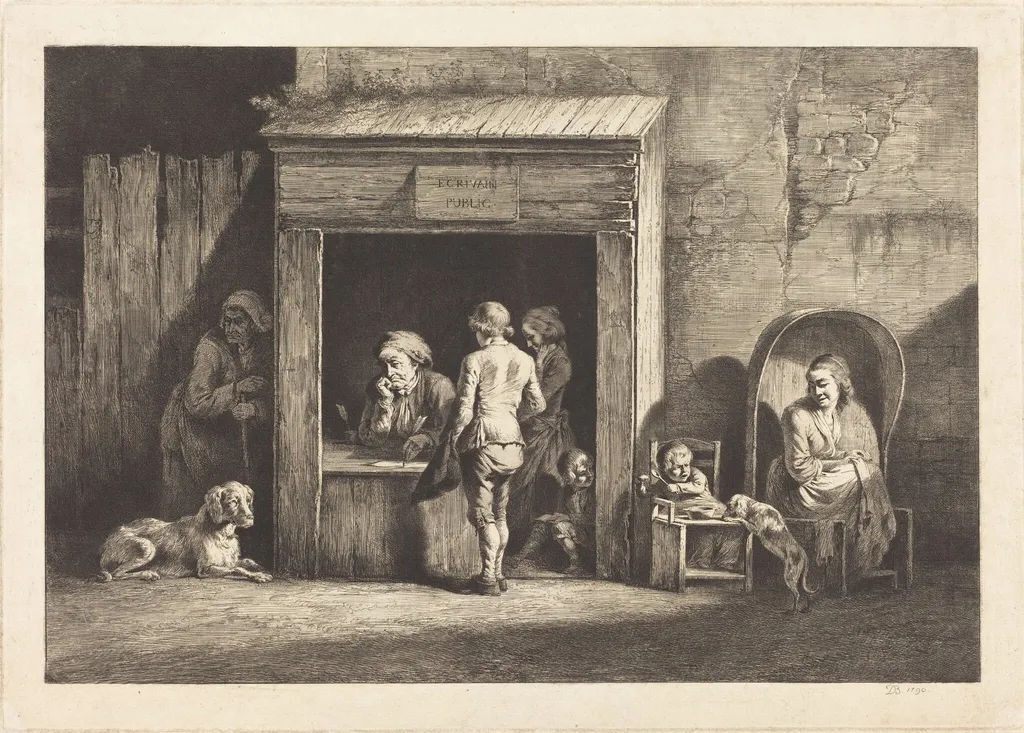
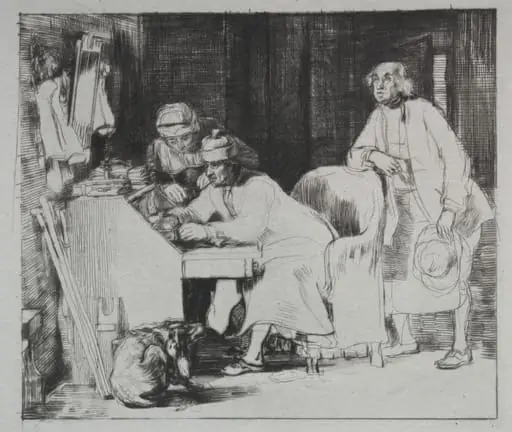
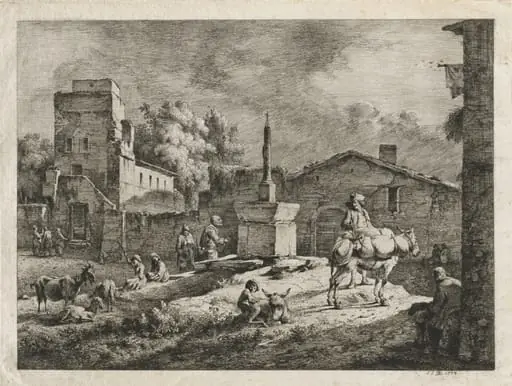
The Public Scribe is an ink print by the Romanticist artist Jean-Jacques de Boissieu. It dates from 1790 and is held in the collection of the National Gallery of Art.
- Inscription
- Inscribed:lower right in plate: DB. 1790.; by later hands, lower verso in graphite: 86 / Vte. Monnier 11/(?) / 50 Boissieu / rare épreuve du 2me état le fond de la culotte du jeaune homme et blanc
About this work
Overview
Jean‑Jacques de Boissieu’s 1790 print, titled The Public Scribe, is an etching on laid paper that incorporates occasional roulette touches. The work depicts a modestly dressed scribe seated at a desk, absorbed in writing while a small crowd gathers around him in a dimly lit interior.
Subject & Meaning
The central figure is a public scribe, a professional copyist who provided written services to the public. Around him, various onlookers, some reading, others conversing or attending to dogs, illustrate a slice of everyday urban life, emphasizing the communal reliance on literacy and the scribe’s role as a focal point of social interaction.
Technique & Style
De Boissieu employed traditional etching methods, incising lines into a copper plate before printing onto laid paper. Selective roulette work adds texture to areas of shadow, enhancing the atmospheric dimness of the stone‑walled room. The composition reflects early Romantic sensibilities through its focus on ordinary people and emotive ambience rather than classical idealization.
History & Provenance
Created in the early years of the French Revolution, the print aligns with de Boissieu’s broader output of topographical and genre scenes. It entered museum collections in the late 19th century, documented in several catalogues of French prints, and has remained in public holdings, offering insight into the period’s visual culture.
![[Merchant in his stall with children playing]](https://artifactworldgallery.com/img/auguste-brouet--merchant-in-his-stall-with-children-playing--87482c59251c2c9c-w320.webp)
Own this work as a print
Artist & collection

- [Merchant in his stall with children playing]
 The Lost Receipt
 Interior of a House
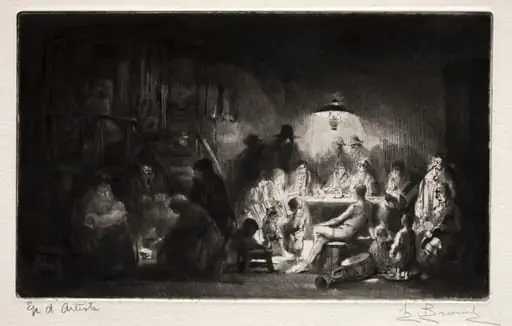 The Franconian Circus
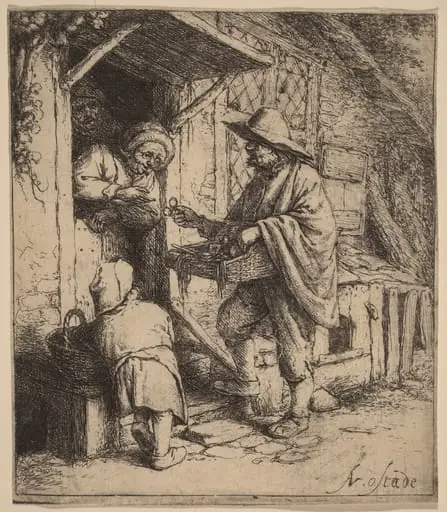 Street Vendor Selling Spectacles at the Door
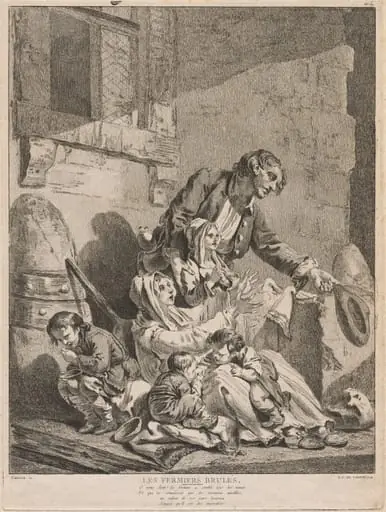 Les Fermiers brulés (A Burnt-Out Farmer, Begging with his Family)
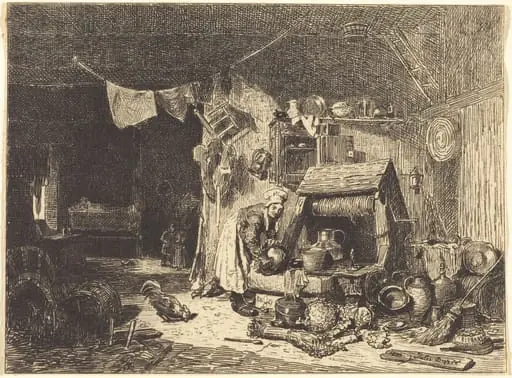 Interior of a Farmhouse
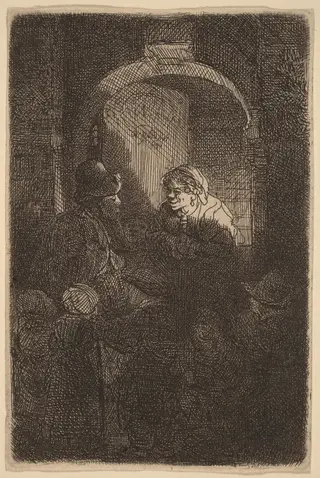 Woman at a Door Hatch Talking to a Man and Children (The Schoolmaster)
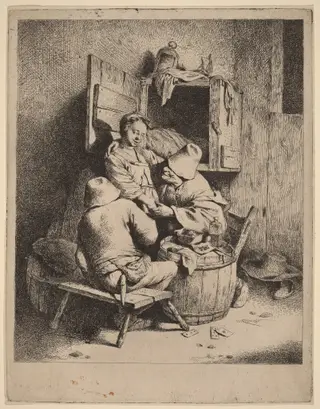 The Flirtation of a Young Innkeeper
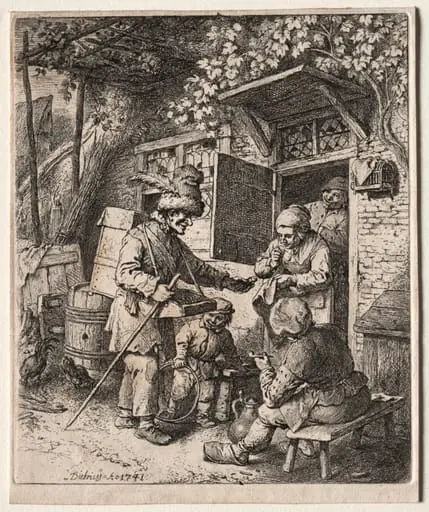 The Peddlar
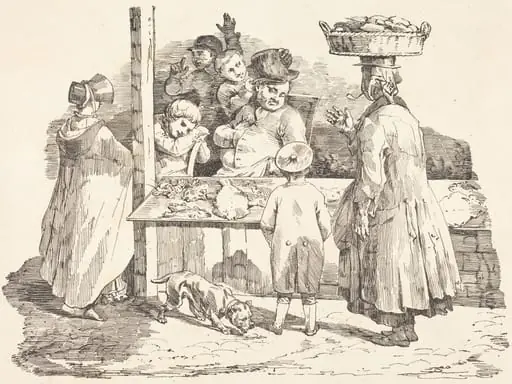 The Dozing Fishmonger (Le marchand de poissons endormie)
 View of Saint-Andeol