Artwork
Madonna and Child with Saints
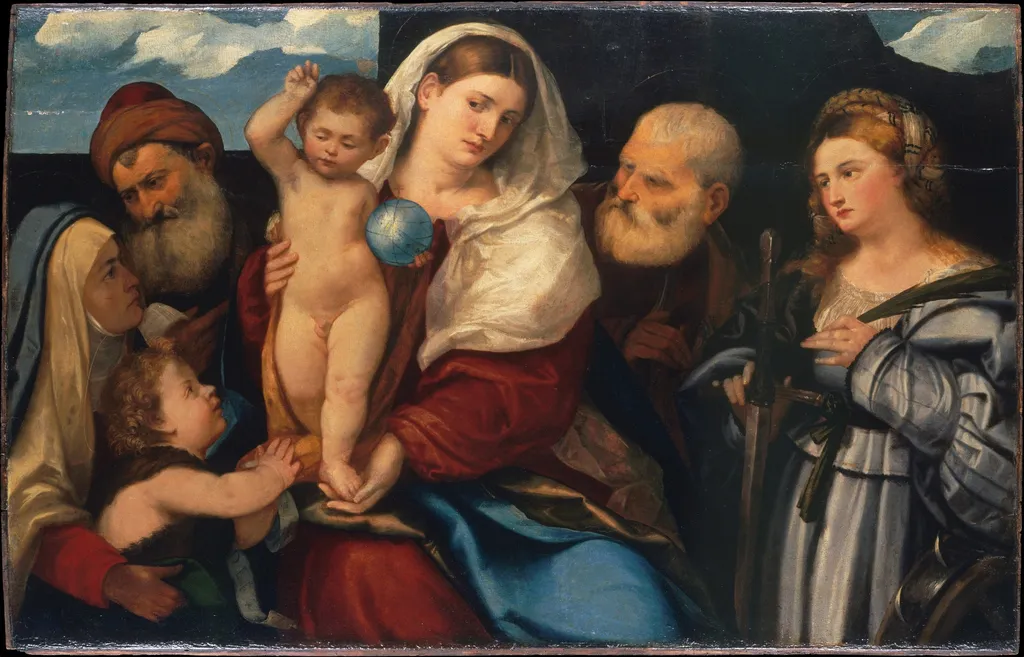
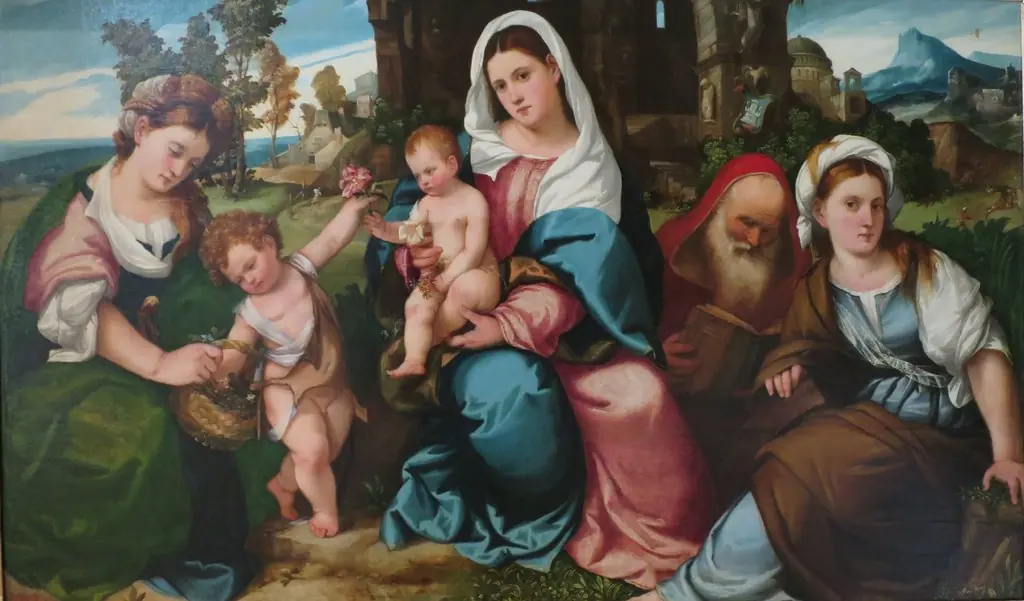
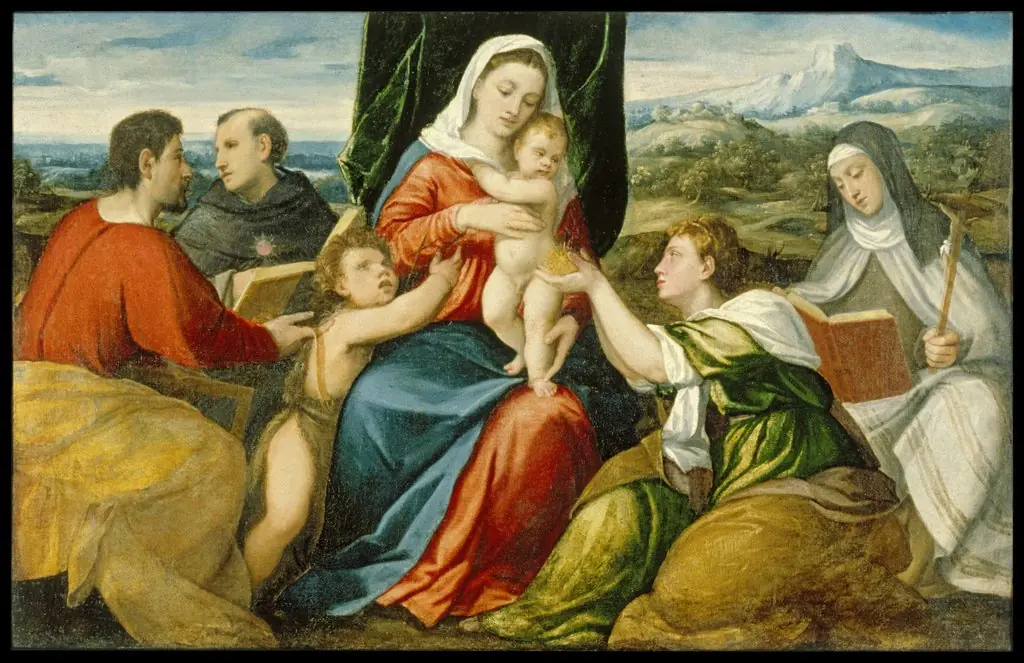
Madonna and Child with Saints is an oil painting by the Mannerist artist Bonifazio Veronese. It dates from 1530 and is held in the collection of the Metropolitan Museum of Art.
About this work
Painted by Bonifacio de' Pitati, known as Bonifazio Veronese, around 1530, the work shows the artist's skill in composing informal yet grand devotional scenes.
Elizabeth and Zachariah stand with their son John the Baptist at the left of this Venetian sacra conversazione, while Joseph and Catherine of Alexandria complete the holy assembly gathered around the Madonna. Painted by Bonifacio de' Pitati, known as Bonifazio Veronese, around 1530, the work shows the artist's skill in composing informal yet grand devotional scenes. The panel, measuring 32 1/2 by 50 inches, entered the Metropolitan Museum of Art in 1995 as a gift from Mr. and Mrs. Edwin L. Weisl Jr.
Subject & Meaning
The painting depicts a sacra conversazione, with the Virgin Mary and Christ Child at the center. Surrounding them are John the Baptist, Joseph, Elizabeth, Zechariah, and Catherine of Alexandria. This grouping emphasizes the interconnected roles of holy figures in Christian salvation history: John the Baptist prefigures Christ's baptism, Joseph represents earthly guardianship, and Catherine symbolizes wisdom and martyrdom. The composition reinforces Marian devotion and the communion of saints, a central theme in Renaissance religious art.
History & Provenance
The painting was created in 1530 by Bonifazio Veronese. Its early history is not documented in the available sources. It was owned by Harriet Loyd-Lindsay before entering the collection of the Metropolitan Museum of Art, where it remains. No further commission or provenance chain is recorded.
Overview
Bonifacio de' Pitati, known as Bonifazio Veronese, created this oil painting titled "Madonna and Child with Saints" around 1530. Executed on a wood panel measuring 32 1/2 by 50 inches, the work is a prime example of a sacra conversazione. It showcases the artist's characteristic approach to religious subjects, blending solemnity with an approachable intimacy, a style highly sought after in mid-16th century Venice.
Technique & Style
Bonifacio Veronese developed a distinctive style for devotional works, building upon the traditions of artists like Palma il Vecchio. This panel exemplifies the mid-sixteenth-century Venetian aesthetic, characterized by a harmonious balance of figures and a warm, rich palette. The composition achieves a sense of both grandeur and informality, a hallmark of Bonifacio's successful Madonna and Child paintings and a key feature of his workshop's output.
Context
Active in Venice during the mid-16th century, Bonifacio de' Pitati was a contemporary of prominent painters such as Titian. He became a leading figure in creating devotional art, managing a significant workshop that reportedly trained younger artists who would later achieve renown. This included figures like Jacopo Tintoretto and Andrea Schiavone, underscoring Bonifacio's influence on the next generation of Venetian painters.
Own this work as a print
Artist & collection
Artist
Bonifazio Veronese, born Bonifazio de' Pitati (1487 – 19 October 1553), was a Venetian Renaissance painter who was active in the Venetian Republic.