Artwork
Madonna and Child with St Catherine, St John the Baptist, St Dorotea and St Anthony the Abbot
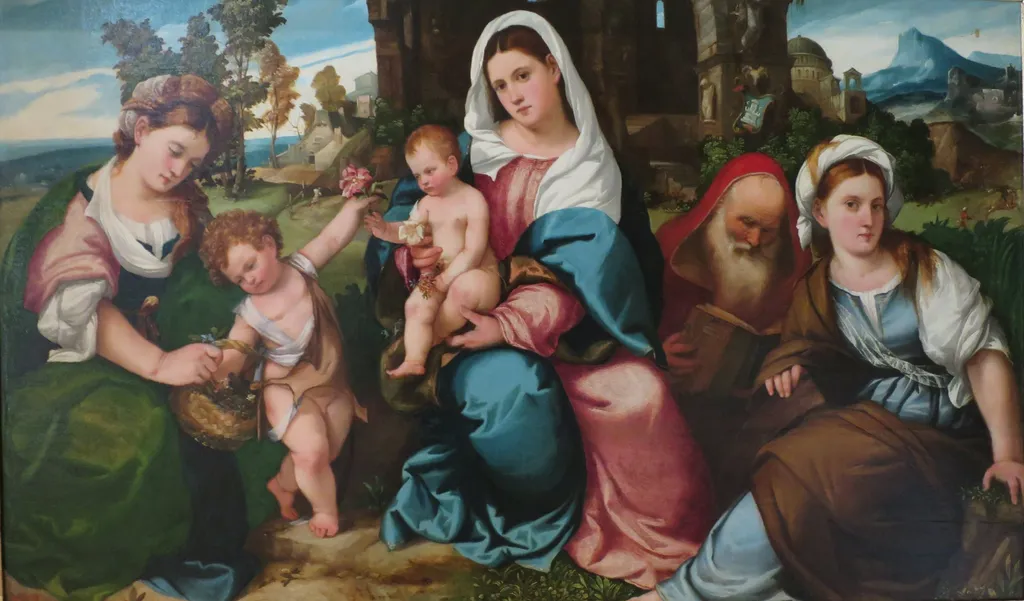
Madonna and Child with St Catherine, St John the Baptist, St Dorotea and St Anthony the Abbot is an oil painting by the Mannerist artist Bonifazio Veronese. It dates from 1523 and is held in the collection of the Hermitage Museum.
About this work
Subject & Meaning
St Catherine and St John the Baptist appear as named figures, alongside St Dorotea and St Anthony the Abbot, whose presence frames the sacred encounter.
The painting presents a devotional gathering centered on the Madonna and Child, identified as the principal subject. The Virgin holds the Christ Child at the composition's heart, surrounded by four saints. St Catherine and St John the Baptist appear as named figures, alongside St Dorotea and St Anthony the Abbot, whose presence frames the sacred encounter.
In its iconography the work follows the Italian Renaissance convention of the sacra conversazione, in which saints from different eras are united around the Virgin and Child in a shared devotional space. The pairing of a contemplative figure such as John the Baptist with the monastic St Anthony the Abbot emphasizes themes of asceticism and holy witness, while St Dorotea, associated with purity and flowering faith, reinforces the Marian context.
Rendered in oil on canvas, the work functions as a religious image intended for veneration, presenting the Madonna and Child as the spiritual focus around which the surrounding saints offer intercession.
Technique & Style
Created in 1523, this religious painting by Bonifazio Veronese is executed in oil paint on a canvas support. The work measures 80 cm in height and 135 cm in width. As a product of the Italian Renaissance tradition, the medium allows for the detailed rendering of the sacred figures, including the Madonna, Christ Child, and the accompanying saints.
The formal composition centers on the Madonna and Child, integrating the surrounding saints within a unified pictorial space characteristic of the artist's handling of religious subjects during this period.
History & Provenance
The work was created in 1523 by Bonifazio Veronese in Italy as an oil painting on canvas, measuring 80 cm in height and 135 cm in width. It is a religious work depicting the Madonna and Child alongside Saints Catherine, John the Baptist, Dorotea, and Anthony the Abbot. The painting is held in the collection of the State Hermitage Museum in Saint Petersburg, where it remains. The available sources do not record a specific accession number, commission details, or a documented exhibition history.
Overview
Created in 1523, this oil painting by Bonifazio Veronese, also known as Bonifazio de’ Pitati, brings together the Virgin Mary with the infant Christ and four accompanying saints within a compact, green‑toned landscape. The work is part of the State Hermitage Museum’s collection and exemplifies the compositional balance characteristic of early 16th‑century Venetian art.
Context
The artist’s career unfolded within the Venetian Republic, where he absorbed influences from contemporaries such as Titian and later passed stylistic elements to painters like Andrea Schiavone and Jacopo Tintoretto. This painting reflects the transitional moment between the balanced classicism of the Renaissance and the more expressive, complex compositions that would define later Mannerist and Baroque works.
Own this work as a print
Artist & collection
Artist
Bonifazio Veronese, born Bonifazio de' Pitati (1487 – 19 October 1553), was a Venetian Renaissance painter who was active in the Venetian Republic.

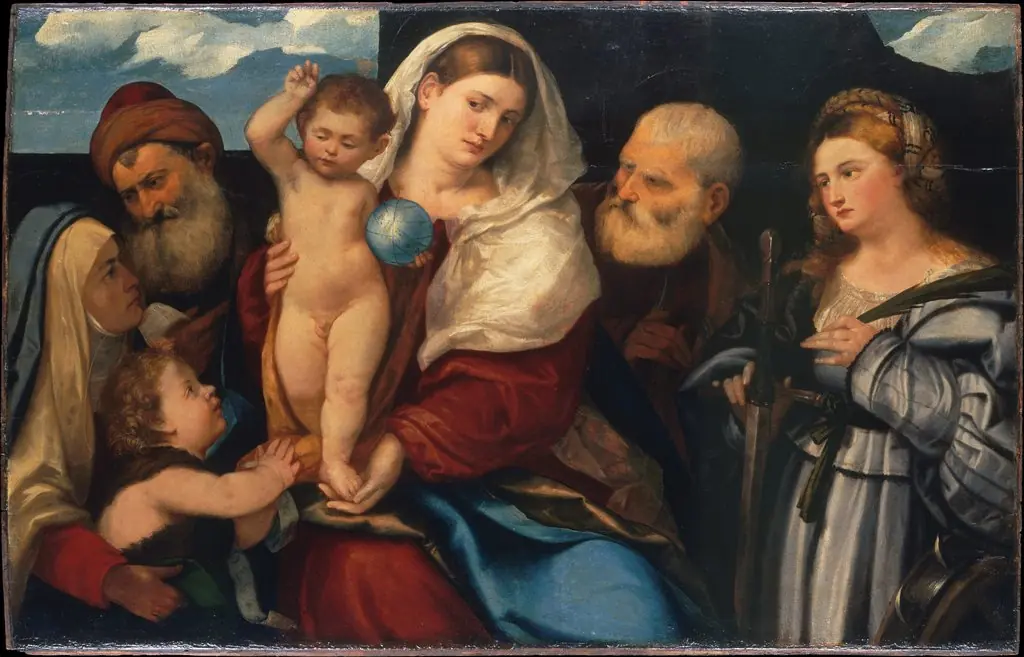
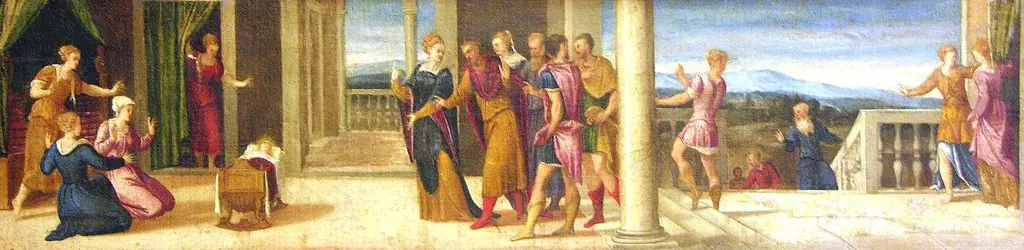
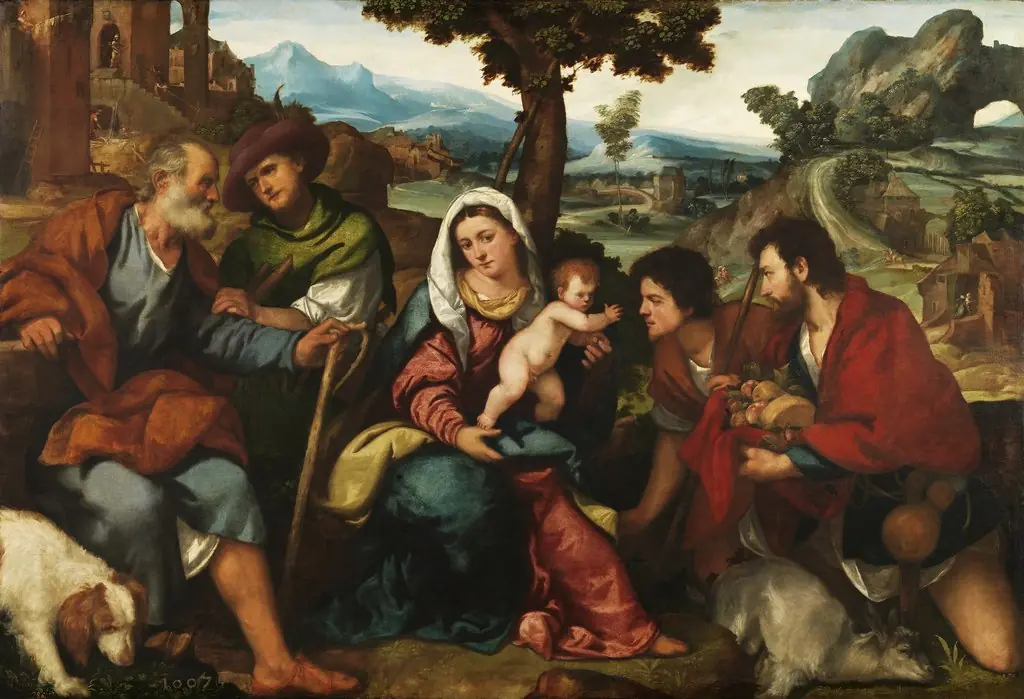
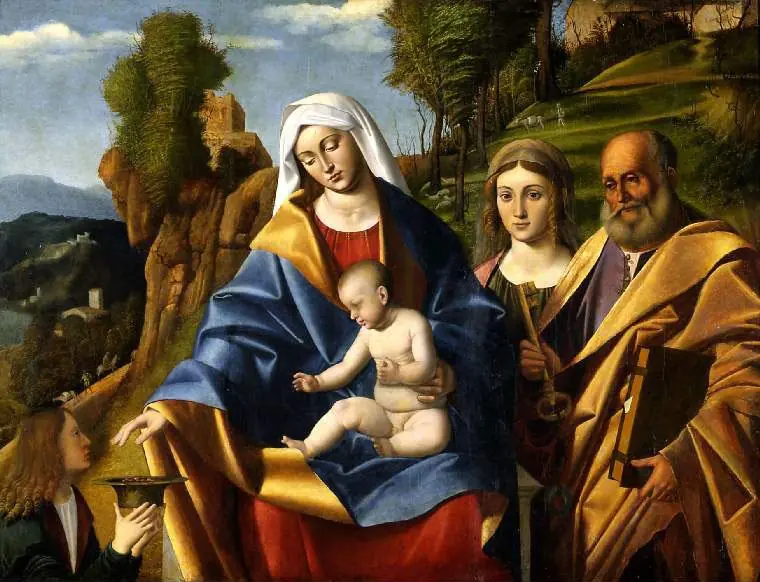 Virgin and Child with Saints,
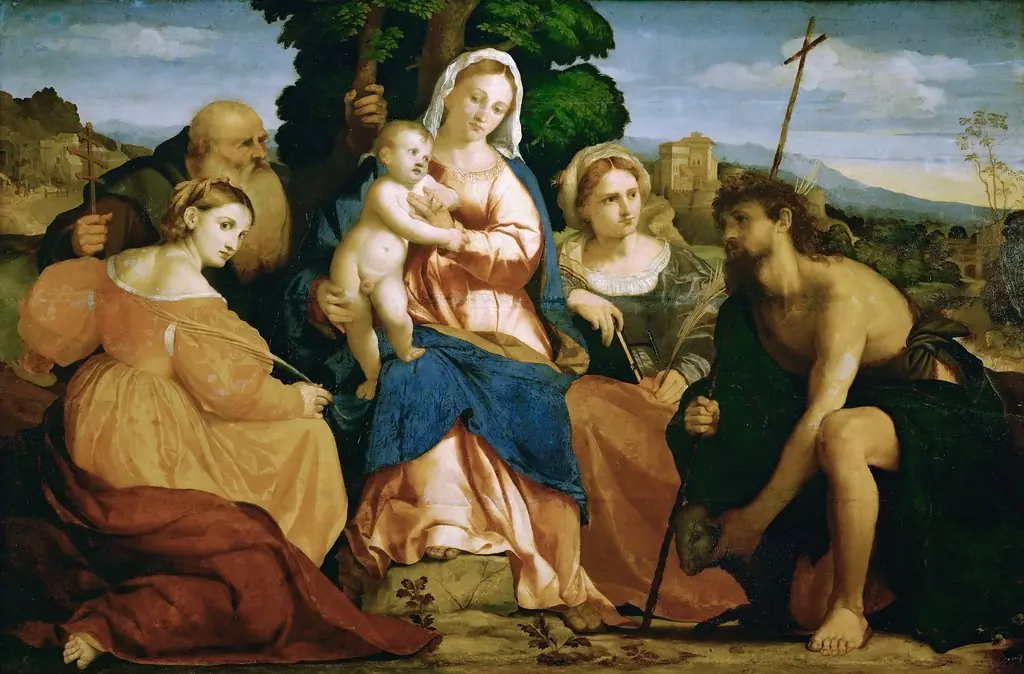 Sacred conversation
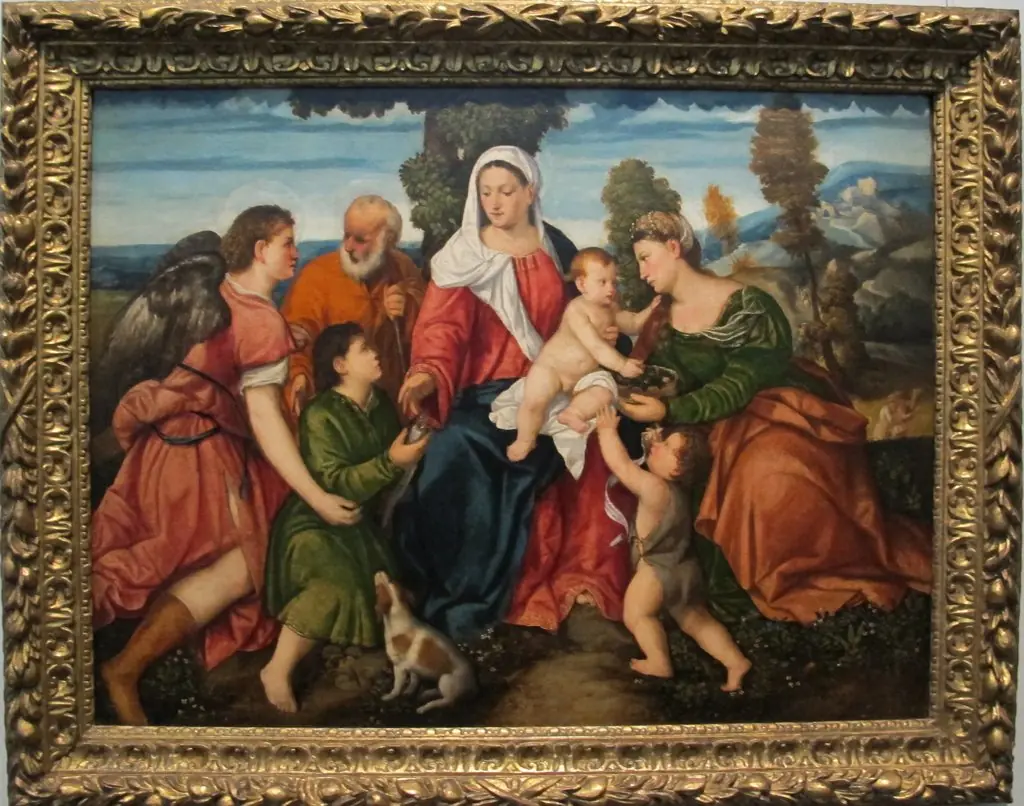 The Holy Family with Tobias and the Angel, Sts. Dorothy, and Infant John the Baptist
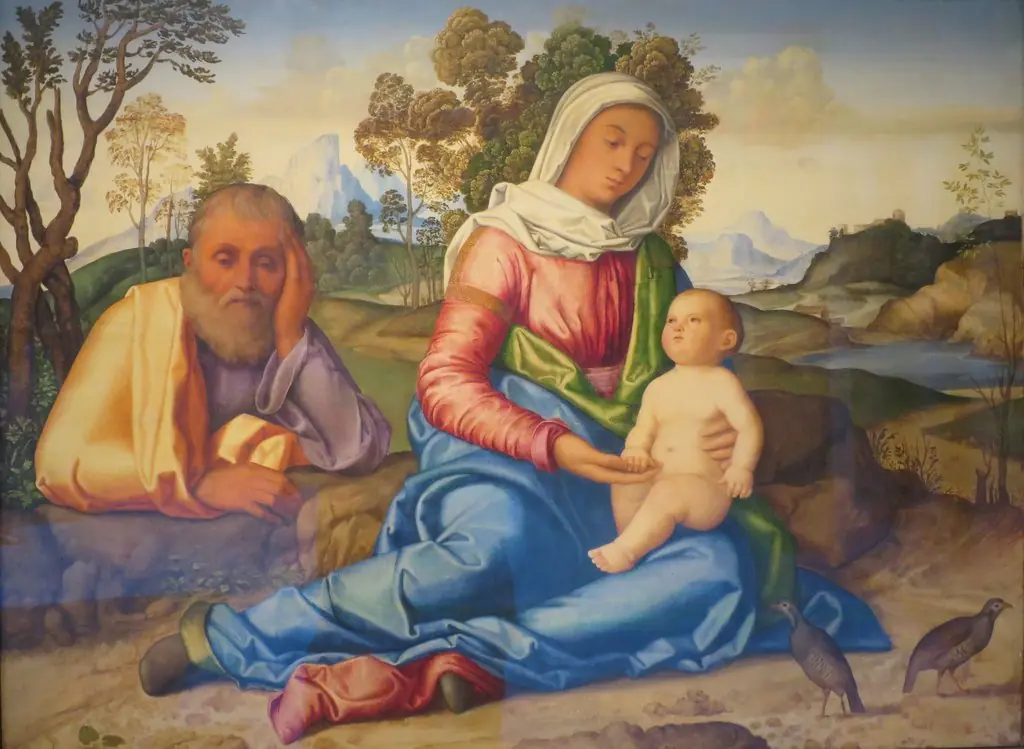 The Rest on the Flight into Egypt
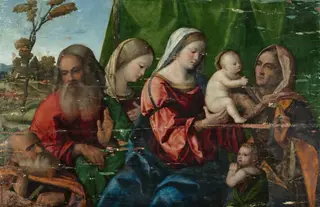 Virgin and Child with Saints
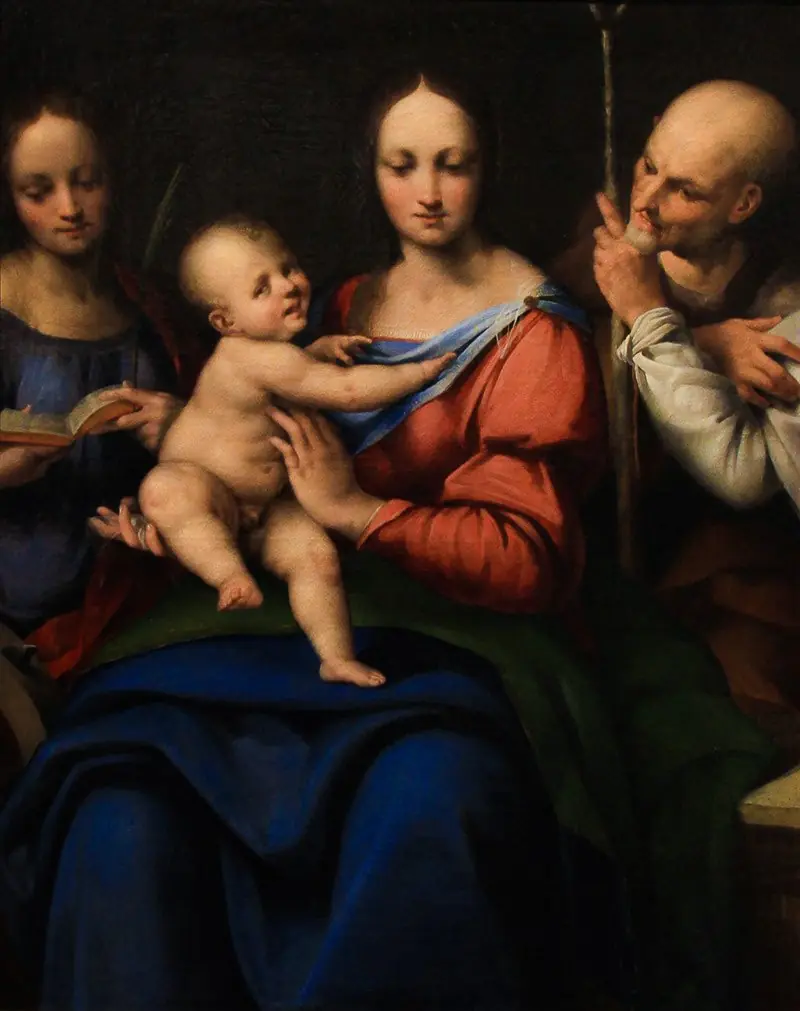 The Holy Family with Catherine
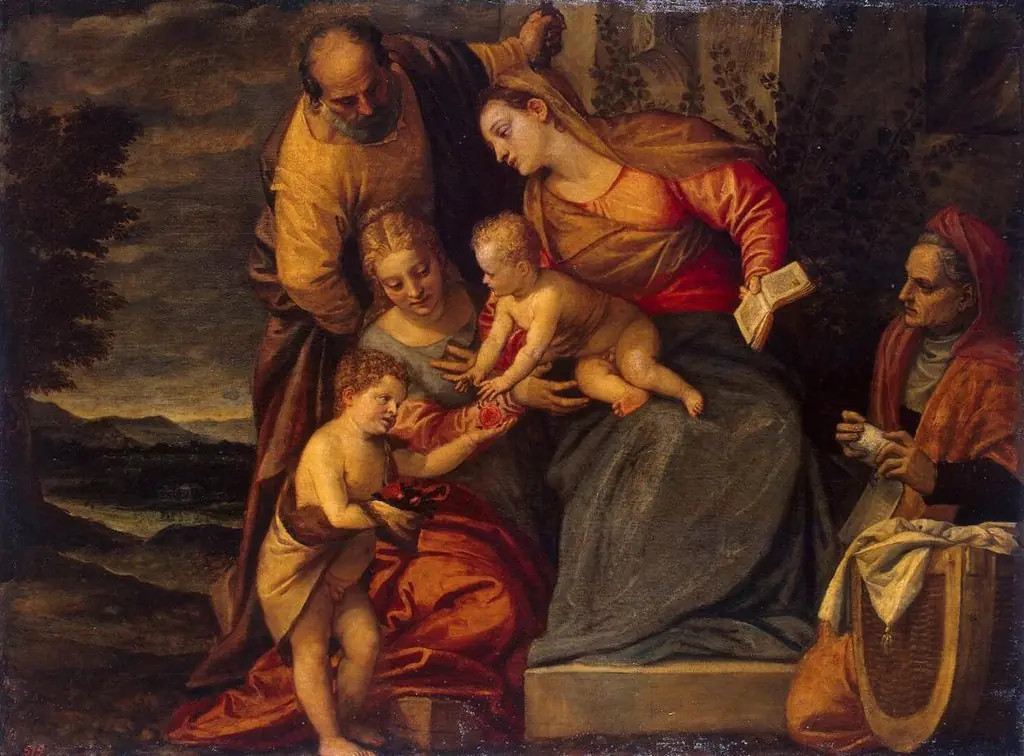 Holy Family with Sts Catherine, Anne and John
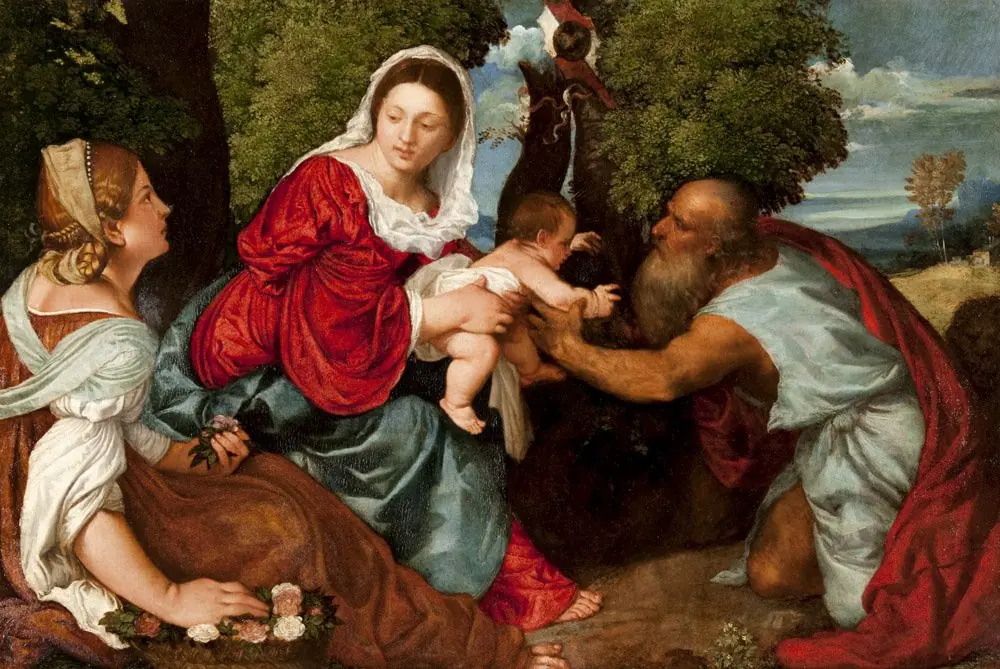 Madonna and Child with Saint Jerome and Saint Dorothy
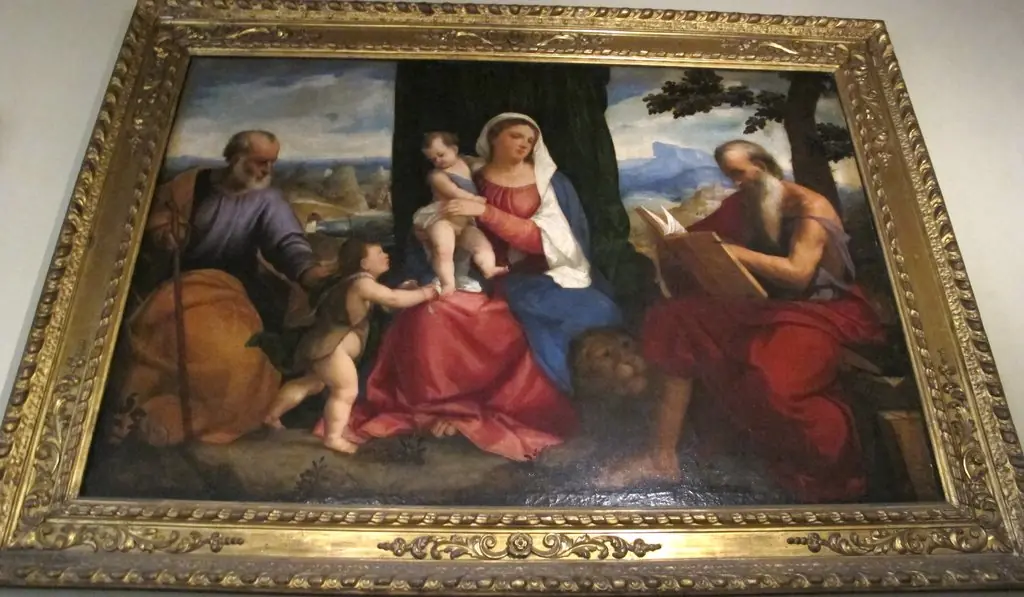 The Holy Family and Infant St. John and St. Jerome
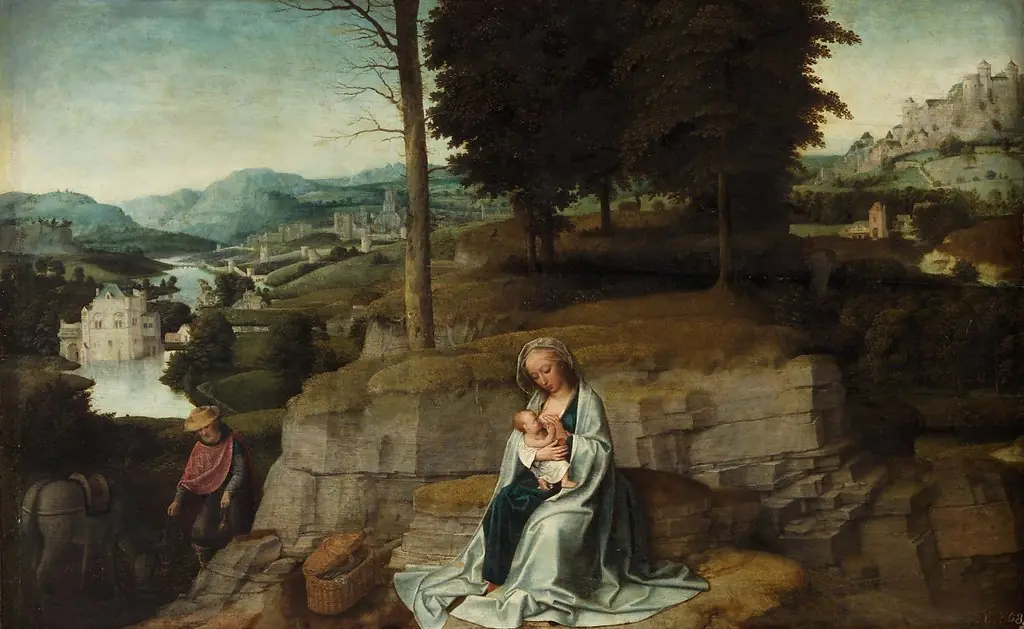 Rest on the Flight into Egypt
- Madonna and child with Saint Catherine, Saint James the Greater, and an angel