Artwork
Madonna and Child with Four Saints
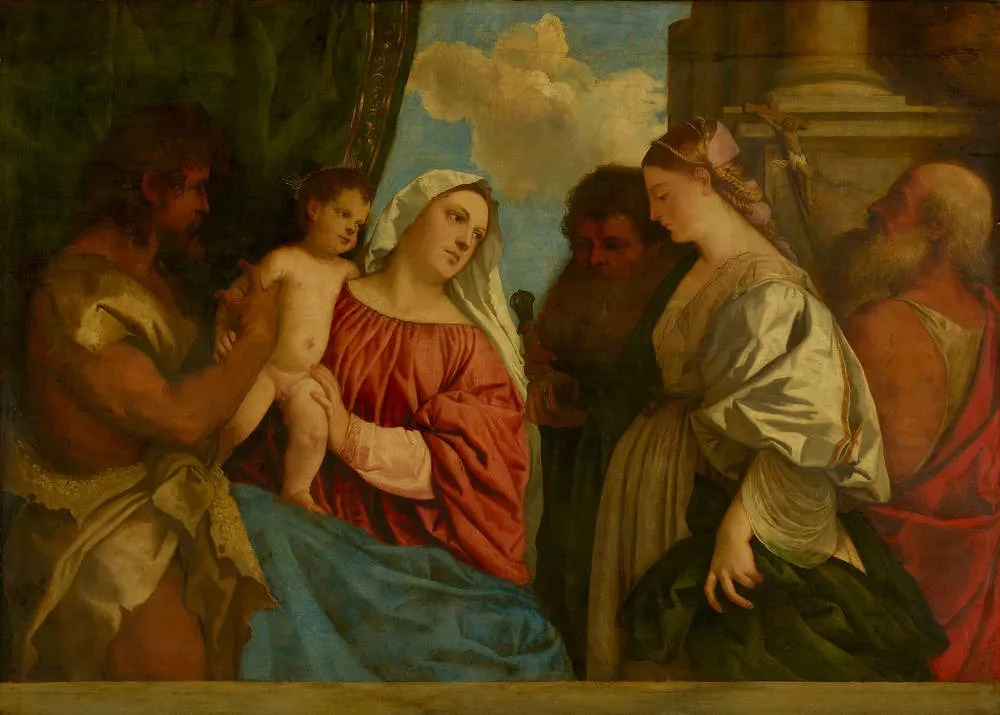
Madonna and Child with Four Saints is an oil painting by the High Renaissance artist Titian. It dates from 1518 and is held in the collection of the Staatliche Kunstsammlungen Dresden.
About this work
Subject & Meaning
To the right, Mary Magdalene appears in profile with her gaze lowered, Saint Paul emerges from shadow, and Saint Jerome kneels in adoration of a crucifix.
The painting depicts a sacra conversazione, a genre in which the Madonna and Child are joined by saints in a unified, informal setting. In the center, the seated Virgin supports the Christ Child on her knee, while the young John the Baptist reaches toward him on the left. To the right, Mary Magdalene appears in profile with her gaze lowered, Saint Paul emerges from shadow, and Saint Jerome kneels in adoration of a crucifix. The composition’s half-length figures and parted curtain backdrop emphasize intimate devotion rather than narrative action.
The inclusion of these specific saints, John the Baptist, Paul, Mary Magdalene, and Jerome, reflects both traditional Venetian piety and Titian’s innovative approach to grouping sacred figures in varied, lifelike poses. The work’s meaning centers on the sacred exchange between the Madonna and Child and the saints, conveying intercession and divine presence accessible to private devotion.
Technique & Style
Created around 1516–1520, the work is an oil painting executed on a wooden panel support. The composition measures approximately 138 by 191 centimeters and depicts figures at half-length against a backdrop of a parted curtain, architectural detail, and a bright sky. Stylistically, the piece exemplifies the Venetian school and High Renaissance movements through its free composition and rich coloration, characteristics often compared to Titian's Assumption.
The arrangement of the Madonna, Child, and four saints is described as extremely free, showcasing a variety of attitudes and expressions that defined the "modern style" of the period. The figures include John the Baptist, Paul, Mary Magdalene, and Jerome, with the latter shown adoring a crucifix while emerging from shadows behind the others.
History & Provenance
The painting was created around 1516-1520 by Titian as an oil on panel work in the sacra conversazione format, intended for private devotion. It entered the collection of Cardinal Grimani in Venice before passing to the Serviti di Venezia and subsequently to the Este family. In 1745 the bulk of the Este collection was sold to the Prince of Saxony, after which the work entered the Gemäldegalerie Alte Meister in Dresden, where it remains on display.
Attribution to Titian was first made by Morelli, a conclusion now widely accepted among scholars, though no contemporary documents record its original commission or creation process.
Madonna and Child with Four Saints is held by the Gemäldegalerie Alte Meister in Dresden, as part of the Staatliche Kunstsammlungen Dresden collection. The painting was probably first in Cardinal Domenico Grimani's collection in Venice before passing to the Servite church of Santa Maria dei Servi in Venice and then to the Este family collection. In 1745 most of the Este holdings were purchased by the Duke of Saxony, bringing the work to its present home in Dresden.
No documents survive to establish its early dating, which rests on stylistic comparison with Titian's Assumption, and its attribution to Titian was first made by Morelli and accepted by most later scholars. The sources do not provide a specific inventory or accession number, nor any record of modern exhibitions.
Context
Attribution of the work was historically debated until Giovanni Morelli assigned it to Titian, a consensus subsequently upheld by most art historians. Dating relies entirely on stylistic comparison to the Assumption of the Virgin, noting shared compositional freedom and chromatic richness characteristic of the artist's output between 1515 and 1518. The painting exemplifies the Venetian school's High Renaissance approach to the sacra conversazione genre, specifically within a series of horizontally developed works intended for private devotion during the 1510s and 1520s.
Its arrangement of figures at half-length, featuring varied attitudes and expressions, embodies the "modern style" prevalent at the time. This work represents a significant contribution to Titian's exploration of sacred dialogue, distinguishing itself through its dynamic, informal grouping of saints around the central Madonna and Child.
Overview
Created around 1516–1520, this oil on panel work by Titian presents a sacra conversazione, a devotional gathering of holy figures. The central focus is the Virgin Mary with the infant Christ, surrounded by four saints, John the Baptist, Paul, Mary Magdalene and Jerome. The painting now belongs to the Gemäldegalerie in Dresden.
Artist & collection
Artist
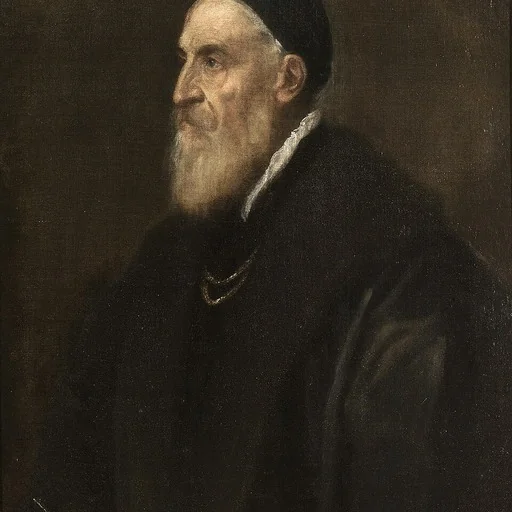
Tiziano Vecellio (Italian:; c. 1488/1490 – 27 August 1576), Latinized as Titianus, hence known in English as Titian ( TISH-ən), was an Italian Renaissance painter. The most important artist of Renaissance Venetian…

 Madonna and Child with Saint Elizabeth and Saint John the Baptist
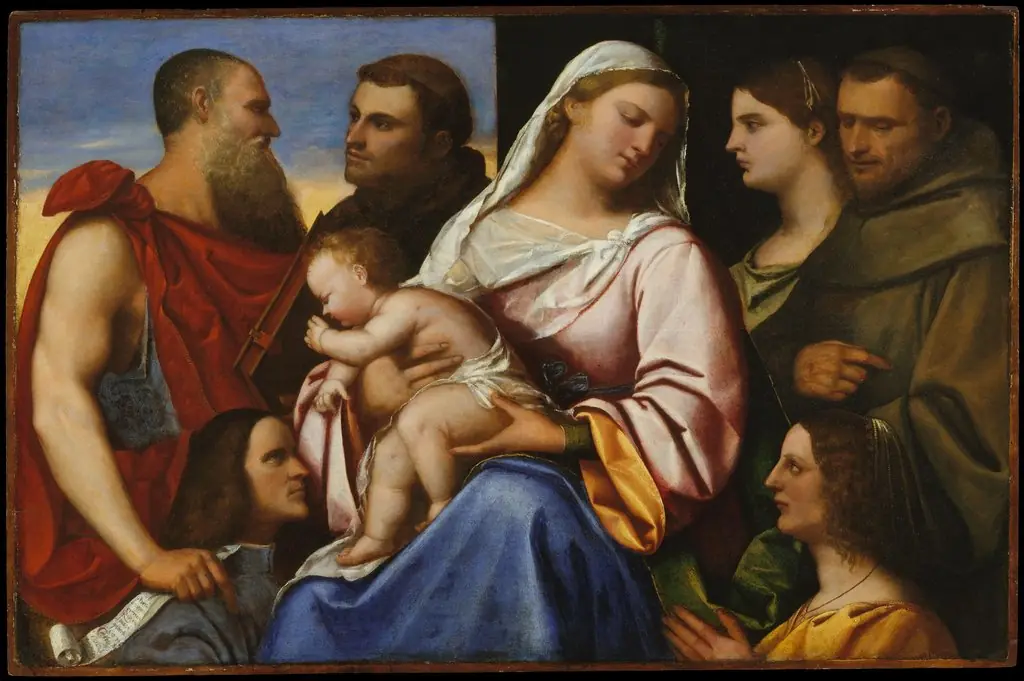 Madonna and Child with Saints and Donors
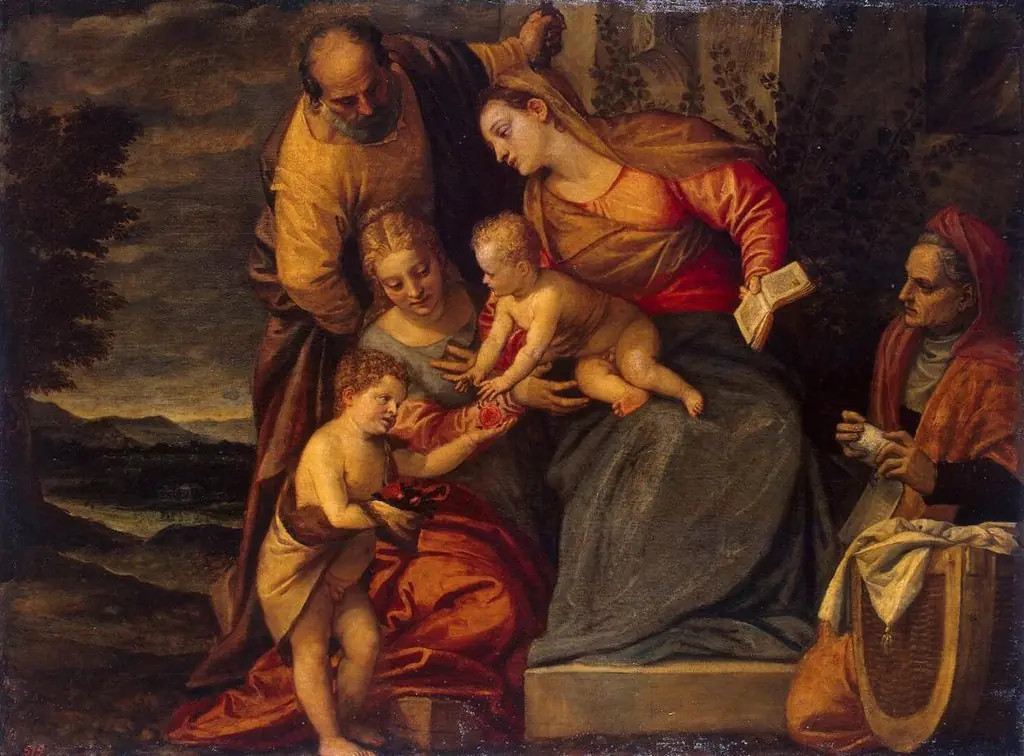 Holy Family with Sts Catherine, Anne and John
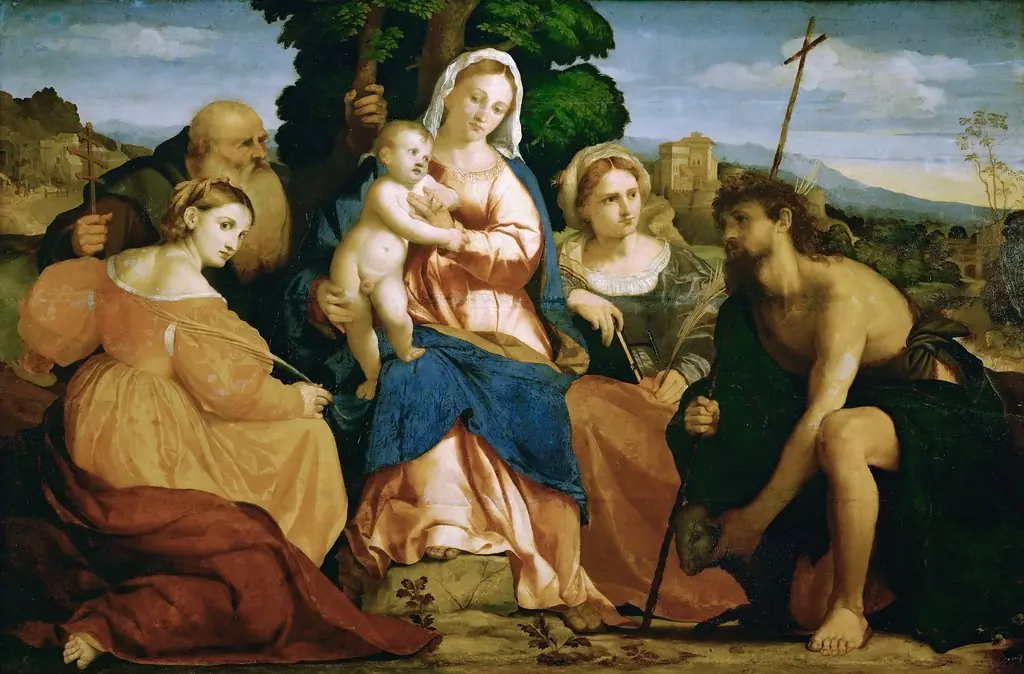 Sacred conversation
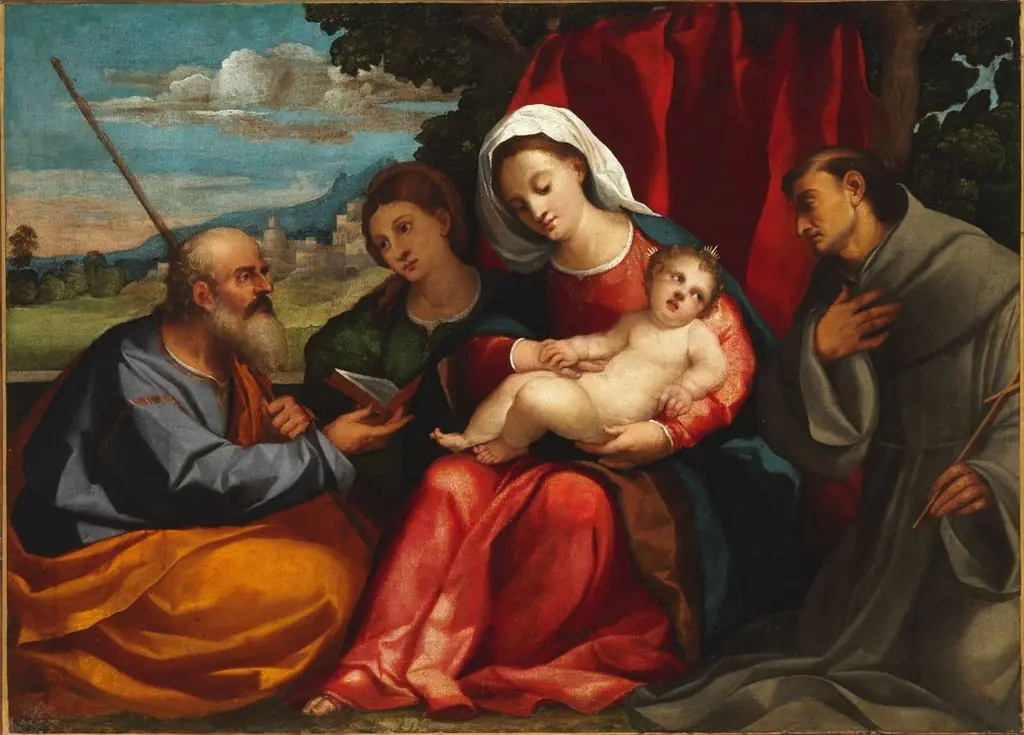 The Holy Family with a Female Saint and Saint Francis of Assisi
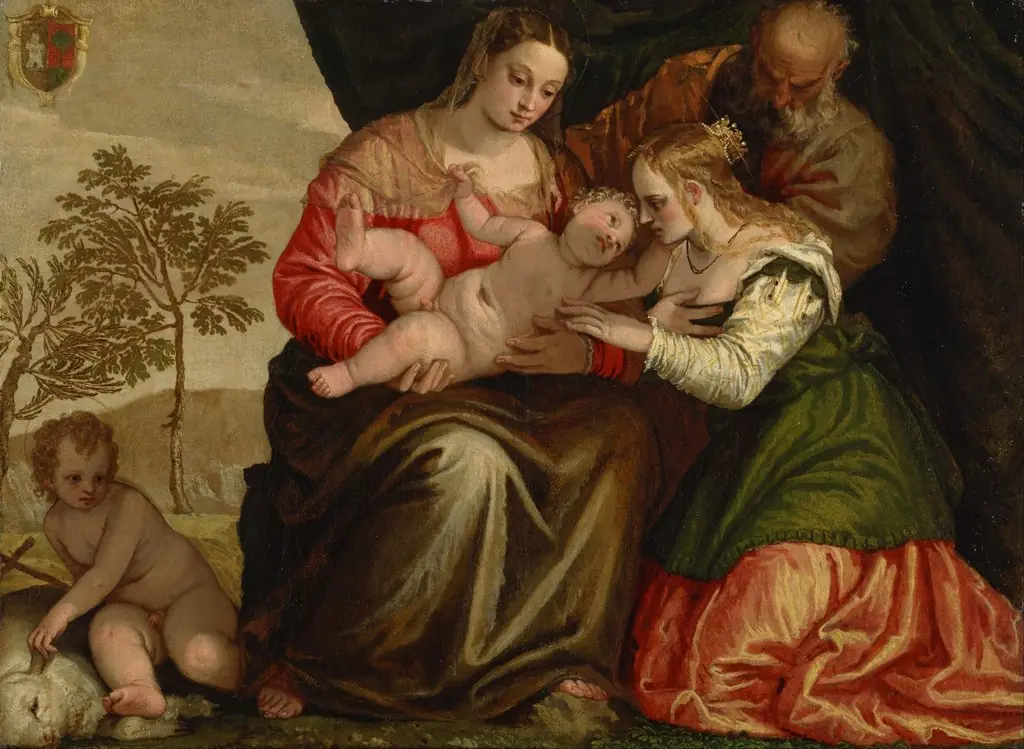 The Mystic Marriage of St. Catherine
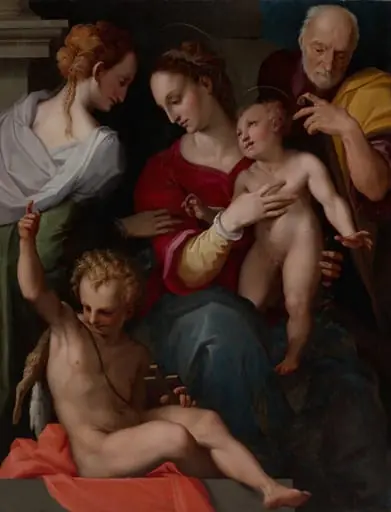 Holy Family with the Mystic Marriage of Saint Catherine
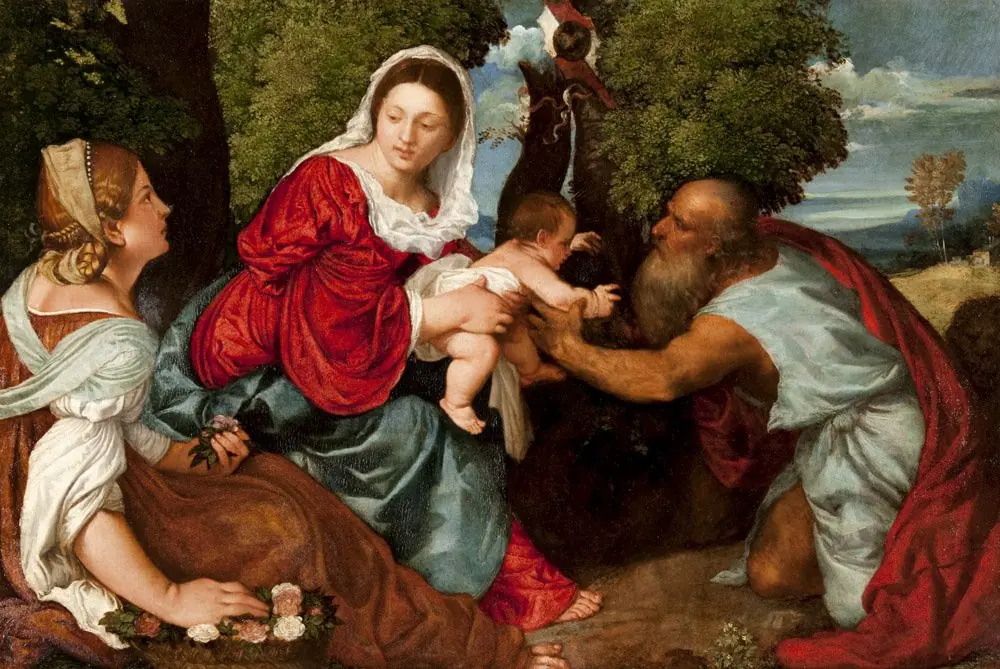 Madonna and Child with Saint Jerome and Saint Dorothy
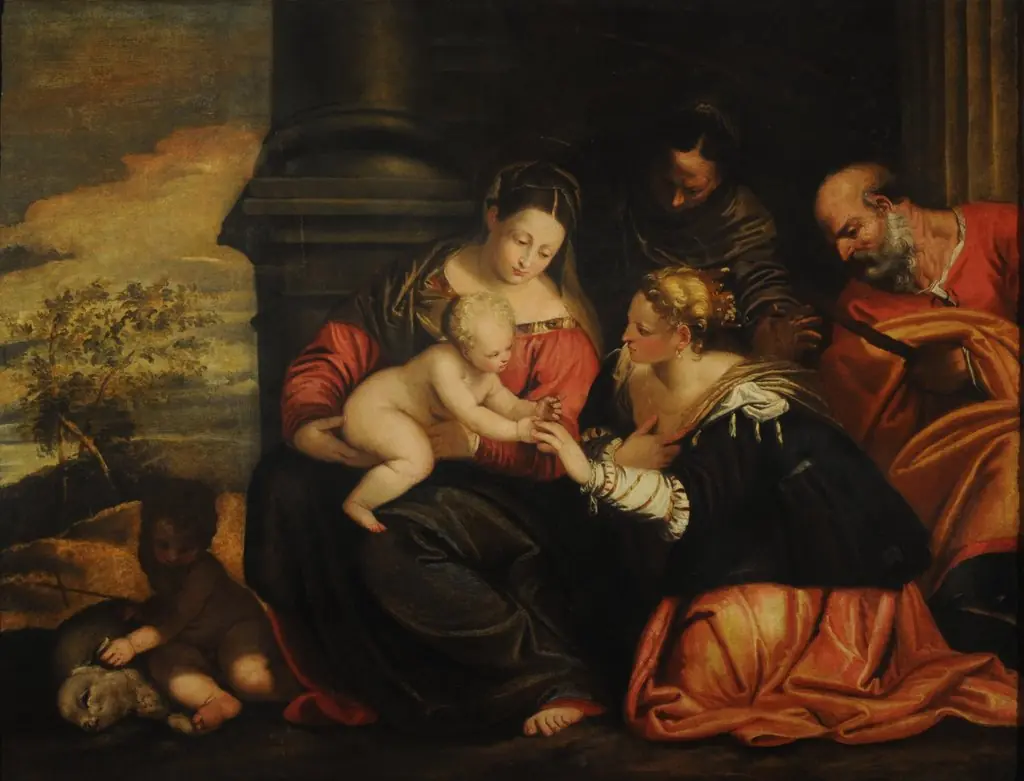 Mystic marriage of Saint Catherine of Alexandria