Artwork
Icoană, casa Șurdești, (Făurești), Muzeul Satului (1968)
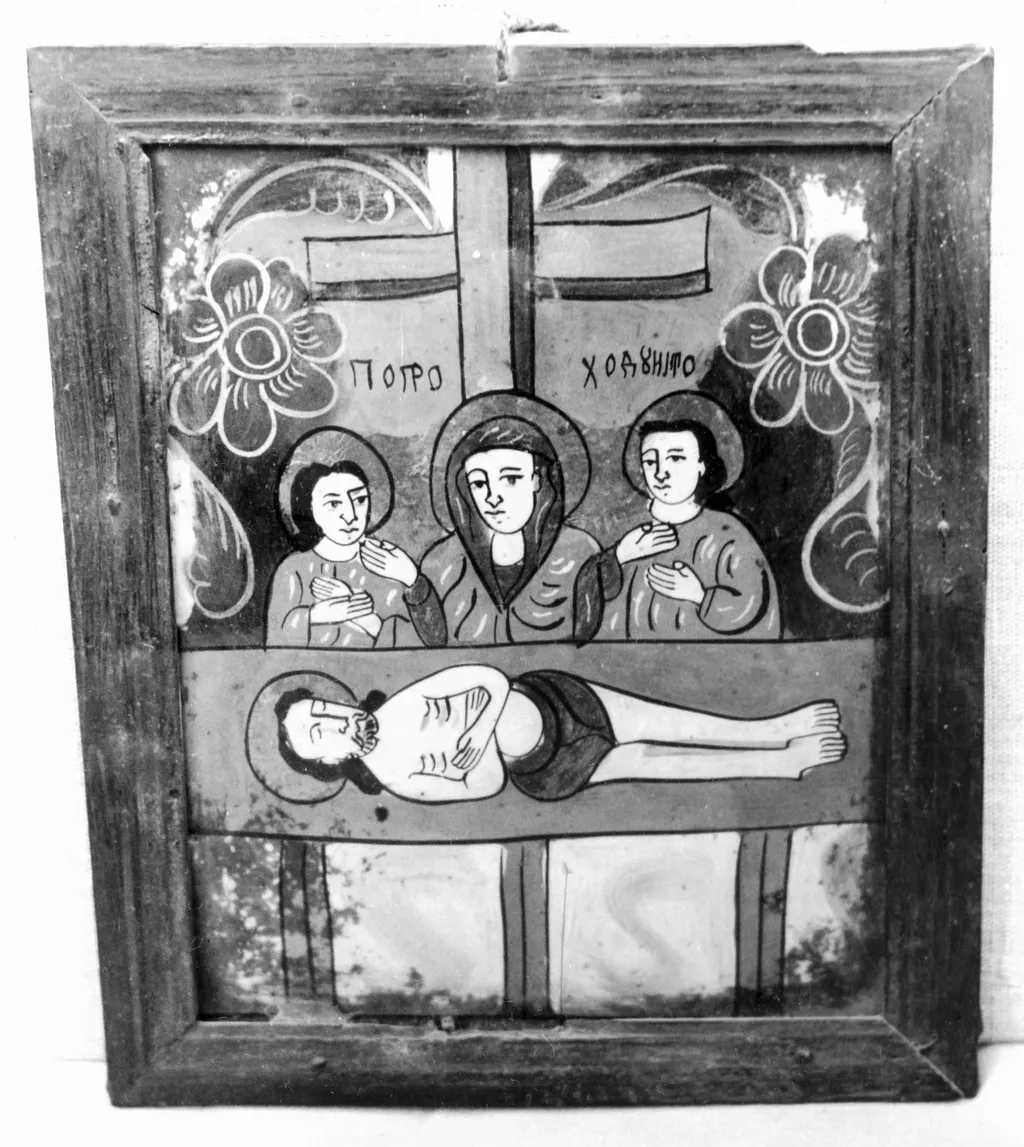
Icoană, casa Șurdești, (Făurești), Muzeul Satului (1968) is an unspecified painting by the Byzantine icon painting artist Boris Zderciuc. It dates from 1968 and is held in the collection of the "Dimitrie Gusti" National Village Museum. The work is an icon originally from the house of Şurdești, a village now displayed in the Village Museum of Bucharest.
About this work
Overview
The work is an icon originally from the house of Şurdești, a village now displayed in the Village Museum of Bucharest. It depicts a religious scene with vivid, flat colors and stylized figures, characteristic of folk devotional art. The piece is presented as a photograph that captures the interior of a modest wooden church setting, highlighting the simplicity of its composition.
Subject & Meaning
The icon portrays a biblical episode often titled “The Complaint of the Virgin,” showing the Virgin Mary in mourning, accompanied by two female witnesses. The composition reflects the devotional focus of rural Romanian households, where such images served as focal points for personal prayer and communal identity.
Technique & Style
Created by folk painters from the Nicula region in the late 19th century, the icon employs tempera mixed with linseed oil and bone glue on a wooden panel. Gold leaf accents the frame, while the surface is treated with traditional binders such as egg white and vinegar. The style is naïve, with simplified iconography and bold outlines typical of Nicula workshop production.
History & Provenance
The original icon was part of the domestic furnishings of the Şurdești house in the Făurești area. It entered the Village Museum’s collection during the institution’s early years, following the extensive field research of the Sociological School led by Professor Dimitrie Gusti in the 1930s. The museum’s acquisition reflects the broader effort to preserve rural cultural artifacts.
Context
In the Romanian countryside, wooden churches and household icons formed the visual core of religious life. The Nicula school, situated in Cluj County, supplied many such works, adapting traditional Orthodox motifs to local aesthetic constraints, such as limited panel size, which resulted in a more schematic representation of sacred narratives.
Legacy
The icon exemplifies the intersection of folk art and religious practice in Romania’s rural heritage. Its preservation in the Village Museum allows scholars to study the material techniques and regional variations of 19th‑century Romanian iconography, contributing to a deeper understanding of vernacular visual culture.
Artist & collection
Artist
Boris Zderciuc made paintings, sculptures, and textiles that document traditional Romanian village houses in the 1960s.
Museum
"Dimitrie Gusti" National Village Museum
Continue through works from the same source collection.
 Plângerea lui Iisus
 Plângerea
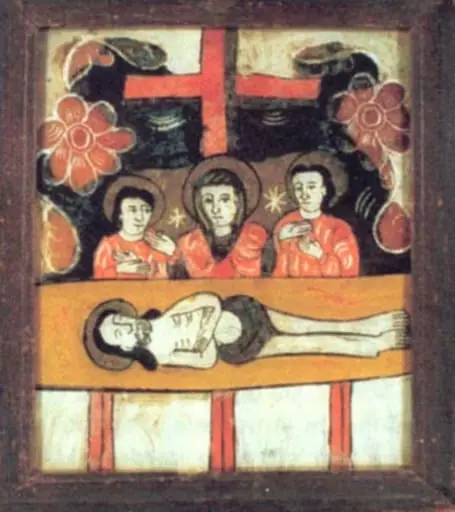
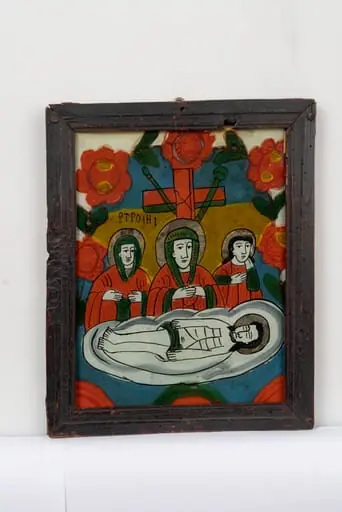 Tema icoanei face parte din ciclul Patimilor Mântuitorului și înfățișează Prohodul Domnului. Alături de Hristos așezat pe piatră sunt reprezentate doar trei personaje. Maica Domnului, în centru, cu mâinile împreunate la piept, are de-o parte un apostol, iar de cealaltă parte una dintre femeile mironosițe, probabil Maria Magdalena. În spate se profilează crucea lui Hristos și însemnele patimilor - sulița și buretele. Un șirag de rozete ornamentează fondul icoanei. Cromatica icoanei se compune din tonuri de roșu vermillon, ocru galben, alb, verde, albastru, negru și gri. Rama icoanei e profilată, băițuită și e formată din îmbinarea a patru baghete de lemn.
 Prohodul Domnului
 Punerea în mormânt
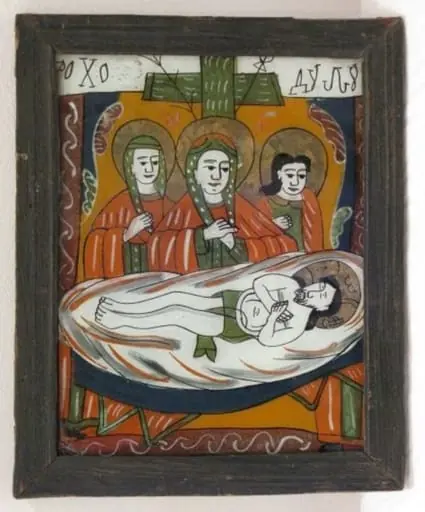
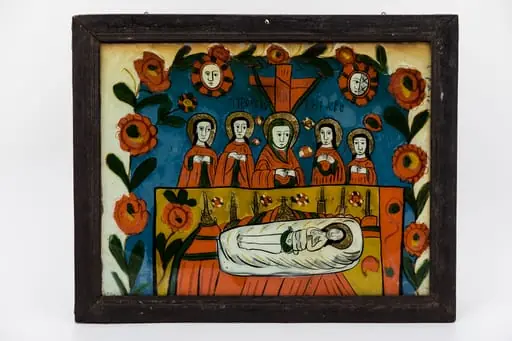 Icoana reprezintă Punerea în mormânt a Mântuitorului Iisus Hristos. Prohodul Domnului. Trupul Mântuitorului Iisus Hristos, fiind coborât de pe cruce, este învelit în țesătura giulgiului alb-gri, cu fire diafane galbene de lumină, amintind de Lumina Învierii. Maica Domnului împreună cu Sfinții Iosif din Arimateea, Nicodim și două femei mironosițe aducătoare de mir țin în brațe trupul Mântuitorului. Compozițional se creează astfel o imagine concentrică de corabie, cu Crucea Răstignirii ca și catarg, corabia prefigurând Biserica. Giulgiul și îmbrățișarea celor apropiați, uniți întru dragoste și suferință, reprezintă axa orizontală perpendiculară pe Cruce. Compoziția este echilibrată, simetrică și circulară. Maica Domnului este îmbrăcată în veșmânt cu maforiom roșu vermillon, cu sacos roșu vermillon și interiorul căptușit cu verde văratic. Fondul icoanei este cerul albastru ceruleum-cobalt, în registrul superior și de mijloc și un spațiu de galben-chihlmbar, în registrul inferior, în jurul mormântului Mântuitorului Iisus Hristos. Întreaga compoziție iconografică este încadrată de un chenar decorativ geometrizant alb, dublat de un chenar fitomorf, format dintr-o ghirlandă de 10-12 ruje roșii vermillon, cu interiorul galben-verde. În ghirlanda de ruje, sunt intercalate cele două elemente astrale martore: Soarele și Luna. Simetric și armonios, sunt 6 sfeșnice cu lumânări arzânde, lângă Trupul Mântuitorului Iisus Hristos, învăluit în giulgiu. Cromatica este armonioasă și luminos-pastelată: roșu vermillon, albastru cobalt, ceruleum, verde văratic-forest, galben chihlimbar, alb și negru. Inscripția din româno-chirilică se traduce Îngroparea Lui IC XC Iisus Hristos. Icoana este din Țara Oltului, Șcheii Brașovului.
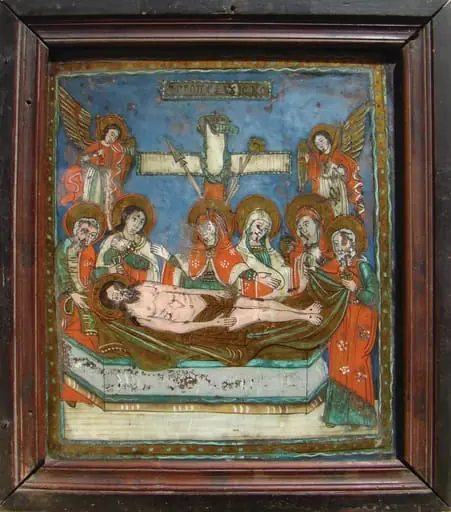 Prohodul lui Iisus
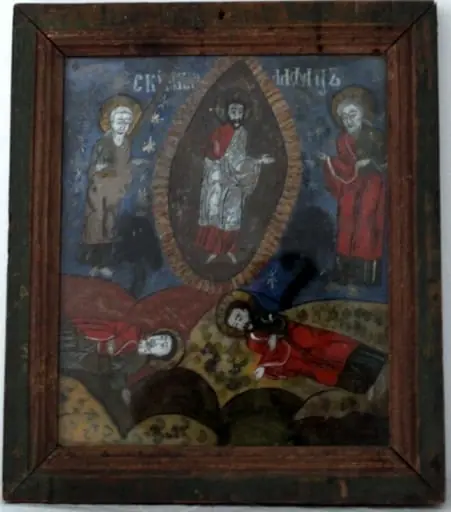 Schimbarea la Față
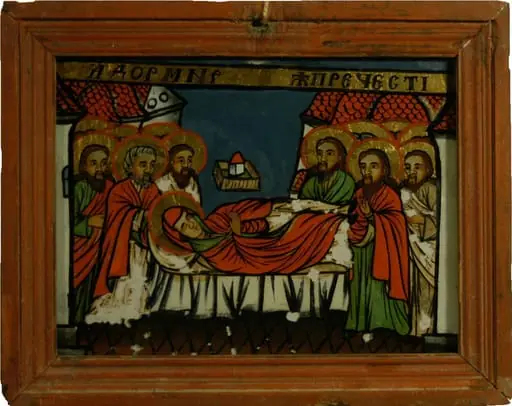 Adormirea Maicii Domnului
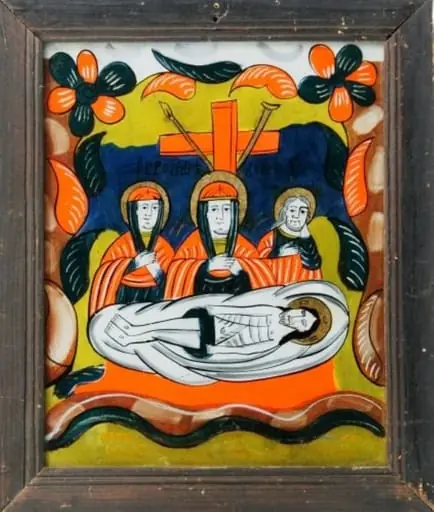 Plângerea lui Iisus (Prohodul)
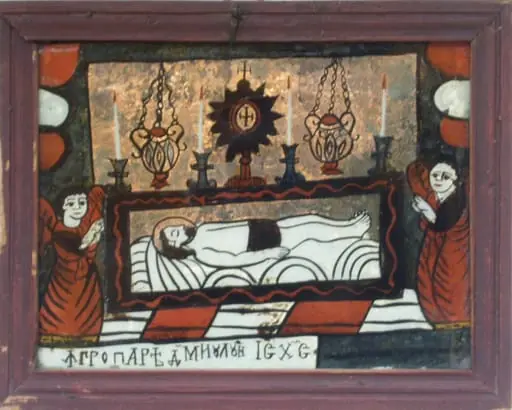 Mormântul Domnului
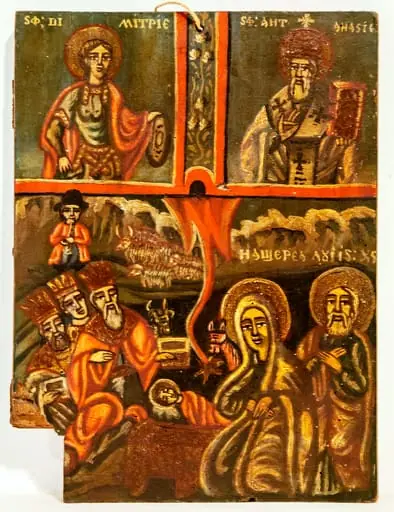
- Câmpul icoanei împărțit în 2 registre orizontale inegale(cel de se 1/3 din suprafața icoanei, la rândul lui împărțit în 2 casete separate de o bandă verticală pe care este pictat un lujer cu flori albe. În registru inferior: Nașterea Domnului. În prim plan, Maria si Iosif îngenuncheați, central Pruncul Isus înfășat, așezat în iesle, în stânga lui cei trei magi, cu coroane împărătești pe cap, aducându-i daruri, în plan îndepărtat un cioban(în veșminte orășenești, cu pălărie neagră pe cap, cântând din fluier turmei de oi. În spatele Pruncului se văd capetele animalelor din grajd și o iesle. Steaua își revarsă razele asupra Pruncului(zonă incandescentă, terminată cu o stea deasupra acestuia). Pe fundalul întunecat, nori cu marginile albe. Sfinții din registrul superior sunt redați 3/4, sfântul Dimitrie tânăr, în veșminte militare, lorică, mantie roșie, scut în stânga, suliță în dreapta, Sfântul Atanasie, în veșminte arhierești, binecuvintează cu dreapta, în stânga ține cartea Evangheliilor ridicată. Părul și barba albe, mustățile lungi, veșmintele deschise la culoare, mitra înaltă, surmontată de o cruce albă. Cromatica: roșu, brun, alb, albastru, galben. Colț stânga jos lipsă. Stil naiv, popular.