Artwork
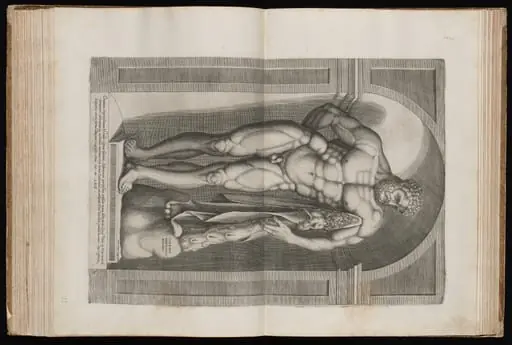
The Statue of Mars, called 'Pyrrhus'
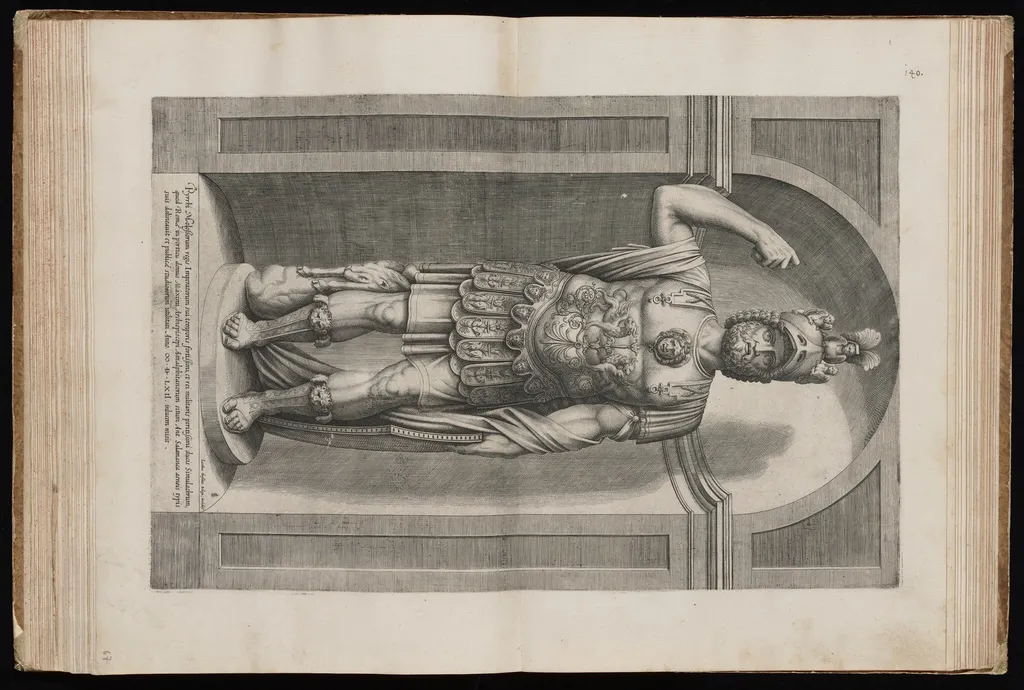
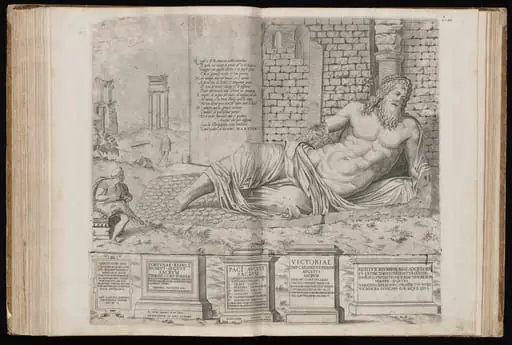
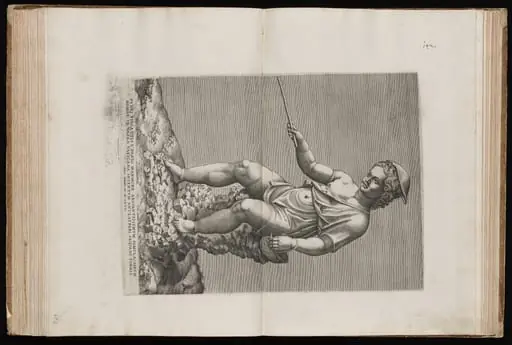
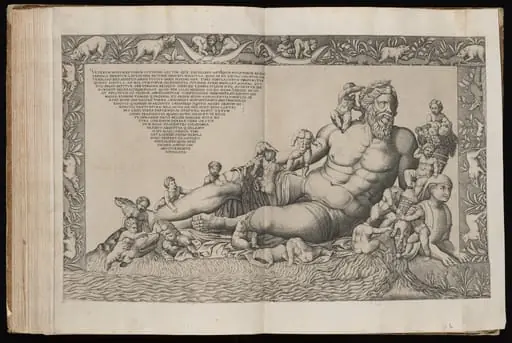
The Statue of Mars, called 'Pyrrhus' is an ink print by the Renaissance artist Jacob Bos. It dates from 1562 and is held in the collection of the National Gallery of Art.
- Inscription
- Inscribed:Lettered LR: "Iacobus Bossius Belga incidit" Lettered LC: "Pyhhri Molossorum regis imperatorum sui temporis fortissimi et rei miliaris peritissimi ducis Simulachrum ... Ant. Salamanca aeneis typis suis delineavit et publicae studiosorum utilitati Anno MDLXII in lucem misit"
About this work
Overview
An engraving by Jacob Bos, dated 1562, depicts a classical statue of a warrior, commonly referred to as 'Pyrrhus.
An engraving by Jacob Bos, dated 1562, depicts a classical statue of a warrior, commonly referred to as 'Pyrrhus.' Rendered in fine line work, the image appears as a detailed illustration within a printed book page. The composition centers on a standing figure in armor, framed by minimal background elements, with legible inscriptions along the left margin, suggesting scholarly or cataloging intent.
Subject & Meaning
The figure represents Mars, the Roman god of war, though traditionally labeled 'Pyrrhus', a reference to the Epirote king known for his military exploits. The pose, with one arm raised and the other lowered, evokes authority and readiness, aligning with Renaissance ideals of classical heroism. The attribution to Pyrrhus reflects contemporary efforts to link ancient statuary with historical narratives, blending myth and history.
Technique & Style
Bos employed meticulous engraving techniques to render intricate details of armor, including etched patterns and textured surfaces. The lines are precise and controlled, typical of Northern Renaissance printmaking. The background is deliberately sparse, directing focus to the statue’s form.
The absence of color and the use of monochrome enhance the illusion of a sculptural object captured on paper.
History & Provenance
Created in 1562, the engraving emerged during a period of renewed interest in classical antiquities among Northern European scholars. Jacob Bos, active in the Low Countries, specialized in reproducing ancient sculptures for scholarly circulation. This print likely appeared in a volume of antiquarian studies, intended for collectors and humanists seeking visual references to classical art.
Context
The engraving reflects the Renaissance fascination with recovering and documenting ancient sculpture. Artists and intellectuals across Europe compiled illustrated catalogs of classical statues, often based on surviving fragments or Roman copies. Bos’s work contributed to this movement, helping disseminate knowledge of antiquity beyond Italy to Northern audiences through printed media.
Legacy
Though not widely known today, Bos’s engraving exemplifies the role of print in preserving and transmitting classical imagery during the 16th century. It stands as a record of how Renaissance viewers interpreted and recontextualized ancient statuary, influencing later archaeological and art-historical practices through its precise documentation and scholarly framing.
Own this work as a print
Artist & collection