Artwork
Madonna lactans
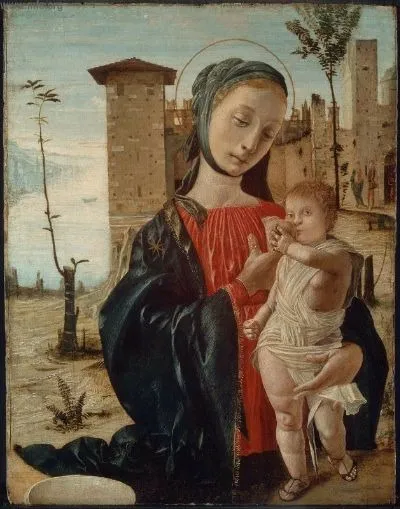
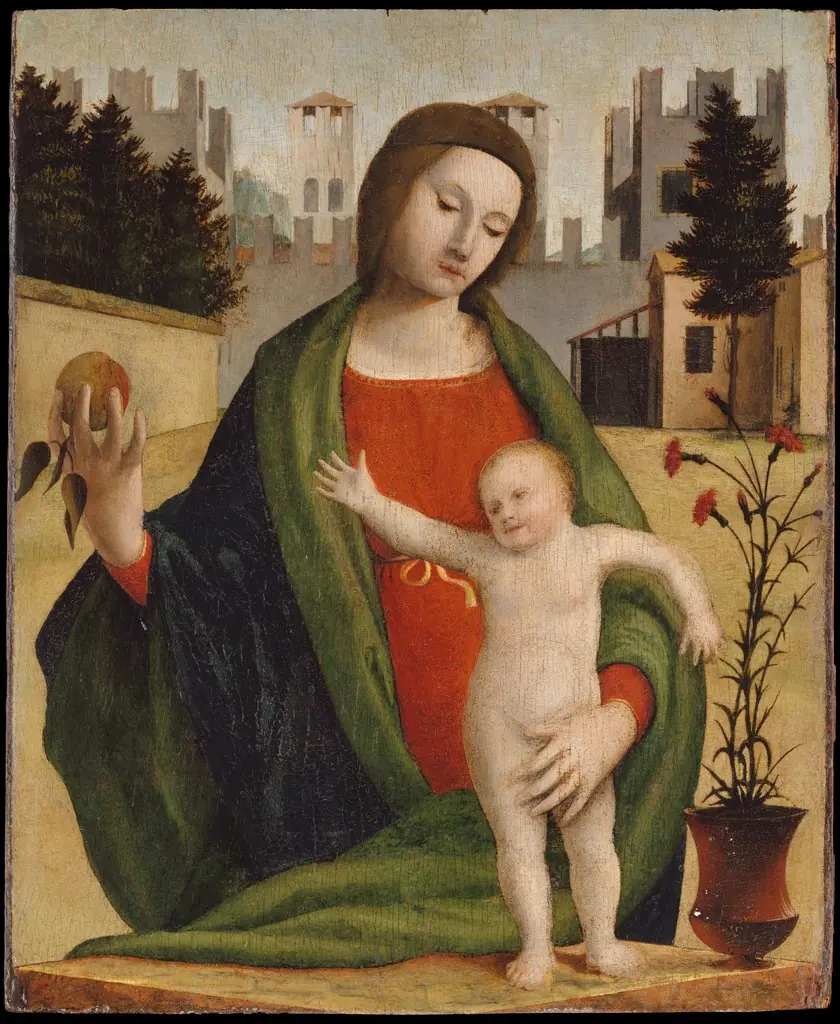
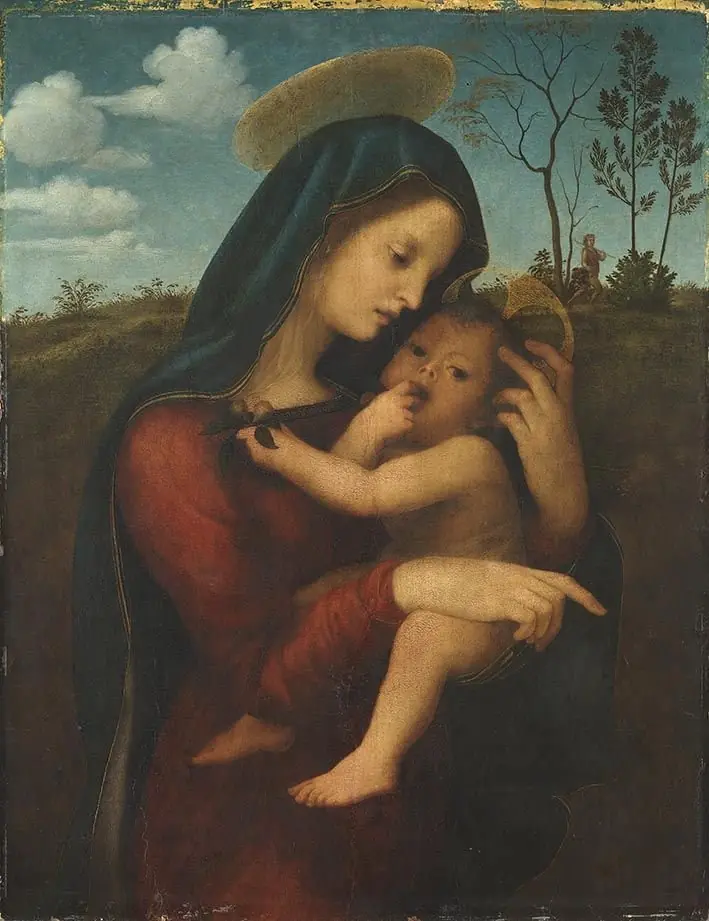
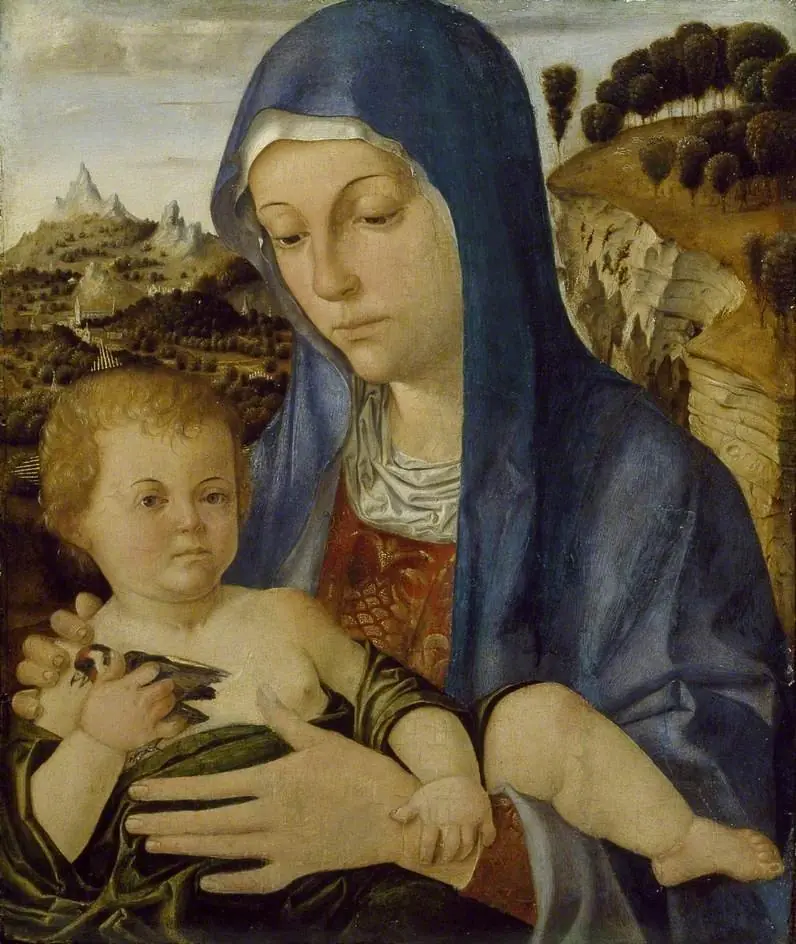
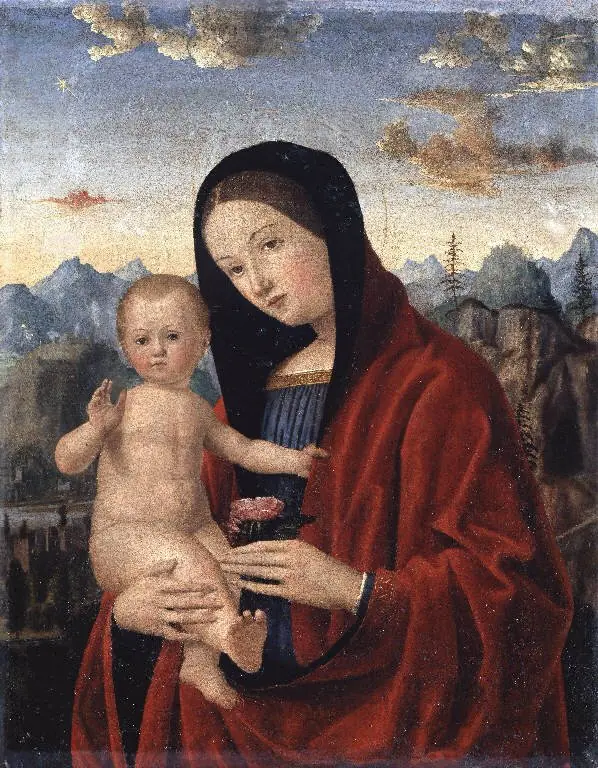
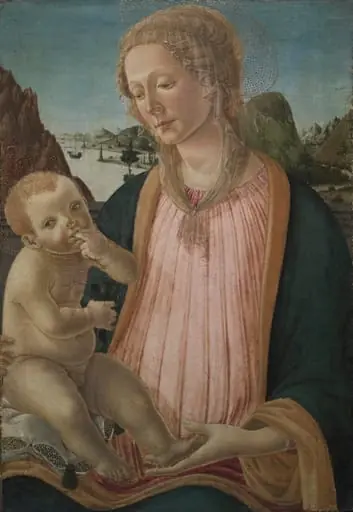
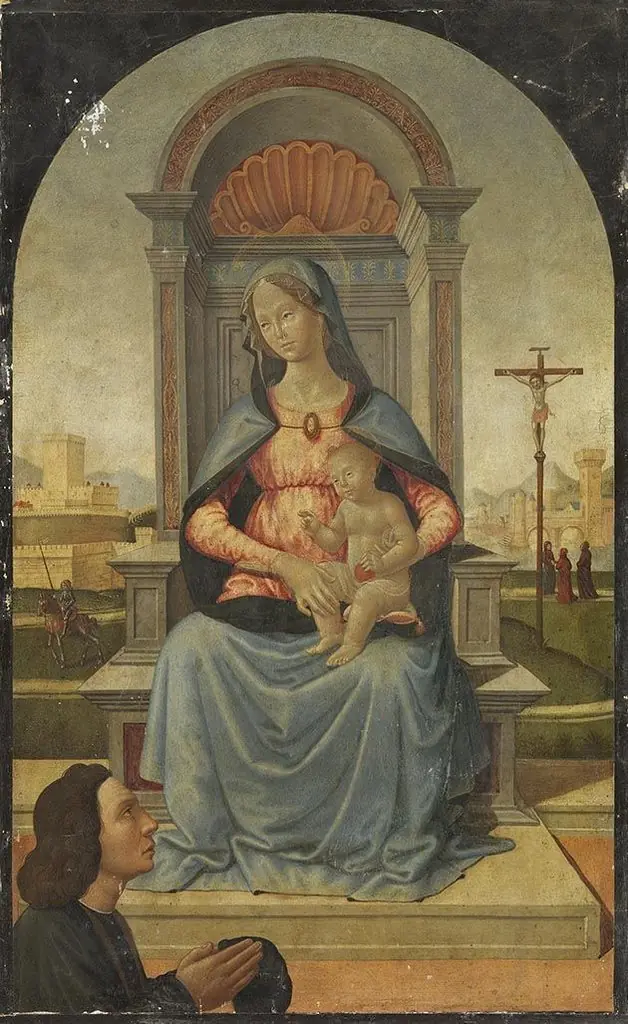
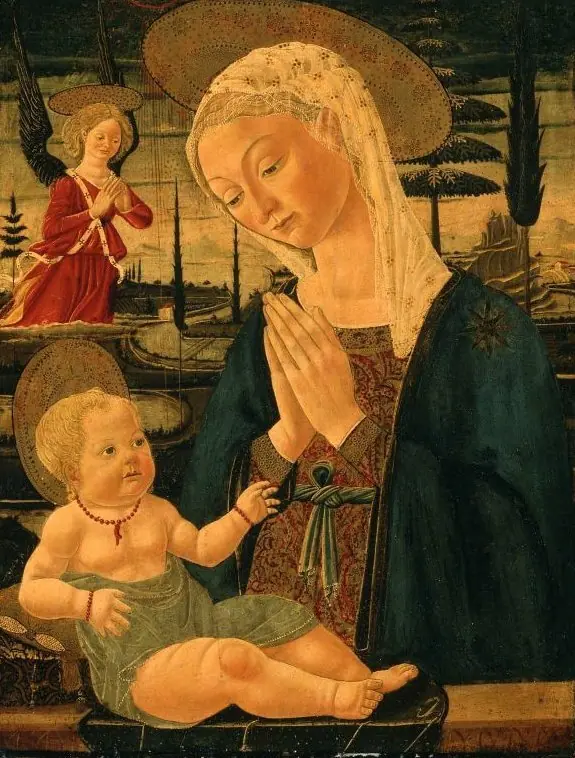
Madonna lactans is an oil painting by the Early Renaissance artist Bramantino. It dates from 1496 and is held in the collection of the Museum of Fine Arts Boston.
About this work
Overview
The infant Jesus is swaddled in white cloth and reaches toward his mother's hand, engaging in a tender interaction that emphasizes their bond.
Bramantino's Madonna lactans, executed in 1496, is a devotional oil painting depicting the Virgin Mary nursing the Christ Child. The composition centers on the Madonna, who wears a red tunic beneath a dark blue mantle adorned with a golden star on the shoulder, a traditional symbol of her purity. A golden halo encircles her head, distinguishing her sanctity.
The infant Jesus is swaddled in white cloth and reaches toward his mother's hand, engaging in a tender interaction that emphasizes their bond. The figures are set against a landscape background featuring architectural elements, a common device in Lombard painting of the late 15th century to ground the sacred scene in a recognizable world. Created during the artist's early mature period, this work reflects Bramantino's synthesis of Leonardo da Vinci's atmospheric influence with the distinct geometric clarity and sculptural modeling characteristic of the Milanese school.
The painting exemplifies the devotional focus of the era, prioritizing intimate human connection within a structured, serene environment.
Subject & Meaning
The work depicts the Virgin nursing the Christ child, a motif that emphasizes both the humanity and divinity of Jesus. The gentle gaze of the mother and the inquisitive look of the infant convey an intimate, nurturing relationship, reinforcing theological themes of maternal care and the incarnation.
Technique & Style
Rendered in oil on panel, Bramantino employs subtle modeling to give volume to the figures, using chiaroscuro to suggest three‑dimensional form. The delicate handling of light on the halo and the fabric’s folds, together with a restrained palette, reflects the artist’s synthesis of Lombard realism and emerging Renaissance spatial concerns.
History & Provenance
Created at the close of the 15th century, the painting entered the collection of the Museum of Fine Arts, Boston, where it remains on display. Its documented provenance traces back to the artist’s workshop, though earlier ownership records are sparse, indicating a relatively stable custodial history since its acquisition by the museum.
Artist & collection