Artwork
Madonna and Child with the Infant Saint John the Baptist
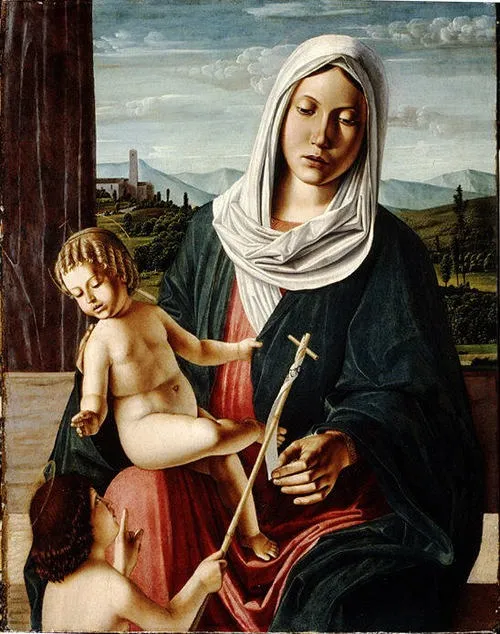
Madonna and Child with the Infant Saint John the Baptist is an unspecified painting by Michele da Verona. It dates from 1496 and is held in the collection of the Metropolitan Museum of Art.
About this work
Subject & Meaning
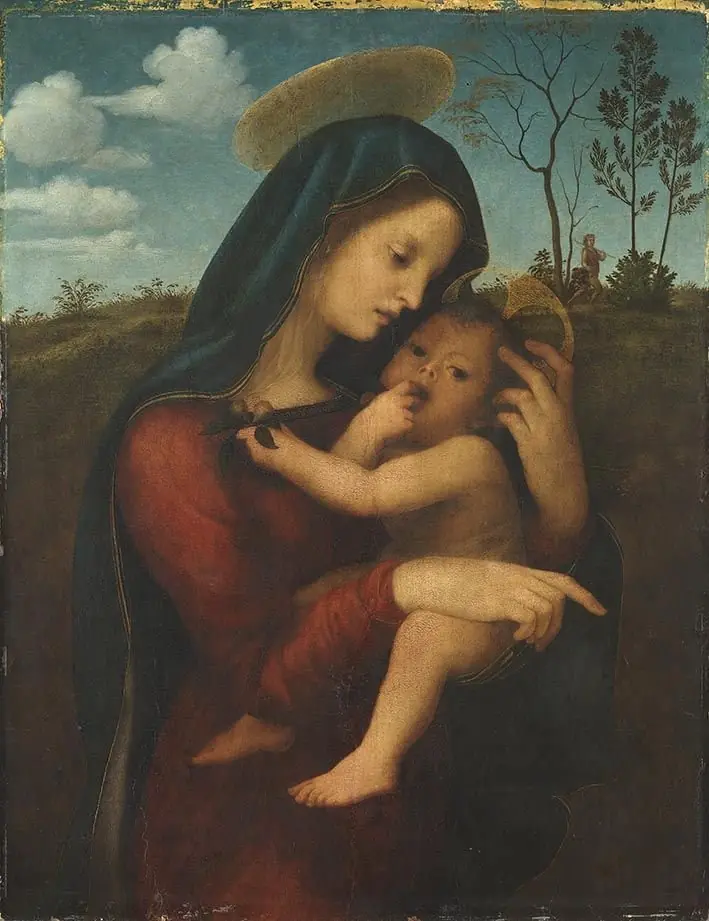
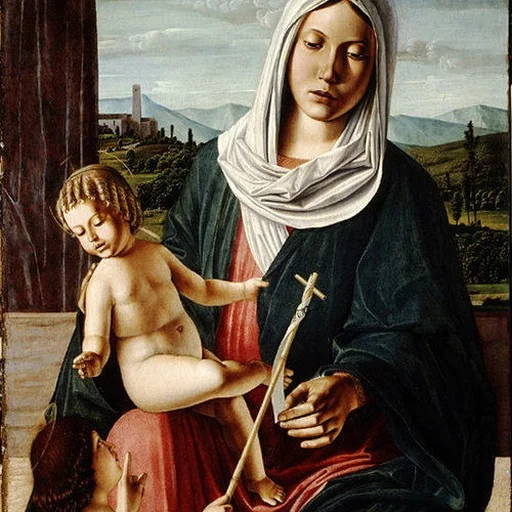
Iconographically, the work is distinguished by a cross, an attribute associated with John the Baptist that foreshadows the Passion of Christ.
Executed in 1496 by Michele da Verona, this religious painting centers on the Madonna and Child as its primary subject. The composition expands the traditional pairing to include the infant Saint John the Baptist, creating a sacred grouping of three figures. Iconographically, the work is distinguished by a cross, an attribute associated with John the Baptist that foreshadows the Passion of Christ.
By depicting these holy figures together, the artwork represents a devotional scene common in late fifteenth-century religious art, emphasizing the familial and spiritual connection between Jesus and his cousin, while the cross serves as a visual symbol of the future sacrifice central to Christian theology.
History & Provenance
Madonna and Child with the Infant Saint John the Baptist was created by Michele da Verona around 1496. It depicts the Virgin Mary with the infant Christ and Saint John the Baptist in a religious composition. The painting is held in the collection of the Metropolitan Museum of Art, New York, where it is inventoried under accession number 1975.1.76, having entered the museum's holdings by 1975.
No documentation of the original commission survives, and the available sources do not record a specific exhibition history.
Overview
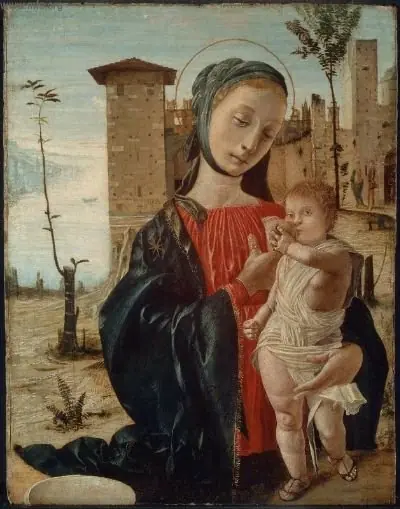
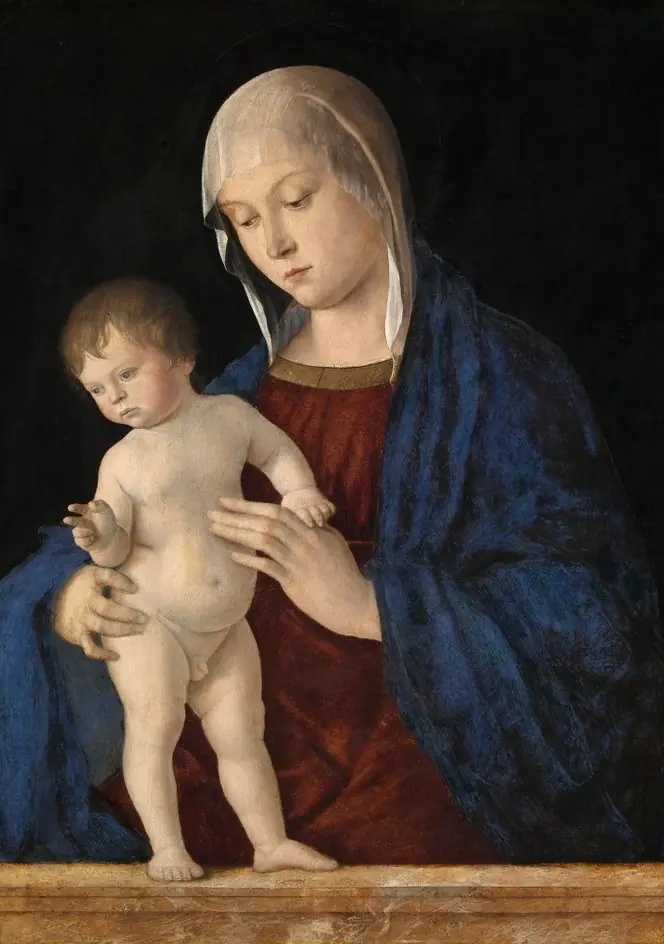
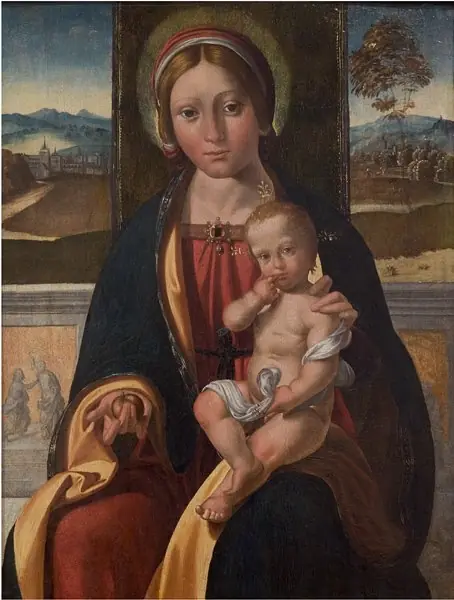
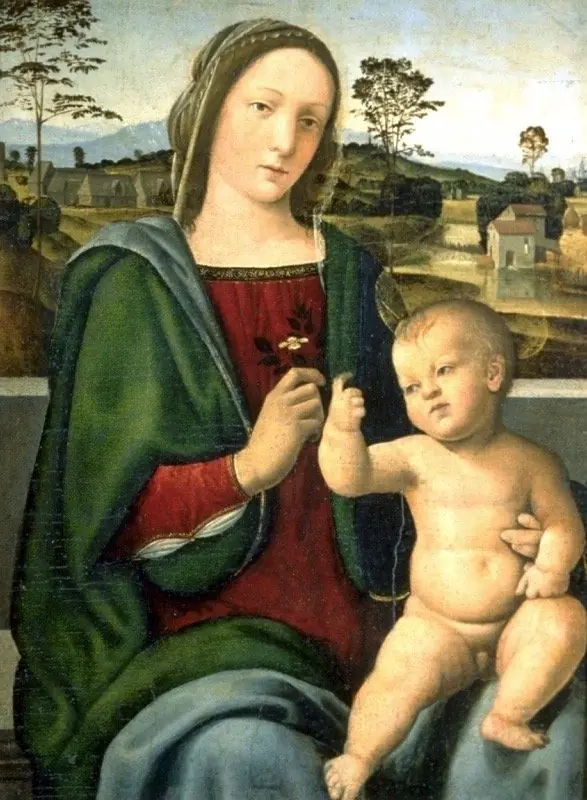
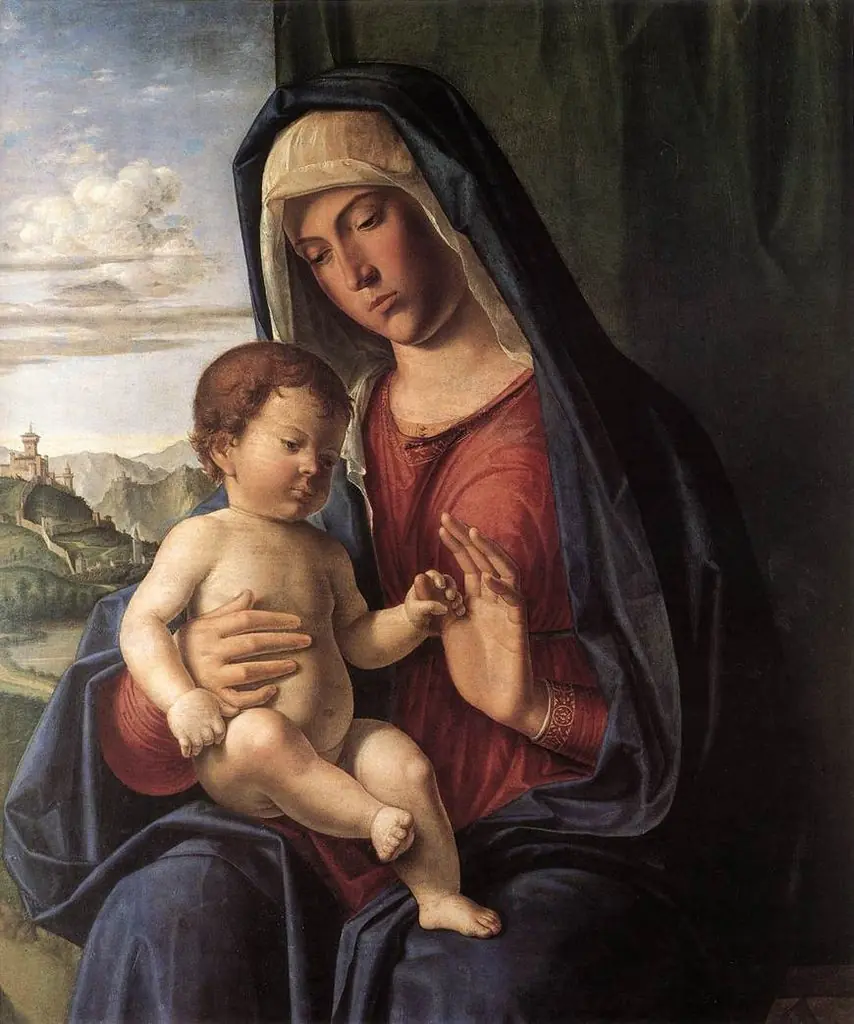
This painting, titled Madonna and Child with the Infant Saint John the Baptist, depicts a serene woman cradling a small, unclothed child. A second naked infant emerges from behind her drapery, engaging with the scene. The figures are set against a receding landscape featuring a distant town and undulating hills beneath a partially clouded sky, establishing a naturalistic backdrop for the sacred subject.
Technique & Style
The artist employs a sophisticated handling of light to differentiate textures and forms within the composition. The Virgin's dark blue robe exhibits crisp, angular folds that contrast with the delicate, rounded contours of the infants' skin. This interplay of light and shadow, a technique known as chiaroscuro, enhances the three-dimensionality of the figures and draws attention to their distinct material qualities, creating visual depth and realism.
Artist & collection
Artist
Michele da Verona (Michele di Zenone) (1470, in Verona – 1536/1544) was an Italian painter of the Renaissance period. He is different but a near contemporary of Zenone Veronese (1484 -1542).