Artwork
The Holy Family
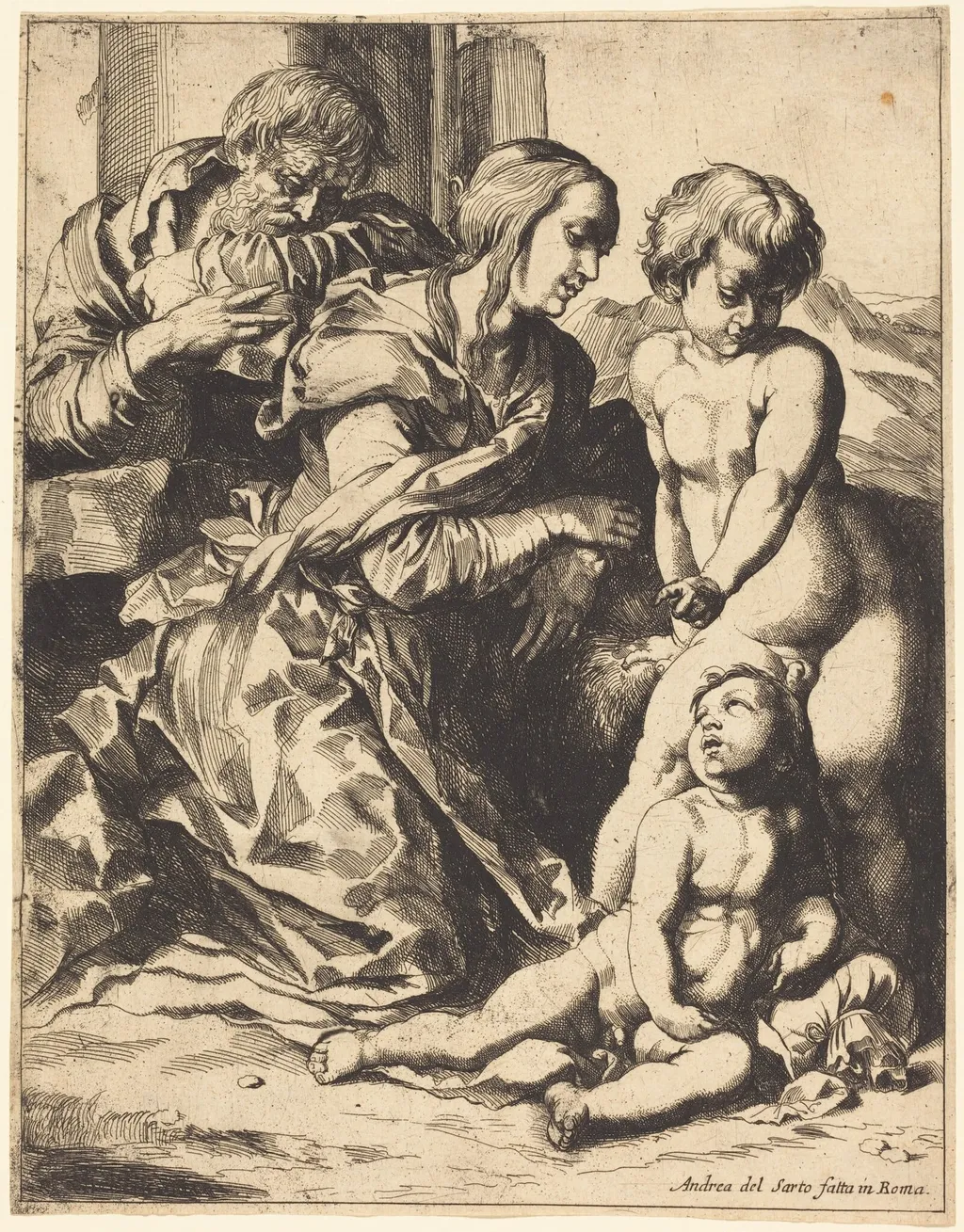
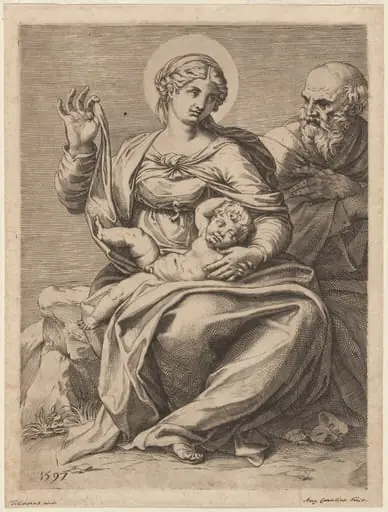
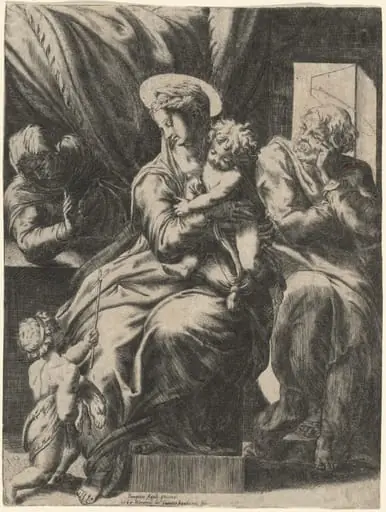
The Holy Family is an ink print by the Baroque artist Pierre Brebiette. It dates from 1630 and is held in the collection of the National Gallery of Art.
- Inscription
- Inscribed:lower right in image: Andrea del Sarto fatt in Roma.; by later hand, lower right verso in graphite: Etching attributed to A. del Sarto. / very fine.
About this work
Overview
Pierre Brebiette's etching The Holy Family, created in 1630, depicts the Virgin Mary seated within a rocky landscape, cradling the Christ Child on her lap.
Pierre Brebiette's etching The Holy Family, created in 1630, depicts the Virgin Mary seated within a rocky landscape, cradling the Christ Child on her lap. The composition includes two additional figures, traditionally identified as the infant John the Baptist and the young Jesus or a secondary child, who kneel beside the mother. One child reaches upward toward the Virgin, while the other sits with a direct, observant gaze.
Brebiette renders the scene with intimate proximity, utilizing soft, fluid lines to articulate the loose folds of Mary's robe against the rugged textures of the surrounding stones. Executed on laid paper, the work exemplifies the artist's mature style during the early 1630s, a period when he synthesized Italian Mannerist influences with French graphic traditions. The etching demonstrates Brebiette's skill in balancing complex groupings within a confined space, using varied line weights to create depth and volume without the aid of color.
This piece stands as a significant example of 17th-century French religious printmaking, reflecting the era's devotional focus on domestic intimacy within sacred narratives.
Subject & Meaning
The composition centers on a mother seated in a loosely draped robe, cradling an infant on her lap. Flanking her are two bare‑chested boys, one reaching upward and the other gazing curiously, suggesting a narrative of familial tenderness and spiritual contemplation. The rocky backdrop reinforces a sense of humility and the earthly setting of the holy narrative.
Technique & Style
Brebiette employs fine, incisive lines to delineate the texture of stone, fabric, and flesh, creating a tactile contrast between the harsh landscape and the softness of the figures. The careful rendering of hands and faces, along with the dynamic, almost kinetic poses of the children, demonstrates the artist’s skill in conveying movement within the static medium of etching.
History & Provenance
Created circa 1630, The Holy Family belongs to a period when religious prints circulated widely for private devotion and instruction. While specific ownership records are scarce, the work is attributed to Brebiette based on stylistic analysis and comparison with other signed prints from his oeuvre, confirming its place within the early Baroque print tradition.
Own this work as a print
Artist & collection


- The Holy Family
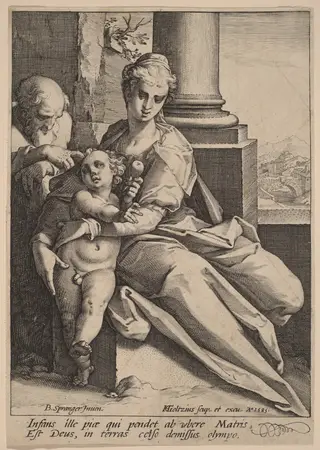 The Holy Family
 The Holy Family
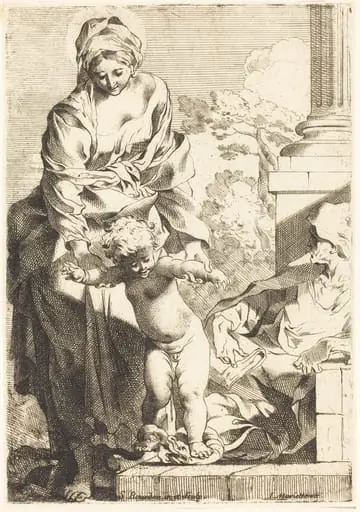 Virgin and Child Trampling on Sin
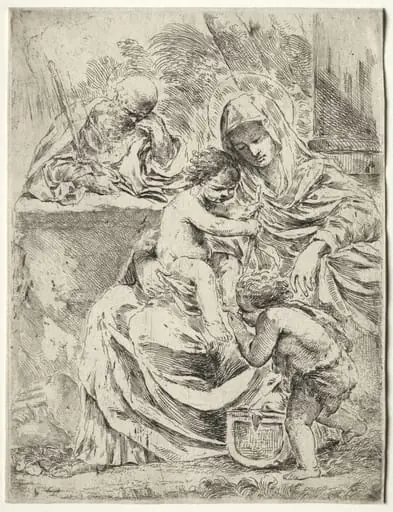 The Holy Family
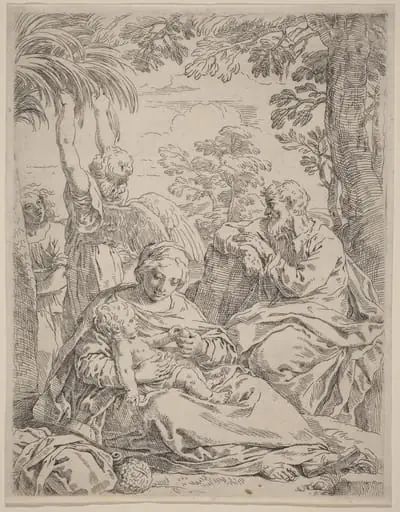 The Rest on the Flight into Egypt
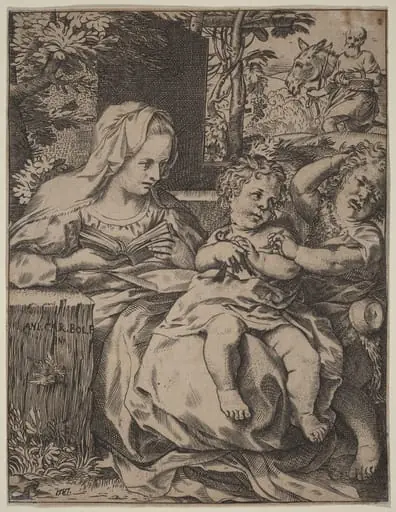 The Madonna of the Swallow
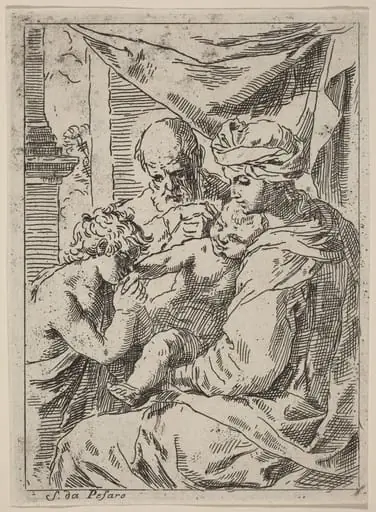 The Virgin and Child with Saint John
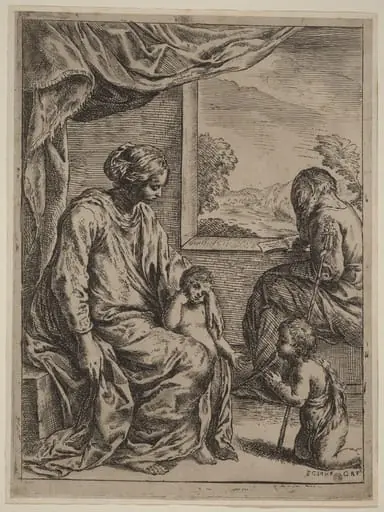 The Holy Family with Saint John the Baptist
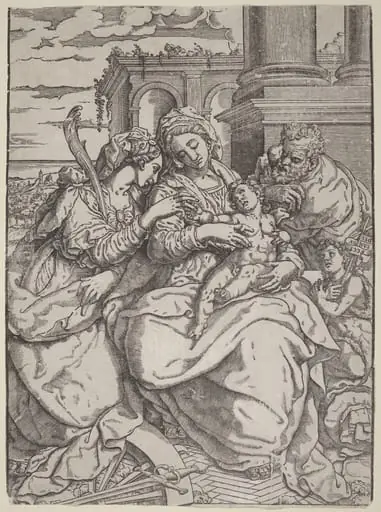 Madonna and Child with Saint Catherine
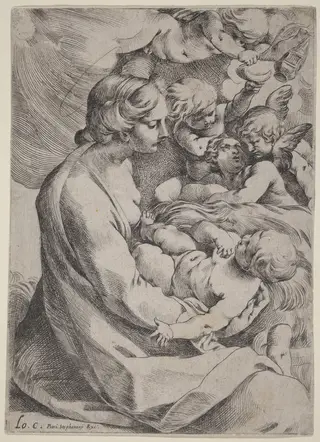 Madonna and Child with Angels
 Holy Family with Saint Elizabeth and the Young John the Baptist