Artwork
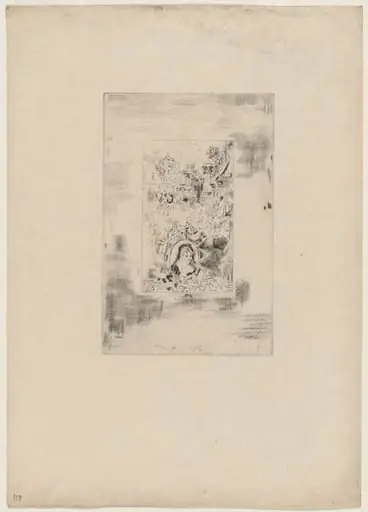
Baptismal commemoration for Jean Buhot (Baptême japonais)
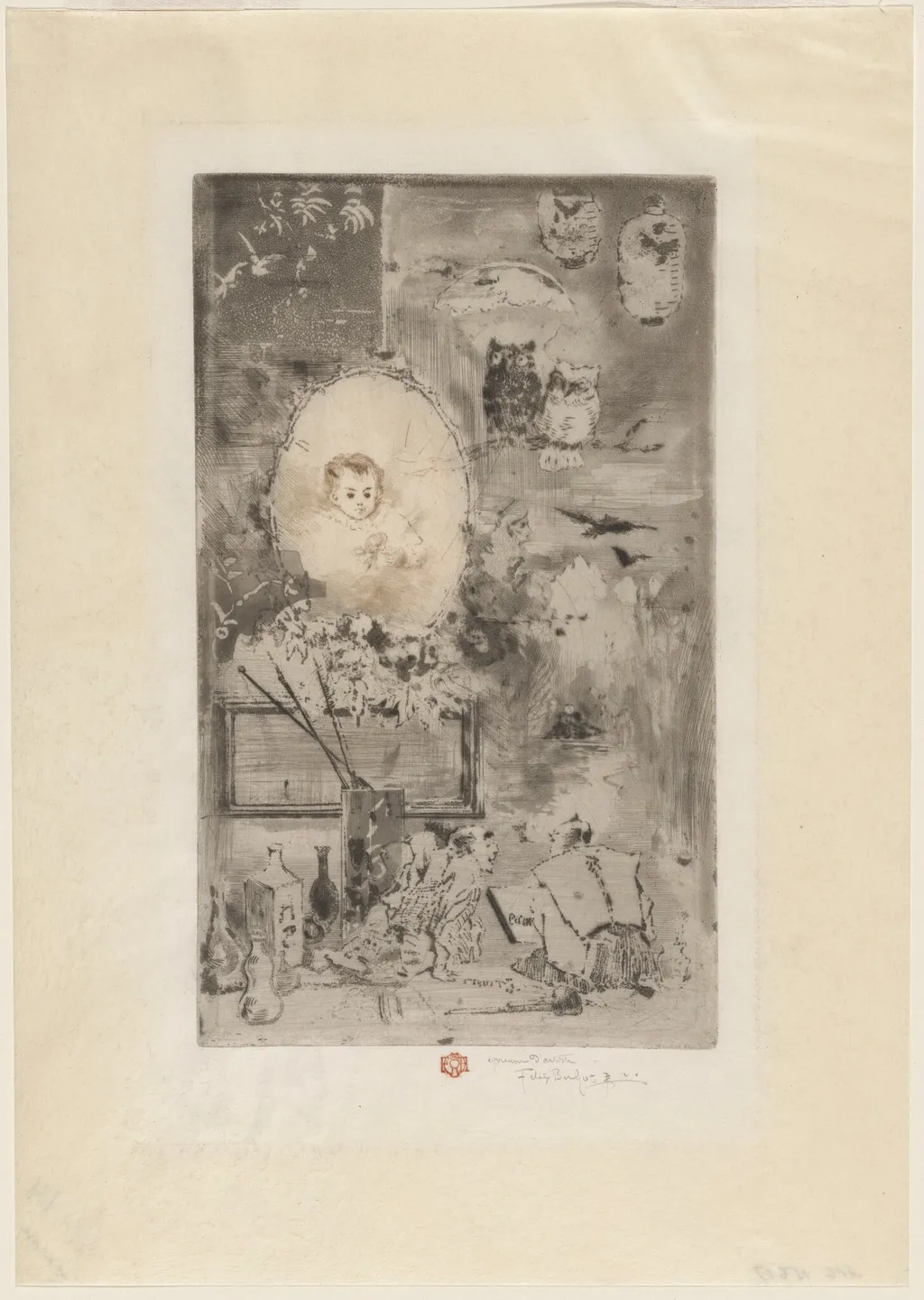
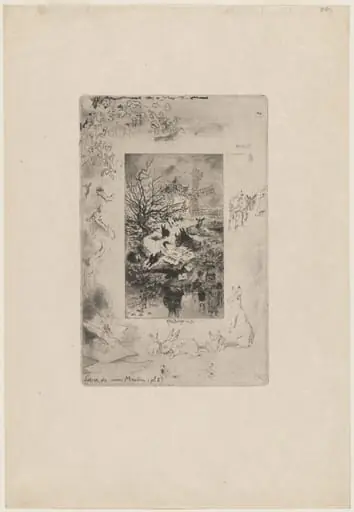
Baptismal commemoration for Jean Buhot (Baptême japonais) is an ink print by the Impressionist artist Félix-Hilaire Buhot. It dates from 1887 and is held in the collection of the National Gallery of Art.
- Inscription
- Inscribed:lower center to lower right below plate mark in graphite: epreuve d'artiste / Felix Buhot lower center below plate mark stamped in red: FB (Lugt 978); by later hand, lower left verso in graphite: APG 15617; by later hand, lower right verso in graphite: No. 14
- Markings
- Marked:Felix Buhot's studio stamp (Lugt 978)
About this work
Overview
Created in 1887 by Félix-Hilaire Buhot, this print commemorates the baptism of his son, Jean. Executed in etching, aquatint, drypoint, and liftground on parchment, it combines multiple intaglio techniques to produce a textured, atmospheric effect. The work is held in the National Gallery of Art, Washington, and reflects Buhot’s interest in experimental printmaking and intimate domestic scenes.
Subject & Meaning
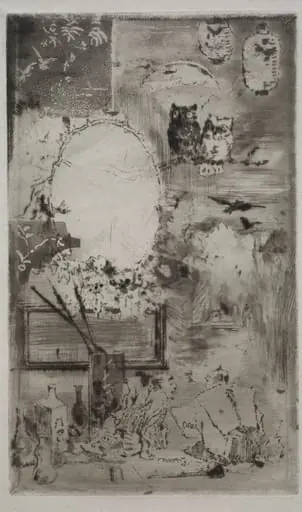
The blurred exterior, birds, sky, and undefined forms, contrasts with the child’s stillness, implying a transition between the mundane and the ceremonial.
The scene centers on a small child, rendered with unusual clarity, suspended within a circular frame as if in a moment of spiritual focus. Below, two adults kneel beside a cluttered table bearing art supplies and bottles, suggesting a studio transformed into a sacred space. The blurred exterior, birds, sky, and undefined forms, contrasts with the child’s stillness, implying a transition between the mundane and the ceremonial.
Technique & Style
Buhot layered etching, aquatint, drypoint, and liftground to achieve a fragmented, sketch-like quality. The child’s face is finely detailed, while surrounding elements appear deliberately rough, lines are loose, tones uneven, surfaces worn. This intentional imbalance between precision and spontaneity evokes the fleeting nature of memory and the emotional weight of the event, rather than a polished record.
History & Provenance
The print was made as a personal commemoration, likely a proof impression, and remained within the Buhot family before entering institutional collections. Its presence in the National Gallery of Art reflects late 19th-century interest in artist-made prints as expressive objects, not merely reproductive media. The work’s survival as a unique impression underscores its role as a private memento rather than a commercial product.
Context
In the 1880s, French printmakers increasingly turned to experimental techniques to break from academic norms. Buhot, influenced by Japanese woodcuts and Impressionist sensibilities, embraced imperfection and immediacy. This work aligns with broader trends in printmaking that valued emotional resonance over technical polish, positioning domestic rituals as worthy subjects for artistic exploration.
Legacy
Though not widely exhibited during Buhot’s lifetime, this print has come to exemplify his innovative approach to intaglio. Its blend of personal narrative and technical experimentation influenced later artists seeking to merge intimacy with printmaking’s material possibilities. Today, it stands as a quiet testament to the role of print as a medium for private reflection rather than public display.
Own this work as a print
Artist & collection

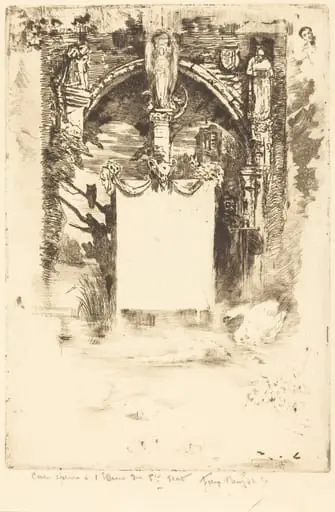 Ex-Libris pour "L'Ensorcelée" (Bookplate for "L'Ensorcelée")
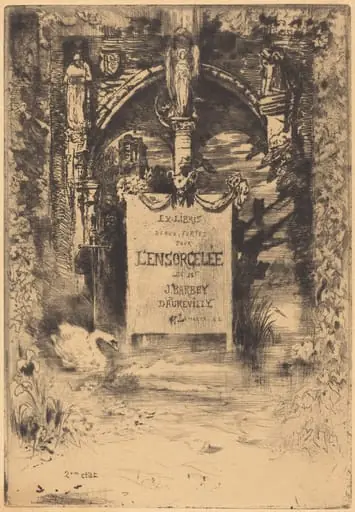 Ex-Libris pour "L'Ensorcelée" (Bookplate for "L'Ensorcelée")
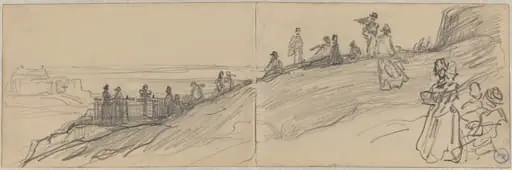 Figures on Top of a Hill, Overlooking the Sea
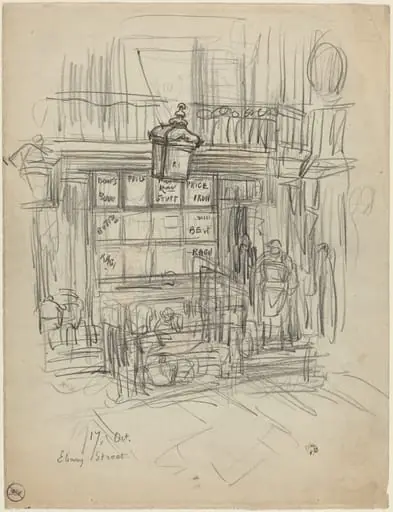 Ebury Street
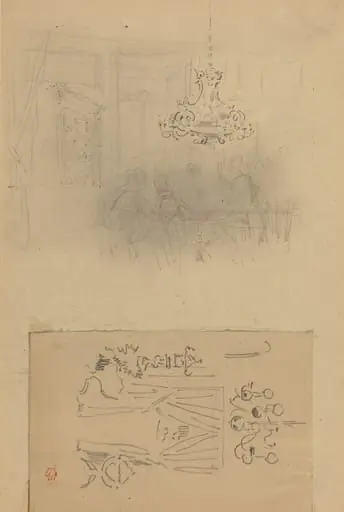 A Gathering in an Interior; A Curtained Doorway
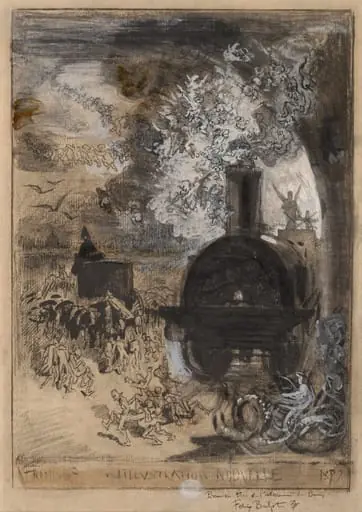 Frontispiece for L'Illustration Nouvelle: The Burial of the Burin
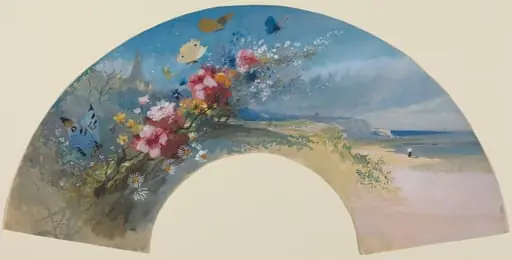 Fan with Wildflowers and Butterflies against the Norman Coast
![Gillingham Pier, London [verso], by Félix-Hilaire Buhot](https://artifactworldgallery.com/img/felix-hilaire-buhot--gillingham-pier-london-verso--641e03dd7de8217b-w320.webp) Gillingham Pier, London [verso]
Gillingham Pier, London [verso]