Artwork
Le Château des hiboux (Castle of the Owls)
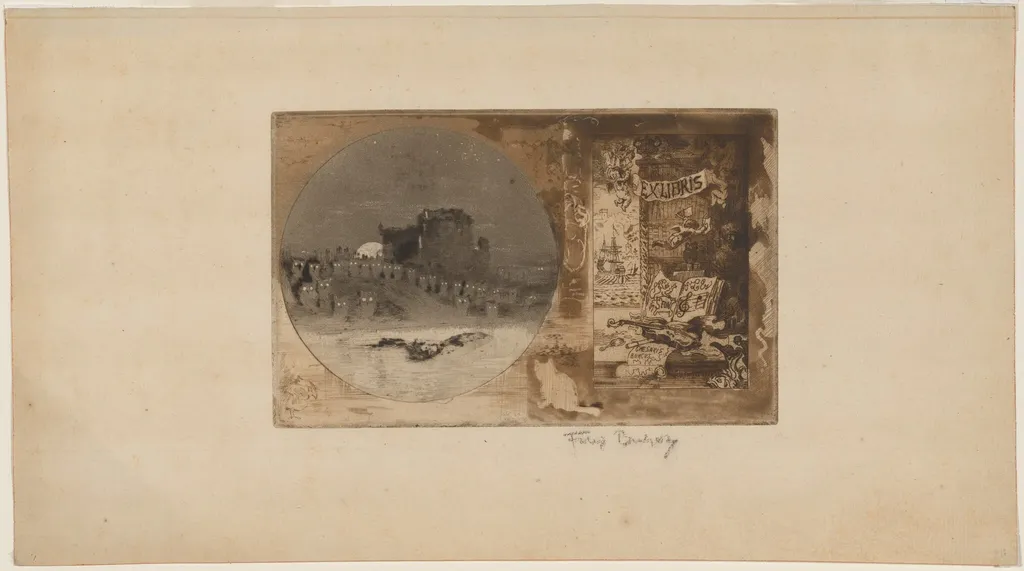
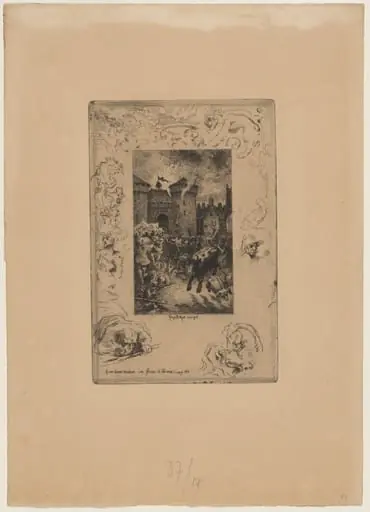
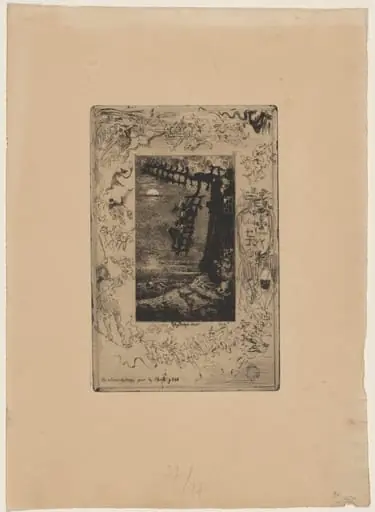
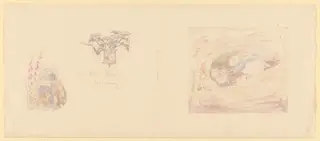
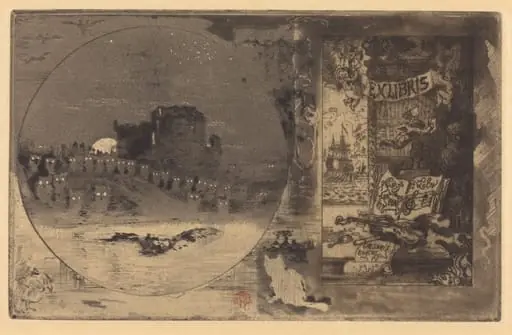
Le Château des hiboux (Castle of the Owls) is a crayon print by the Impressionist artist Félix-Hilaire Buhot. It dates from 1882 and is held in the collection of the National Gallery of Art. Félix‑Hilaire Buhot’s print Le Château des hiboux, executed in 1882, presents a dual‑panel composition.
About this work
Overview
The right panel mimics a theatrical billboard, announcing the play Exubéris and depicting a ship alongside a woman in flight.
Félix‑Hilaire Buhot’s print Le Château des hiboux, executed in 1882, presents a dual‑panel composition. The left panel frames a circular opening that reveals a somber, atmospheric landscape dominated by a hill‑top castle, with diminutive figures and distant vessels. The right panel mimics a theatrical billboard, announcing the play Exubéris and depicting a ship alongside a woman in flight. The work juxtaposes a medieval scene with a contemporary cultural reference.
Subject & Meaning
The piece contrasts two realms: a remote, almost mythic fortress set against a bleak horizon, and a modern advertisement for performance art. This pairing may suggest a dialogue between past and present, or between the permanence of architecture and the fleeting nature of theatrical spectacle. The tiny human and nautical elements in the landscape emphasize the insignificance of individuals within vast historical and cultural narratives.
Technique & Style
Buhot employed a complex combination of printmaking processes, etching, aquatint, drypoint, roulette, stop‑out, sulphur tint, and crayon stop‑out, layering them to achieve varied tonalities and textures. The use of aquatint creates broad, muted washes, while drypoint and roulette add fine lines and stippled effects. The paper, a wove variety, shows signs of wear, indicating frequent handling or intentional distress to enhance the work’s tactile presence.
Context
Created during the late nineteenth century, the print reflects the period’s fascination with both historic romanticism and the burgeoning popularity of theater and popular entertainment. Buhot, known for his experimental approach to printmaking, often explored the interplay of narrative and visual form, and this work exemplifies his interest in merging traditional subjects with contemporary cultural motifs.
Artist & collection

 Ex-Libris pour "L'Ensorcelée" (Bookplate for "L'Ensorcelée")
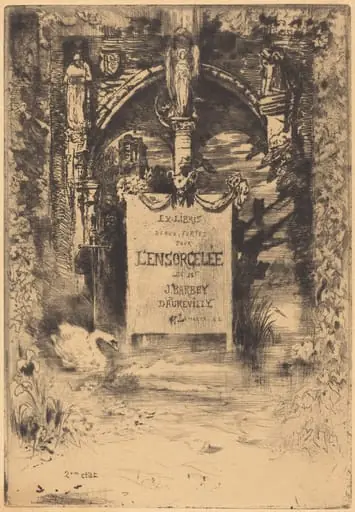 Ex-Libris pour "L'Ensorcelée" (Bookplate for "L'Ensorcelée")
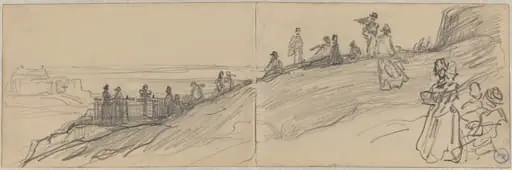 Figures on Top of a Hill, Overlooking the Sea
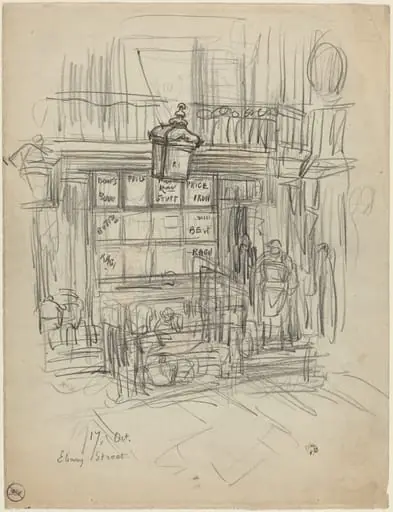 Ebury Street
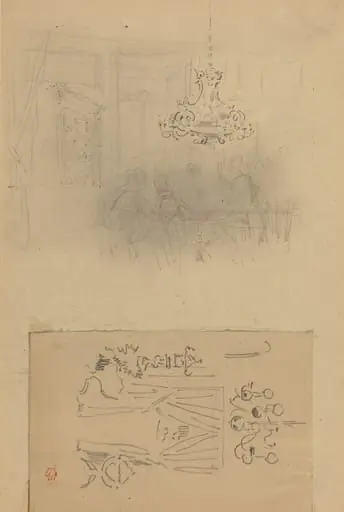 A Gathering in an Interior; A Curtained Doorway
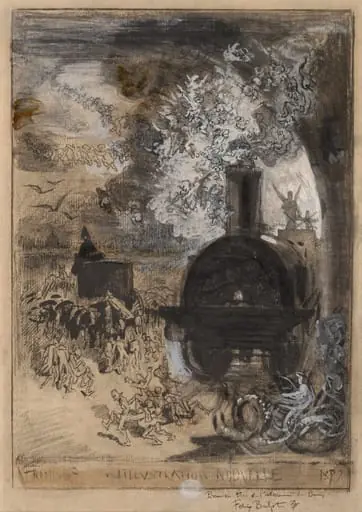 Frontispiece for L'Illustration Nouvelle: The Burial of the Burin
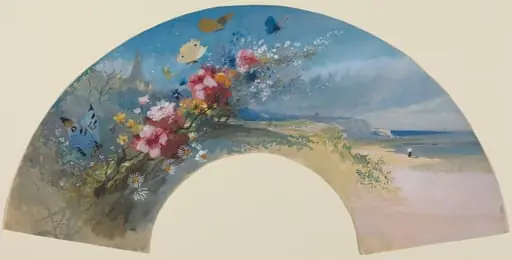 Fan with Wildflowers and Butterflies against the Norman Coast
![Gillingham Pier, London [verso], by Félix-Hilaire Buhot](https://artifactworldgallery.com/img/felix-hilaire-buhot--gillingham-pier-london-verso--641e03dd7de8217b-w320.webp) Gillingham Pier, London [verso]
Gillingham Pier, London [verso]