Artwork
Pan and Syrinx
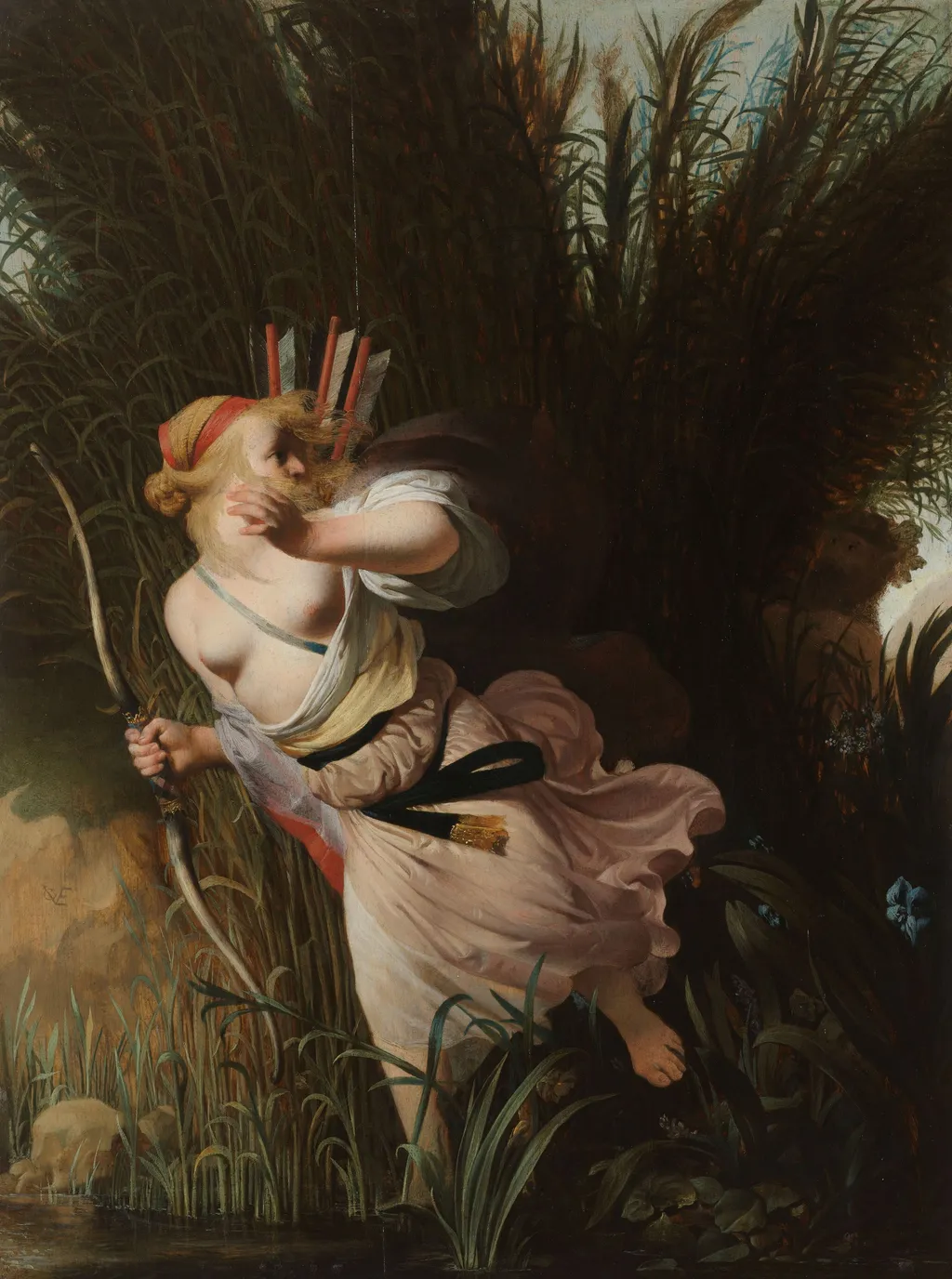
Pan and Syrinx is an oil painting by the Dutch Golden Age artist Caesar van Everdingen. It dates from 1638 and is held in the collection of the Rijksmuseum.
About this work
Subject & Meaning
The painting depicts the mythological narrative of Pan and Syrinx, a subject drawn from classical mythology. The artwork represents the pursuit of the nymph Syrinx by the rustic god Pan. This mythological theme was a common motif in art, allowing for the exploration of themes such as desire, pursuit, and transformation, centered on the interactions between divine figures and nymphs.
Technique & Style
The panel's modest scale suggests an intimate viewing experience, focusing attention on the mythological narrative.
The work is executed in oil paint on a panel support, measuring 49.5 by 37 cm. The medium and support are typical of the artist's practice in the mid-17th century. The panel's modest scale suggests an intimate viewing experience, focusing attention on the mythological narrative. Van Everdingen's handling is precise and smooth, characteristic of the Dutch classicist style, with careful modeling of forms and a restrained, cool palette that emphasizes the figures against a subdued background.
History & Provenance
The painting Pan and Syrinx was created by Caesar Boëtius van Everdingen in 1638. Executed in oil paint on a panel, the work measures 49.5 cm in height and 37 cm in width. It is currently held in the collection of the Rijksmuseum in Amsterdam. The artwork depicts the mythological figures Pan and Syrinx and is classified as a mythological painting.
The painting Pan and Syrinx by Caesar van Everdingen is held in the collection of the Rijksmuseum in Amsterdam. Created in 1638, the work is executed in oil on panel. While the specific inventory or accession number is not provided in the available records, the museum houses this mythological scene, which measures 49.5 cm in height and 37 cm in width. The provided sources do not contain details regarding a specific exhibition history for this artwork.
Legacy
Pan and Syrinx by Caesar van Everdingen, created in 1638, was a mythological painting that entered the Rijksmuseum collection and became part of the artist’s documented oeuvre. Its presence in a major national collection ensured continued scholarly attention to van Everdingen’s work in the Dutch Golden Age, and the piece is frequently cited in studies of mythological painting in 17th‑century Dutch art. The work’s composition and subject matter have been referenced in later discussions of how Dutch painters treated classical myths, influencing interpretations of the Pan and Syrinx narrative in subsequent art historical writing.
Overview
Pan and Syrinx is a 1638 oil painting by Caesar van Everdingen, a Dutch Golden Age artist. It is a mythological scene held in the Rijksmuseum collection.
Own this work as a print
Artist & collection
Artist
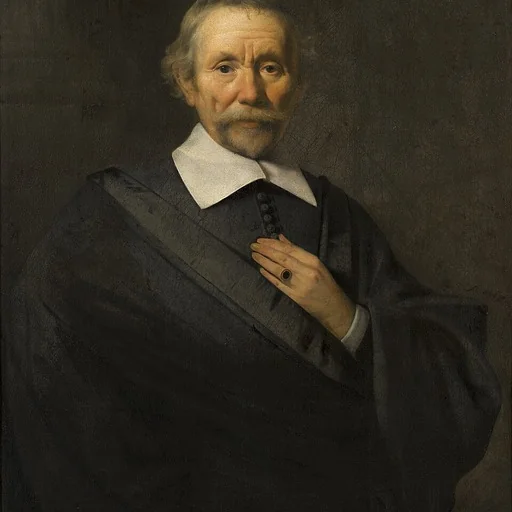
Cesar Pietersz, or Cesar Boetius van Everdingen (1616/17 – buried 13 October 1678), older brother of Allart van Everdingen and Jan van Everdingen, was a Dutch Golden Age portrait and history painter.

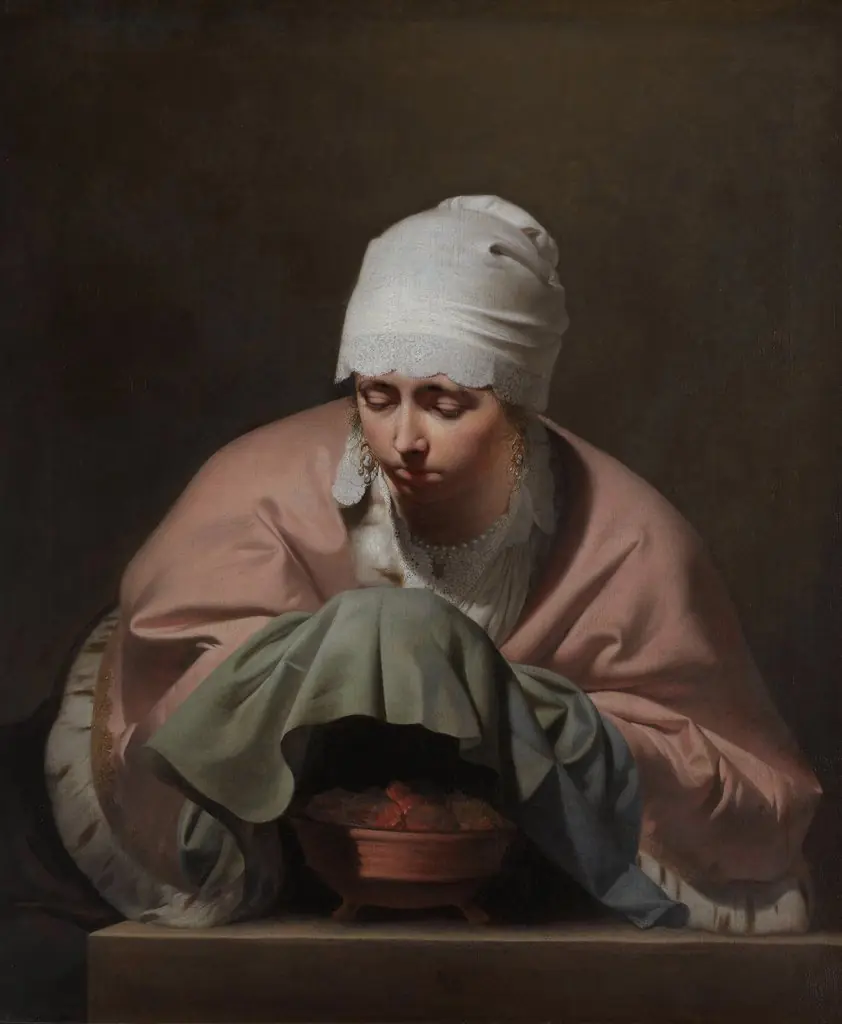 A Young Woman Warming her Hands over a Brazier: Allegory of Winter
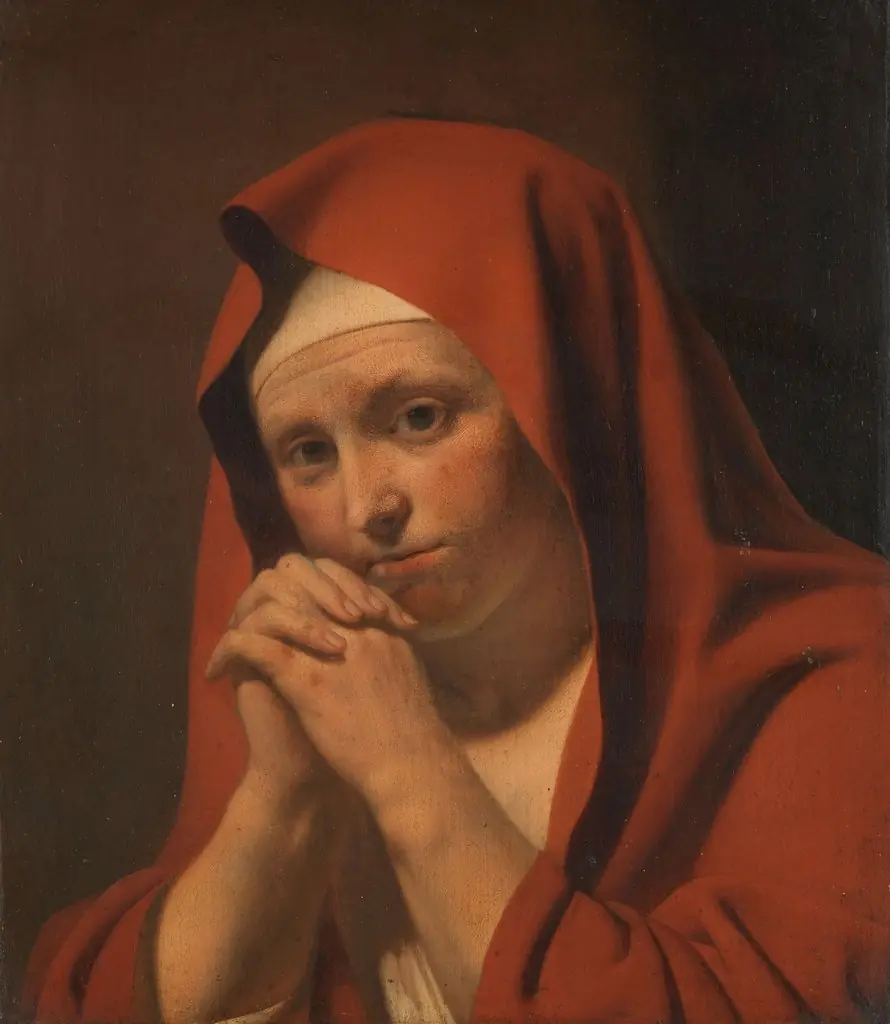 Woman praying
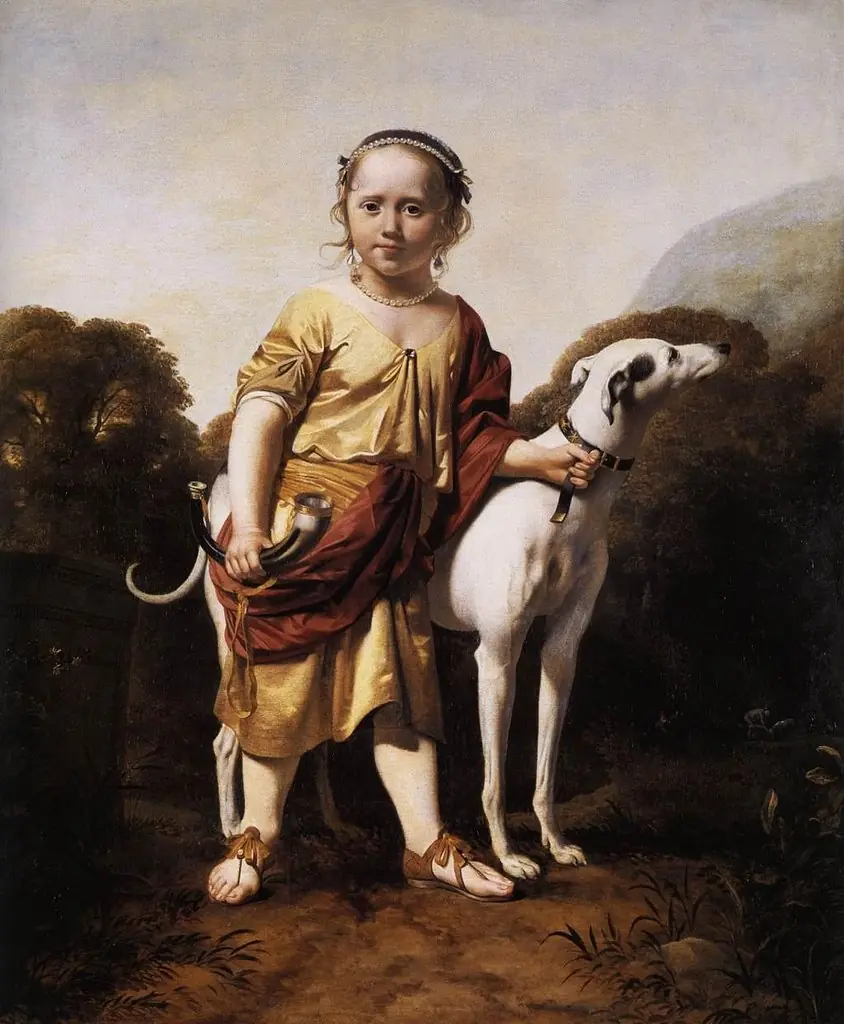 Portrait of a Girl as a Huntress
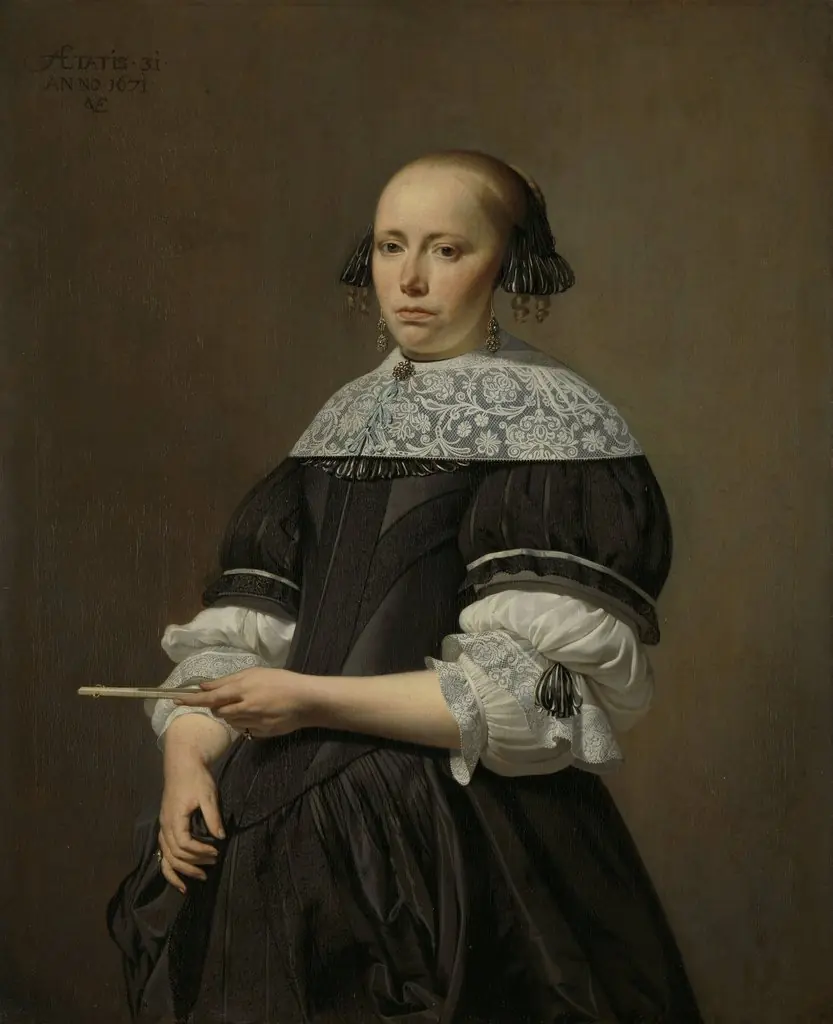 Elisabeth van Kessel (1640-1717). Wife of Willem Jacobsz Baert
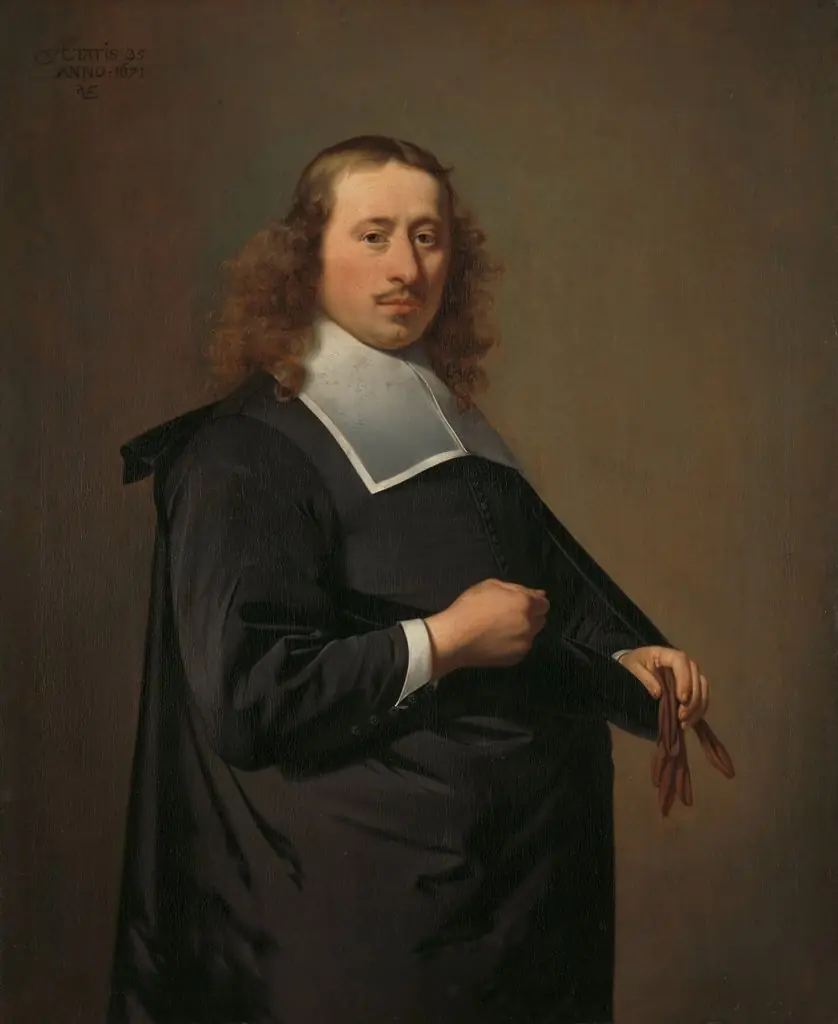 Willem Jacobsz Baert (1636-84). Mayor of Alkmaar and Amsterdam
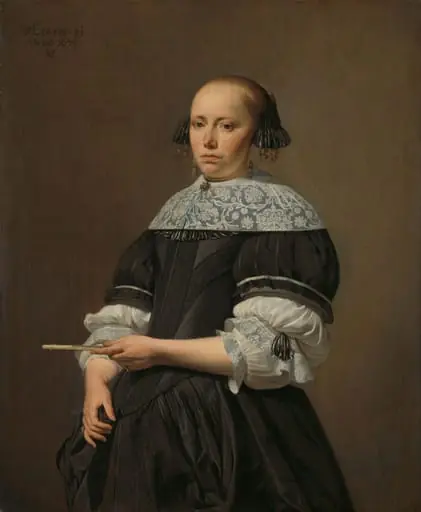 Portrait of Elisabeth Pietersdr Kessels (1640-1717)
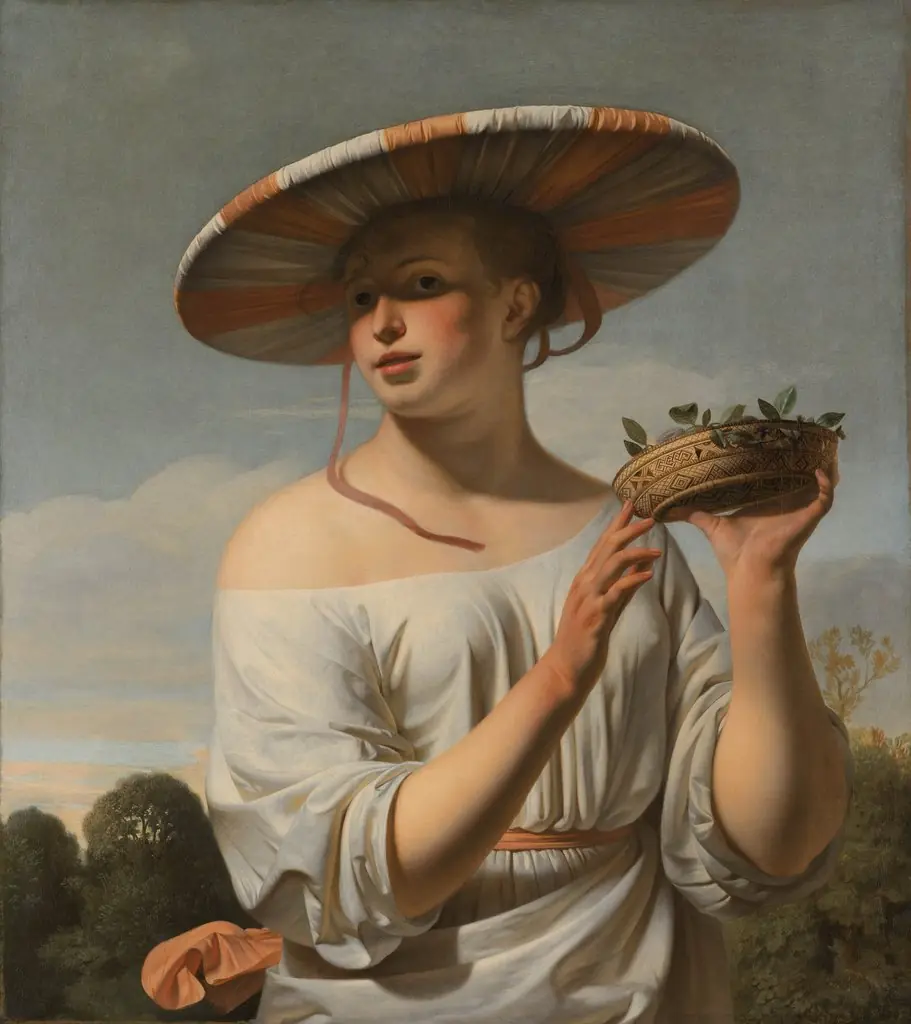 Girl in a Large Hat
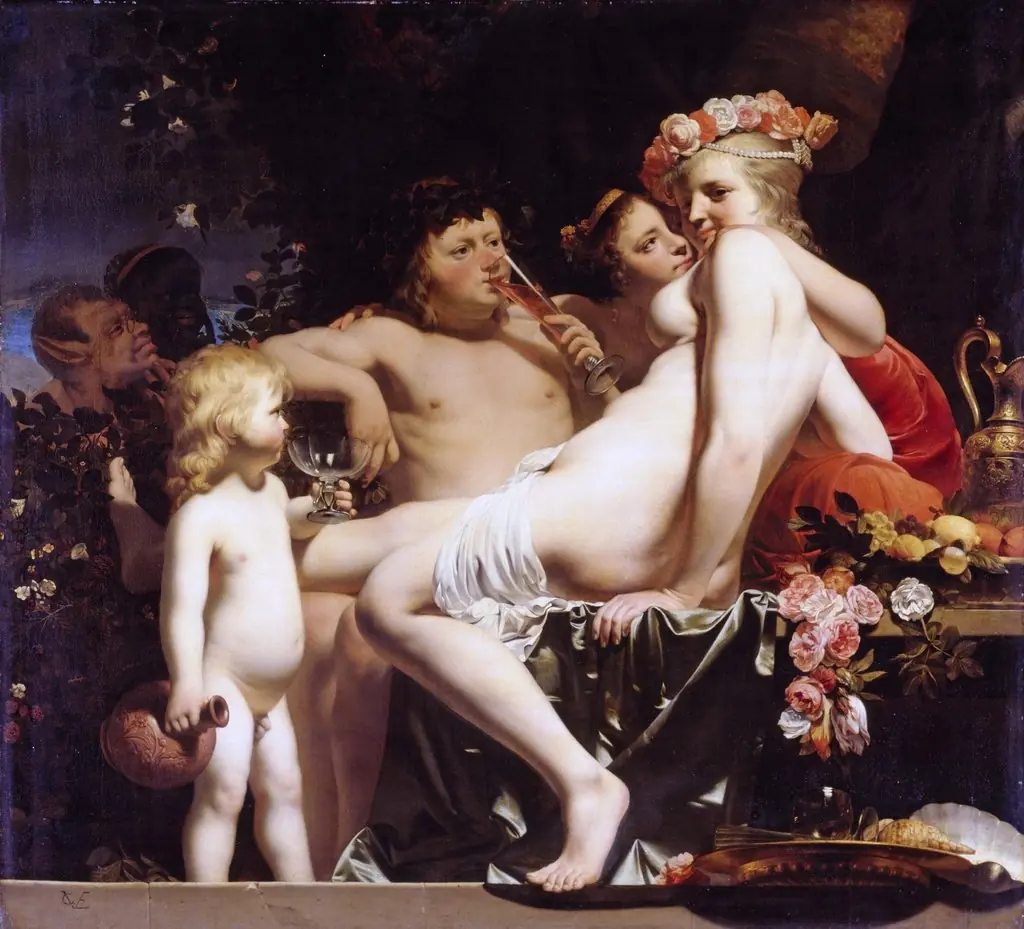 Bacchus and Ariadne
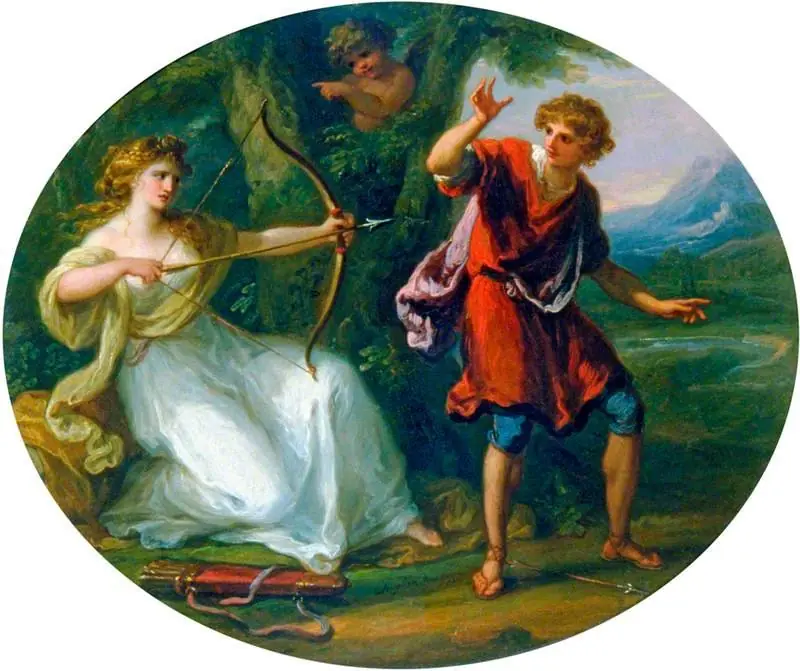
- A Nymph Drawing Her Bow on a Youth
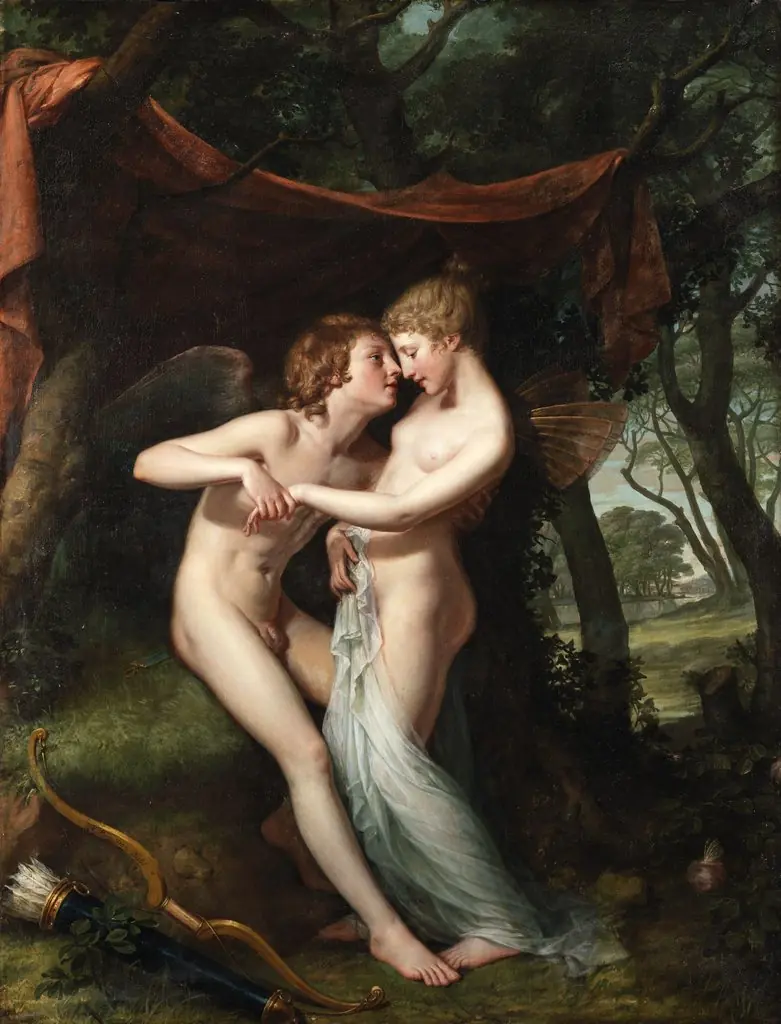 Cupid and Psyche in the Nuptial Bower
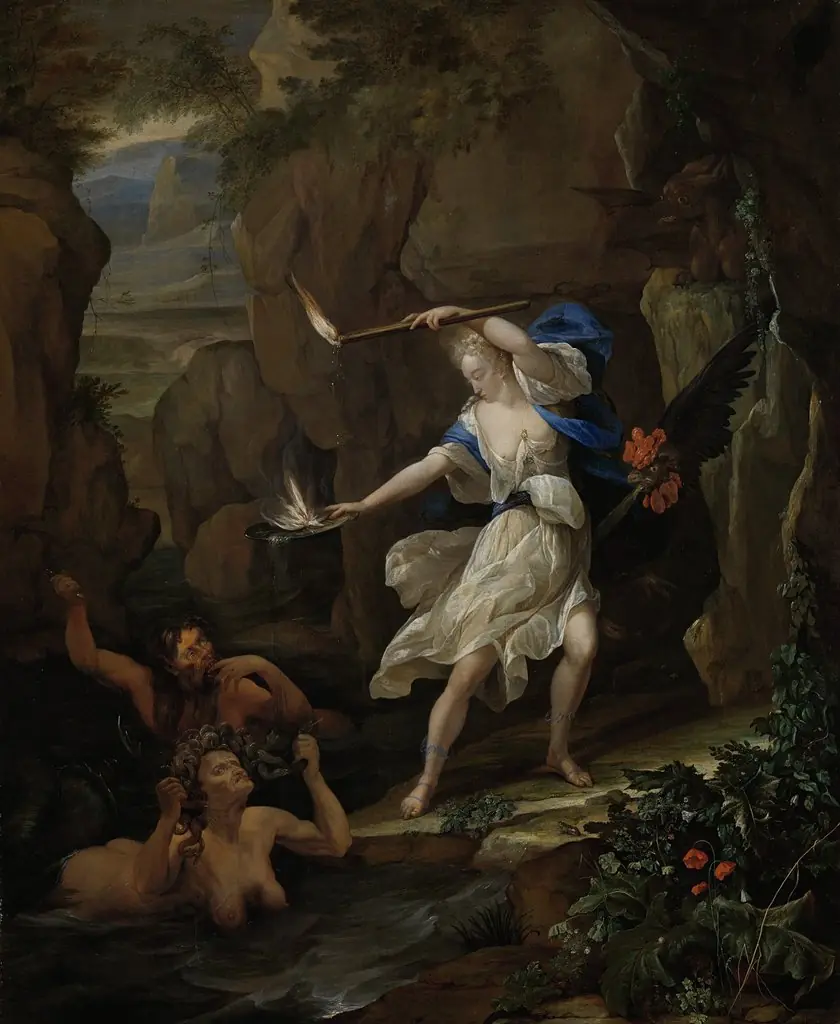 Circe Punishes Glaucus by Turning Scylla into a Monster
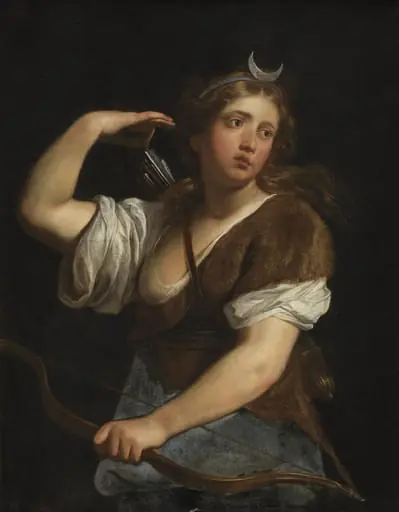 Diana Hunting
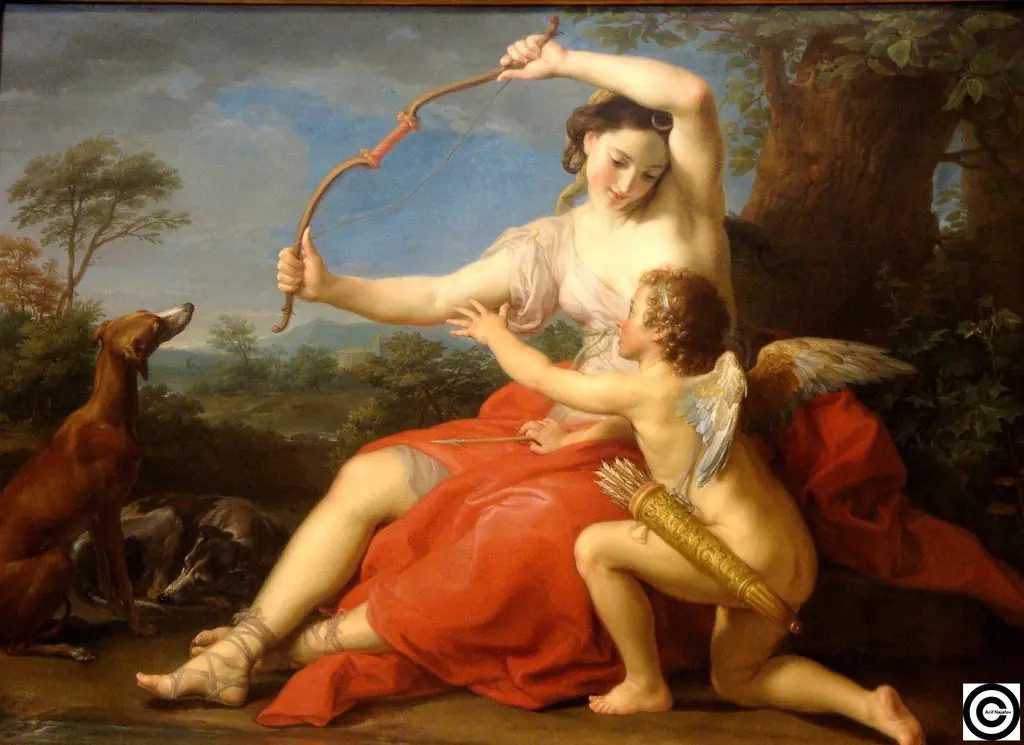 Diana and Cupid
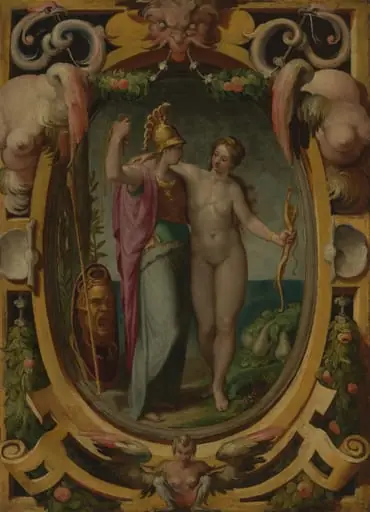 Venus and Minerva
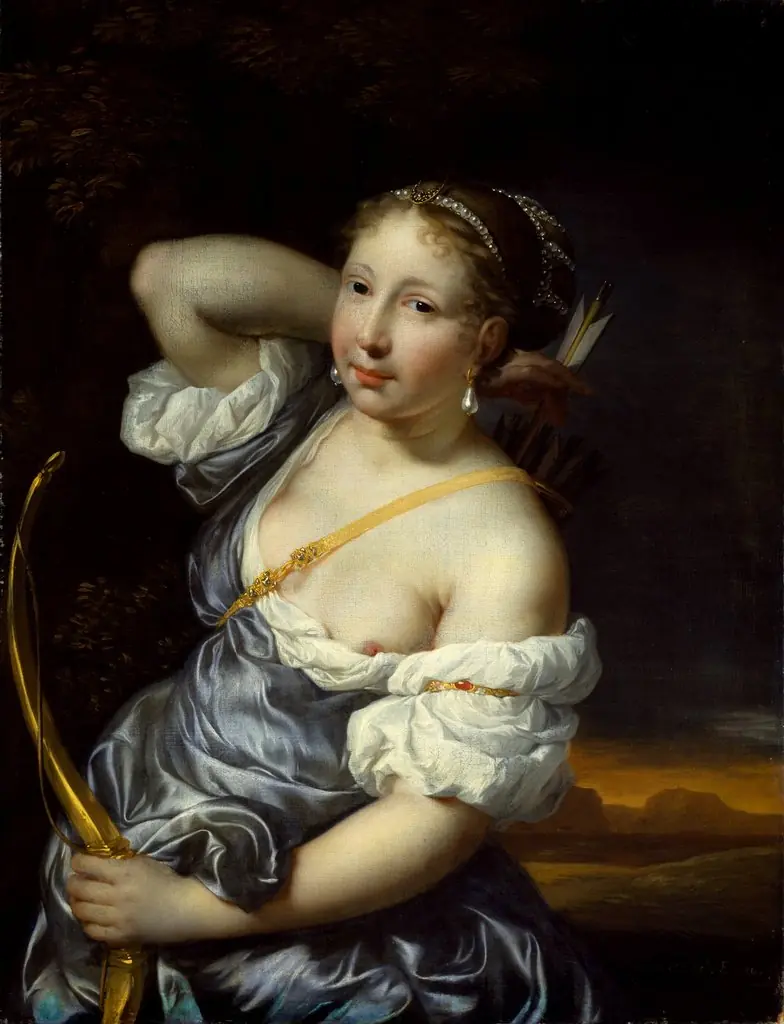 Diana as Huntress
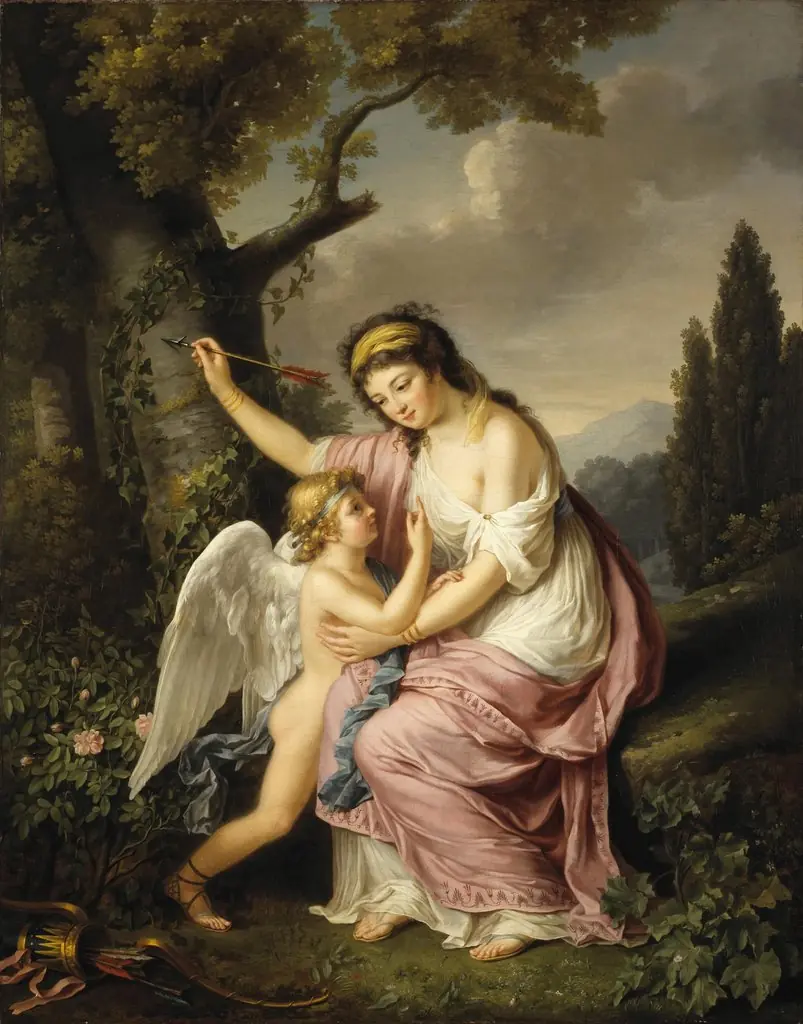 Woman and Cupid
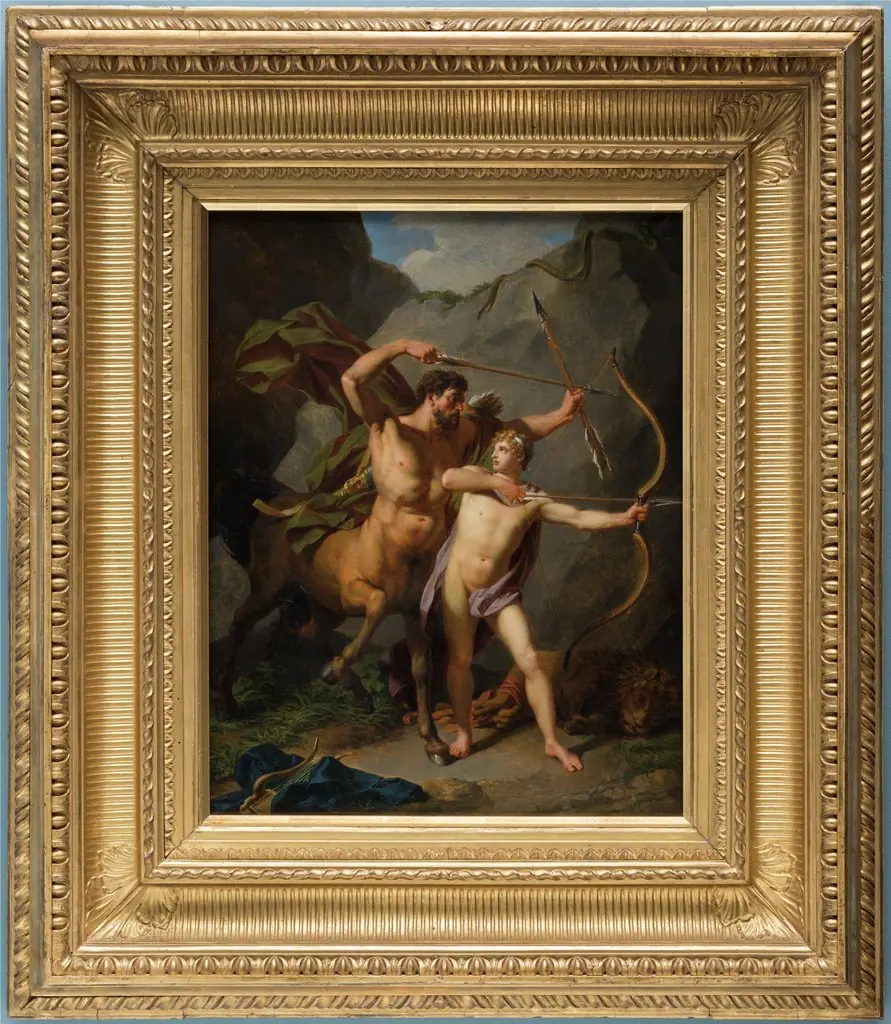 Education of Achilles
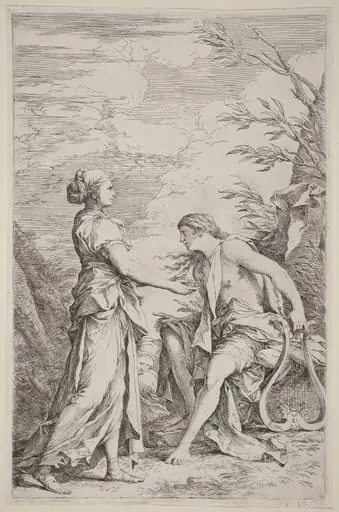 Apollo and the Cumaean Sibyl
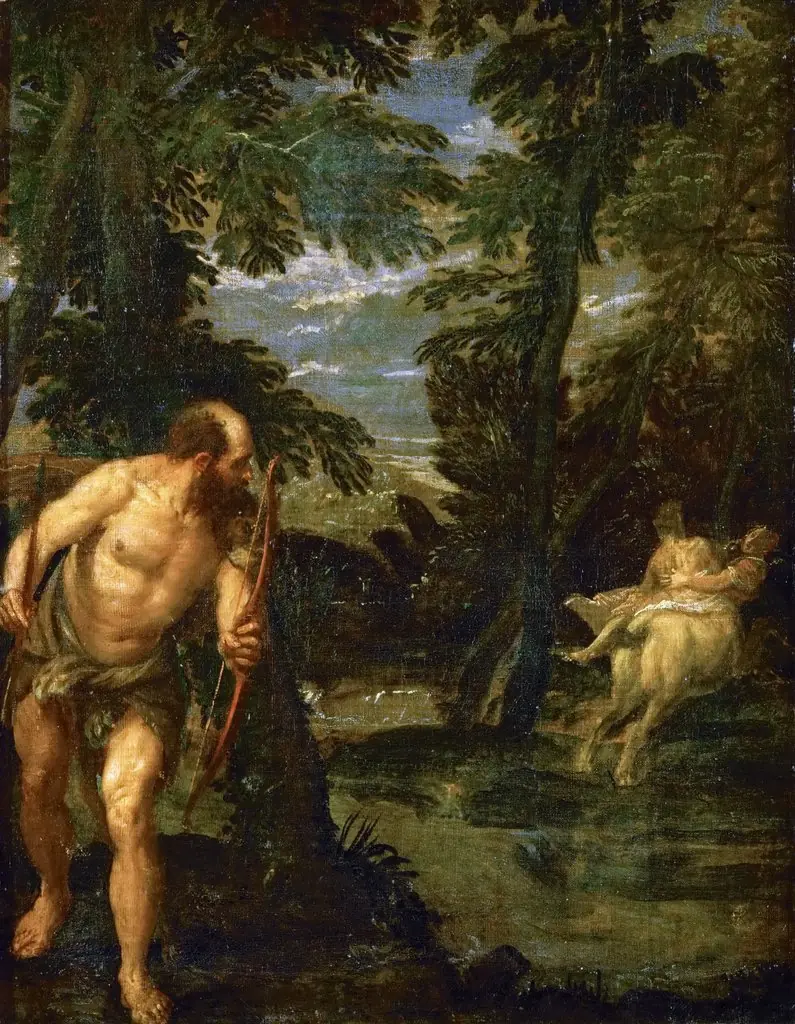 Hercules, Deianira and the Centaur Nessus
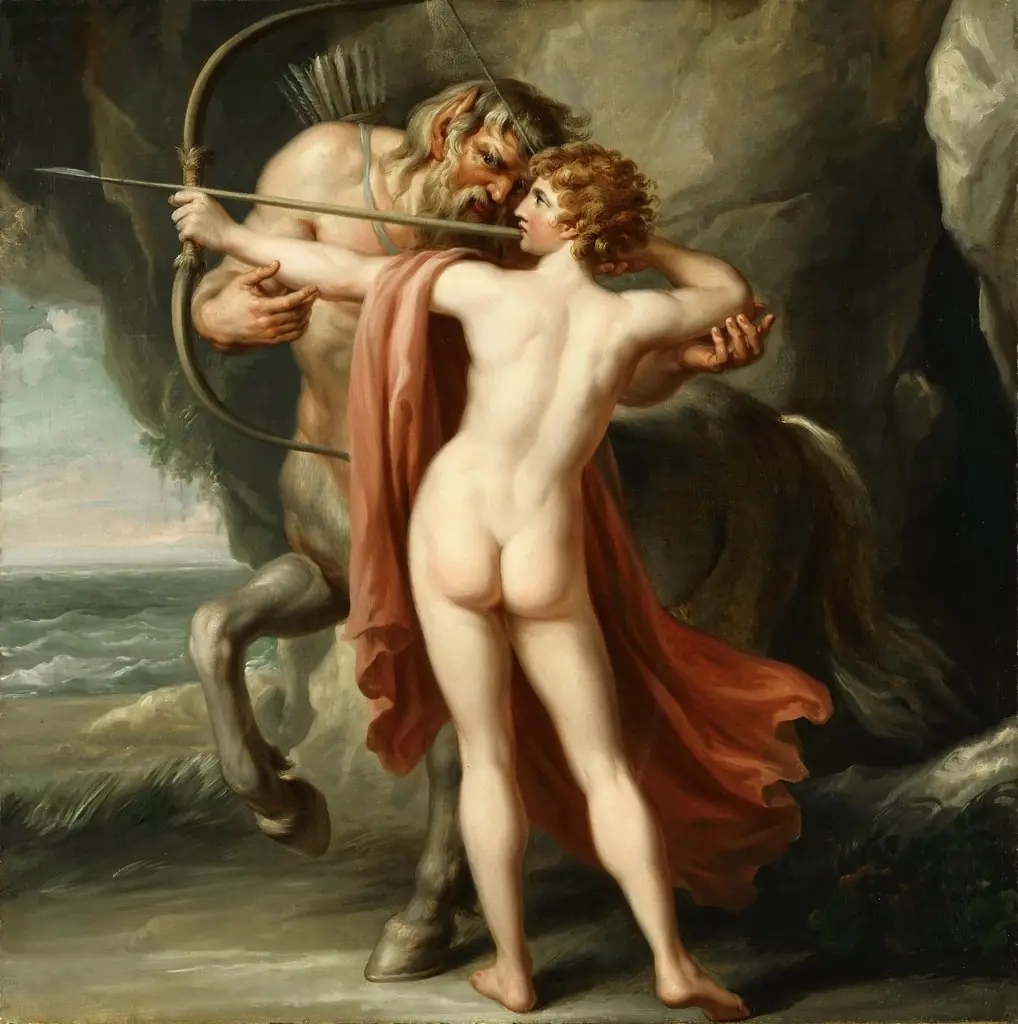 Chiron Instructing Achilles in the Bow