Artwork
Hercules, Deianira and the Centaur Nessus
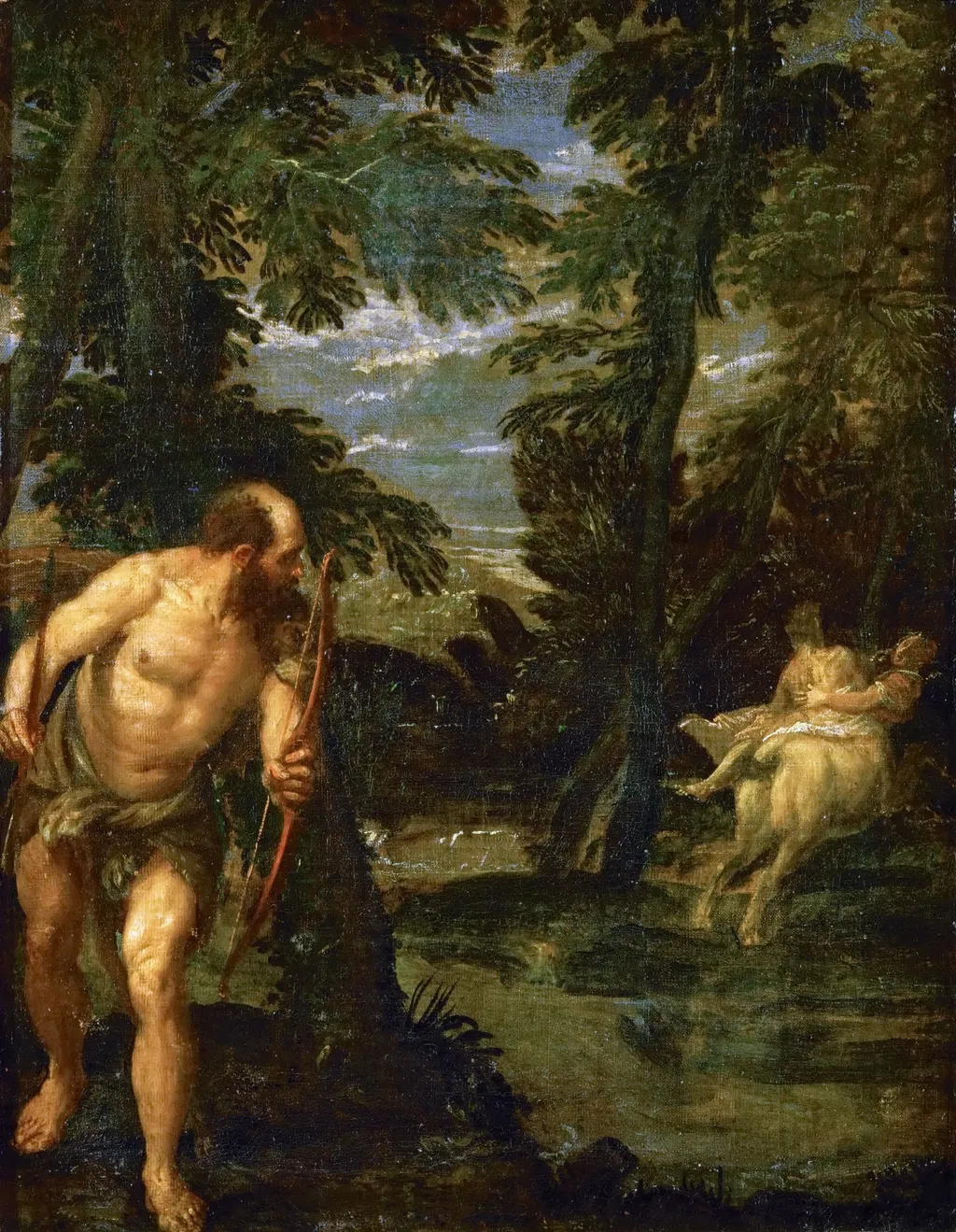
Hercules, Deianira and the Centaur Nessus is an oil painting by the Mannerist artist Paolo Veronese. It is held in the collection of the Kunsthistorisches Museum.
About this work
Subject & Meaning
The work belongs to the genre of mythological painting, treating the story as a dramatic confrontation between human and hybrid forms.
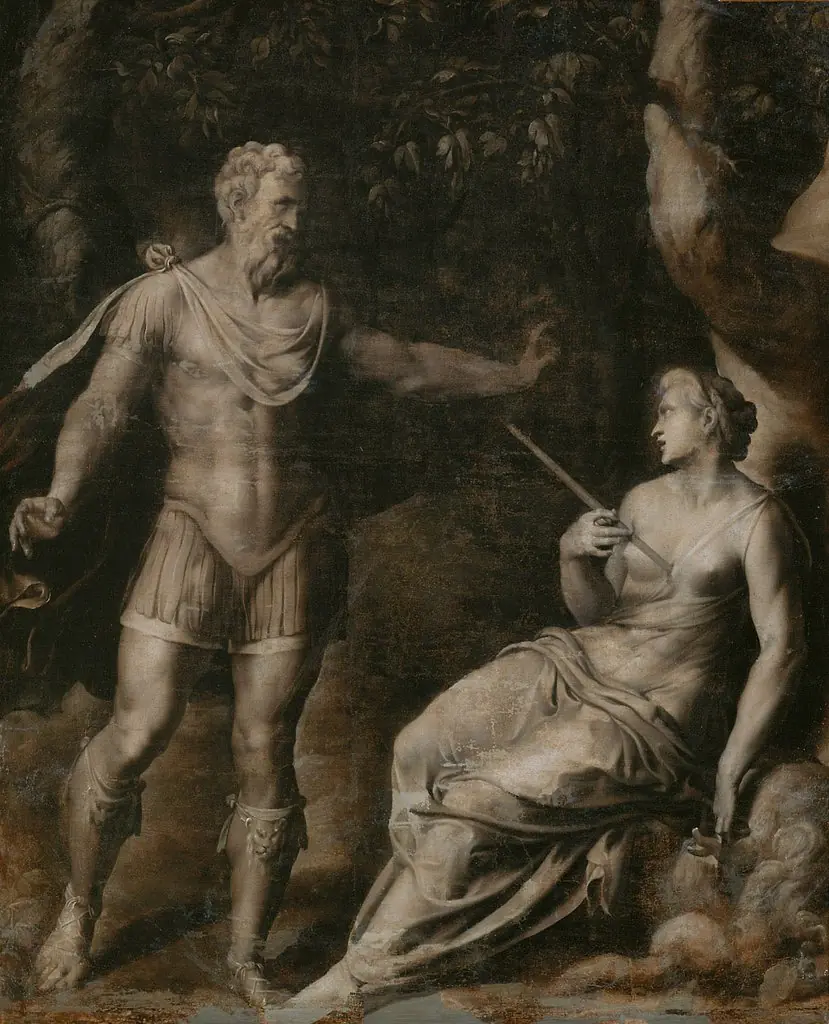
The painting depicts the mythological episode in which Hercules shoots the centaur Nessus, who attempts to carry off Deianira. The composition brings together three figures drawn from classical myth: Hercules, his wife Deianira, and the centaur Nessus, capturing the violent climax of their encounter. The subject is identified as the moment of Hercules' intervention against the centaur's abduction of Deianira, a narrative rooted in the labors and trials associated with the hero.
The work belongs to the genre of mythological painting, treating the story as a dramatic confrontation between human and hybrid forms. By focusing on the instant of rescue and retribution, the scene emphasizes themes of heroism, betrayal, and the vulnerability of the heroine, central to the Deianira myth cycle.
Technique & Style
Paolo Veronese executed Hercules, Deianira and the Centaur Nessus in 1586 using oil paint on a support now measuring 68.4 cm in height and 53.4 cm in width. The work is classified as a mythological painting depicting the narrative of Hercules, Deianira, and the centaur Nessus. As an oil painting from the late sixteenth century, the piece retains its original material composition within the collection of the Kunsthistorisches Museum.
History & Provenance
Paolo Veronese created the mythological painting Hercules, Deianira and the Centaur Nessus in 1586 using oil paint. The work was originally owned by Archduke Leopold Wilhelm of Austria before entering the collection of the Kunsthistorisches Museum in Vienna. The painting measures 68.4 cm in height and 53.4 cm in width.
Hercules, Deianira and the Centaur Nessus is housed in the Kunsthistorisches Museum in Vienna. The painting belongs to the museum’s collection and was formerly owned by Archduke Leopold Wilhelm of Austria, a known patron of Veronese. Its precise inventory or accession number is not provided in the available records.
The work dates from 1586 and exemplifies Veronese’s late mannerist style. The work has been included in several museum displays focusing on Veronese’s mythological subjects, though the sources consulted do not list specific exhibition titles or dates.
Overview
Paolo Veronese's Hercules, Deianira and the Centaur Nessus, completed in 1594, is a substantial oil painting that captures a dramatic moment from classical mythology. This late work by the renowned Venetian artist depicts Hercules intervening as the centaur Nessus attempts to abduct Deianira. Housed in the Kunsthistorisches Museum, the piece exemplifies Veronese's mature style and his significant contribution to mythological history painting within the vibrant artistic landscape of the late 16th century.
Context
Veronese was a prominent figure in 16th-century Venetian art, renowned for his large-scale narrative works. While celebrated for religious commissions such as The Wedding at Cana, he also specialized in mythological history paintings like this one. This genre allowed him to explore dramatic human and divine interactions, often set against opulent backdrops.
Hercules, Deianira and the Centaur Nessus represents his late-career engagement with classical themes, reflecting the broader artistic trends of the era.
Own this work as a print
Artist & collection
Artist
Paolo Caliari (1528 – 19 April 1588), known as Paolo Veronese ( VERR-ə-NAY-zay, -zee, US also -see; Italian: ), was an Italian Renaissance painter based in Venice, known for extremely large history paintings of…