Artwork
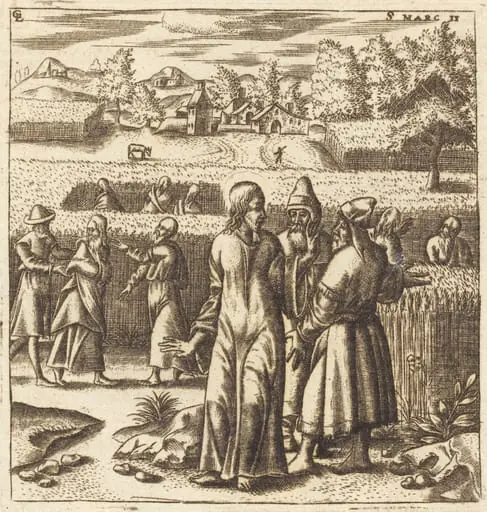
Jesus with the Pharisees
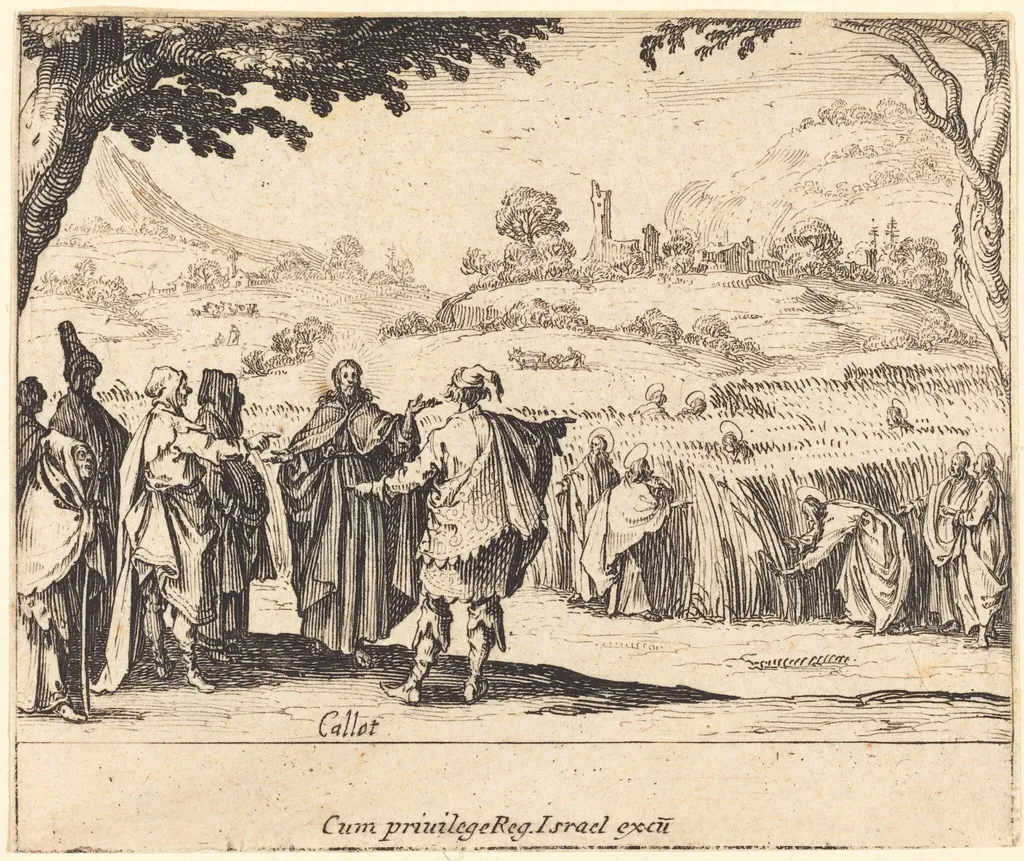
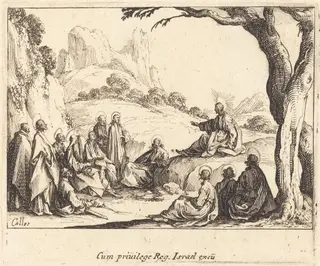
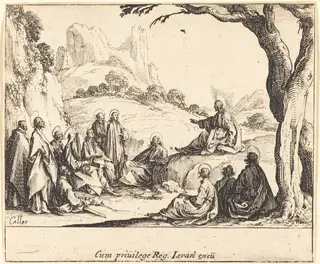
Jesus with the Pharisees is an ink print by the Baroque artist Jacques Callot. It dates from 1635 and is held in the collection of the National Gallery of Art.
About this work
Overview
Made on laid paper, the work is one of more than 1,400 prints he created, reflecting his dedication to capturing both sacred and secular life.
Jacques Callot produced this etching in 1635 during a period of intense religious printmaking in his career. Made on laid paper, the work is one of more than 1,400 prints he created, reflecting his dedication to capturing both sacred and secular life. His technique emphasized precision and atmospheric depth, distinguishing his prints from contemporaries.
The scene depicts a moment from the Gospels, rendered with careful attention to spatial composition and human expression.
Subject & Meaning
The image illustrates a confrontation between Jesus and the Pharisees near a river, as described in the Gospels. Figures are arranged in a dynamic grouping: some gesture emphatically, while others stand in quiet observation. A central figure in robes points toward the crowd, suggesting debate or instruction.
The setting, rural yet near a town with a church, anchors the moment in a tangible world, reinforcing the narrative’s earthly context rather than idealizing it.
Technique & Style
Callot employed fine-line etching to achieve intricate detail and tonal variation. The use of cross-hatching and delicate lines models form and shadow, particularly in the folds of garments and the texture of foliage. Background elements like the distant town and riverbank are rendered with graduated density, creating spatial recession.
His mastery of the medium allowed him to convey complex scenes with clarity, even at small scale, without sacrificing nuance.
History & Provenance
Created during Callot’s mature period in Nancy, the etching emerged from a prolific phase of religious imagery alongside genre scenes. Though specific early ownership records are sparse, the work aligns with prints distributed widely across Europe through print dealers. It entered institutional collections in the 19th century, where it was recognized for its technical refinement and historical insight into 17th-century devotional art.
Context
In the 1630s, religious subjects remained central to print culture despite rising secular interests. Callot, working in the Duchy of Lorraine, responded to both Catholic devotional needs and broader public interest in biblical narratives. His prints circulated among clergy, scholars, and collectors, offering accessible visual theology. The inclusion of everyday landscapes and ordinary figures reflects a trend toward naturalism in Counter-Reformation art.
Legacy
Callot’s etchings, including this one, influenced later generations of printmakers through their technical rigor and narrative clarity. His ability to merge detailed human interaction with expansive environments set a standard for religious and genre prints. Though less celebrated than his war scenes, works like this demonstrate his consistent commitment to documenting spiritual life with observational honesty and compositional discipline.
Own this work as a print
Artist & collection
Artist
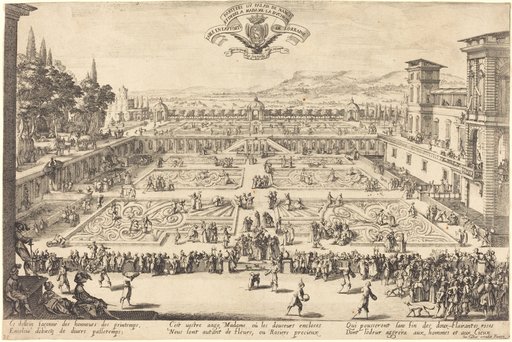
Jacques Callot (French: ; c. 1592 – 1635) was a baroque printmaker and draftsman from the Duchy of Lorraine. He is an important person in the development of the old master print. He made more than 1,400 etchings that…

 Holy Family at supper
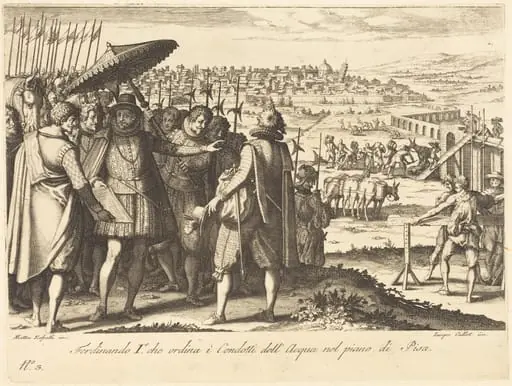 Restoration of the Aqueduct at Pisa
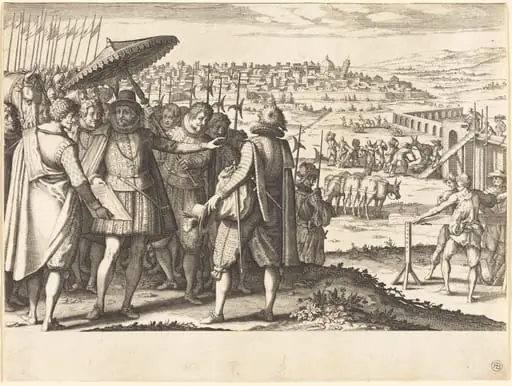 Restoration of the Aqueduct at Pisa
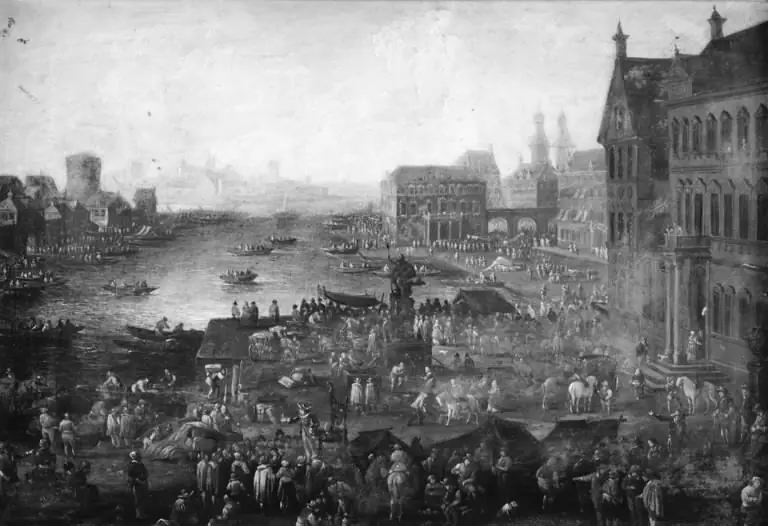 Square in Paris with Many Figures
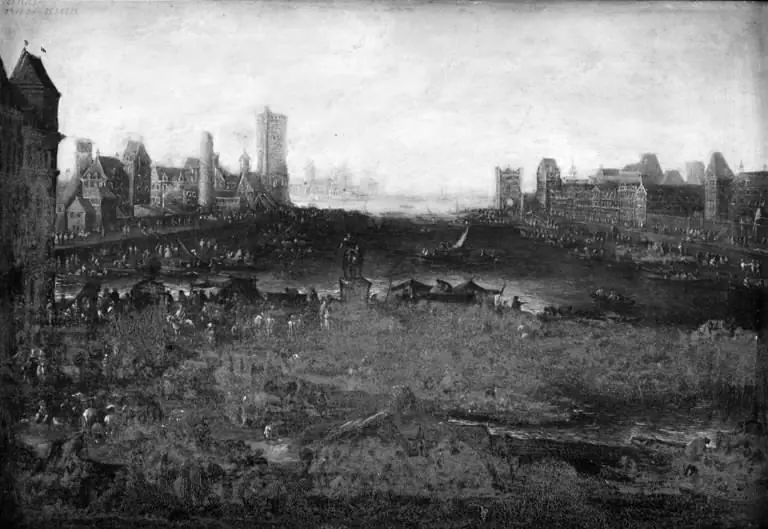 Square in Paris with Many Figures
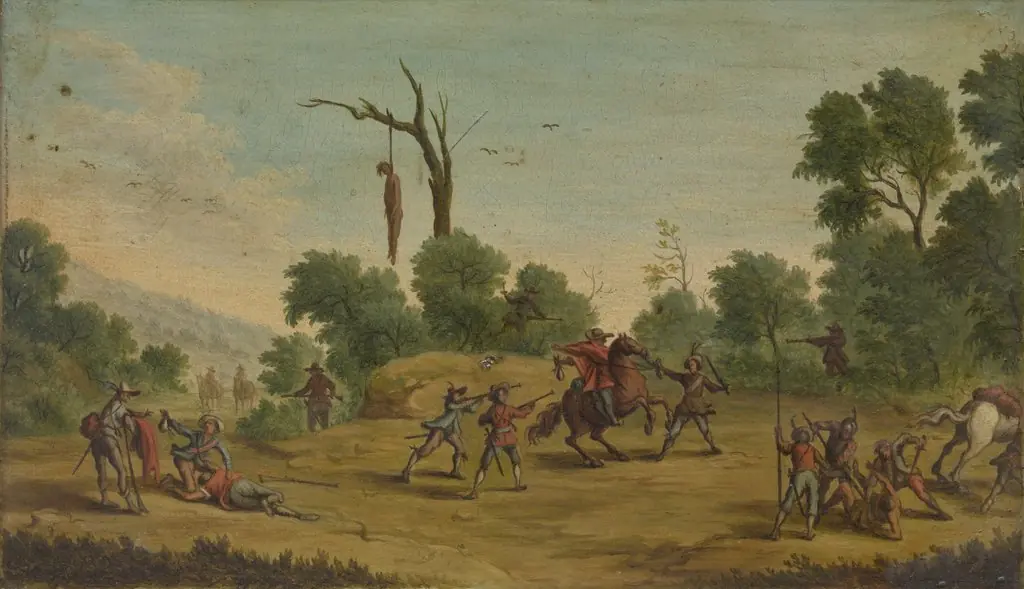 Horsemen Attacked by Robbers
 HOW WILL A COVERED PART BE CORRECTED?HOW WIKA A COVERED HEART DEED CORRECTED?
![Christ Walking on the Water [second plate], by Jacques Callot](https://artifactworldgallery.com/img/jacques-callot--christ-walking-on-the-water-second-plate--2069f3bfe4cb2126-w320.webp) Christ Walking on the Water [second plate]
Christ Walking on the Water [second plate]