Artwork
Jesus with the Pharisees
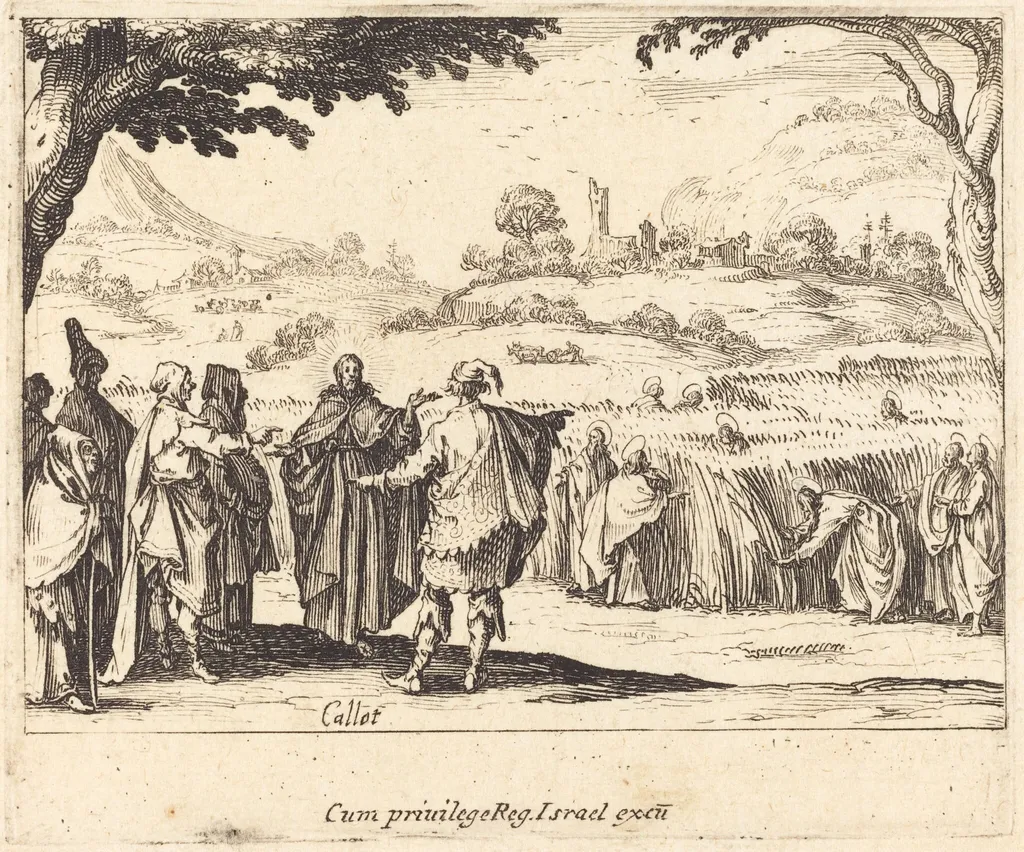
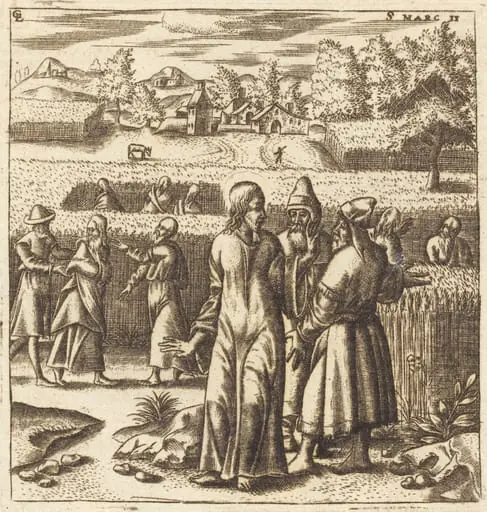
Jesus with the Pharisees is an ink print by the Baroque artist Jacques Callot. It dates from 1635 and is held in the collection of the National Gallery of Art.
About this work
Overview
Callot, from the Duchy of Lorraine, was known for his precision in etching and his ability to render complex scenes with clarity and spatial depth.
Jacques Callot produced this etching in 1635, part of a vast body of over 1,400 prints that documented both sacred and secular life in early 17th-century Europe. Created on laid paper, the work belongs to his religious series, which often drew from biblical narratives. Callot, from the Duchy of Lorraine, was known for his precision in etching and his ability to render complex scenes with clarity and spatial depth.
Subject & Meaning
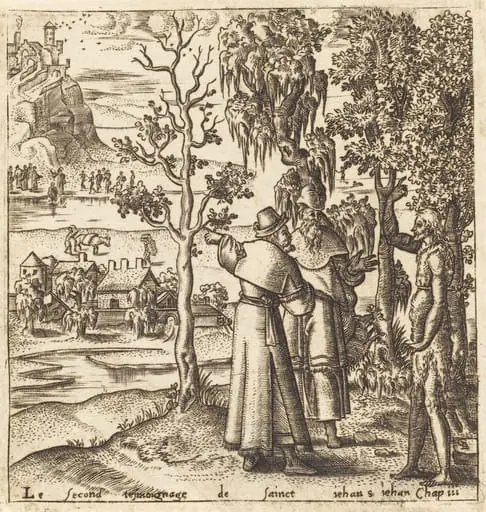
The scene depicts Jesus engaged with Pharisees, a moment drawn from the Gospels where religious authorities challenge his teachings. The figures are arranged in a formal line, their postures suggesting tension and deliberation. The inclusion of distant walkers and architectural elements situates the encounter within a broader social world, emphasizing the public nature of religious debate rather than isolating it as a private moment.
Technique & Style
Callot employed fine, controlled etching lines to define folds of robes, facial expressions, and the textured landscape. His use of cross-hatching creates strong contrasts of light and shadow, lending the scene dramatic weight despite its monochrome palette. The background, with its receding hills and buildings, demonstrates his skill in atmospheric perspective, while the composition’s order suggests a staged, almost theatrical arrangement.
History & Provenance
The print was made during Callot’s mature period, after years of working in Florence and Paris, where he absorbed Italian and Flemish influences. Though specific early ownership records are sparse, the work aligns with prints circulated among collectors and clergy in northern Europe. Its survival in multiple institutional collections suggests consistent interest in his religious imagery throughout the 17th and 18th centuries.
Context
In 1635, religious themes remained central to visual culture amid the tensions of the Thirty Years’ War. Callot’s etchings offered a quiet counterpoint to the era’s violence, focusing on moral and spiritual encounters. His detailed renderings of clothing and architecture reflect a broader interest in documenting contemporary customs, even when illustrating ancient stories, grounding the sacred in recognizable reality.
Legacy
Callot’s technical innovations in etching influenced generations of printmakers, particularly in his ability to render fine detail and complex compositions. While less celebrated than his satirical or military scenes, works like this one reveal his consistent engagement with religious narrative and his commitment to clarity and narrative precision. His prints remain studied for their craftsmanship and subtle storytelling.
Own this work as a print
Artist & collection
Artist
Jacques Callot (French: ; c. 1592 – 1635) was a baroque printmaker and draftsman from the Duchy of Lorraine. He is an important person in the development of the old master print. He made more than 1,400 etchings that…

 Holy Family at supper
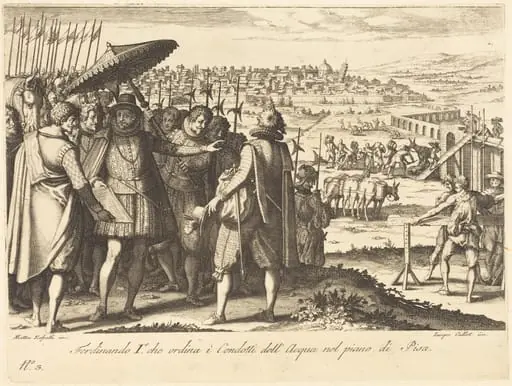 Restoration of the Aqueduct at Pisa
 Restoration of the Aqueduct at Pisa
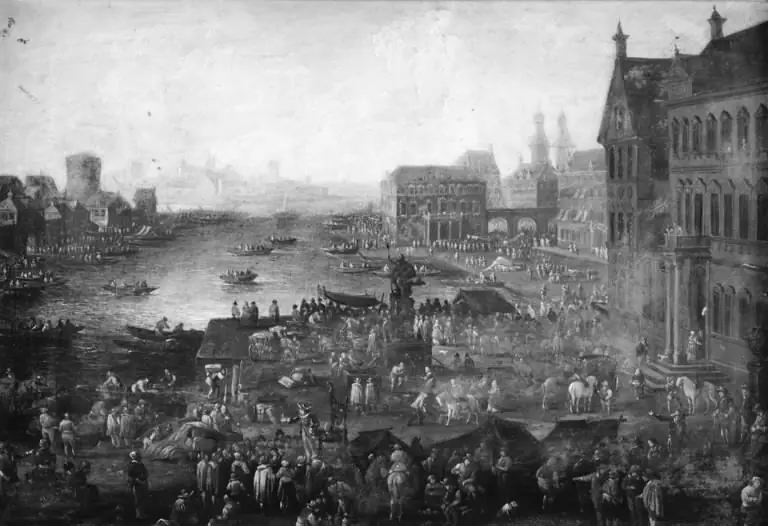 Square in Paris with Many Figures
 Square in Paris with Many Figures
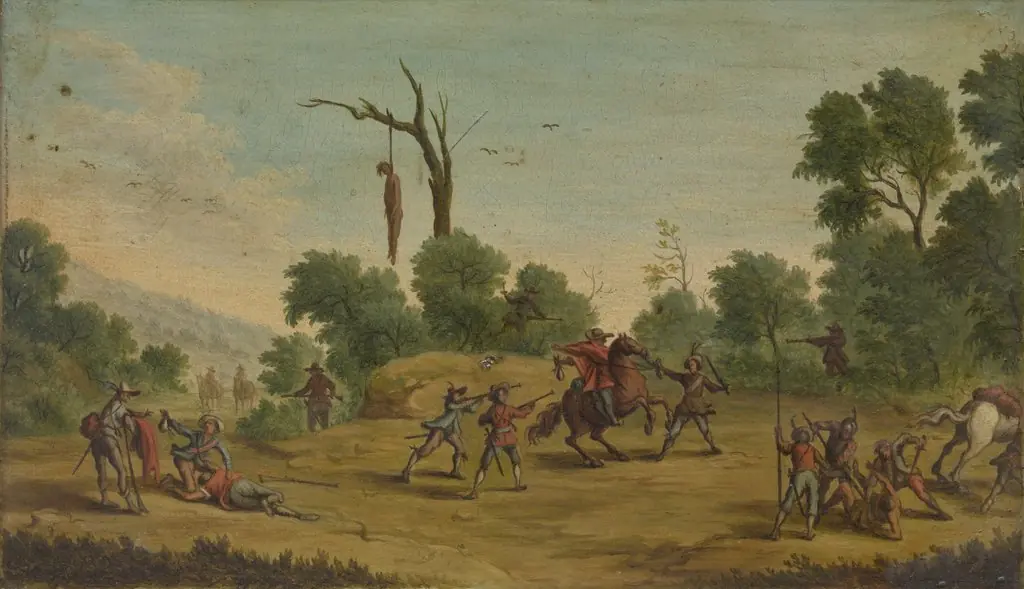 Horsemen Attacked by Robbers
 HOW WILL A COVERED PART BE CORRECTED?HOW WIKA A COVERED HEART DEED CORRECTED?
![Christ Walking on the Water [second plate], by Jacques Callot](https://artifactworldgallery.com/img/jacques-callot--christ-walking-on-the-water-second-plate--2069f3bfe4cb2126-w320.webp) Christ Walking on the Water [second plate]
Christ Walking on the Water [second plate]