Artwork
Bath Road, London, (sketch)
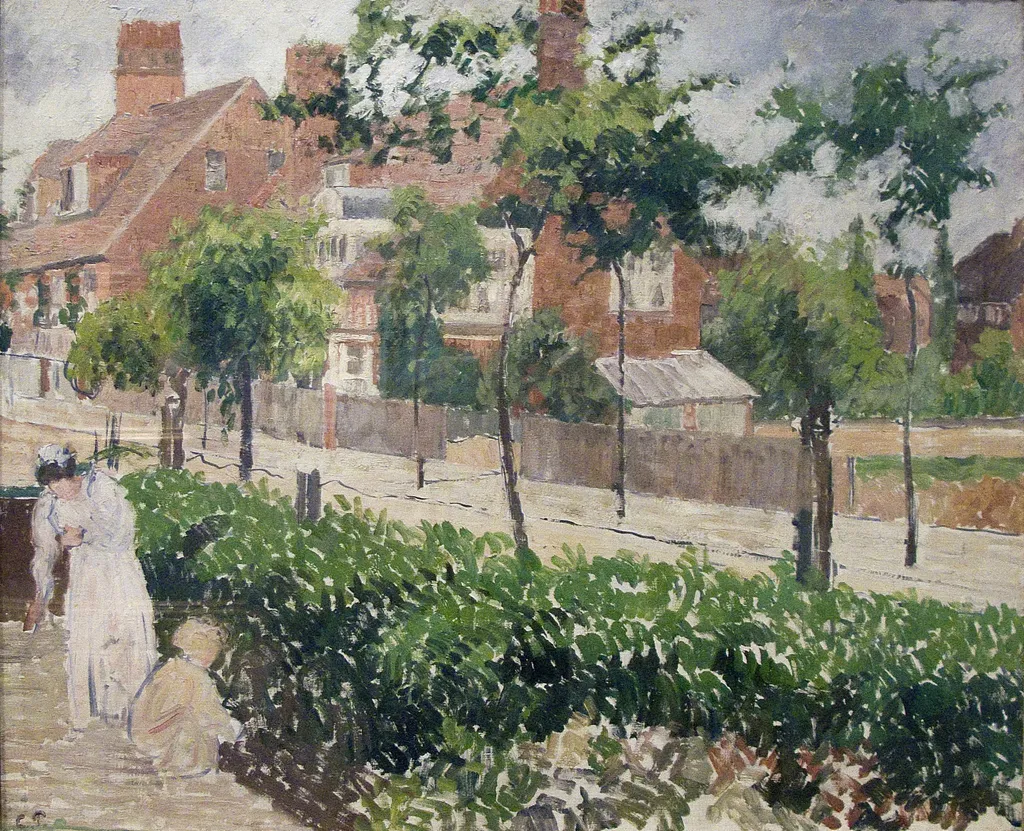
Bath Road, London, (sketch) is an oil painting by the Impressionist artist Camille Pissarro. It dates from 1899 and is held in the collection of the Ashmolean Museum.
About this work
It looks out from 62 Bath Road, where Pissarro’s son Lucien had just moved with his wife Esther and their daughter Orovida.
Bath Road, London is a sketch from 1897 by French painter Camille Pissarro. He used oil paint for this work.
The painting shows the new garden suburb of Bedford Park near Chiswick, known for its Queen Anne Revival houses. It looks out from 62 Bath Road, where Pissarro’s son Lucien had just moved with his wife Esther and their daughter Orovida. At this time Camille returned to a more orthodox form of impressionism.
You can see more of this work at the Ashmolean Museum.
Subject & Meaning
The sketch depicts a quiet residential stretch of Bath Road in the garden suburb of Bedford Park, west London, where Pissarro’s son Lucien had settled in 1896. A woman and child in the foreground are identified as Lucien’s wife, Esther, and their daughter, Orovida, playing in their front garden. Behind them, modest Queen Anne Revival houses line the avenue, conveying the orderly, suburban expansion of late‑Victorian London. The scene captures the interplay of light and foliage typical of Pissarro’s later Impressionist manner, aligning with his stated return to a more orthodox Impressionism by 1897. The composition frames domestic life within a modernising urban landscape, reflecting the artist’s engagement with contemporary suburban development.
Technique & Style
Executed in oil on canvas in 1897, the work measures 54 by 65 centimeters. The handling aligns with Pissarro’s late-Impressionist practice, characterized by broken, luminous brushwork and a bright, plein-air palette that captures the suburban atmosphere of Bedford Park. Compositionally, the scene employs a low vantage point to emphasize the street’s receding perspective and the rhythmic alignment of Queen Anne Revival houses, while the foreground figures, a woman and child, are rendered with swift, descriptive strokes that integrate them into the luminous setting rather than isolating them as primary subjects.
History & Provenance
Camille Pissarro executed this oil on canvas in 1897, depicting the garden suburb of Bedford Park near Chiswick. The scene captures the view from 62 Bath Road, where the artist's son, Lucien Pissarro, had relocated with his family the preceding year. The figures portrayed in the front garden are Lucien's wife, Esther, and their daughter, Orovida.
The work remained within the artist's lineage until it was presented to the Ashmolean Museum in Oxford by the Pissarro Family in 1952. Upon acquisition, the museum assigned the painting the accession number WA1951.225.4.
The work is held by the Ashmolean Museum in Oxford, where it is recorded under accession number WA1951.225.4; it entered the collection through a 1952 bequest from the Pissarro family. Exhibition records indicate that the painting was shown in the museum’s 1953 exhibition of Impressionist works and later featured in the 1975 retrospective of Camille Pissarro at the Tate Gallery.
Context
Bath Road, London, painted in 1897 by Camille Pissarro, captures a garden suburb scene in Bedford Park, near Chiswick, reflecting the Queen Anne Revival architecture of the area. The work portrays the view from 62 Bath Road, where Pissarro’s son Lucien had relocated the previous year, and features his wife Esther and daughter Orovida in the garden. Today the painting resides in the Ashmolean Museum, Oxford, forming part of the museum’s collection of Pissarro works.
The painting has been discussed in scholarly literature, including Stephen Bann’s *Art of the Garden*, which situates it within the broader tradition of garden imagery in British art, and Kenneth McConkey’s *Impressionism in Britain*, which examines Pissarro’s return to more orthodox Impressionist techniques during this period. Nicholas Reed’s study of Pissarro’s West London works further contextualizes the piece within the artist’s local engagements in the 1890s.
The artwork is catalogued in major databases, with its accession details recorded by Art UK and the Ashmolean Museum, confirming its provenance and acquisition history.
Own this work as a print
Artist & collection


- Country Lane with Trees. Kastrup
 Foliage—Oak Tree and Fruit Seller
 Stanfield House, Hampstead
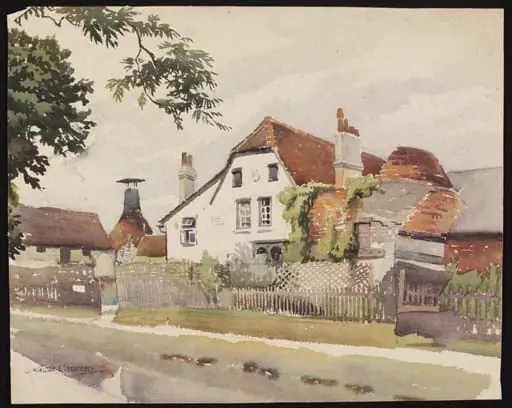 Kilns and Maltings on the Canal Bank, Bishop's Stortford
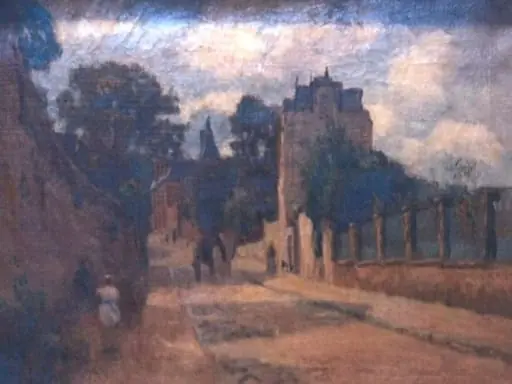 Stradă
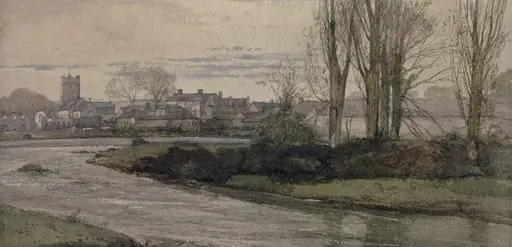 Leixlip on the Liffey
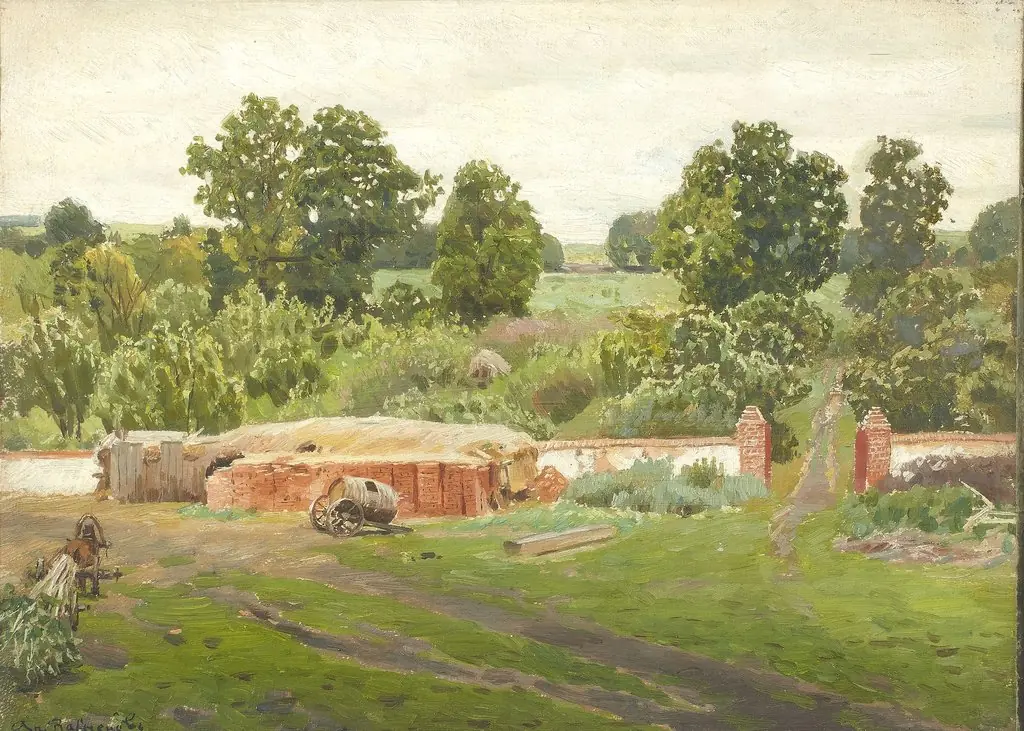 Grey day. Kozlovka
 Moară la Baia Mare
 The Old Walnut Tree B
 Raze de soare
 View of Lower Terrace, Hampstead
 The Road near the Railway, Effect of Snow, Osny