Artwork
The Fifteen Mysteries and the Virgin of the Rosary
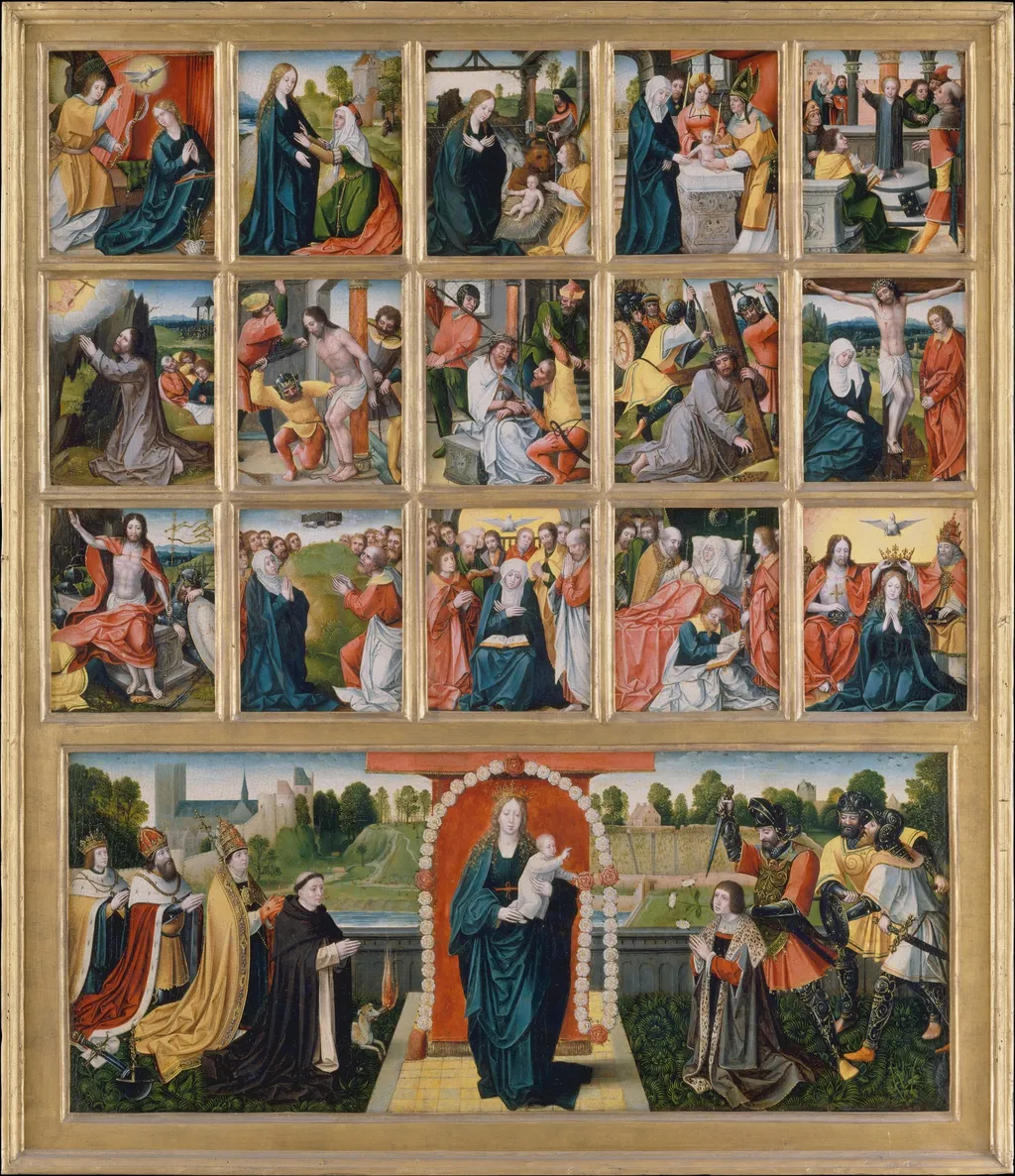
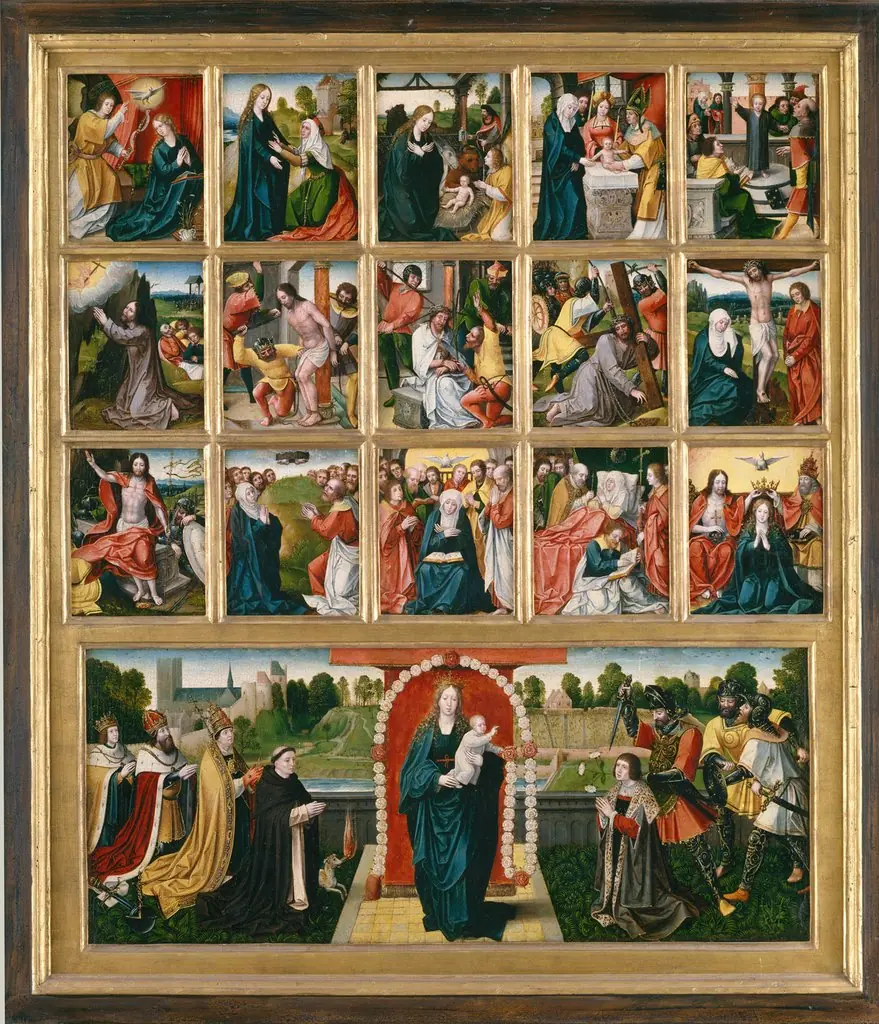
The Fifteen Mysteries and the Virgin of the Rosary is an oil painting. It dates from 1517 and is held in the collection of the Metropolitan Museum of Art.
About this work
In the bottom register of a Brussels altarpiece, the Virgin and Christ Child appear adorned with an enormous rosary of red and white roses. The top three registers lay out the fifteen mysteries of the rosary in miniature narrative scenes. Behind the Virgin, the towers of the Coudenberg Palace tie the commission to the Habsburg court around 1517.
Subject & Meaning
These episodes surround a central Virgin and Child, reinforcing the work's devotional function.
The painting, titled The Fifteen Mysteries and the Virgin of the Rosary, depicts the key events of the Rosary's Joyful, Sorrowful, and Glorious mysteries, as indicated by the represented scenes: the Nativity, Visitation, Flagellation, Christ Carrying the Cross, Crucifixion, Resurrection, Death of the Virgin, and Coronation of the Virgin. These episodes surround a central Virgin and Child, reinforcing the work's devotional function. The iconography thus serves as a visual aid for meditating on Christ's life and Mary's role in salvation, a common practice in early 16th-century Netherlandish religious art.
Technique & Style
The painting is executed in oil paint on a panel support, a medium typical of early 16th-century Netherlandish devotional works. The panel measures 12.7 by 10.5 centimeters, indicating a small, intimate format suited for private prayer. The oil technique allows for fine detail and translucent glazes, characteristic of the period's meticulous handling, though no specific observations about brushwork or condition are recorded in the sources.
Stylistically, the composition belongs to the religious art genre, depicting multiple narrative scenes from the life of Christ and the Virgin within a single framework.
History & Provenance
Dating from about 1517 (or ca. 1515–20), the painting is attributed to a Netherlandish painter, possibly Goswijn van der Weyden. It is currently in the collection of the Metropolitan Museum of Art. No commission details or earlier ownership chain are recorded in the available sources.
Overview
This early sixteenth-century altarpiece, titled The Fifteen Mysteries and the Virgin of the Rosary, is an oil painting attributed to a Brussels artist, possibly Goswijn van der Weyden. Dated between 1515 and 1520, the work visually interprets the devotional practice of the rosary. It combines a large central panel with fifteen smaller ones, presenting a unique fusion of religious narrative and symbolic representation characteristic of Northern Renaissance art.
Context
A significant detail within the altarpiece's landscape is the discernible architecture of the Coudenberg Palace in Brussels. This inclusion strongly suggests that the work was commissioned by an individual with ties to the Habsburg court, which resided there. The painting thus serves as a rare example from the Northern Renaissance where private religious devotion is explicitly interwoven with the public identity and patronage of a powerful courtly family.
Artist & collection

 Holy Kinship
![Altarpiece showing scenes from the Infancy of Christ: The Adoration of the Magi [center]; The Annunciation; The Presentation of Christ in the Temple; The Flight into Egypt; The Nativity [clockwise from upper left], by Master of Hoogstraeten](https://artifactworldgallery.com/img/master-of-hoogstraeten--altarpiece-showing-scenes-from-the-infancy-of-christ-the-ado--6a236bfea3373486-w320.webp) Altarpiece showing scenes from the Infancy of Christ: The Adoration of the Magi [center]; The Annunciation; The Presentation of Christ in the Temple; The Flight into Egypt; The Nativity [clockwise from upper left]
Altarpiece showing scenes from the Infancy of Christ: The Adoration of the Magi [center]; The Annunciation; The Presentation of Christ in the Temple; The Flight into Egypt; The Nativity [clockwise from upper left] The Le Cellier Altarpiece
 Triptych with Scenes from the Life of the Virgin
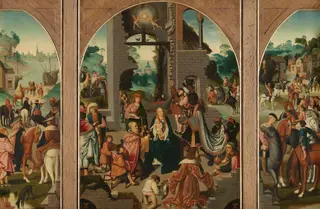 Triptych with Adoration of the Magi (center and inner wings), Saint Antony Abbot (left, outer wing) and Saint Adrian (right, outer wing)
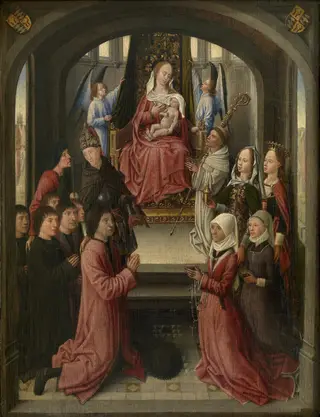 Lactatio of Saint Bernard of Clairvaux with Donors
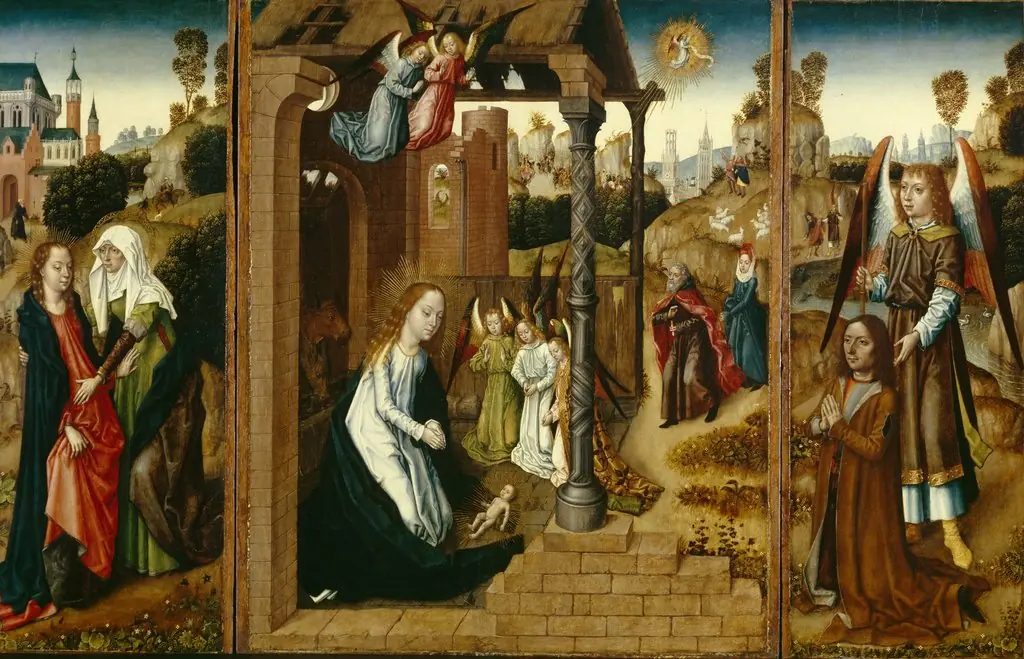 Nativity
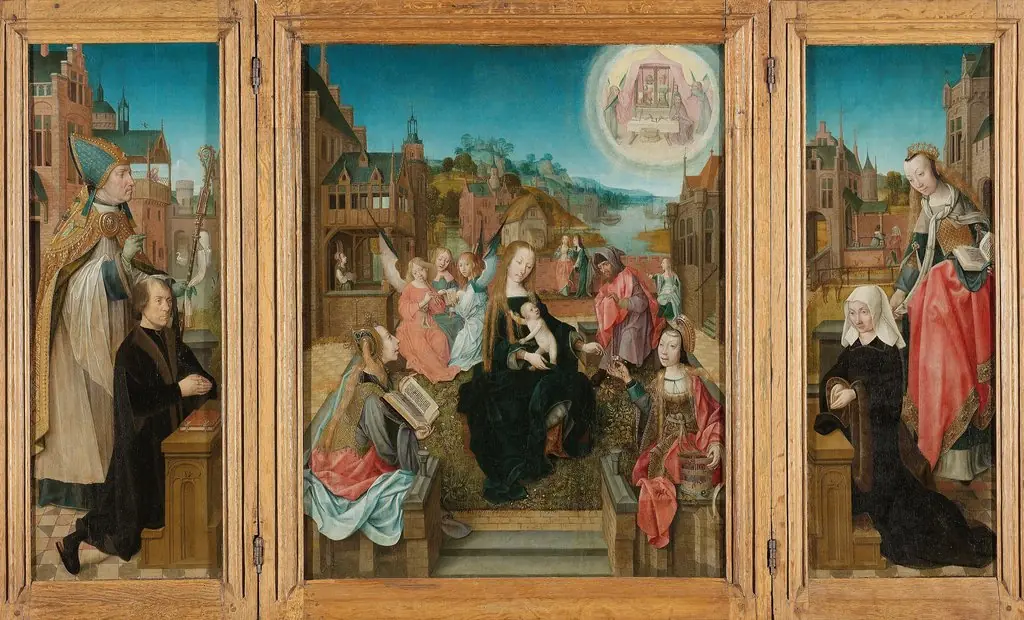 Triptych with the Virgin and Child and saints (centre panel), the donor with St Martin (inner left wing), the donor’s wife with St Cunera (inner right wing) and the Annunciation (outer wings)
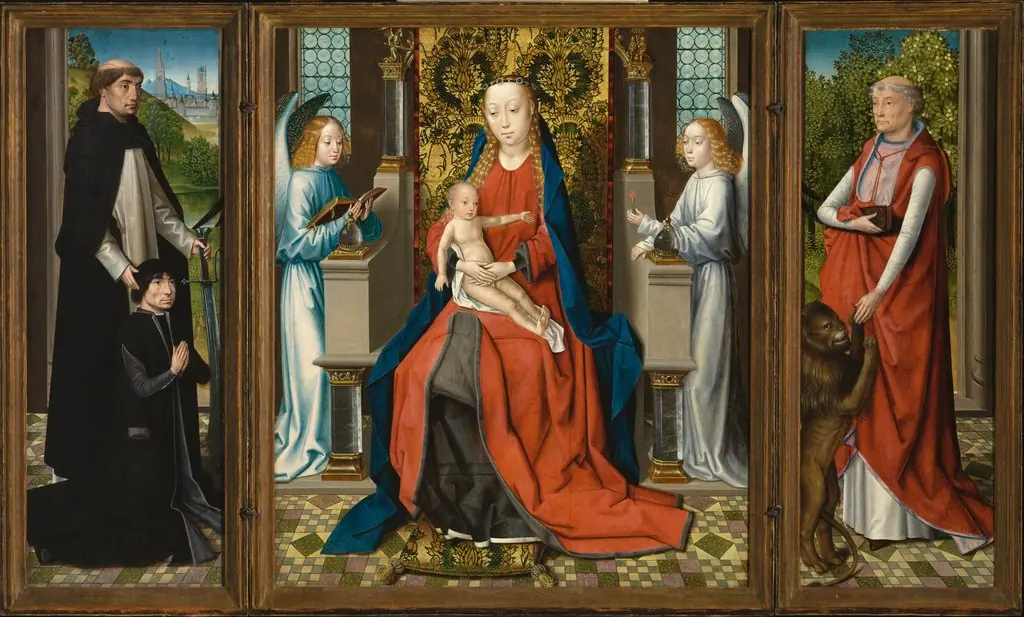 Triptych of Madonna and Child with Angels; Donor and His Patron Saint Peter Martyr; and Saint Jerome and His Lion
 Drieluik met de kruisiging
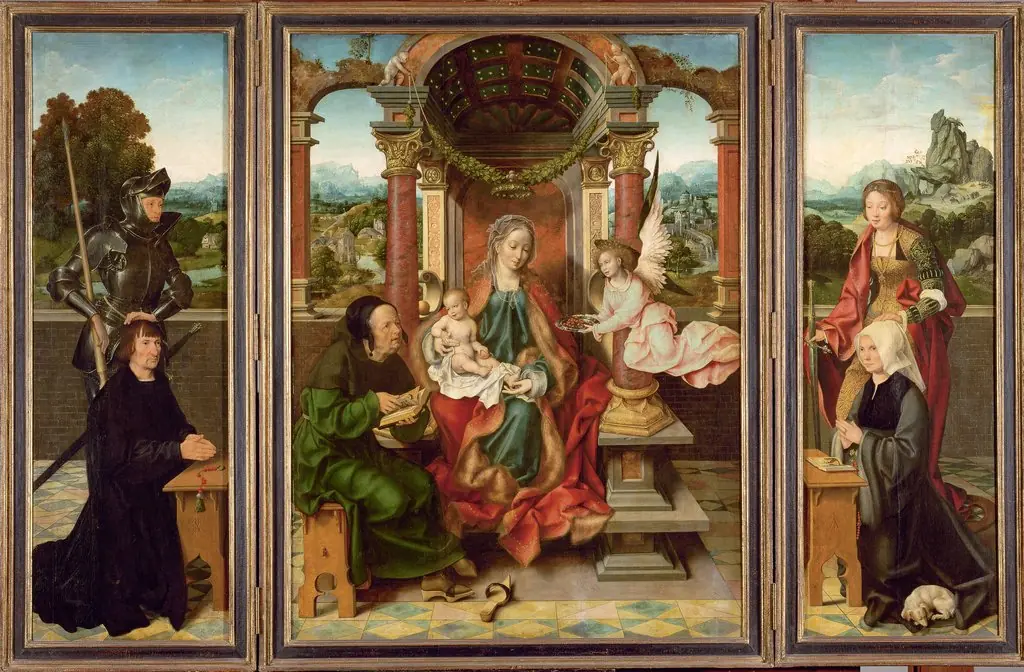 Winged Altar
- The Fifteen Mysteries and the Virgin of the Rosary