Artwork
Pentecostes
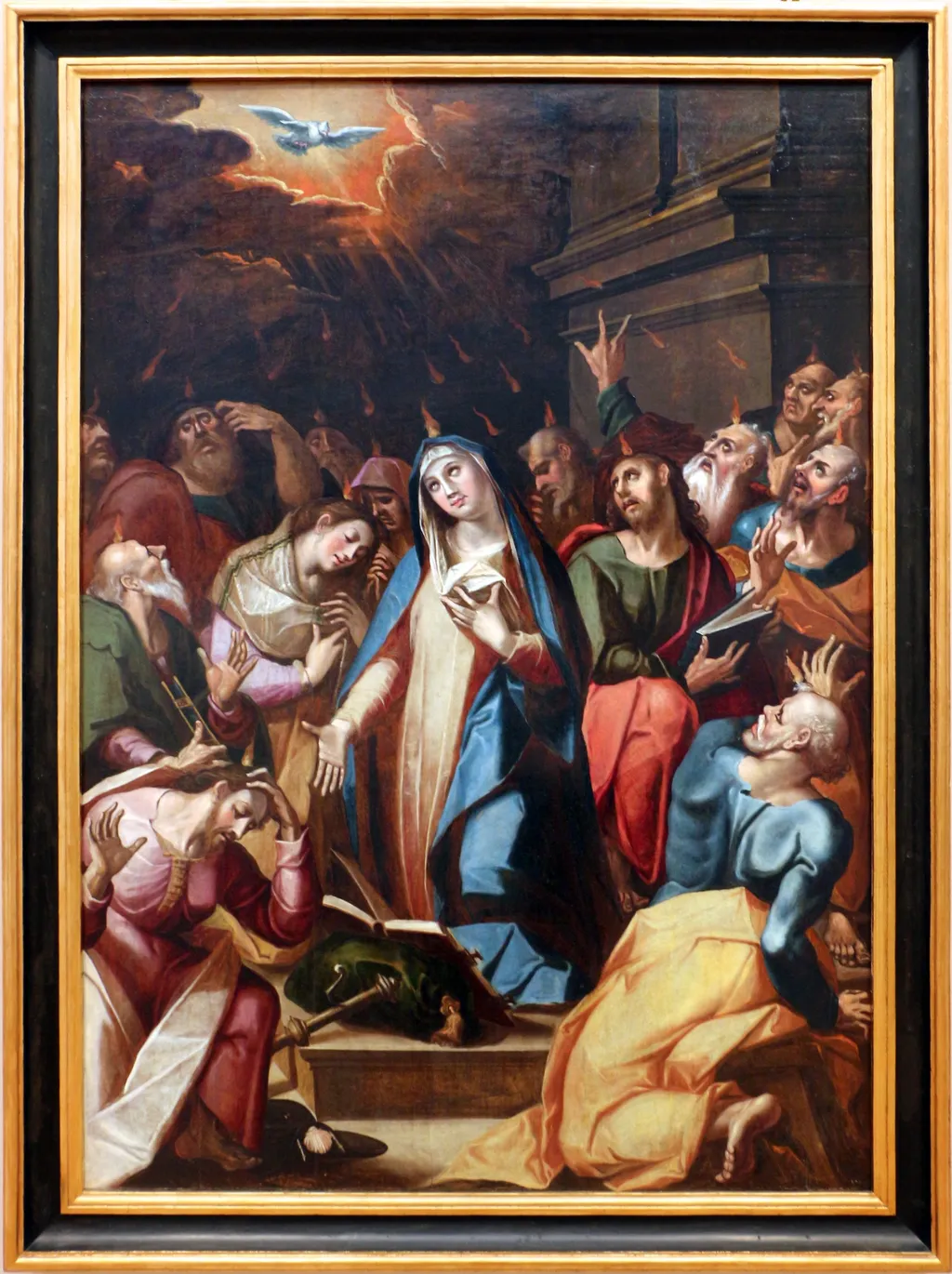
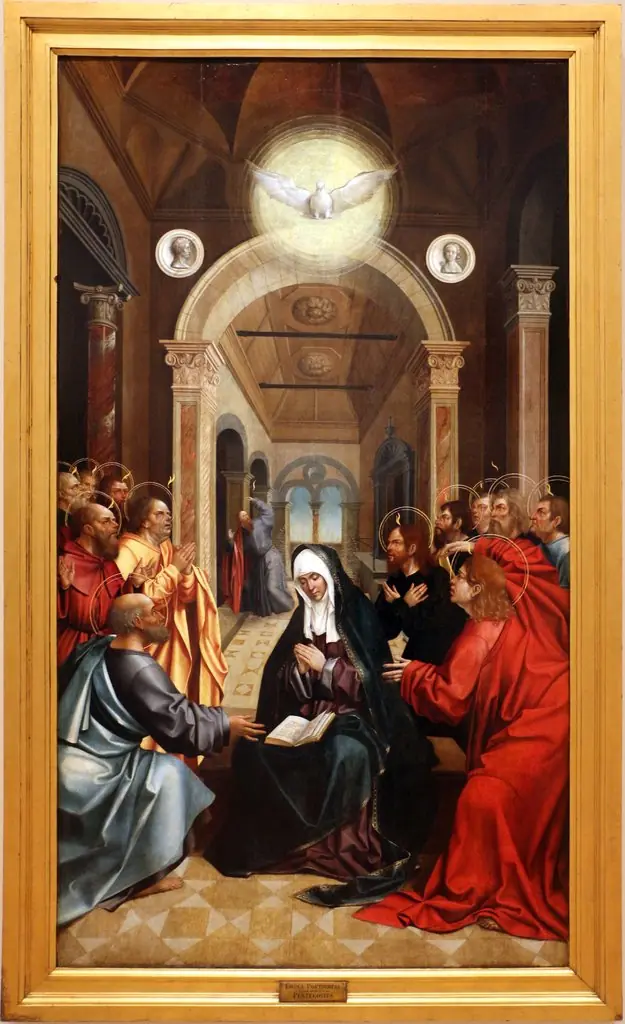
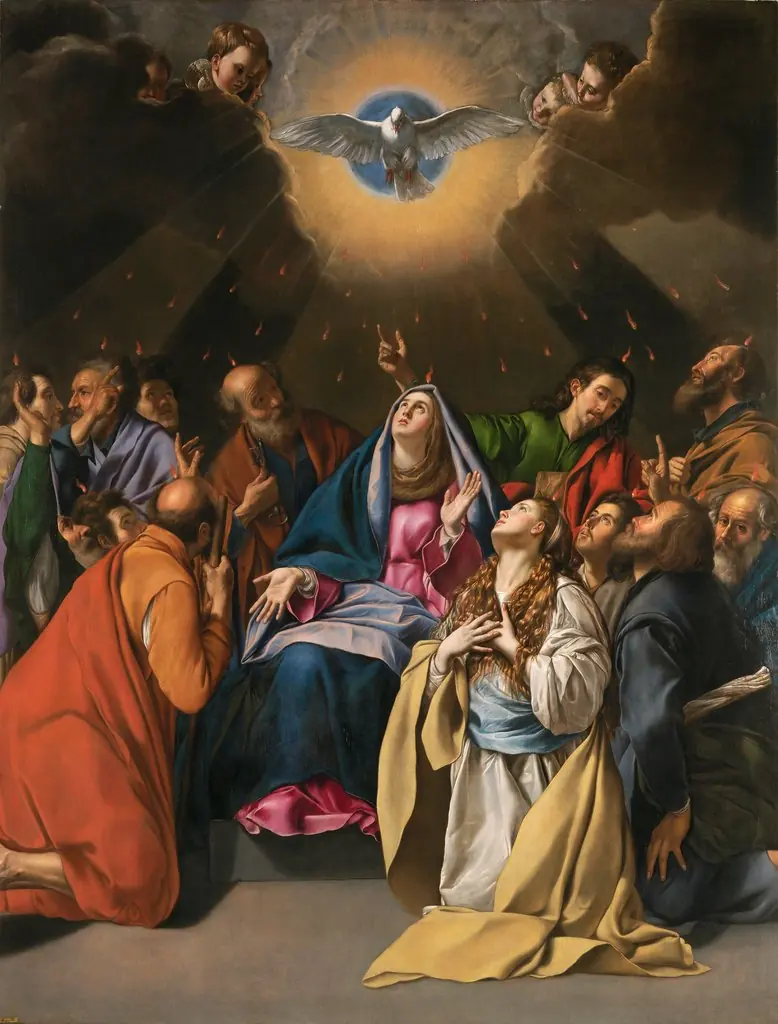
Pentecostes is an unspecified painting by the Mannerist artist Fernão Gomes. It dates from 1596 and is held in the collection of the National Museum of Ancient Art.
About this work
Overview
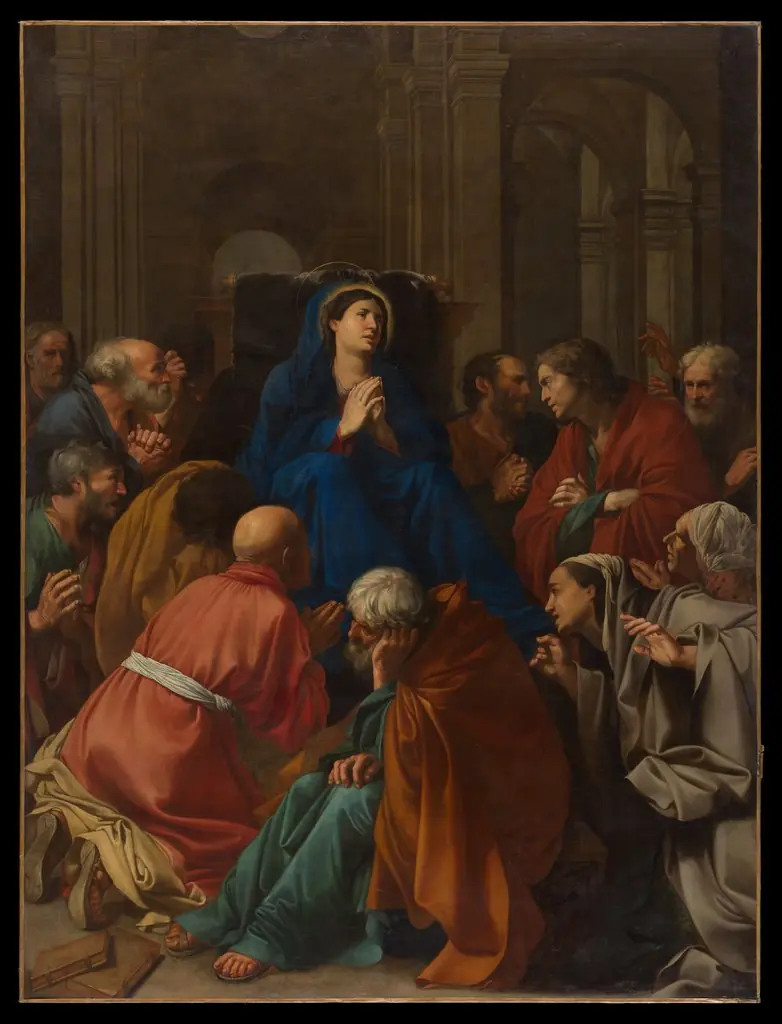
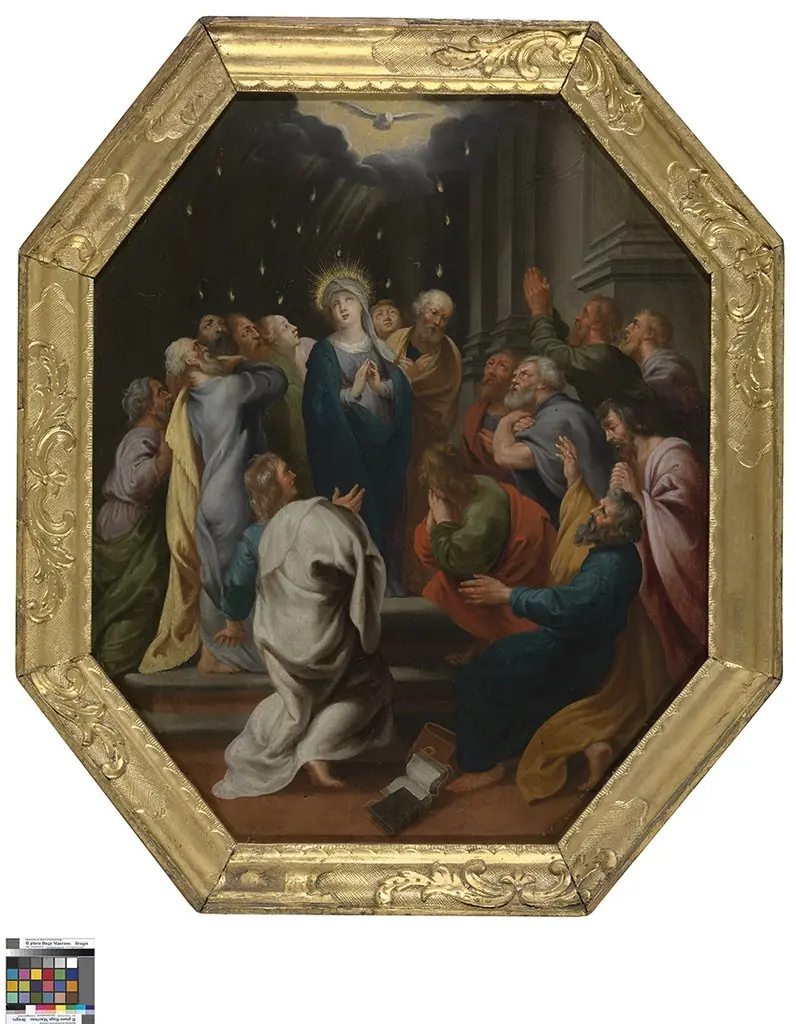
Pentecostes is a 1596 religious painting by Fernão Gomes, housed at the National Museum of Ancient Art. It portrays a central female figure in a blue robe amidst a distressed crowd, set against a dark, ominous background with hints of red and orange.
Subject & Meaning
The painting's central figure, likely representing a religious persona (possibly Mary or a symbol of the Church), stands calmly with clasped hands, contrasting with the turbulent crowd. A white bird (symbolizing the Holy Spirit) flies upwards in the top-left corner, suggesting a scene related to the Pentecost.
Technique & Style
Gomes employs a predominantly dark palette with strategic warm tones to evoke turmoil. The composition's focal point is the serene, blue-robed woman, while the surrounding crowd and ominous sky convey chaos, characteristic of late 16th-century religious art's dramatic flair.
History & Provenance
Created in 1596 by Fernão Gomes, the painting's early history is not detailed here, but it is currently part of the collection at the National Museum of Ancient Art.
Context
Pentecostes reflects the religious themes prevalent in 16th-century European art, particularly in Portugal, where such scenes reinforced Catholic doctrine. The depiction of Pentecost aligns with the Counter-Reformation's emphasis on vivid, emotionally engaging religious imagery.
Legacy
While specific influences or direct artistic lineage are not outlined, Pentecostes contributes to the understanding of Fernão Gomes's contribution to Portuguese religious art of his time, offering insights into the thematic and stylistic preferences of late Renaissance Portugal.
Own this work as a print
Artist & collection