Artwork
Two Nymphs and a Satyr
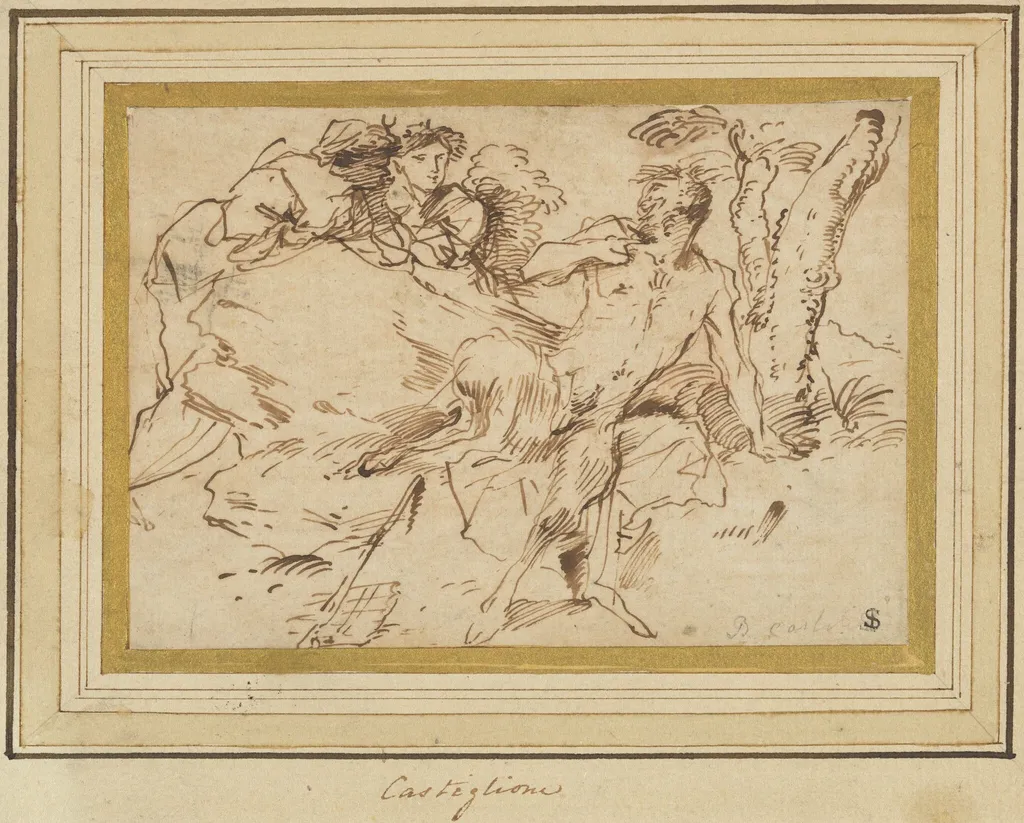
Two Nymphs and a Satyr is an ink drawing by the Baroque artist Giovanni Benedetto Castiglione. It dates from 1644 and is held in the collection of the National Gallery of Art.
- Inscription
- Inscribed:in later hand, lower right: B Castili; lower left on mount: 1/2 [the Lat?](effaced) / 176 L1-; across bottom on mount: Castiglione / Coll Earl Spencer; upper center verso: A / No.46
About this work
Overview
Created in 1644, Two Nymphes and a Satyr is a pen-and-brown‑ink drawing on laid paper by the Genoese Baroque artist Giovanni Benedetto Castiglione, often referred to by the nickname Il Grechetto. The work exemplifies Castiglione’s interest in mythological subjects rendered with a confident, fluid hand.
Subject & Meaning
The composition brings together two female nymphs and a satyr, figures drawn from classical mythology that traditionally embody the contrast between pastoral innocence and untamed nature. Their interaction suggests a narrative moment that reflects the artist’s fascination with the interplay of human and animal worlds in rural settings.
Technique & Style
Executed with pen and brown ink, the drawing showcases Castiglione’s skillful line work and nuanced shading on laid paper, a surface that retains a subtle texture. The artist’s draftsmanship, marked by swift, expressive strokes, conveys both the softness of the nymphs and the muscular vigor of the satyr.
History & Provenance
Castiglione, a prominent figure of the Genoese school, was also known for his printmaking innovations, including the development of monotyping. While the specific ownership trail of this drawing is not fully documented, it aligns with his broader oeuvre of rural and mythological scenes produced during the mid‑17th century.
Own this work as a print
Artist & collection
Artist
Giovanni Benedetto Castiglione
Giovanni Benedetto Castiglione (baptized 23 March 1609 – 5 May 1664) was an Italian Baroque painter, printmaker and draftsman, of the Genoese school.

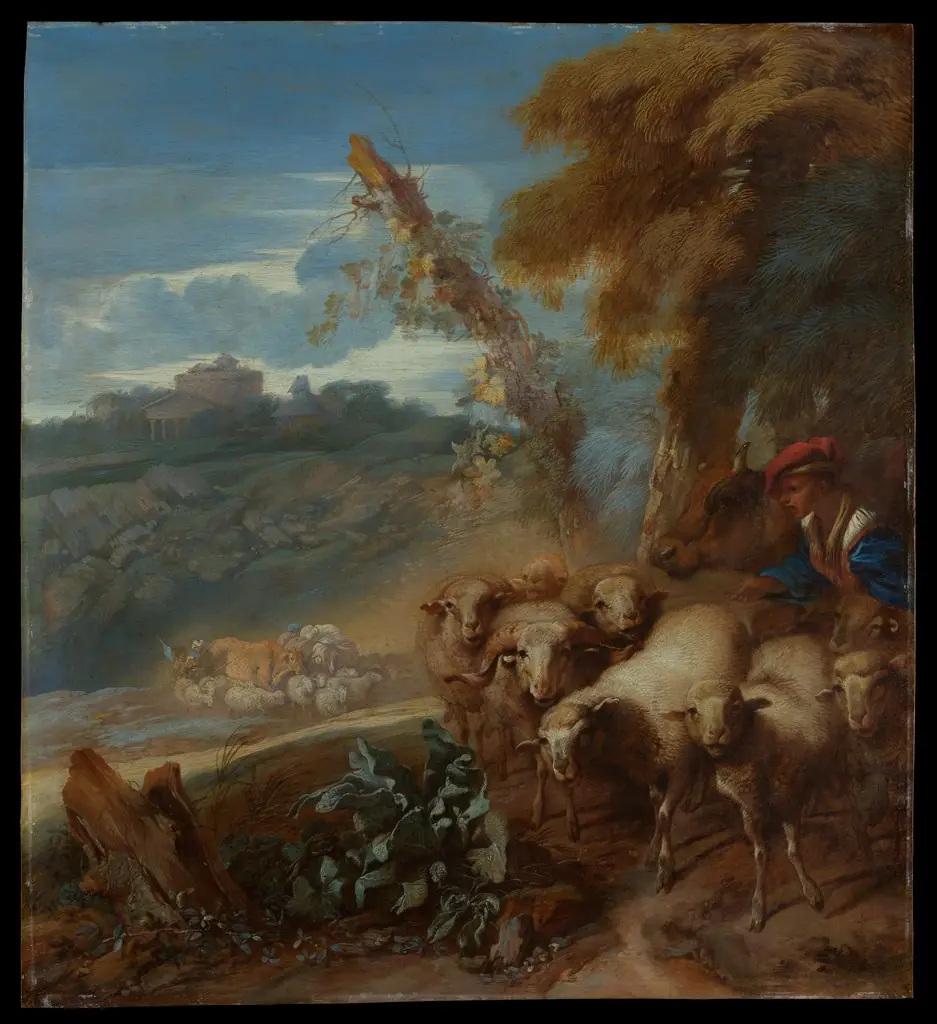
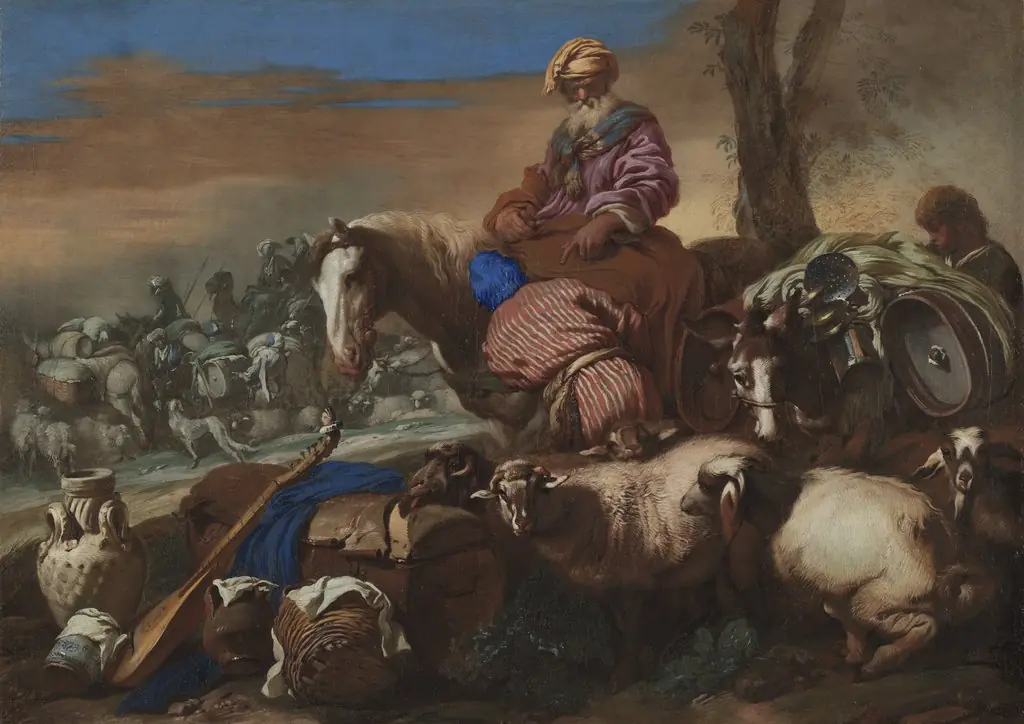
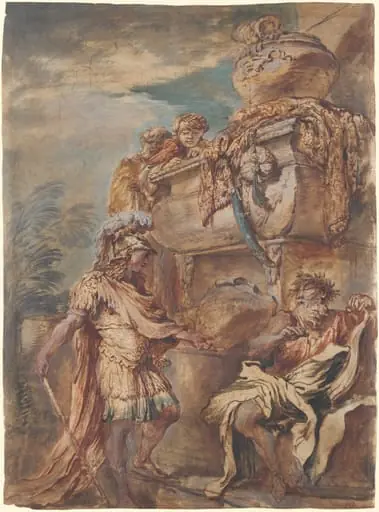
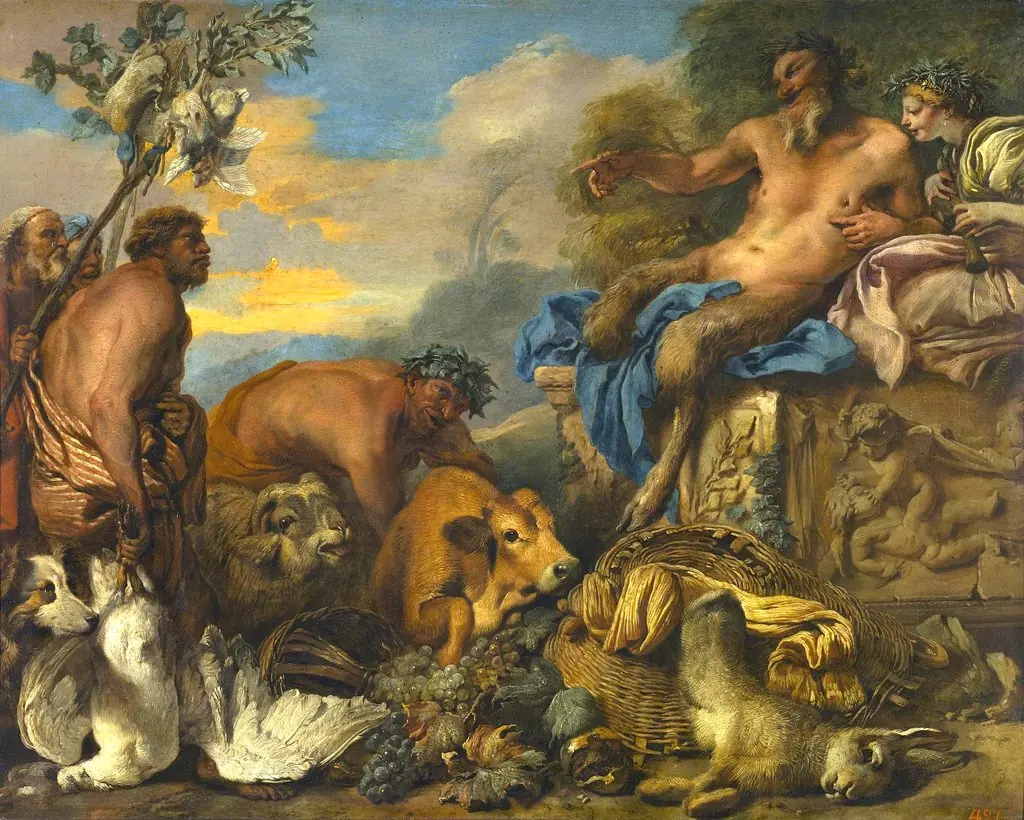
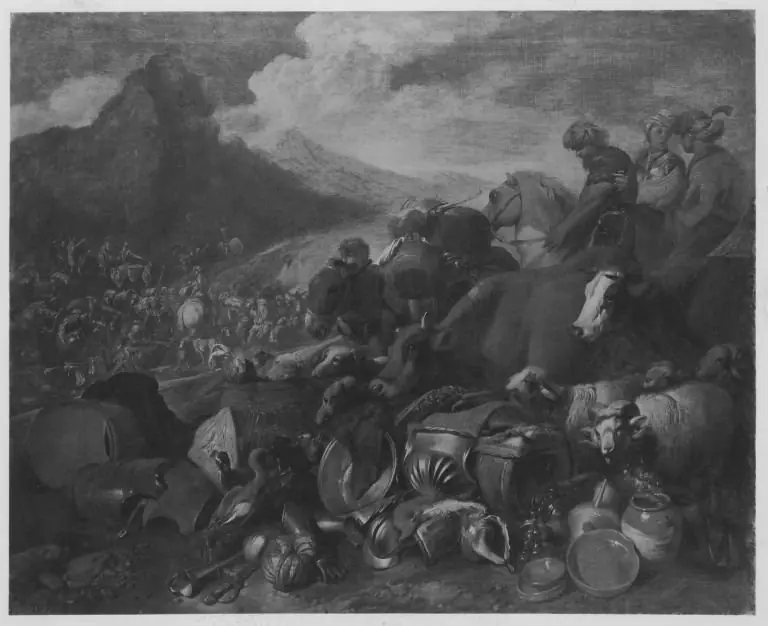
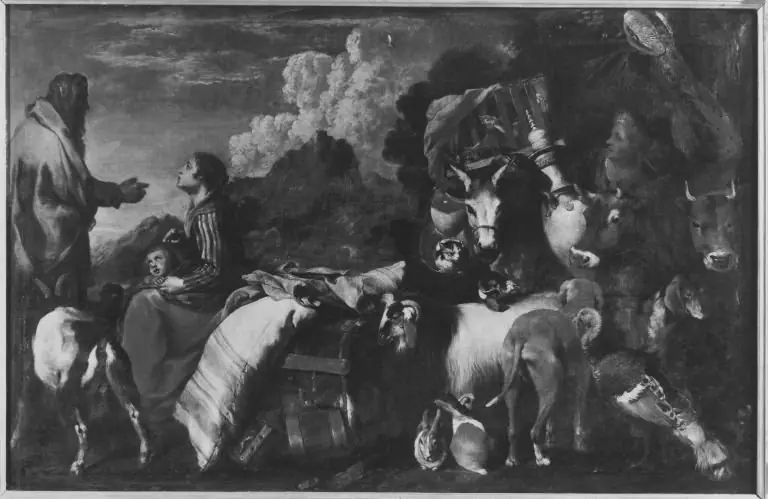
- A Wooded Landscape with a Shepherd and His Family
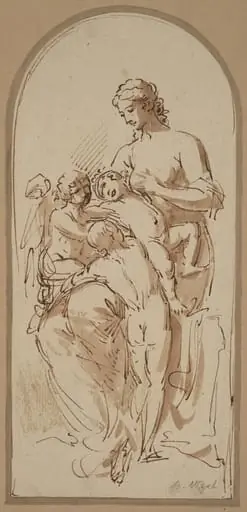 Charity
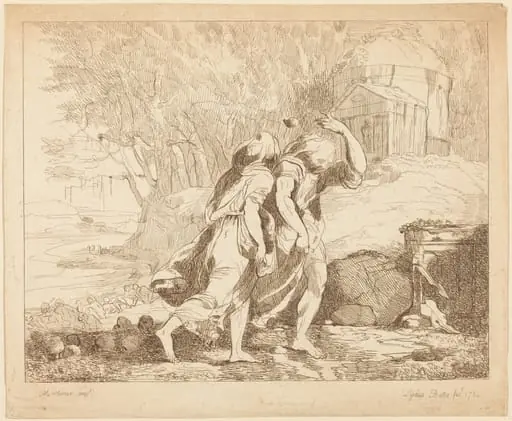 Two Fleeing Figures (Atlanta and Hippomenes?)
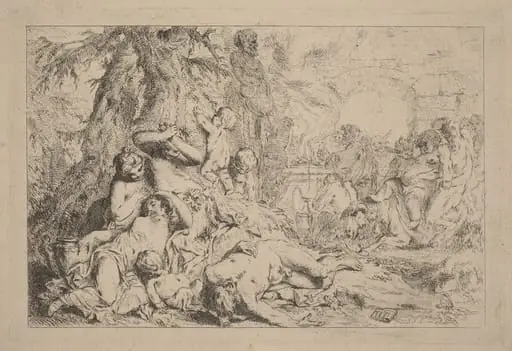 The March of Silenus
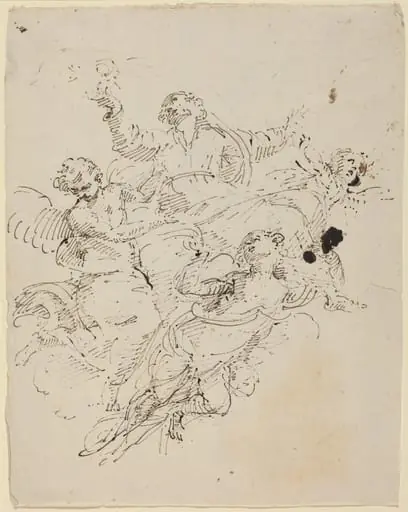 The Ascension of the Virgin
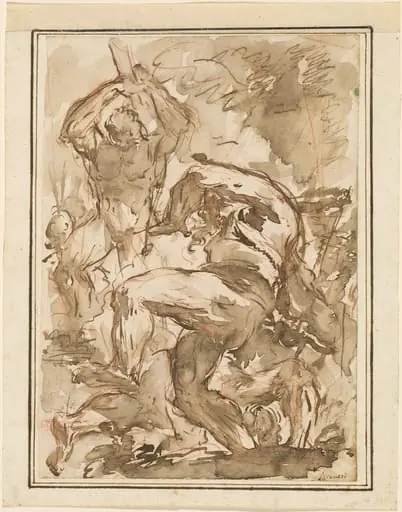 A Battle of Nude Men
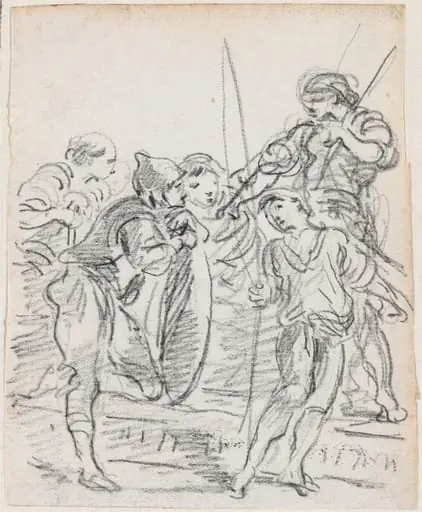 Group of Male Figures Conversing
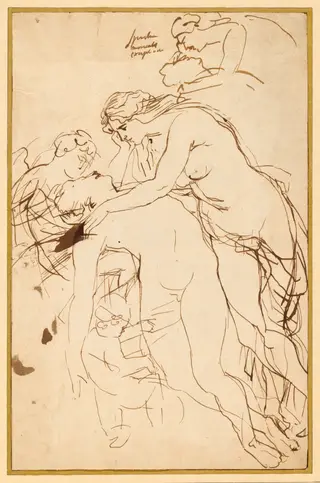 Venus Lamenting Adonis
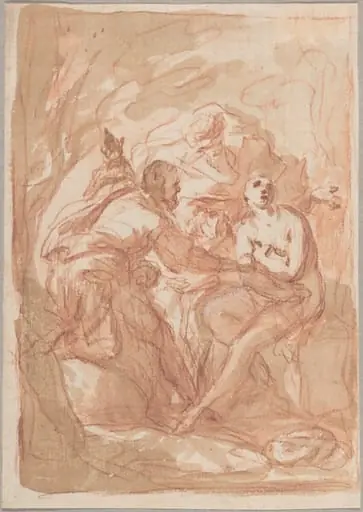 Susanna and the Elders
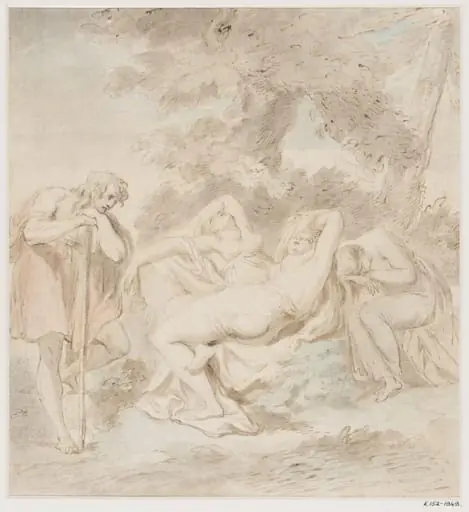 Cymon, Iphigeneia and two female attendants in a landscape.
 The Entombment
 Gleaners