Artwork
Still life with ram head
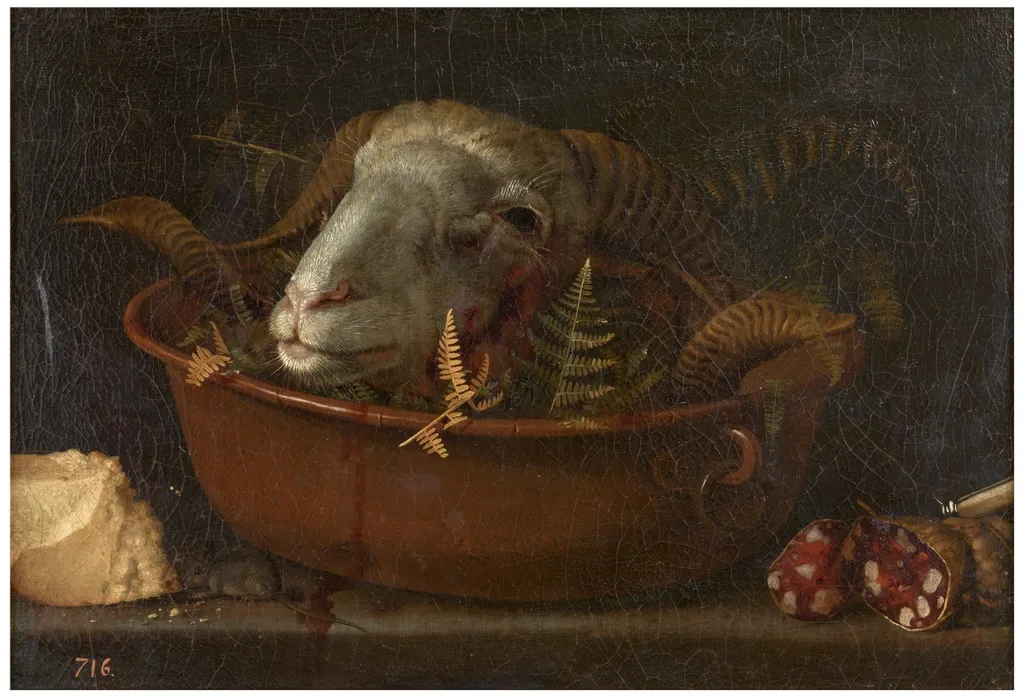
Still life with ram head is an oil painting by the Early Baroque Italian artist Giovanni Benedetto Castiglione. It dates from 1601 and is held in the collection of the Museo del Prado. Created in 1601, this oil painting presents a modest still‑life composition centered on a ram’s head placed in a wooden bowl.
About this work
Subject & Meaning
The ram carries strong symbolic weight in European art, traditionally associated with sacrifice, virility, and biblical imagery such as the ram of Abraham.
The painting is a still life in which a ram's head is the central subject, accompanied by other still-life elements. According to the available record, the work depicts cheese and a knife alongside the ram's head, set within a modest arrangement of objects on a canvas measuring 41 by 58 cm.
The ram carries strong symbolic weight in European art, traditionally associated with sacrifice, virility, and biblical imagery such as the ram of Abraham. Paired with cheese and a knife, the composition evokes themes of provisioning, slaughter, and pastoral abundance, transforming a simple kitchen subject into a meditation on sustenance and mortality. Castiglione's choice of a ram's head rather than more conventional game or fruit reflects his interest in unconventional, rustic motifs.
Technique & Style
Giovanni Benedetto Castiglione executed Still life with ram head in 1601 using oil paint applied to a canvas support. The work measures 41 cm in height and 58 cm in width. Stylistically, the piece is classified as a still life that depicts specific objects including cheese and a knife. The painting is currently held in the collection of the Museo del Prado.
History & Provenance
Giovanni Benedetto Castiglione executed this oil painting on canvas in 1601. The work, which depicts a ram's head alongside cheese and a knife, measures 41 cm in height and 58 cm in width. Historical records indicate that the piece was once owned by Elisabeth Farnese. It currently resides in the collection of the Museo del Prado.
Giovanni Benedetto Castiglione's oil painting Still life with ram head is held in the collection of the Museo del Prado in Madrid. The work is part of the museum's holdings, which were historically associated with the collection of Elisabeth Farnese. Specific inventory or accession numbers for this piece are not provided in the available records. The artwork has not been documented with a specific exhibition history in the current sources.
Context
The painting is housed in the Museo del Prado, where it forms part of the collection assembled by Elisabeth Farnese, linking it to the broader European collecting practices of the 18th century. Giovanni Benedetto Castiglione, an early Baroque artist known for his dramatic chiaroscuro and influence on later painters such as Rubens, developed this work within a tradition of richly textured still-life compositions that emphasized material abundance and symbolic abundance. The composition, featuring cheese and a knife, exemplifies the genre's focus on everyday objects rendered with heightened realism, reflecting contemporary debates about the moral and sensory implications of such subjects in early modern visual culture.
Overview
Created in 1601, this oil painting presents a modest still‑life composition centered on a ram’s head placed in a wooden bowl. The work belongs to the early Italian Baroque period and is currently housed in the Museo del Prado. Its restrained arrangement of everyday objects reflects the artist’s interest in rural subjects and the tactile qualities of food and animal forms.
Own this work as a print
Artist & collection
Artist
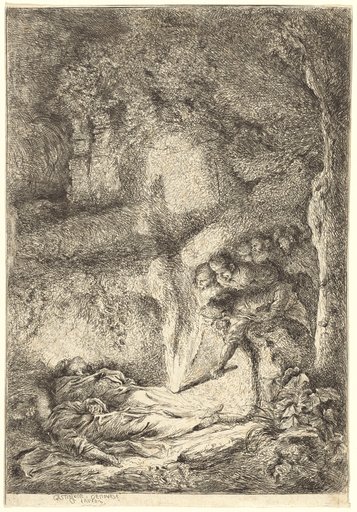
Giovanni Benedetto Castiglione
Giovanni Benedetto Castiglione (baptized 23 March 1609 – 5 May 1664) was an Italian Baroque painter, printmaker and draftsman, of the Genoese school.

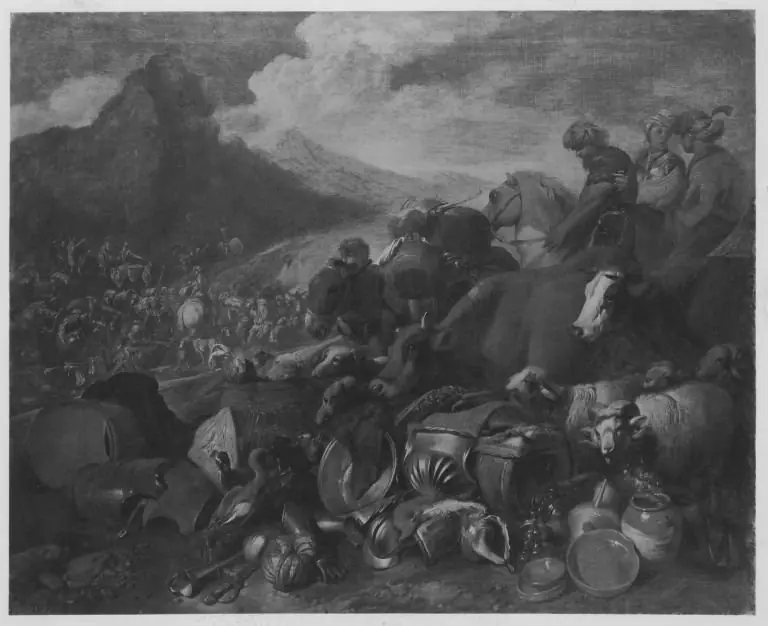
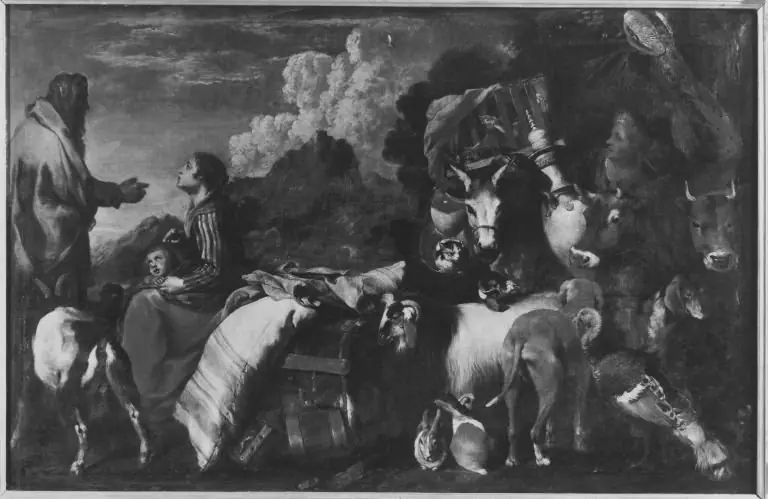
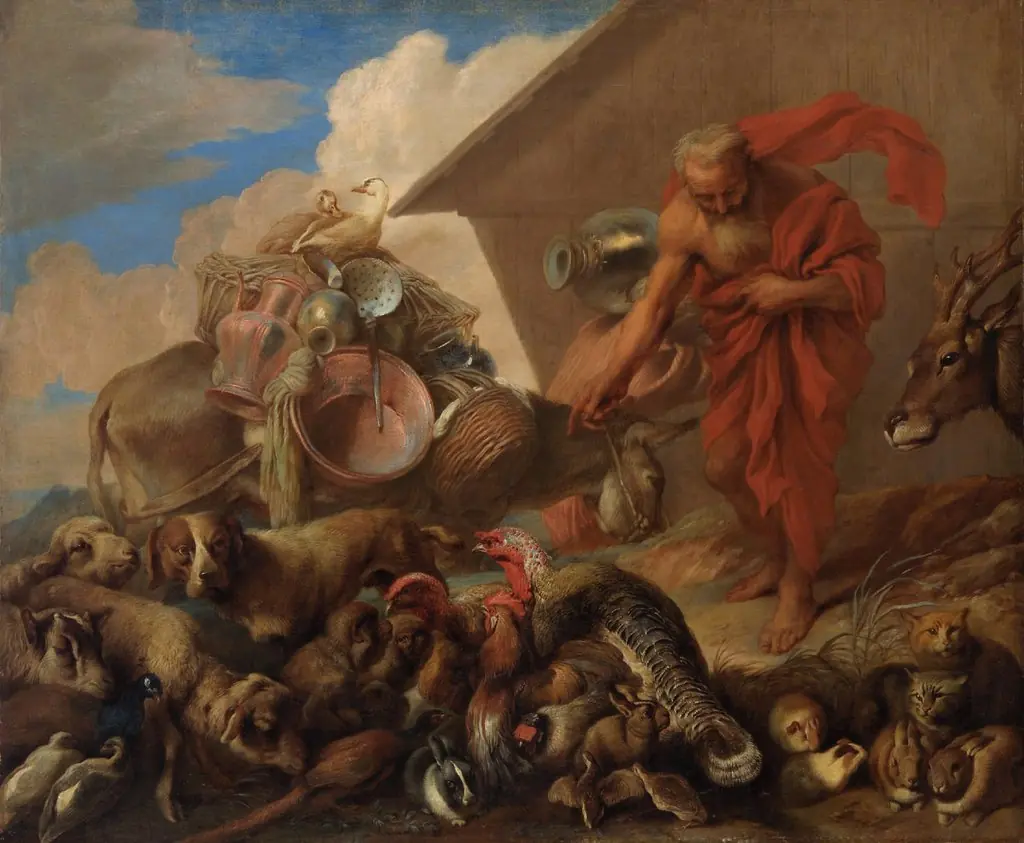
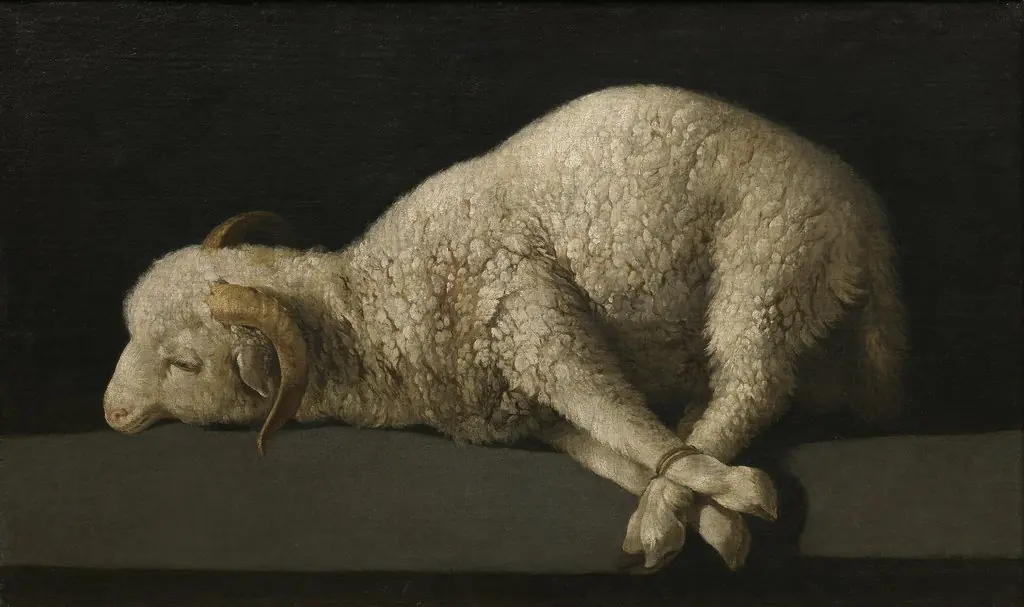
- Agnus Dei
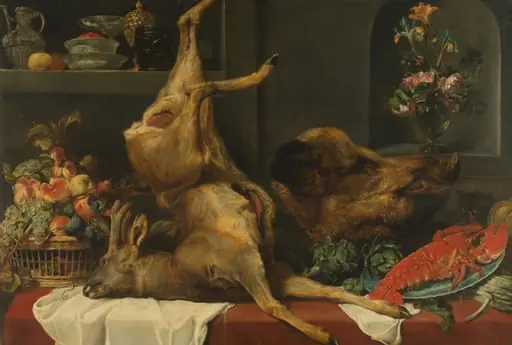 Larder Still life
 The Silver Tureen
 Still Life with Dead Game
 Still Life with a Dead Stag
 Still Life with Dead Game
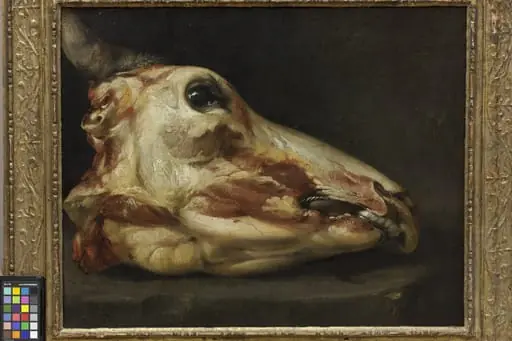 Skinned Head of an Ox
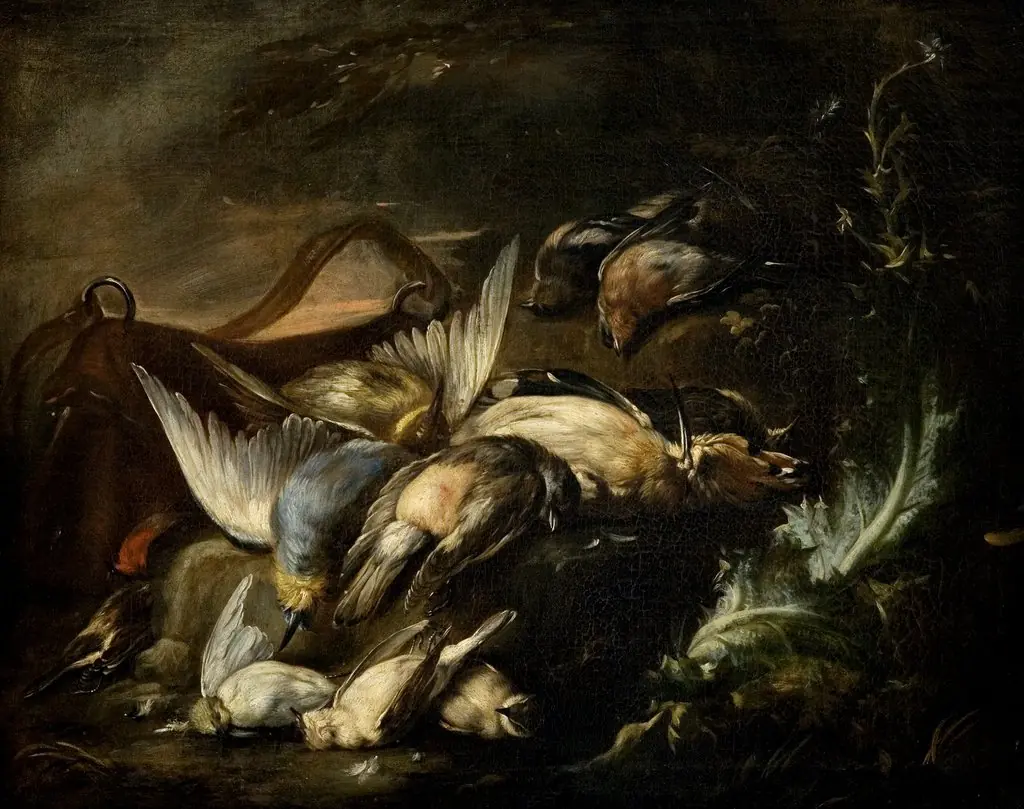 Still Life
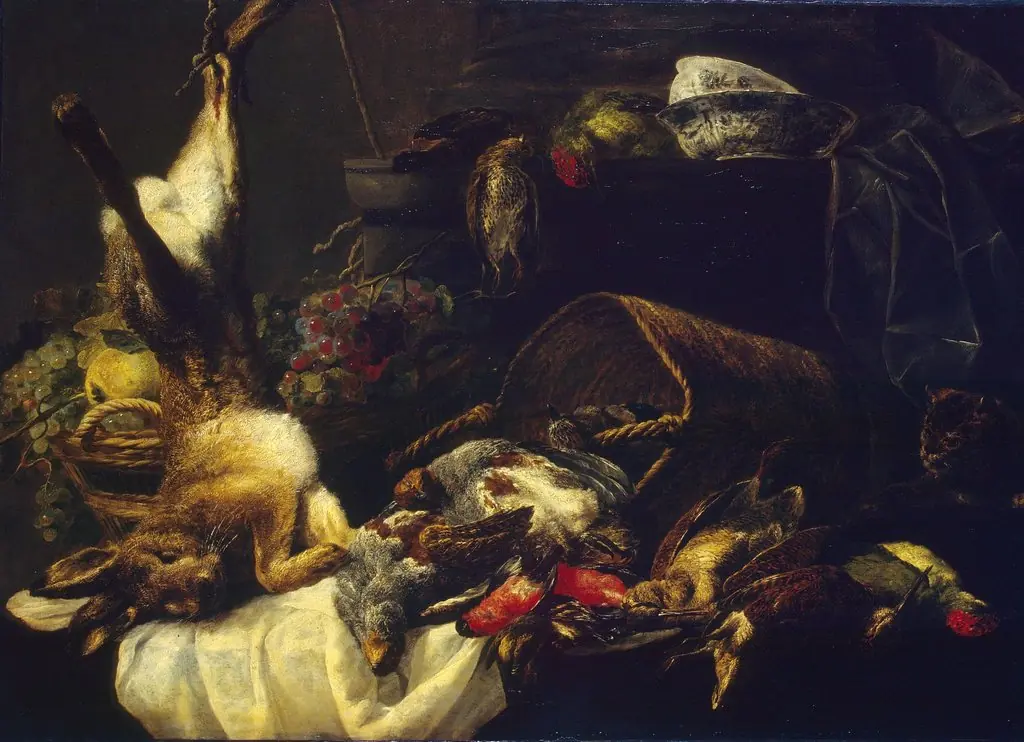 Dead Game
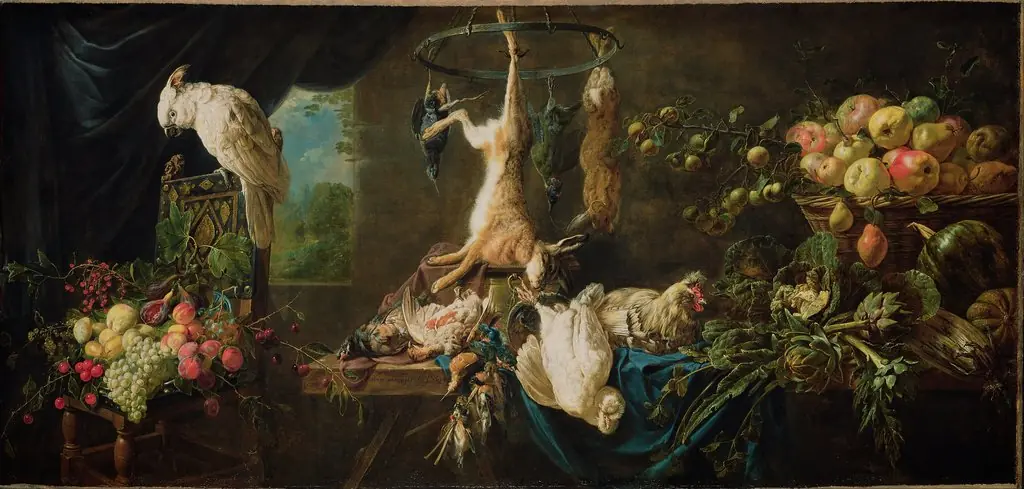 Still Life with Game, Vegetables, Fruit and a Cockatoo
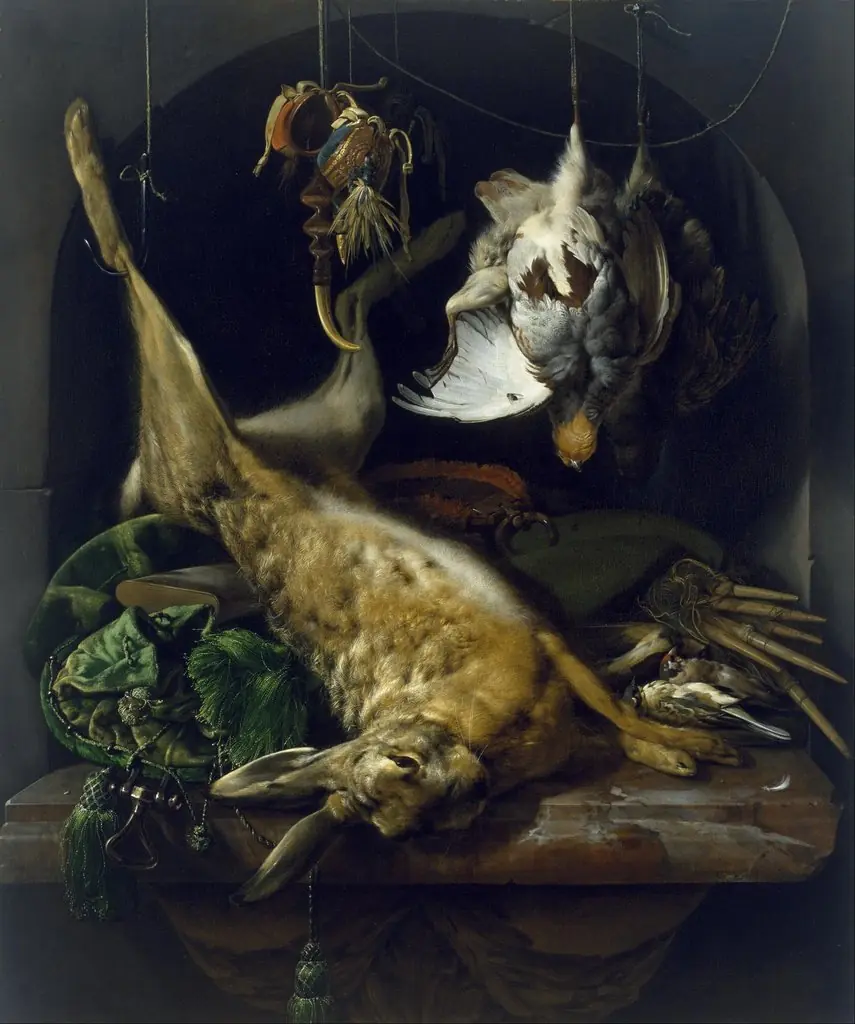 Still Life of a Dead Hare, Partridges, and Other Birds in a Niche
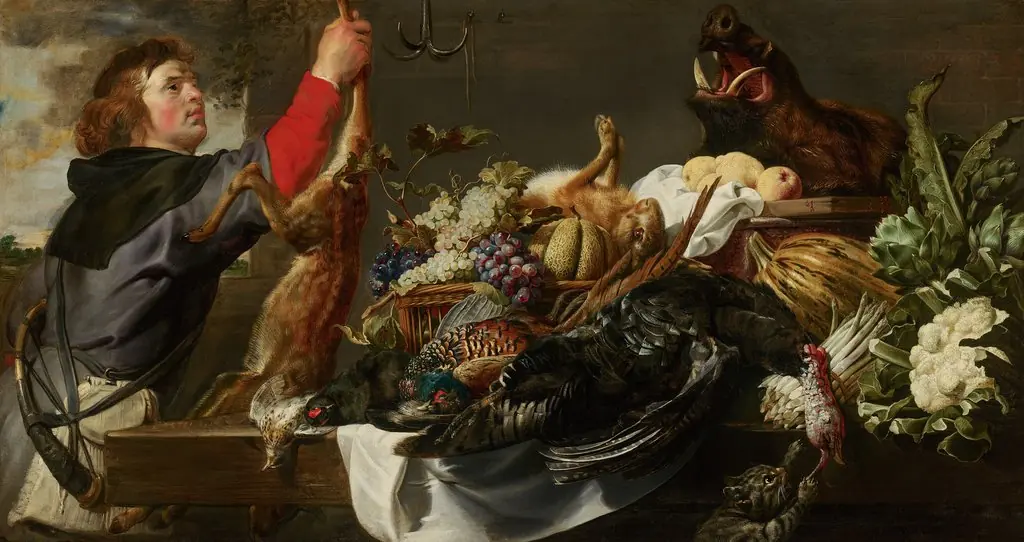 Still Life with Huntsman