Artwork
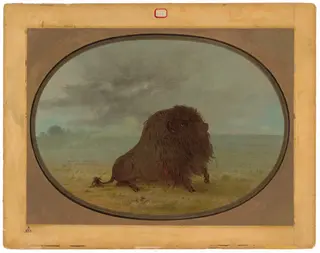
A Buffalo Wallow
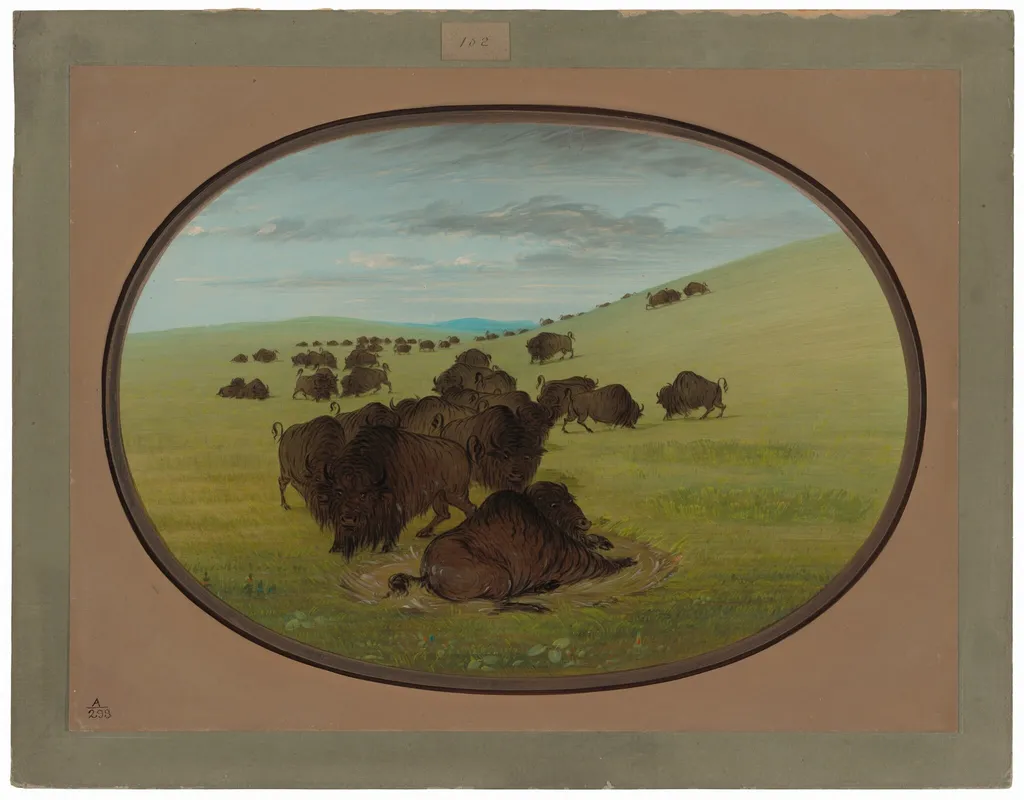
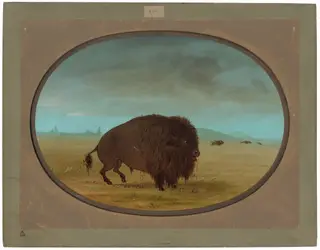
A Buffalo Wallow is an oil painting by the American Folk Art artist George Catlin. It dates from 1865 and is held in the collection of the National Gallery of Art.
About this work
Subject & Meaning
The composition focuses on the animals within their natural environment, specifically referencing a buffalo wallow in its title and subject matter.
Painted in 1861, this landscape work by George Catlin explicitly depicts buffalo. The composition focuses on the animals within their natural environment, specifically referencing a buffalo wallow in its title and subject matter. As a genre landscape, the piece serves as a visual record of the American West's fauna, capturing the presence of these large mammals without additional allegorical layers described in the available records.
The work functions primarily as a documentary representation of the buffalo, reflecting Catlin's broader artistic mission to preserve the image of indigenous life and wildlife before their disappearance.
Technique & Style
A Buffalo Wallow is an oil painting executed on a card that has been mounted onto a paperboard support. The work is classified as a landscape and portrays a group of buffalo in a natural setting, reflecting Catlin’s interest in documenting American wildlife. The paint handling is typical of mid‑nineteenth‑century oil technique, though specific brushwork details are not recorded in the sources. No information about the painting’s current condition is provided in the available records.
History & Provenance
George Catlin executed A Buffalo Wallow in 1861 as an oil painting on card mounted to paperboard. Following the artist's death in 1872, the work passed by descent to his three daughters: Clara Gregory Catlin, Louise Catlin Kinney, and Elizabeth Wing Catlin. In 1912, the American Museum of Natural History purchased the piece directly from Elizabeth Wing Catlin.
The museum retained ownership until 1959, when it sold the painting through Kennedy Galleries of New York to collector Paul Mellon of Upperville, Virginia. Mellon subsequently donated the work to the National Gallery of Art in Washington, D.C., in 1965, where it remains in the collection.
A Buffalo Wallow is held by the National Gallery of Art, Washington, D.C., where it is accessioned under object number 1965.1.23.
The painting entered the Gallery’s collection as a gift in 1965 from Mr. Paul Mellon, who had acquired it in 1959 through Kennedy Galleries, New York, from Elizabeth Wing Catlin. Its prior history traces from the artist, George Catlin, to his daughters and then to the American Museum of Natural History before its sale in 1912.
Legacy
A Buffalo Wallow (1861) entered the National Gallery of Art in 1965 after a documented chain of ownership that began with George Catlin and passed through his daughters before being sold to Paul Mellon and gifted to the museum. Its inclusion in the museum’s permanent collection underscores scholarly and curatorial recognition of the work as a representative example of Catlin’s frontier subjects. The painting measures 46.7 × 62.5 cm and depicts a herd of buffalo, a motif that has been referenced in studies of 19th‑century American landscape painting.
As part of the National Gallery’s holdings, the work contributes to the ongoing assessment of Catlin’s role in shaping visual narratives of the West.
Overview
George Catlin's 1865 painting, A Buffalo Wallow, captures a scene of wildlife in its natural habitat. Executed in oil on card mounted on paperboard, this work presents a buffalo within a shallow depression, characteristic of the "wallow" where these animals seek rest and relief. The piece reflects Catlin's enduring interest in the American frontier and its inhabitants, a theme central to his artistic output.
Context
Originally trained as a lawyer, George Catlin transitioned to painting, dedicating his career to recording life on the American frontier. His extensive travels through the West in the 1830s profoundly influenced his artistic direction, leading him to focus on Indigenous peoples and their environments. Although created decades after his initial expeditions, A Buffalo Wallow demonstrates Catlin's sustained commitment to depicting the region's wildlife, extending his visual record beyond human subjects.
Own this work as a print
Artist & collection

Artist
George Catlin ( KAT-lin; July 26, 1796 – December 23, 1872) was an American lawyer, painter, author, and traveler, who specialized in portraits of Native Americans in the American frontier.

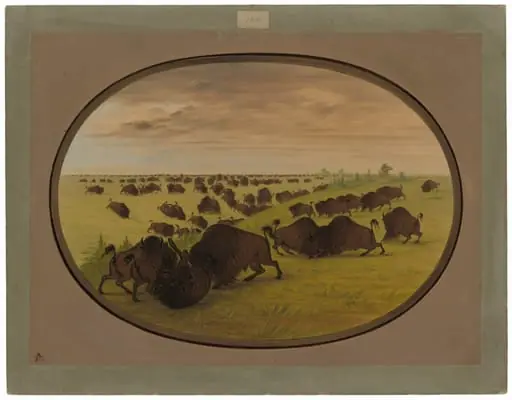 Bulls Fighting
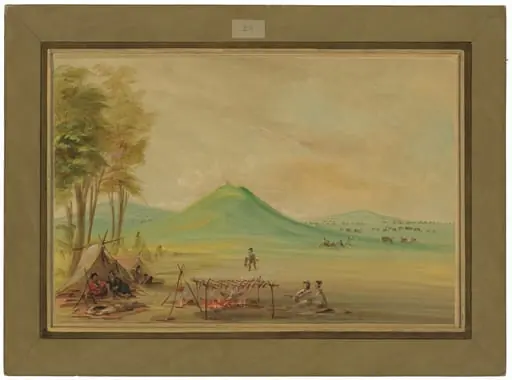 Expedition Encamped on a Texas Prairie. April 1686
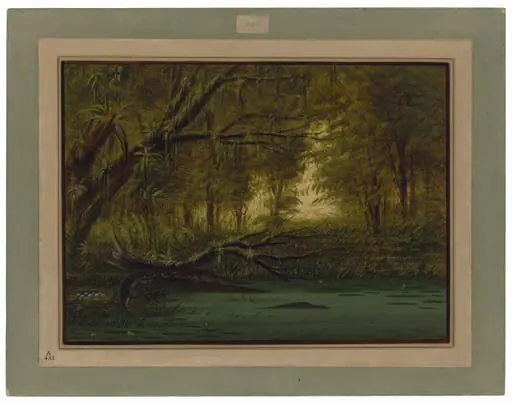 An Alligator's Nest
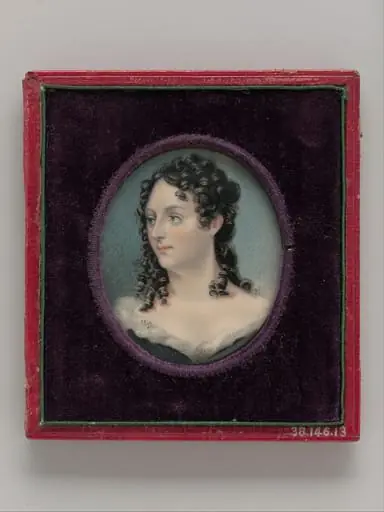 Mrs. George Catlin (Clara Bartlet Gregory)
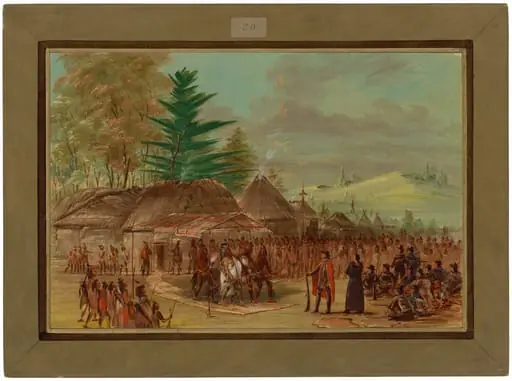 Chief of the Taensa Indians Receiving La Salle. March 20, 1682
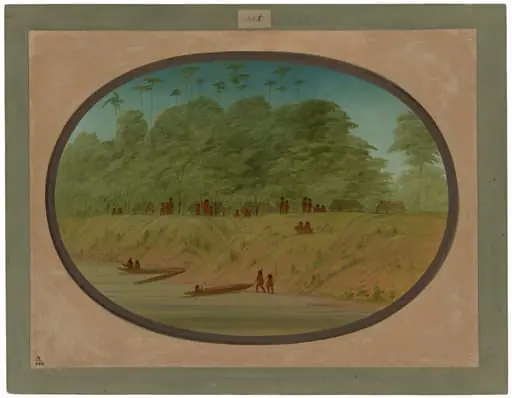 A Small Village - Payaguas Indians
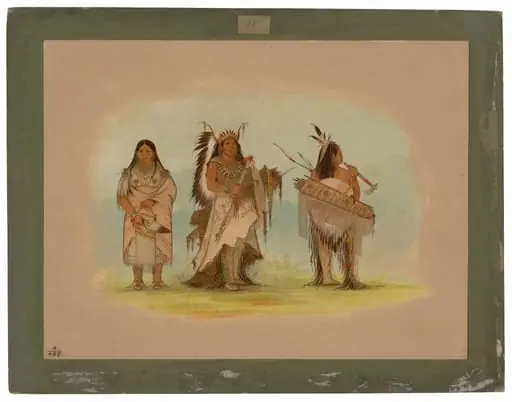 Omaha Chief, His Wife, and a Warrior
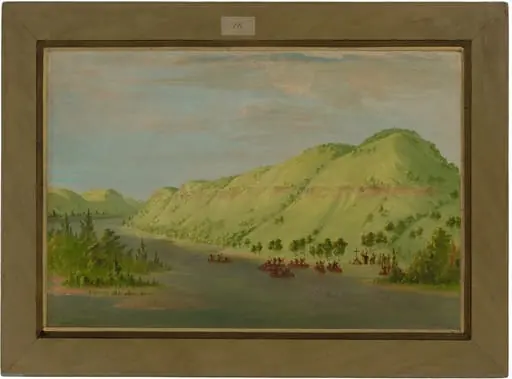 Father Hennepin Leaving the Mississippi to Join La Salle. May 8, 1680