Artwork
Buffalo Chase
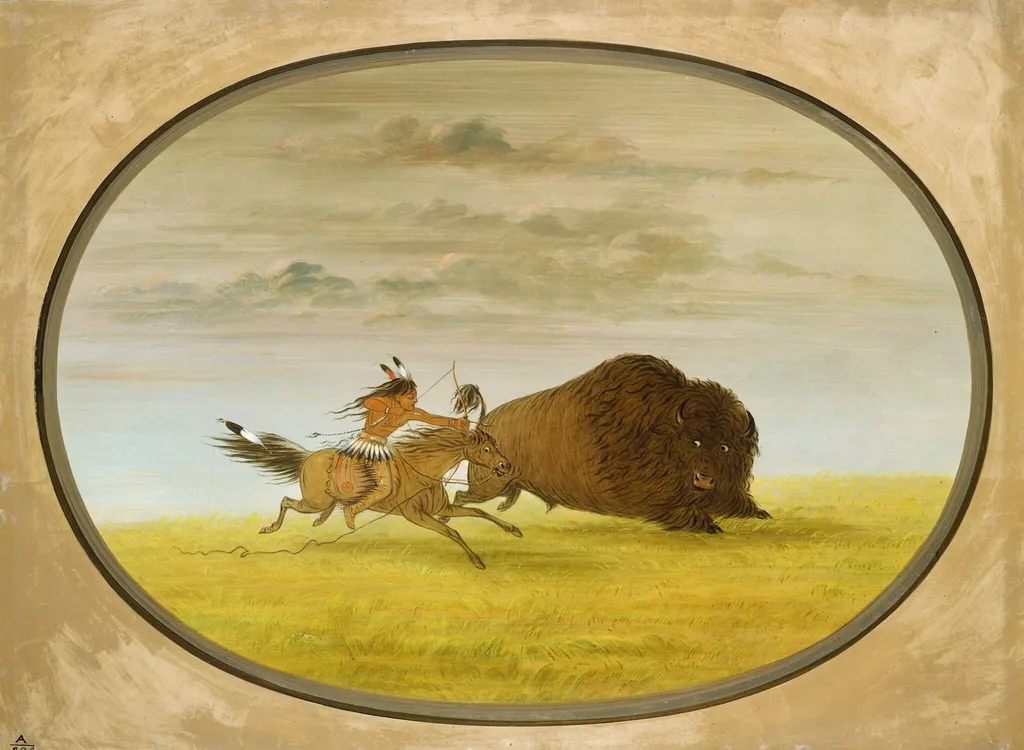
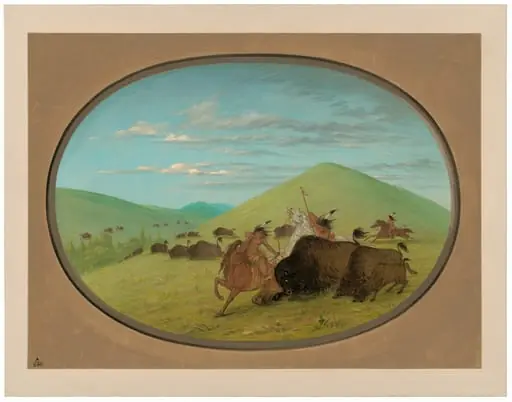
Buffalo Chase is an oil painting by the American Folk Art artist George Catlin. It dates from 1865 and is held in the collection of the National Gallery of Art.
About this work
Technique & Style
Created in 1861, Buffalo Chase is executed in oil paint applied to card that has been mounted on a paperboard support.
Created in 1861, Buffalo Chase is executed in oil paint applied to card that has been mounted on a paperboard support. This specific combination of materials distinguishes the work from traditional oil paintings on canvas or wood panels. The resulting image measures 46.3 cm in height and 63 cm in width.
Classified as a history painting, the piece documents a dynamic scene of action, consistent with George Catlin's broader artistic focus on Native American life and the American West during the mid-nineteenth century.
History & Provenance
The painting Buffalo Chase was created by George Catlin in 1861. It is executed in oil on card mounted on paperboard. Following the artist's death in 1872, the work passed by descent to his daughters: Clara Gregory Catlin, Louise Catlin Kinney, and Elizabeth Wing Catlin.
In 1912, the American Museum of Natural History purchased the piece from Elizabeth Wing Catlin. The museum later sold it in 1959 through Kennedy Galleries in New York to Paul Mellon of Upperville, Virginia. Mellon subsequently gifted the painting to the National Gallery of Art in 1965, where it remains part of the collection.
Buffalo Chase is held in the collection of the National Gallery of Art in Washington, D.C. The work entered the museum's holdings in 1965 as a gift from Paul Mellon of Upperville, Virginia. Prior to this acquisition, the painting was sold in 1959 through Kennedy Galleries in New York to Mellon. Its earlier provenance includes ownership by the artist George Catlin, followed by inheritance by his daughters Clara Gregory Catlin, Louise Catlin Kinney, and Elizabeth Wing Catlin.
The American Museum of Natural History purchased the piece from Elizabeth Wing Catlin in 1912 but subsequently sold it in 1959.
Overview
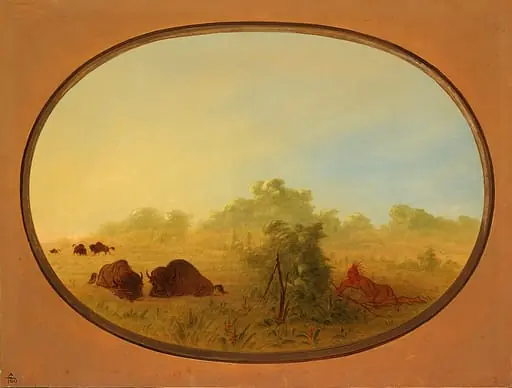
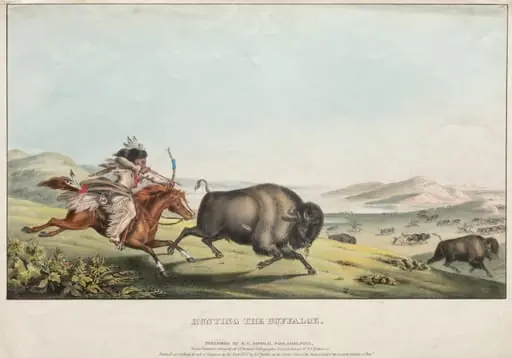
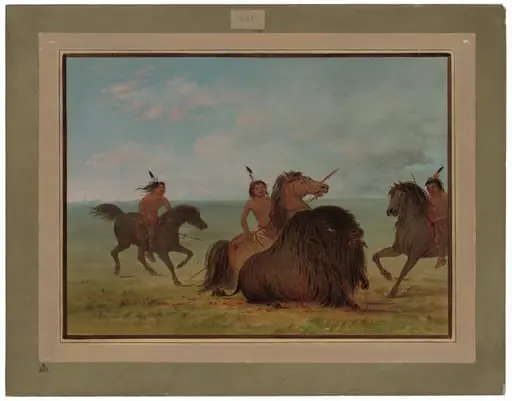
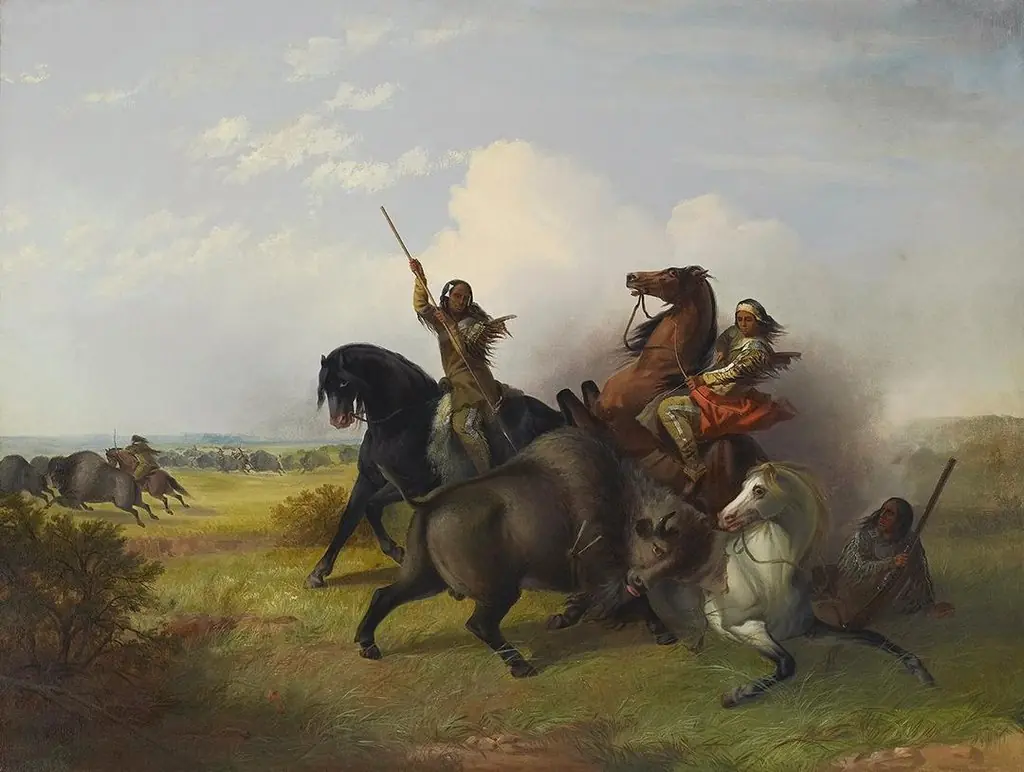
Created in 1865, Buffalo Chase is an oil painting executed on card that has been mounted to a paperboard support. The work depicts a dynamic encounter on the Great Plains, featuring a mounted Native American hunter pursuing a bison across an open, windswept landscape.
Subject & Meaning
The central figure is a Plains Indian rider, attired in traditional garb and equipped with a bow, poised to strike as the massive bison flees. The composition captures a moment of tension between human and animal, reflecting the subsistence practices and cultural significance of the hunt within Indigenous societies.
Context
Buffalo Chase belongs to a period when American artists sought to document the rapidly changing frontier. While Catlin’s focus was ethnographic, his visual approach also mirrors contemporary historical painting conventions, presenting a dramatized yet observational view of western expansion.
Own this work as a print
Artist & collection

Artist
George Catlin ( KAT-lin; July 26, 1796 – December 23, 1872) was an American lawyer, painter, author, and traveler, who specialized in portraits of Native Americans in the American frontier.

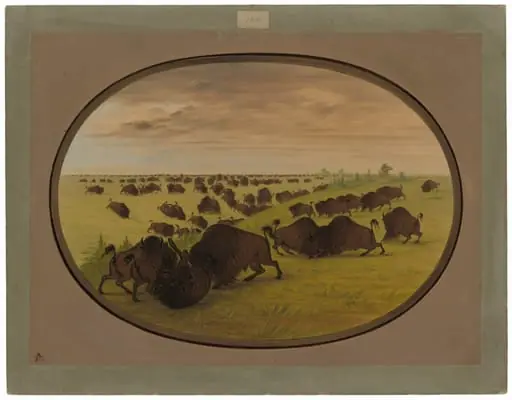 Bulls Fighting
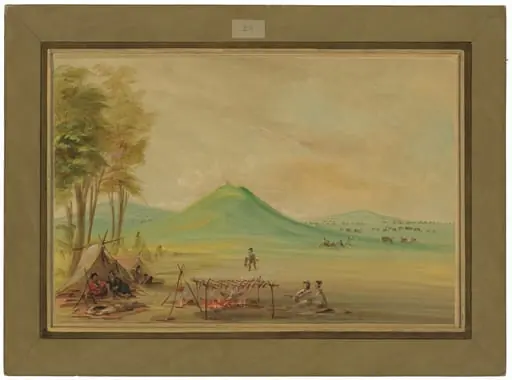 Expedition Encamped on a Texas Prairie. April 1686
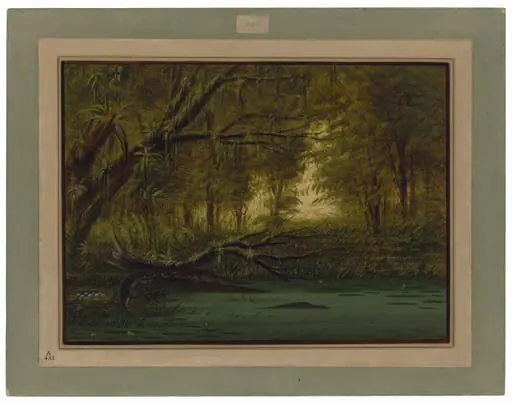 An Alligator's Nest
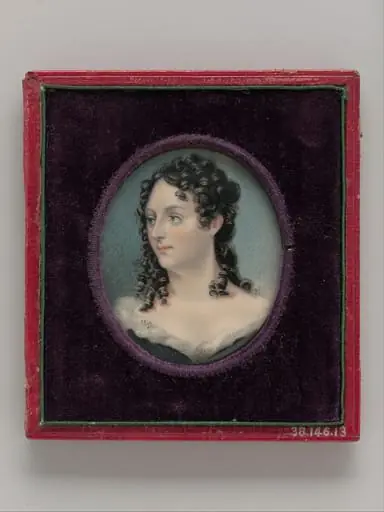 Mrs. George Catlin (Clara Bartlet Gregory)
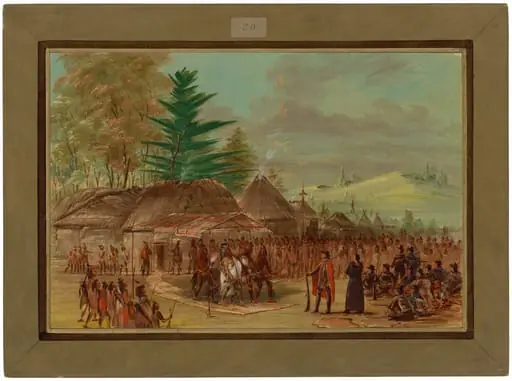 Chief of the Taensa Indians Receiving La Salle. March 20, 1682
 A Small Village - Payaguas Indians
 Omaha Chief, His Wife, and a Warrior
 Father Hennepin Leaving the Mississippi to Join La Salle. May 8, 1680