Artwork
A K'nisteneux Warrior and Family
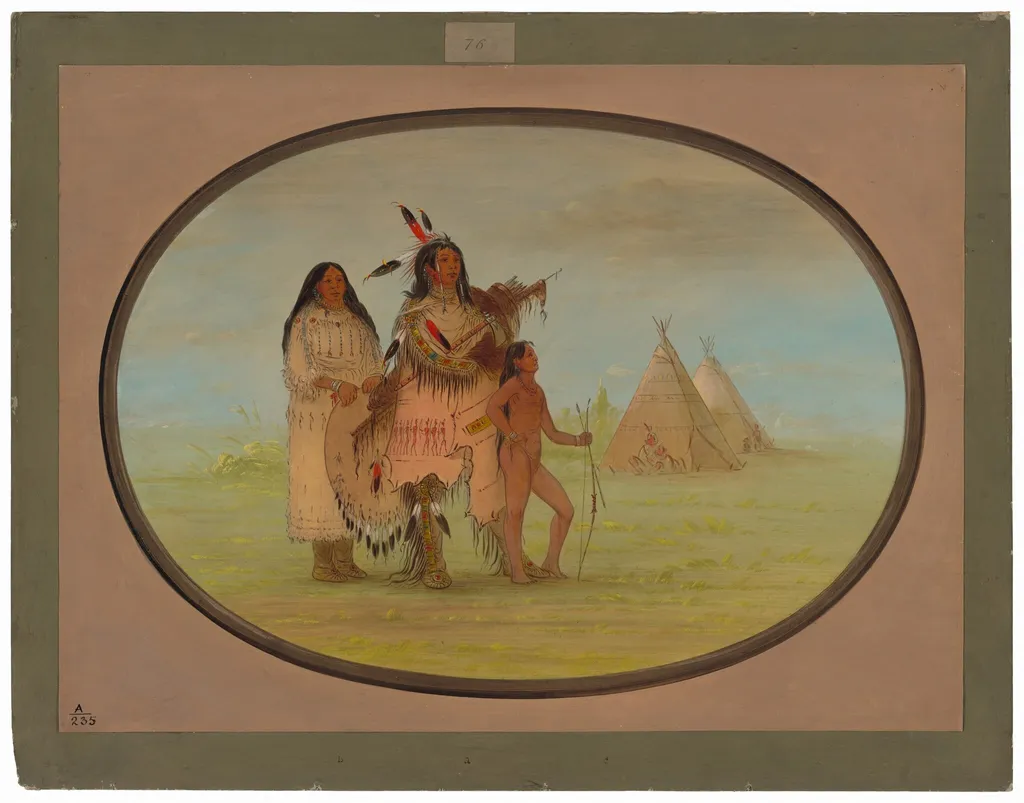
A K'nisteneux Warrior and Family is an oil painting by the Impressionist artist George Catlin. It dates from 1865 and is held in the collection of the National Gallery of Art.
About this work
Overview
A K'nisteneux Warrior and Family is an 1861 oil on card mounted on paperboard painting by the American artist George Catlin.
A K'nisteneux Warrior and Family is an 1861 oil on card mounted on paperboard painting by the American artist George Catlin. Measuring 47 by 63.8 centimeters, the work depicts a Cree warrior, his wife, and their son in a grassy plain with tipis in the background. It forms part of Catlin's later Cartoon Collection, a series of over 600 works created during the 1850s and 1860s. The painting is now held by the National Gallery of Art in Washington, D.C., having entered the collection as a gift from Paul Mellon in 1965.
Subject & Meaning
The painting portrays three figures identified in Catlin's 1871 exhibition catalog as the K'nisteneux, now recognized as the Cree. The central warrior, Eeh-tow-ees-ka-zeet (He who has eyes behind him), also called Bras-Casse (The Broken arm), was a distinguished fighter who killed six enemies using his left hand. He wears an elaborate feathered headdress and a fringed garment with painted figures, carrying a round shield and staff. To his left stands Kee-wet (The Cup), his wife, dressed in a long white beaded garment with fringe, while to his right is their son, Tse-mount (A Great Wonder), depicted as a smaller nude figure holding a bow and arrows. Two tipis with seated figures in the background reinforce the nomadic domestic life of this 8,000-member tribe, conveying a sense of familial unity and social structure.
Technique & Style
Catlin executed the work in oil on card mounted on paperboard, employing a circular composition set within a rectangular tan and olive border. The border is marked with the number 76 at the top and A/235 at the lower left, corresponding to its catalog placement in the Cartoon Collection. The palette relies on soft blues, greens, tans, and earth tones accented with red and black. Catlin's brushwork is smooth and detailed, paying careful attention to the costumes and accessories of the figures. The sky is rendered as pale blue with wispy clouds, and light falls evenly across the scene with minimal shadow, lending the portrait an anthropological clarity.
History & Provenance
Created in 1861, the painting remained with George Catlin until his death in 1872, descending to his daughters Clara Gregory Catlin, Louise Catlin Kinney, and Elizabeth Wing Catlin. In 1912, the American Museum of Natural History in New York purchased the work from Elizabeth Wing Catlin. When the museum deaccessioned parts of the collection in 1959, Kennedy Galleries in New York facilitated its sale to Paul Mellon of Upperville, Virginia. Mellon donated the painting, along with over 300 other works from the Cartoon Collection, to the National Gallery of Art in 1965. Catlin had previously exhibited the Cartoon Collection in New York in 1871, publishing a catalog that documented the works.
Context
This painting belongs to Catlin's Cartoon Collection, his second major body of work following his original Indian Gallery of the 1830s, which contained over 500 portraits and genre scenes now largely held by the Smithsonian American Art Museum. While the original gallery was painted in the 1830s, the Cartoon Collection was produced in the 1850s and 1860s. Catlin's catalog notes the subject dates to 1832, indicating the later painting was likely based on earlier field observations or sketches. Catlin functioned as a visual anthropologist, aiming to document the lives and customs of Native American tribes during a period of immense change and displacement, preserving their imagery for future historical study.
Legacy
As part of the Cartoon Collection that survived deaccession and dispersal, A K'nisteneux Warrior and Family represents a crucial later phase of Catlin's ethnographic project. The preservation of these works through Paul Mellon's donation to the National Gallery of Art ensured their continued accessibility. The painting remains an invaluable historical document, providing researchers with visual records of Cree social structure, traditional clothing, and domestic scenes. By combining visual representation with the textual specifics of his 1871 catalog, Catlin's work continues to inform modern understandings of Indigenous peoples and the complex relationship between the artist, his subjects, and their historical context.
Own this work as a print
Artist & collection

Artist
George Catlin ( KAT-lin; July 26, 1796 – December 23, 1872) was an American lawyer, painter, author, and traveler, who specialized in portraits of Native Americans in the American frontier.

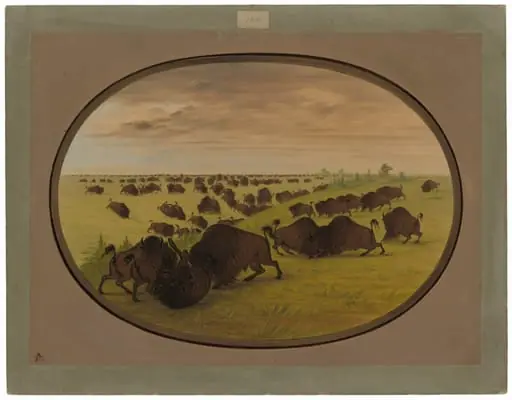 Bulls Fighting
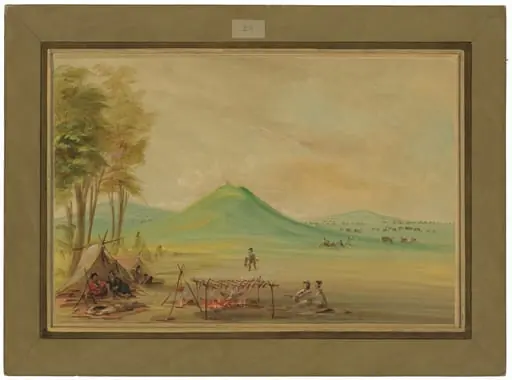 Expedition Encamped on a Texas Prairie. April 1686
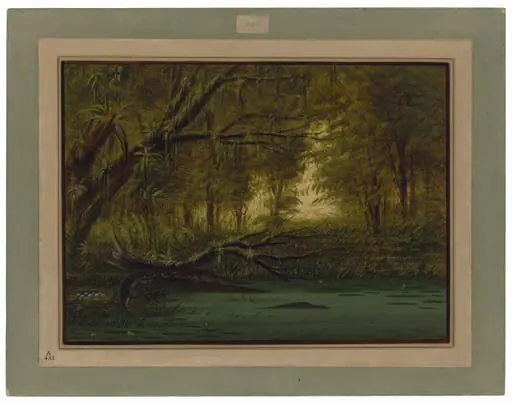 An Alligator's Nest
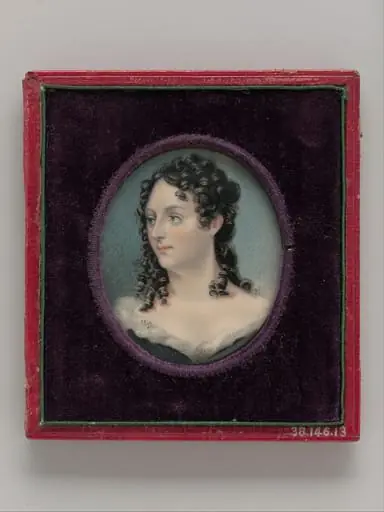 Mrs. George Catlin (Clara Bartlet Gregory)
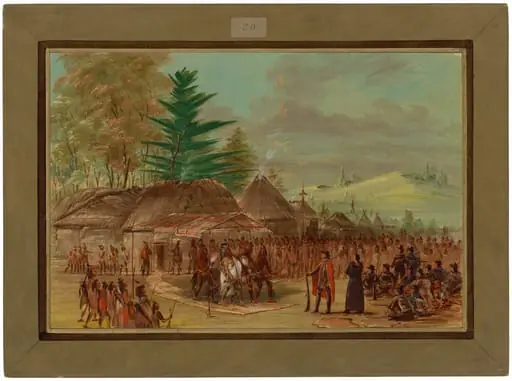 Chief of the Taensa Indians Receiving La Salle. March 20, 1682
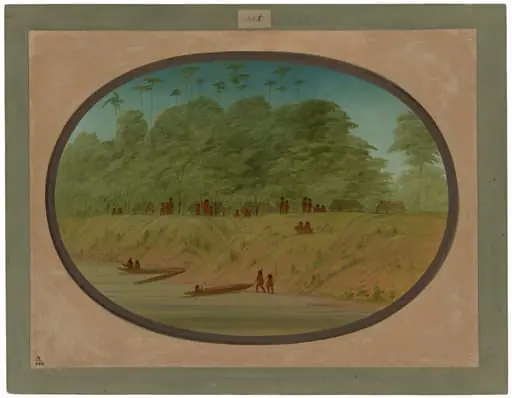 A Small Village - Payaguas Indians
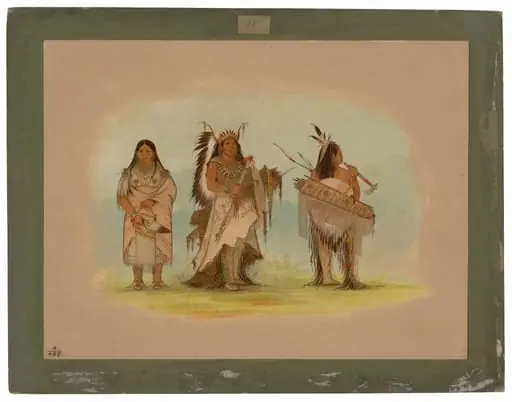 Omaha Chief, His Wife, and a Warrior
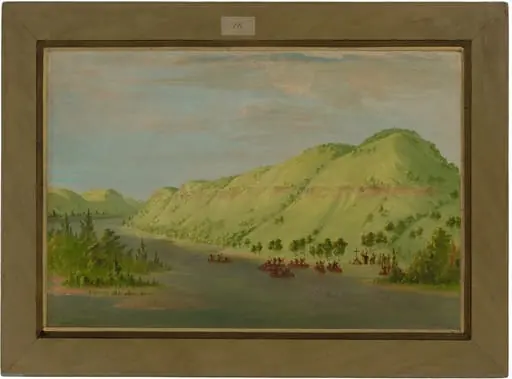 Father Hennepin Leaving the Mississippi to Join La Salle. May 8, 1680
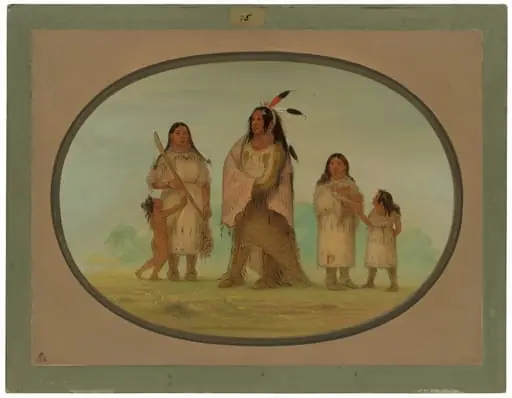
- Assinneboine Warrior and His Family
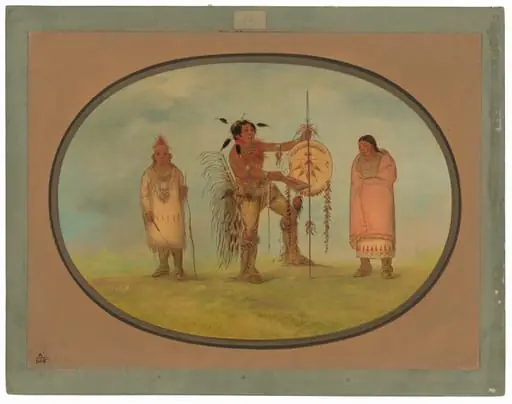 Saukie Warrior, His Wife, and a Boy
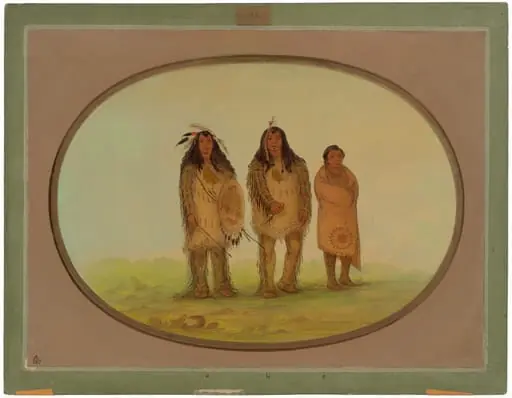 Two Nezperce Warriors and a Boy
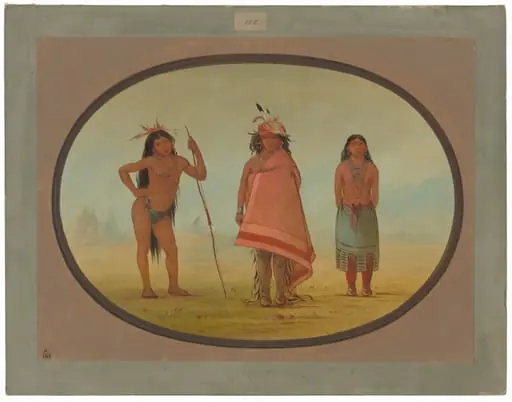 Cochimtee Chief, His Wife, and a Warrior
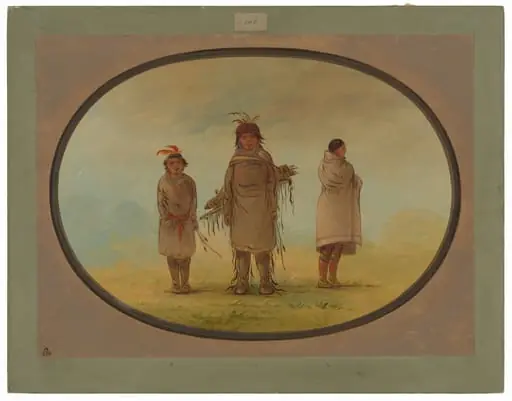 A Stone Warrior, His Wife, and a Boy
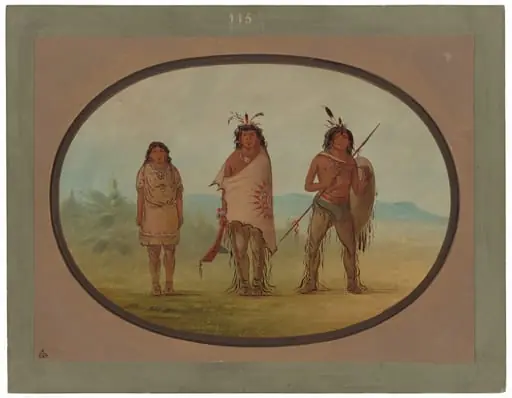 A Yuma Chief, His Daughter, and a Warrior
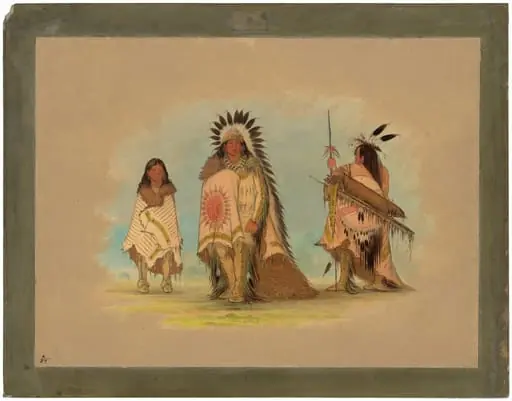 A Sioux Chief, His Daughter, and a Warrior
 Mohave Chief, a Warrior, and His Wife
 An Aged Ojibbeway Chief and Three Warriors