Artwork
Cochimtee Chief, His Wife, and a Warrior
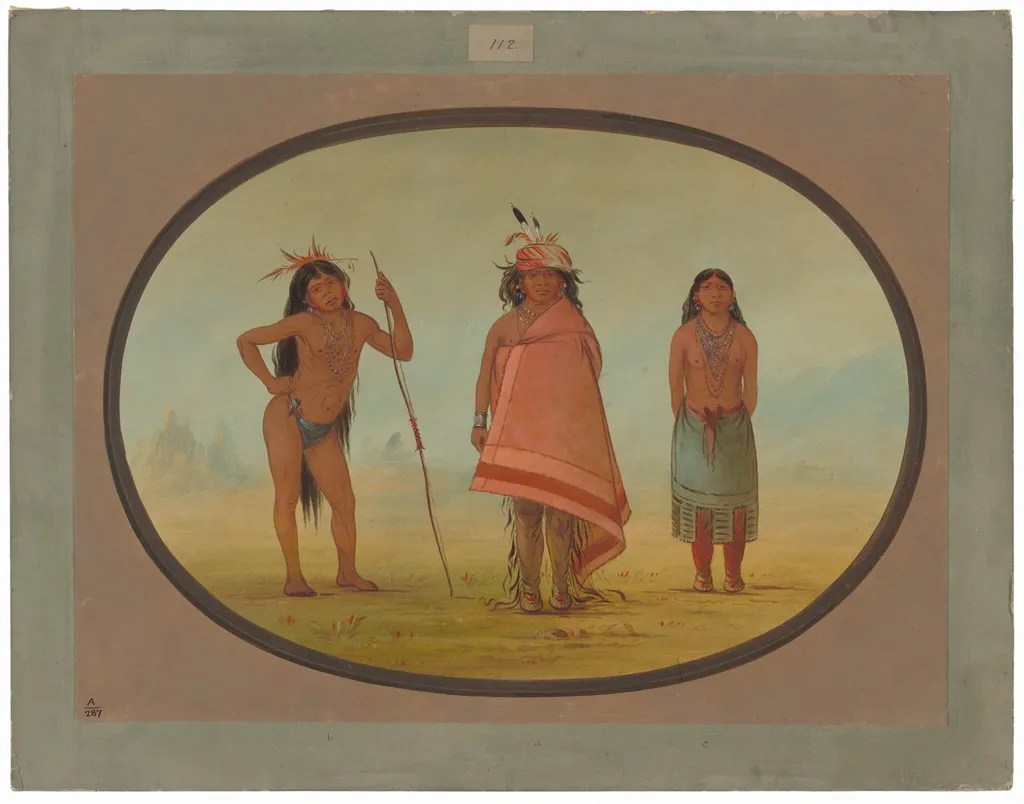
Cochimtee Chief, His Wife, and a Warrior is an oil painting by the American Folk Art artist George Catlin. It dates from 1862 and is held in the collection of the National Gallery of Art.
About this work
Subject & Meaning
The composition emphasizes familial and ceremonial relationships, reflecting cultural narratives around leadership and social roles.
The painting depicts Cochimtee Chief alongside his wife and a warrior, figures drawn from Indigenous North American communities. The composition emphasizes familial and ceremonial relationships, reflecting cultural narratives around leadership and social roles. Symbolic elements within the attire and gestures suggest status and spiritual significance, aligning with broader artistic explorations of identity and representation in 19th-century portraiture.
The work is held by the National Gallery of Art in Washington, D.C., where it remains part of the permanent collection.
The painting was created in 1869 using oil on card mounted on paperboard and measures 45.8 centimeters by 61.3 centimeters.
Technique & Style
The work is an oil painting executed on card that is mounted on paperboard, classifying it as a portrait genre. Its formal qualities include a measured composition with the chief positioned centrally, his wife seated beside him, and a warrior figure in the background, rendered in Catlin's characteristic use of color and detail to convey narrative content. The handling of the medium emphasizes fine brushwork to capture textures of clothing and ceremonial elements, while the overall stylistic approach reflects 19th‑century American portraiture with a focus on realistic representation.
History & Provenance
George Catlin painted this portrait in 1869; it remained in his family until 1912 when Elizabeth Wing Catlin sold it to the American Museum of Natural History. The work then passed to Kennedy Galleries in New York, which sold it to Paul Mellon in 1959, and Paul Mellon gifted it to the National Gallery of Art in 1965.
The painting entered the collection of the American Museum of Natural History in 1912 following a purchase from Elizabeth Wing Catlin, one of the artist's daughters. The museum deaccessioned the work in 1959, selling it through Kennedy Galleries in New York to Paul Mellon of Upperville, Virginia. Mellon subsequently donated the piece to the National Gallery of Art in Washington, D.C., in 1965, where it remains part of the permanent collection.
Overview
Created in 1862, this oil painting on card, later mounted on paperboard, presents three figures, a chief, his spouse, and a warrior, arranged frontally against a desert backdrop. The composition places the trio on a sandy plain with sparse vegetation, while distant mountains and a muted sky frame the scene, lending a tranquil, contemplative atmosphere.
Own this work as a print
Artist & collection

Artist
George Catlin ( KAT-lin; July 26, 1796 – December 23, 1872) was an American lawyer, painter, author, and traveler, who specialized in portraits of Native Americans in the American frontier.

 Bulls Fighting
 Expedition Encamped on a Texas Prairie. April 1686
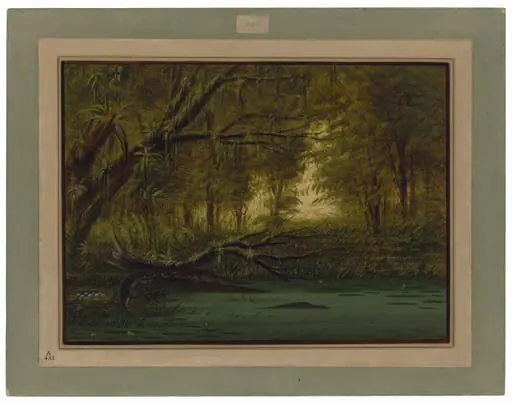 An Alligator's Nest
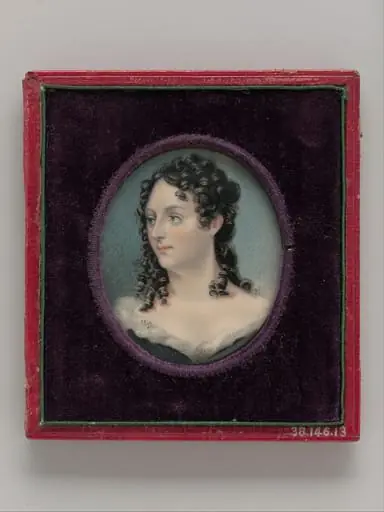 Mrs. George Catlin (Clara Bartlet Gregory)
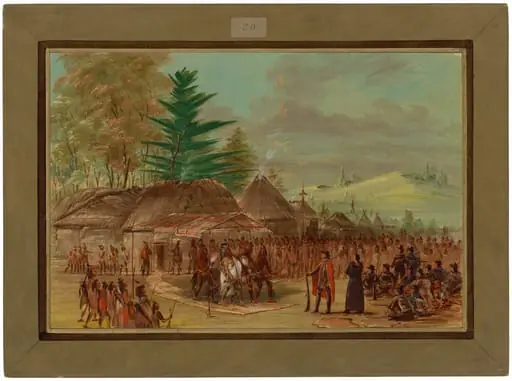 Chief of the Taensa Indians Receiving La Salle. March 20, 1682
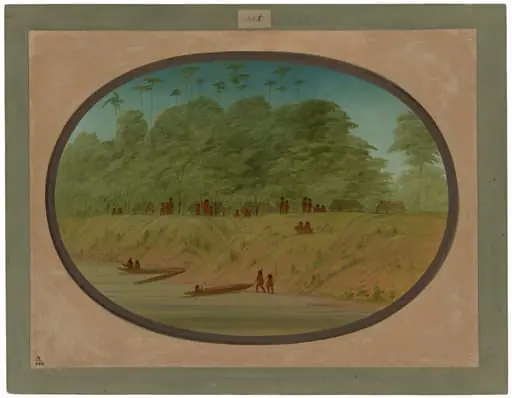 A Small Village - Payaguas Indians
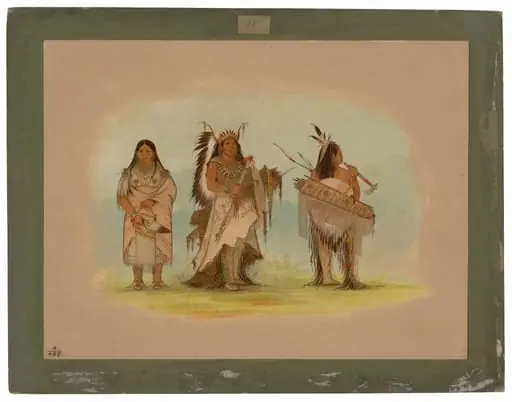 Omaha Chief, His Wife, and a Warrior
 Father Hennepin Leaving the Mississippi to Join La Salle. May 8, 1680
- Athapasca Chief, His Wife, and a Warrior
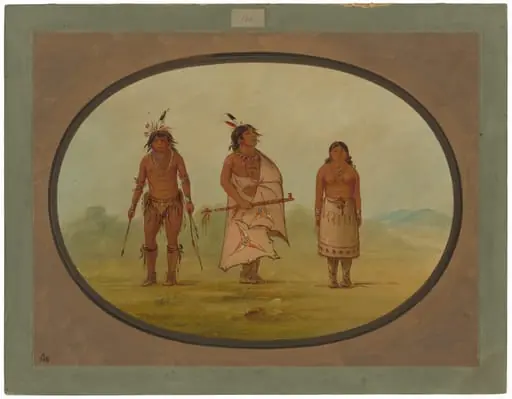 Mohave Chief, a Warrior, and His Wife
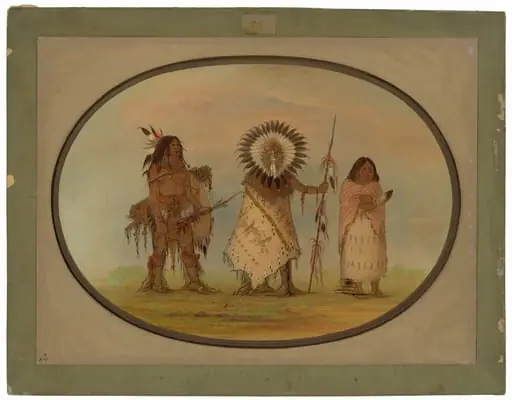 Crow Chief, His Wife, and a Warrior
 A Yuma Chief, His Daughter, and a Warrior
 Weeco Chief, His Wife, and a Warrior
 Nayas Indian Chief, His Wife, and a Warrior
 Saukie Warrior, His Wife, and a Boy
 Yntah Medicine Man, a Warrior, and a Woman
 A Crow Chief, a Warrior, and His Wife
 Arapaho Chief, His Wife, and a Warrior
 Ottowa Chief, His Wife, and a Warrior