Artwork
Assinneboine Warrior and His Family
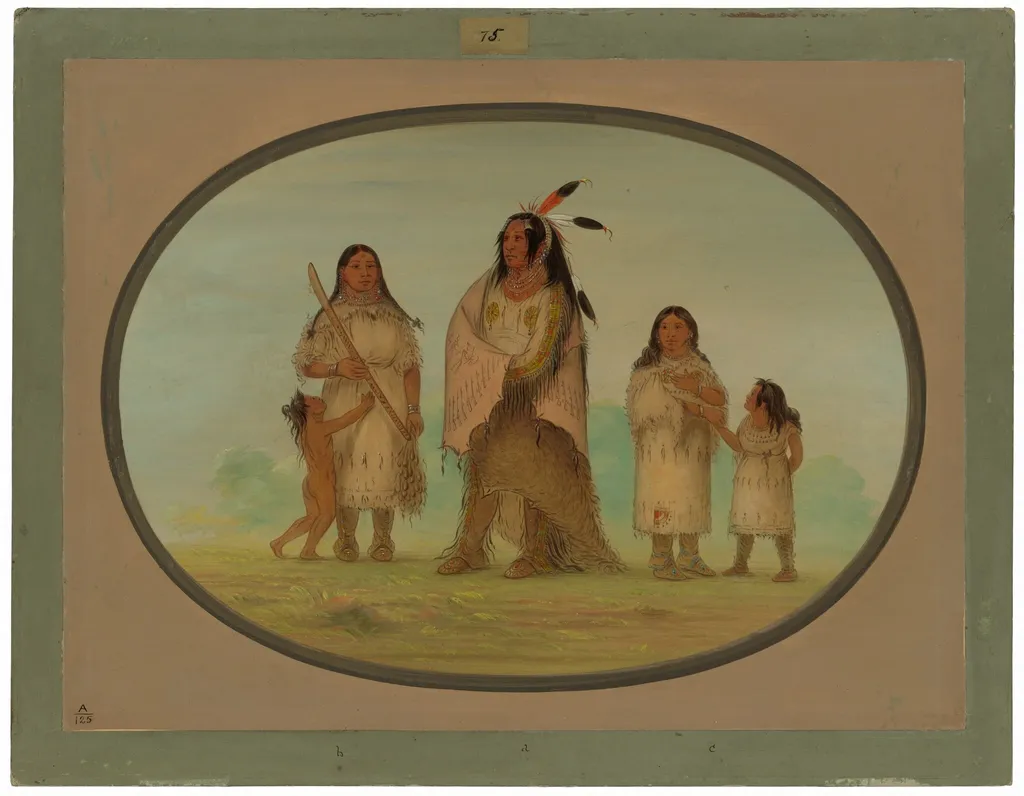
Assinneboine Warrior and His Family is an oil painting by the American Folk Art artist George Catlin. It dates from 1865 and is held in the collection of the National Gallery of Art.
About this work
Subject & Meaning
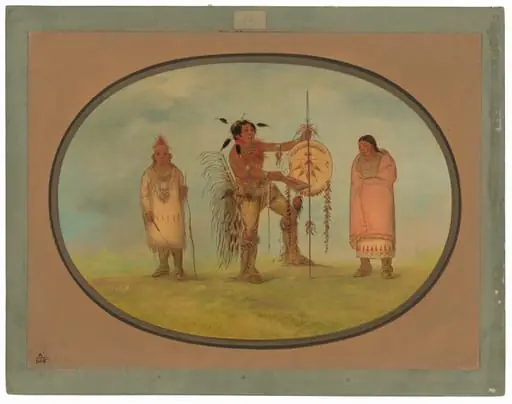
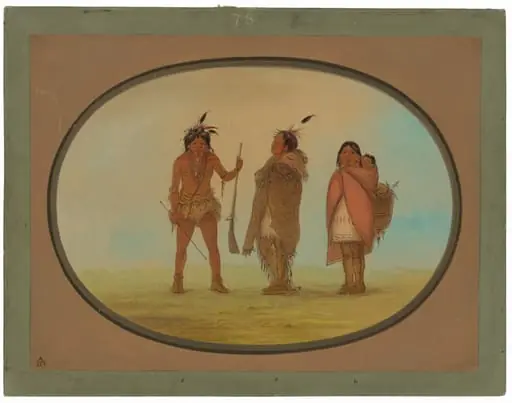
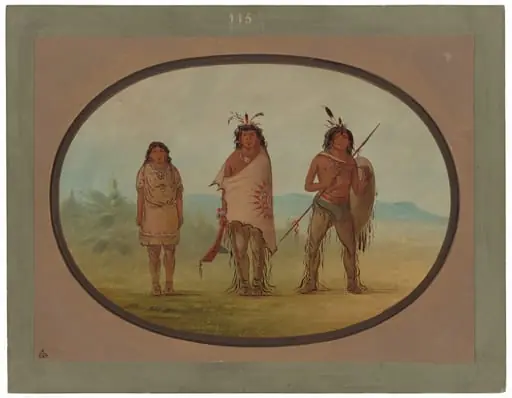
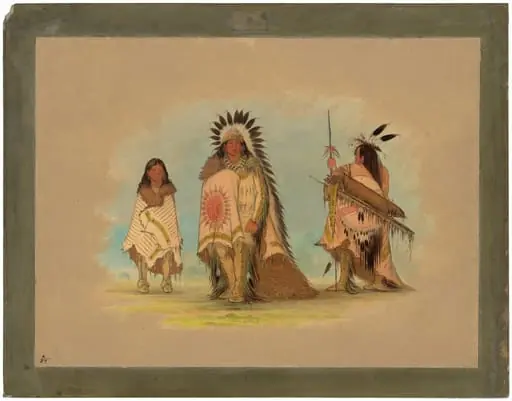
The subjects are rendered with dignified posture and direct gaze, symbolizing resilience and the transmission of tradition within the community.
The painting portrays a Dakota leader named Assinneboine alongside his wife and children, emphasizing familial bonds and cultural continuity. The subjects are rendered with dignified posture and direct gaze, symbolizing resilience and the transmission of tradition within the community. This representation aligns with Catlin’s broader effort to document Indigenous lifeways during a period of significant displacement and change.
Technique & Style
Oil on card mounted on paperboard, painted in 1861, depicts an Assinneboine warrior with his family as a formal portrait. The work measures 47.3 cm in height and 63.5 cm in width. It is currently held in the collection of the National Gallery of Art in Washington, D.C., where it has been since its acquisition in 1965.
History & Provenance
George Catlin painted Assinneboine Warrior and His Family in 1861, creating an oil on card work classified as a portrait. The painting descended through Catlin’s daughters, Clara Gregory Catlin, Louise Catlin Kinney, and Elizabeth Wing Catlin, before being purchased in 1912 from Elizabeth Wing Catlin by the American Museum of Natural History. It later passed through Kennedy Galleries, New York, and was sold in 1959 to Paul Mellon of Upperville, VA.
In 1965, Paul Mellon gifted the artwork to the National Gallery of Art, where it remains in the collection today.
Assinneboine Warrior and His Family is held by the National Gallery of Art in Washington, D.C., where it entered the collection in 1965 as a gift from Mr. Paul Mellon of Upperville, Virginia. Mellon had acquired the painting in 1959 through Kennedy Galleries in New York, which had purchased it from the American Museum of Natural History that same year. The American Museum of Natural History had originally acquired the work in 1912, buying it from Elizabeth Wing Catlin, one of George Catlin's three daughters, who had inherited it from her father along with her sisters Clara Gregory Catlin and Louise Catlin Kinney.
No exhibition history beyond this chain of ownership is recorded in the available sources.
Overview
Created in 1865, Assinneboine Warrior and His Family is an oil painting executed on card that has been affixed to a paperboard support. The work presents a small group of four figures positioned in an open landscape, centered on a male figure adorned with a feathered headdress and a fur loincloth, while the accompanying women and child are clothed in light‑colored garments.
Context
The work belongs to a broader series of images Catlin produced to document Plains tribes during a period of rapid change on the American frontier. By the mid‑19th century, such visual records served both as ethnographic evidence and as a means of preserving a way of life that was increasingly threatened by expansion and policy.
Own this work as a print
Artist & collection

Artist
George Catlin ( KAT-lin; July 26, 1796 – December 23, 1872) was an American lawyer, painter, author, and traveler, who specialized in portraits of Native Americans in the American frontier.

 Bulls Fighting
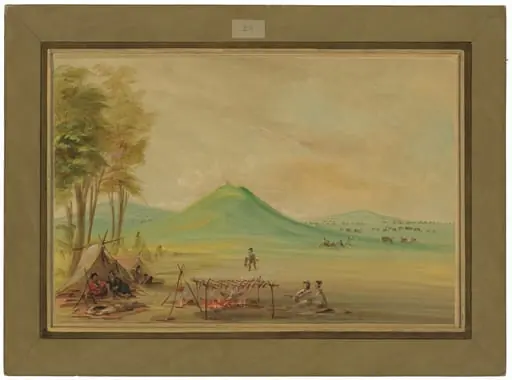 Expedition Encamped on a Texas Prairie. April 1686
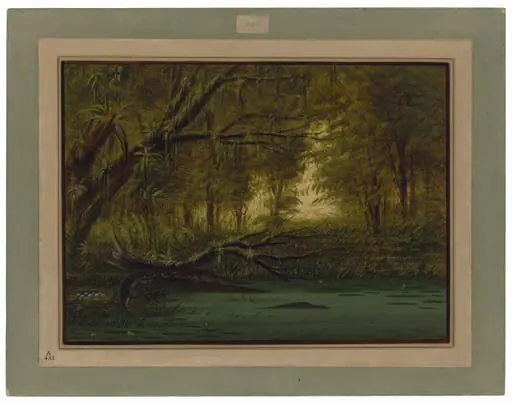 An Alligator's Nest
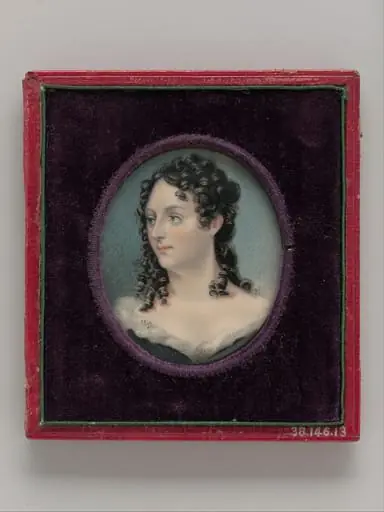 Mrs. George Catlin (Clara Bartlet Gregory)
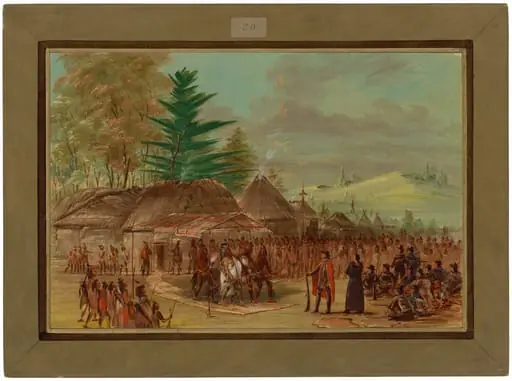 Chief of the Taensa Indians Receiving La Salle. March 20, 1682
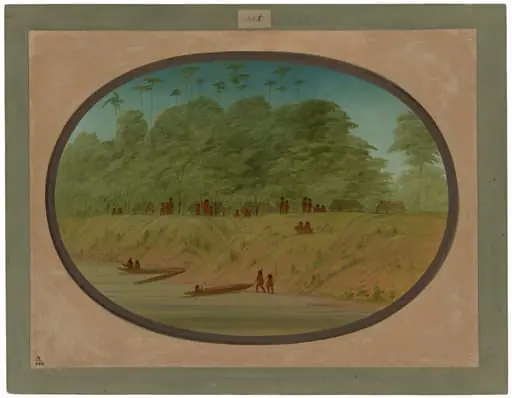 A Small Village - Payaguas Indians
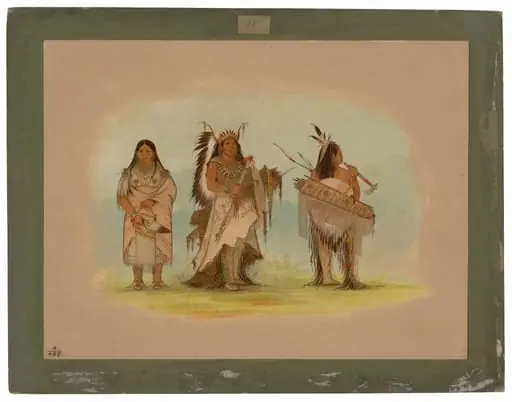 Omaha Chief, His Wife, and a Warrior
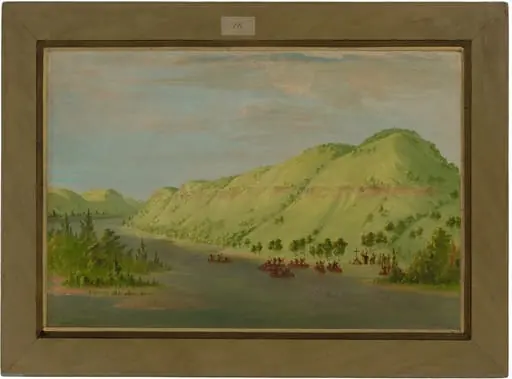 Father Hennepin Leaving the Mississippi to Join La Salle. May 8, 1680