Artwork
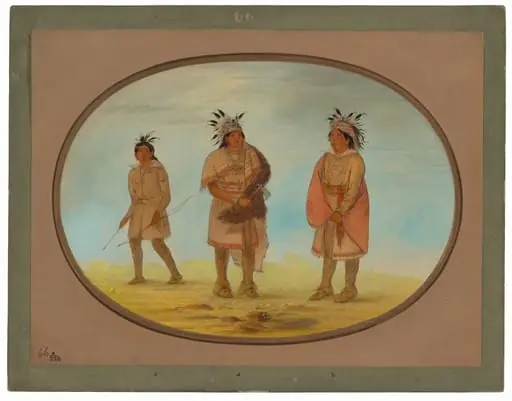
A Yuma Chief, His Daughter, and a Warrior
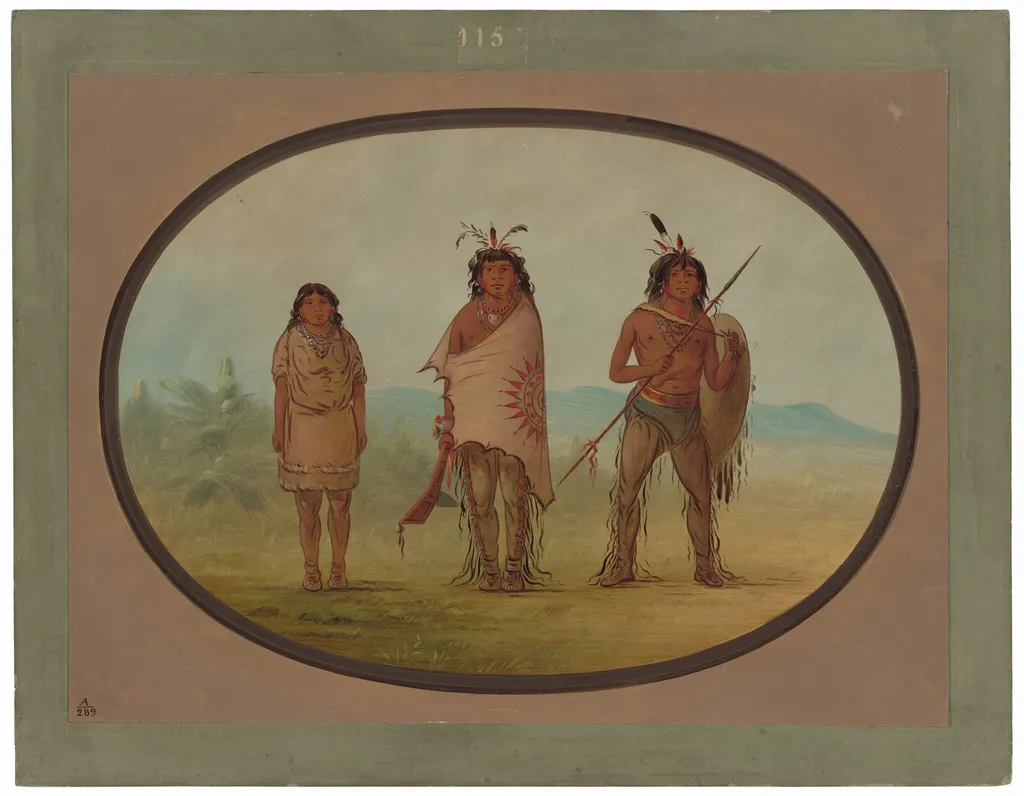
A Yuma Chief, His Daughter, and a Warrior is an oil painting by the American Folk Art artist George Catlin. It dates from 1862 and is held in the collection of the National Gallery of Art.
About this work
Technique & Style
Technique & Style: The work is executed in oil paint on a card that is mounted onto a paperboard support, a medium Catlin frequently used for his portable field sketches. Classified as a genre painting, it presents a Yuma chief, his daughter, and a warrior standing before a tree, rendered in a straightforward, representational style characteristic of his ethnographic subjects. The canvas measures approximately 46.5 cm in height and 62.1 cm in width. (No condition information is provided in the sources.)
History & Provenance
Following the artist's death in 1872, the work passed by descent to his daughters: Clara Gregory Catlin, Louise Catlin Kinney, and Elizabeth Wing Catlin.
George Catlin executed this oil on card mounted on paperboard in 1862. Following the artist's death in 1872, the work passed by descent to his daughters: Clara Gregory Catlin, Louise Catlin Kinney, and Elizabeth Wing Catlin. In 1912, the American Museum of Natural History purchased the painting directly from Elizabeth Wing Catlin.
The museum retained the piece until 1959, when it was sold through Kennedy Galleries in New York to Paul Mellon of Upperville, Virginia. Mellon subsequently gifted the work to the National Gallery of Art in Washington, D.C., in 1965, where it remains in the collection.
Following its creation in 1862, the painting remained within the artist's family until 1912, when the American Museum of Natural History purchased it from Elizabeth Wing Catlin. The institution retained the work until 1959, at which point it was sold through Kennedy Galleries in New York to Paul Mellon of Upperville, Virginia. Mellon subsequently donated the piece to the National Gallery of Art in Washington, D.C., in 1965, where it currently resides in the permanent collection.
Overview
George Catlin, an artist recognized for his extensive documentation of Indigenous cultures, completed A Yuma Chief, His Daughter, and a Warrior in 1862. This painting, executed in oil on card mounted on paperboard, presents a group portrait. It reflects Catlin's sustained interest in Native American subjects, a focus that defined much of his artistic career.
Subject & Meaning
The painting portrays a Yuma leader, his daughter, and a warrior positioned before a tree. The chief appears in traditional attire, while his daughter gazes upward at him, creating a narrative moment. This composition functions as a genre scene, offering a glimpse into what Catlin perceived as aspects of Indigenous daily life, a subject he frequently explored.
Context
Originally trained in law, George Catlin transitioned to painting with a specific ambition to record Native American life on the American frontier. His extensive journeys through the West in the 1830s profoundly influenced his dedication to depicting Plains Indian cultures. Even decades later, as seen in this 1862 work, Catlin maintained his commitment to portraying Indigenous peoples, extending his visual record beyond his initial expeditions.
Own this work as a print
Artist & collection

Artist
George Catlin ( KAT-lin; July 26, 1796 – December 23, 1872) was an American lawyer, painter, author, and traveler, who specialized in portraits of Native Americans in the American frontier.

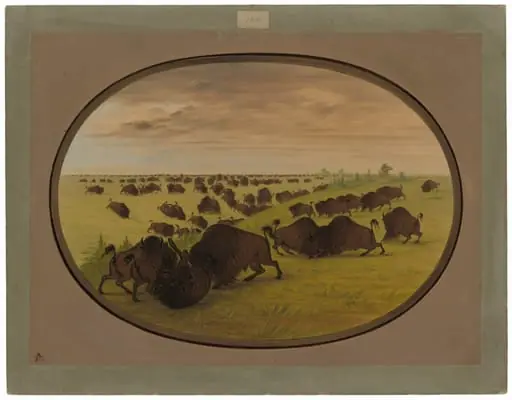 Bulls Fighting
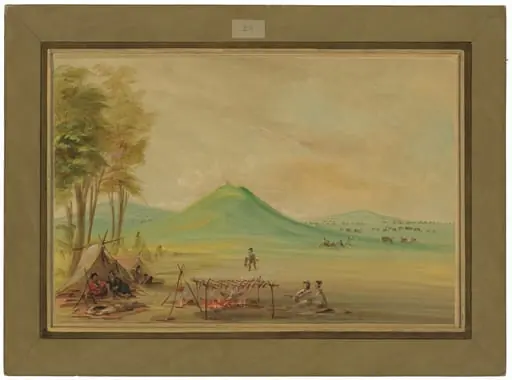 Expedition Encamped on a Texas Prairie. April 1686
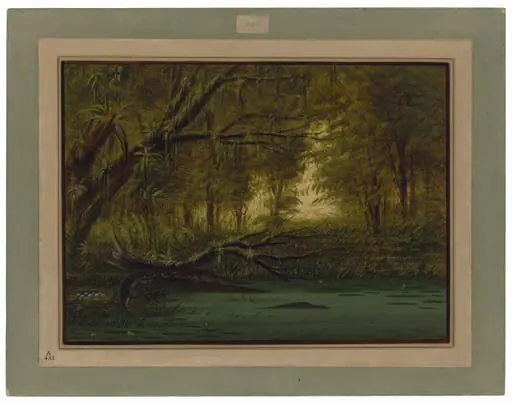 An Alligator's Nest
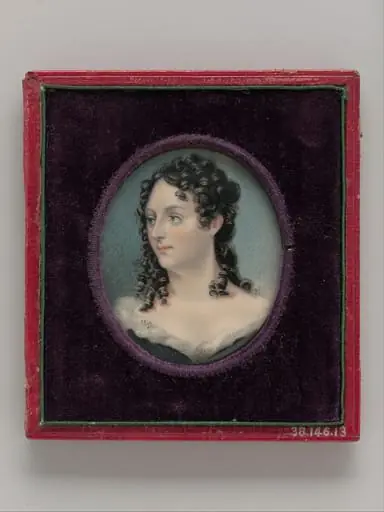 Mrs. George Catlin (Clara Bartlet Gregory)
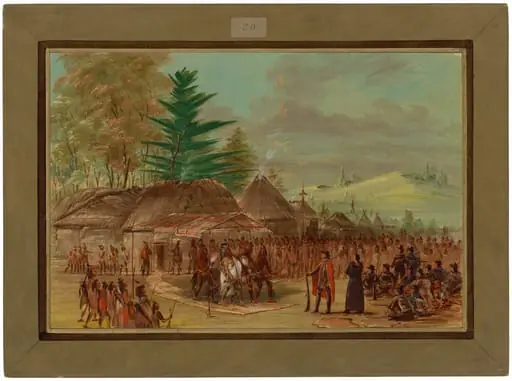 Chief of the Taensa Indians Receiving La Salle. March 20, 1682
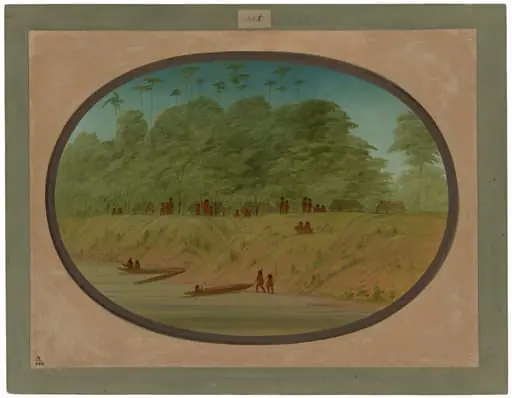 A Small Village - Payaguas Indians
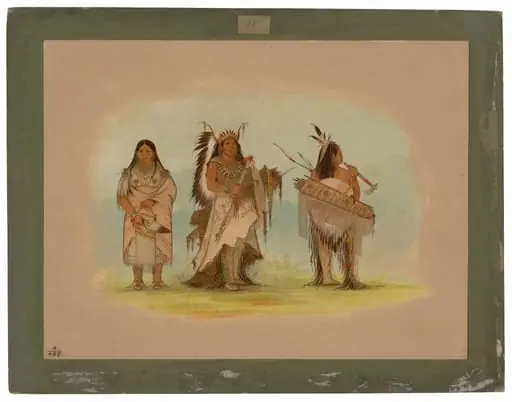 Omaha Chief, His Wife, and a Warrior
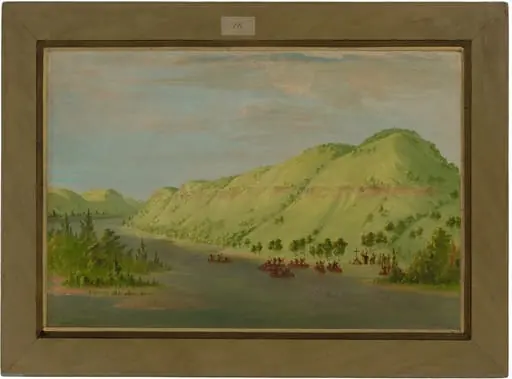 Father Hennepin Leaving the Mississippi to Join La Salle. May 8, 1680
- Nayas Indian Chief, His Wife, and a Warrior
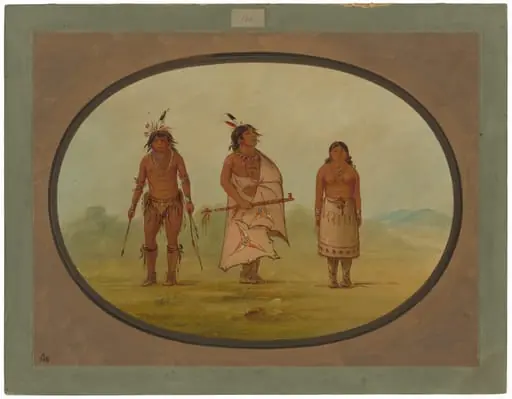 Mohave Chief, a Warrior, and His Wife
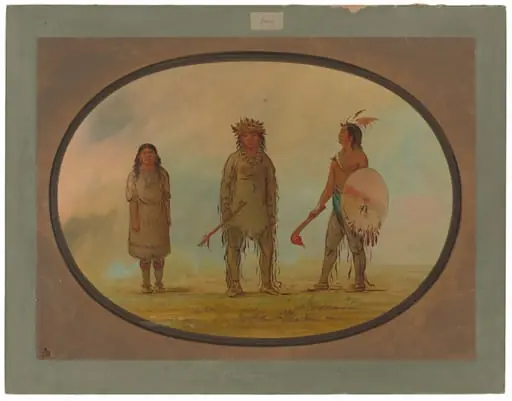 Athapasca Chief, His Wife, and a Warrior
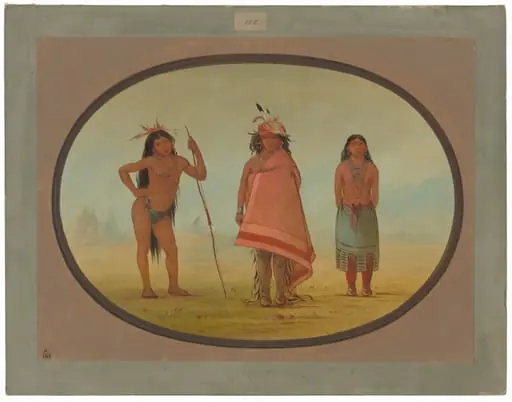 Cochimtee Chief, His Wife, and a Warrior
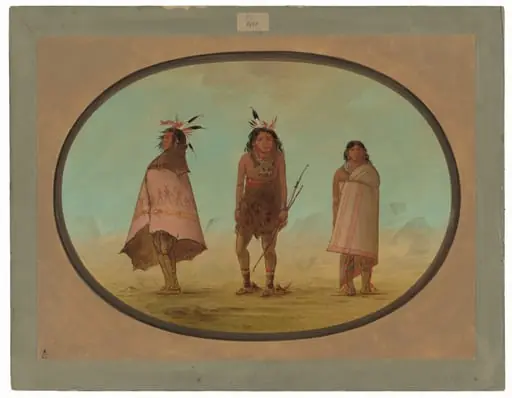 Yntah Medicine Man, a Warrior, and a Woman
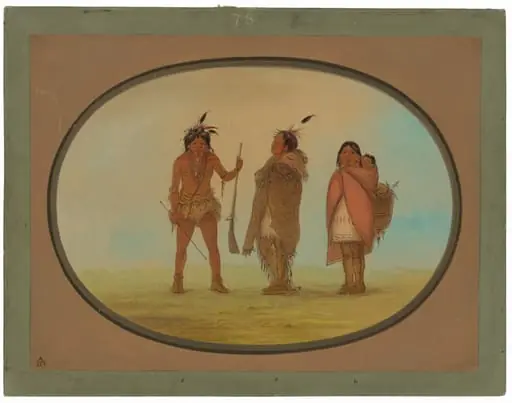 Arapaho Chief, His Wife, and a Warrior
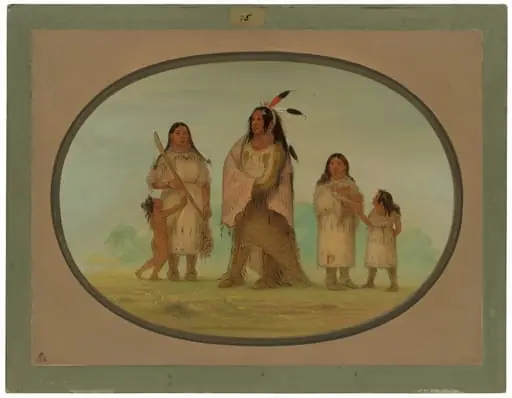 Assinneboine Warrior and His Family
 Weeco Chief, His Wife, and a Warrior
 Crow Chief, His Wife, and a Warrior
 A Crow Chief, a Warrior, and His Wife
 A Stone Warrior, His Wife, and a Boy
 Two Weeah Warriors and a Woman