Artwork
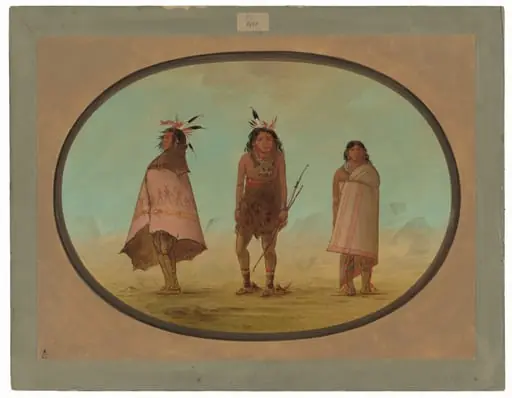
A Stone Warrior, His Wife, and a Boy
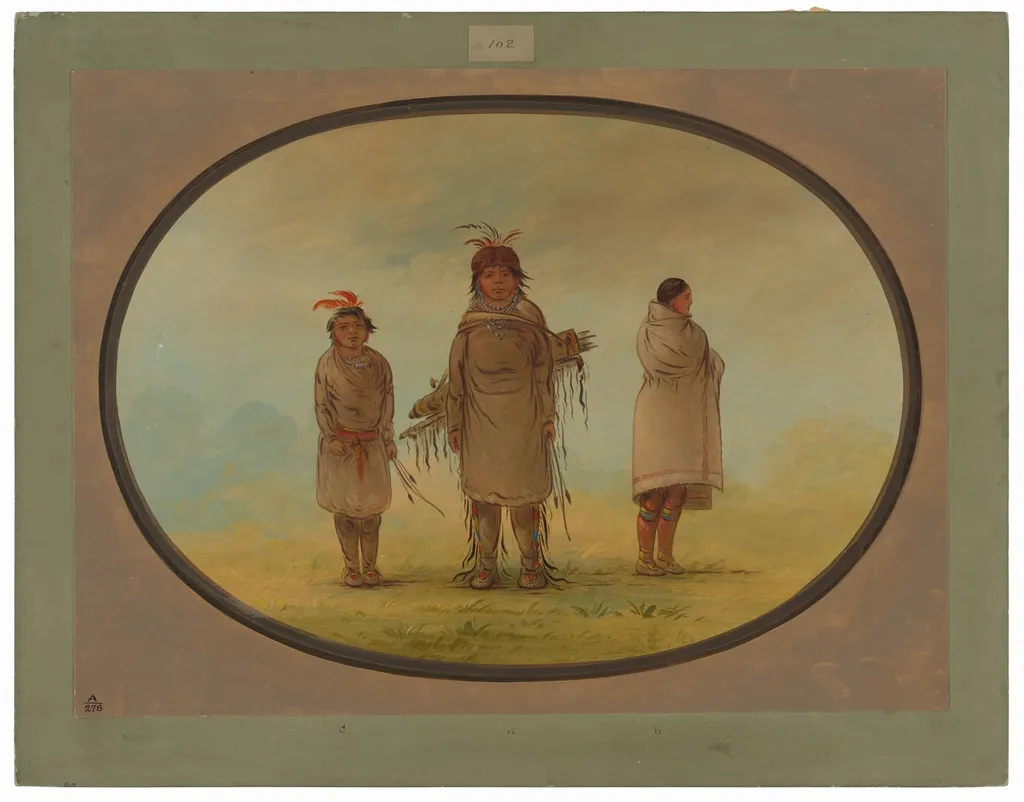
A Stone Warrior, His Wife, and a Boy is an oil painting by the American Folk Art artist George Catlin. It dates from 1862 and is held in the collection of the National Gallery of Art.
About this work
Technique & Style
No further details regarding surface condition, paint handling, brushwork, or specific stylistic qualities are documented in the available sources.
A Stone Warrior, His Wife, and a Boy is an oil painting executed on card that has been mounted on paperboard, a support combination consistent with George Catlin's working methods for smaller-scale portraits produced in the field. The work measures 45.7 by 61.8 centimeters in a horizontal format suited to a group portrait arrangement of three figures. Painted in 1862, the composition is classified as a portrait genre work, with the oil medium applied directly to the lightweight card substrate rather than to canvas.
No further details regarding surface condition, paint handling, brushwork, or specific stylistic qualities are documented in the available sources.
History & Provenance
Created in 1862, A Stone Warrior, His Wife, and a Boy is an oil painting on card mounted on paperboard by George Catlin. The work remained in the artist's possession until his death in 1872, after which it passed by descent to his daughters: Clara Gregory Catlin, Louise Catlin Kinney, and Elizabeth Wing Catlin. In 1912, the American Museum of Natural History purchased the piece from Elizabeth Wing Catlin.
The museum later sold the painting in 1959 through Kennedy Galleries in New York to Mr. Paul Mellon of Upperville, Virginia. Finally, Paul Mellon gifted the artwork to the National Gallery of Art in Washington, D.C., in 1965, where it remains part of the collection.
The painting is held by the National Gallery of Art, Washington, D.C., where it is accessioned as 1965.1.16.
It has been exhibited once since entering the NGA’s collection: in 1989, the work appeared in the exhibition “George Catlin and His Indian Gallery” held at the National Gallery of Art.
Overview
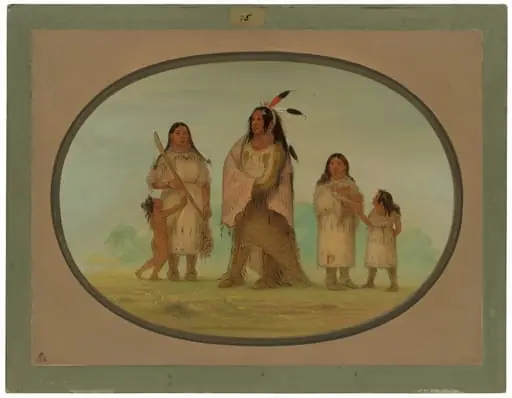
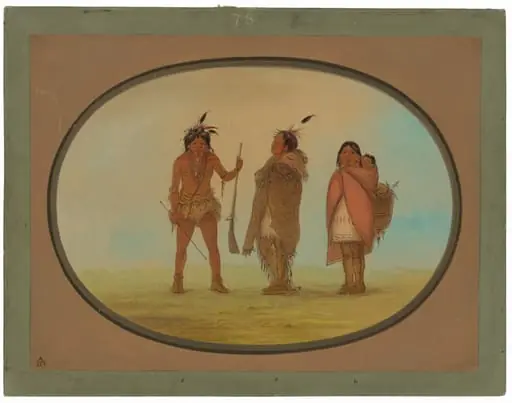
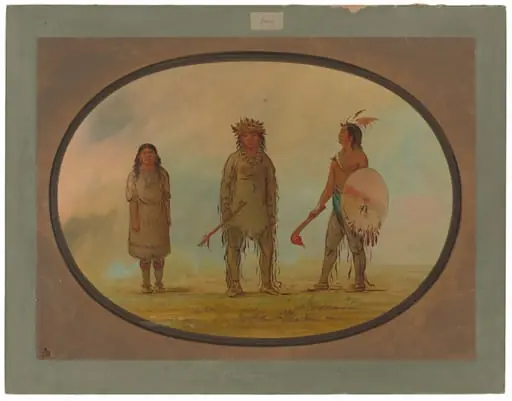
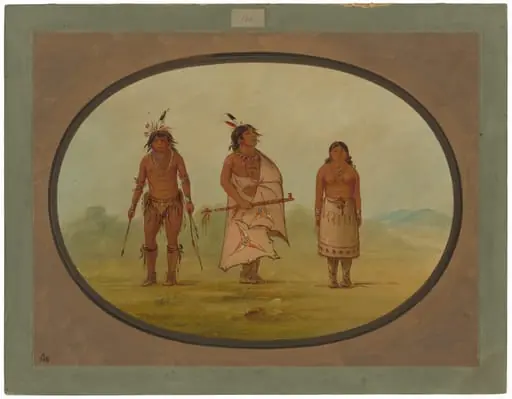
Created in 1862, this oil painting on card, later mounted on paperboard, presents a small family group set against a gentle, rolling landscape. The work captures a man, his wife, and a boy, each dressed in traditional attire, standing in an open field beneath a clear sky.
Subject & Meaning
The central male figure is shown in a long tan robe trimmed with feathers and fringe, holding a bundle of sticks and a small animal, suggesting a role as provider or hunter. Beside him, a boy in a similar robe with a red belt and feathered headdress reflects youth and continuity, while the woman, wrapped in a tan blanket and turned away, adds a quiet, contemplative presence to the scene.
Context
Catlin’s portraits were intended as ethnographic records as much as artistic works, reflecting a period of rapid change for Native communities. By the 1860s, his images served both as visual testimony of disappearing cultures and as a contribution to the broader American folk tradition.
Own this work as a print
Artist & collection

Artist
George Catlin ( KAT-lin; July 26, 1796 – December 23, 1872) was an American lawyer, painter, author, and traveler, who specialized in portraits of Native Americans in the American frontier.

 Bulls Fighting
 Expedition Encamped on a Texas Prairie. April 1686
 An Alligator's Nest
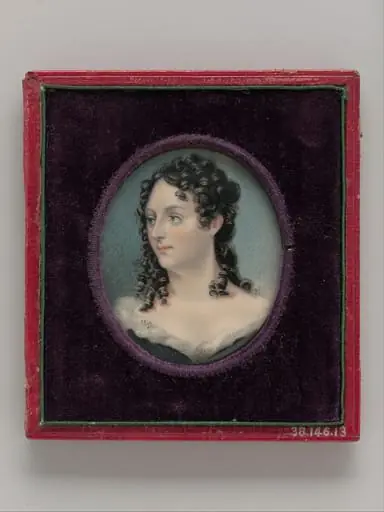 Mrs. George Catlin (Clara Bartlet Gregory)
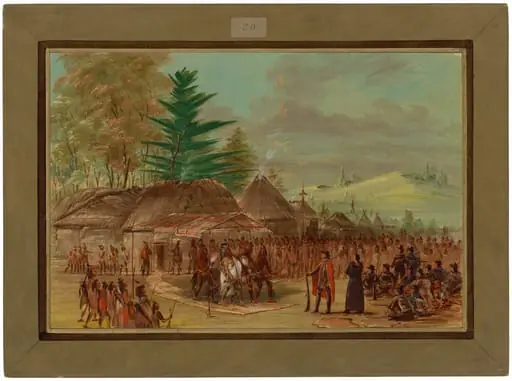 Chief of the Taensa Indians Receiving La Salle. March 20, 1682
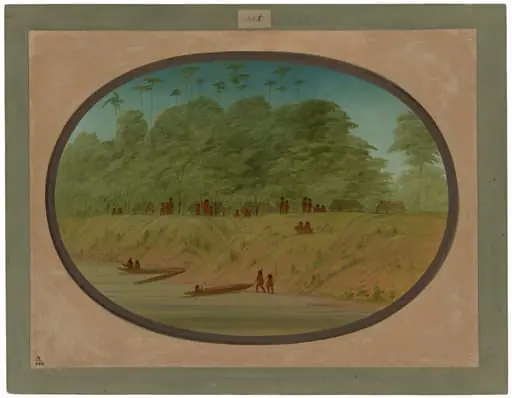 A Small Village - Payaguas Indians
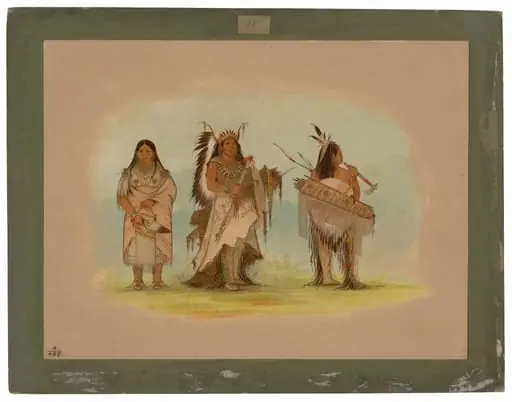 Omaha Chief, His Wife, and a Warrior
 Father Hennepin Leaving the Mississippi to Join La Salle. May 8, 1680