Artwork
A Small Cheyenne Village
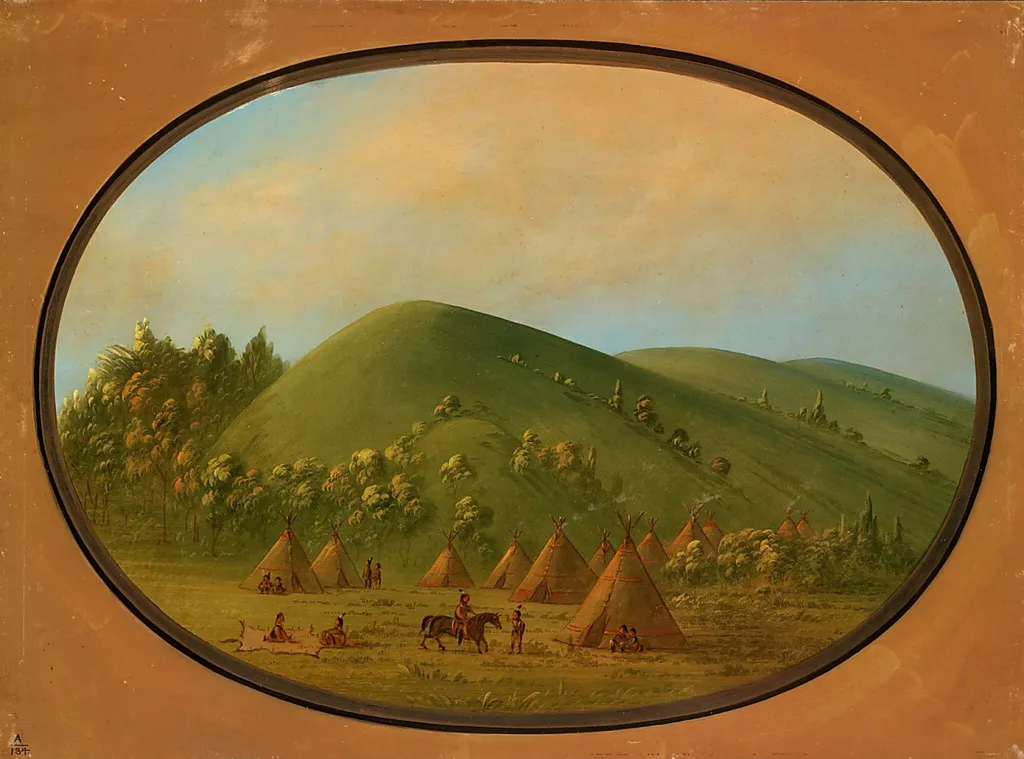
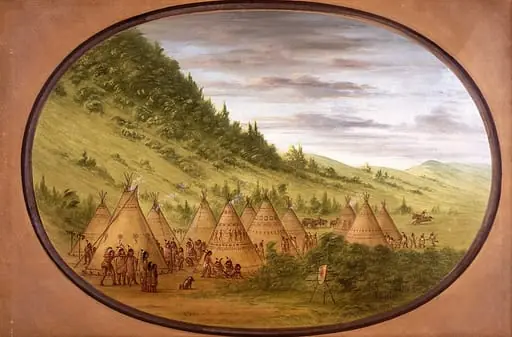
A Small Cheyenne Village is an oil painting by the Impressionist artist George Catlin. It dates from 1865 and is held in the collection of the National Gallery of Art.
- Inscription
- Inscribed:lower left on card: A/134; upper center on board on applied paper: 402; reverse in graphite: 402
About this work
This shows a Cheyenne village by a river. Tipis stand in a circle. People and dogs move between them. Trees line the riverbank. The sky is big and cloudy.
Catlin painted this in 1861. He spent years traveling west. This was his way of sharing Native life with easterners. Most artists never left the cities.
Look up Catlin, George to see more of his work.
Technique & Style
Executed in 1861, this landscape utilizes oil paint applied onto a card support that has been mounted onto paperboard. The work measures 45.7 cm in height and 62.2 cm in width. Stylistically, the composition focuses on natural elements, specifically depicting trees within a village setting characteristic of the artist's documentation of Indigenous life.
History & Provenance
Following his death in 1872, the work descended to his daughters, Clara Gregory Catlin, Louise Catlin Kinney, and Elizabeth Wing Catlin.
George Catlin painted A Small Cheyenne Village in 1861 in oil on card mounted on paperboard. Following his death in 1872, the work descended to his daughters, Clara Gregory Catlin, Louise Catlin Kinney, and Elizabeth Wing Catlin. Elizabeth Wing Catlin sold the painting in 1912 to the American Museum of Natural History, which held it until 1959.
That year, Kennedy Galleries in New York facilitated its sale to Mr. Paul Mellon of Upperville, Virginia. Mellon gave the work to the National Gallery of Art in 1965, where it remains.
The painting is held by the National Gallery of Art in Washington, D.C.
It was purchased in 1912 by the American Museum of Natural History from Elizabeth Wing Catlin, one of the artist's daughters. In 1959, the American Museum of Natural History sold it through Kennedy Galleries in New York to Paul Mellon of Upperville, Virginia. Mellon gifted the work to the National Gallery of Art in 1965.
Overview
A Small Cheyenne Village is an oil painting on card, later mounted on paperboard, executed by American artist George Catlin in the mid‑1860s. The composition presents a riverside Cheyenne encampment, with tipis arranged in a circular pattern, figures and dogs moving among the dwellings, and a solitary tree framing the scene beneath an expansive, cloud‑filled sky.
Subject & Meaning
The work records a moment of daily life among the Cheyenne people, emphasizing the communal layout of their tipis and the interaction between inhabitants and their environment. By depicting the village in situ, Catlin offers a visual testimony to the cultural practices and spatial organization of the tribe during a period of rapid frontier change.
Context
During the 1830s and 1840s Catlin undertook five major expeditions into the western territories, producing portraits and scenes that were subsequently reproduced in early lithographic publications. Unlike most contemporary artists who remained in urban centers, his firsthand experience granted him a unique perspective that informed both the content and authenticity of his western subjects.
Own this work as a print
Artist & collection

Artist
George Catlin ( KAT-lin; July 26, 1796 – December 23, 1872) was an American lawyer, painter, author, and traveler, who specialized in portraits of Native Americans in the American frontier.

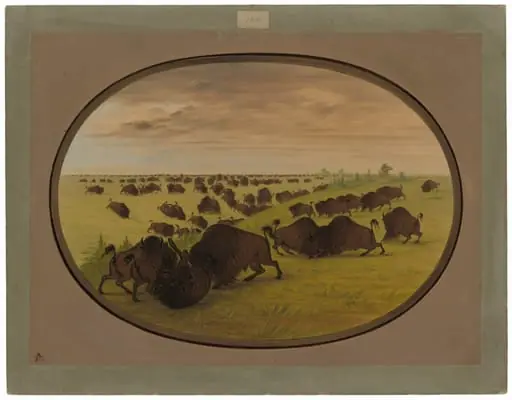 Bulls Fighting
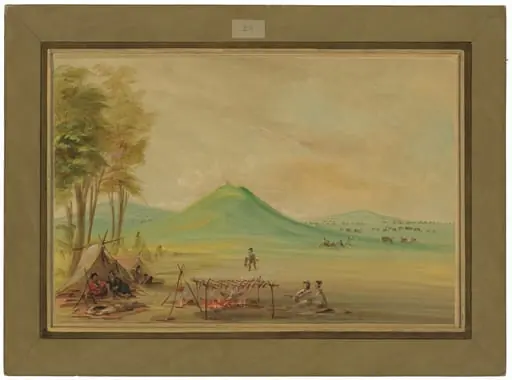 Expedition Encamped on a Texas Prairie. April 1686
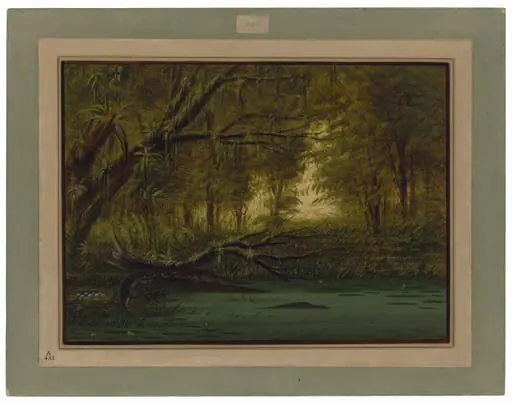 An Alligator's Nest
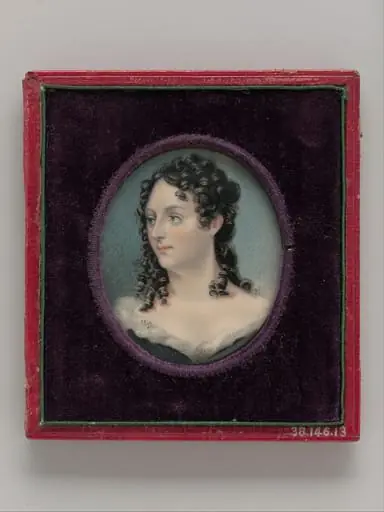 Mrs. George Catlin (Clara Bartlet Gregory)
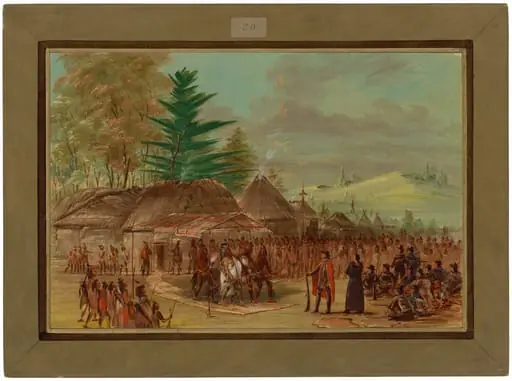 Chief of the Taensa Indians Receiving La Salle. March 20, 1682
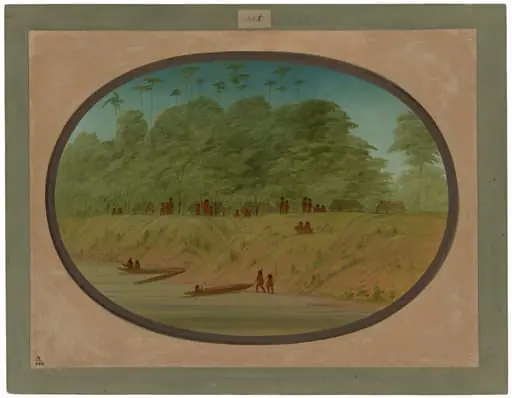 A Small Village - Payaguas Indians
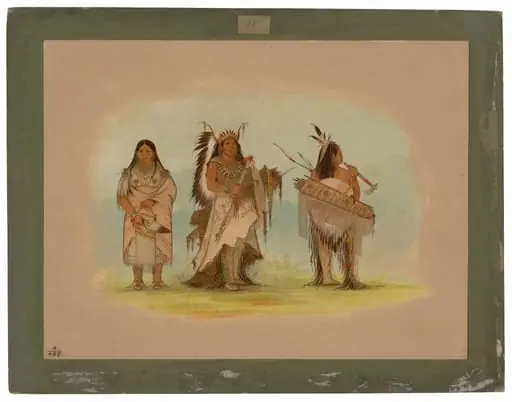 Omaha Chief, His Wife, and a Warrior
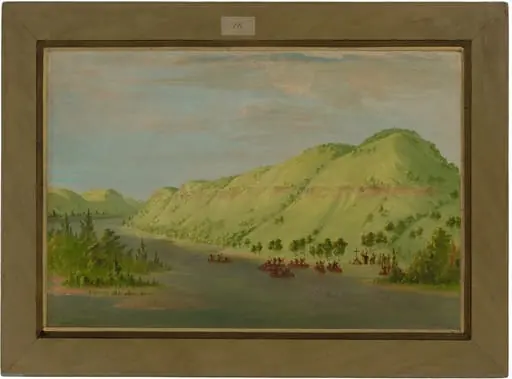 Father Hennepin Leaving the Mississippi to Join La Salle. May 8, 1680