Artwork
Gathering Wild Rice - Winnebago
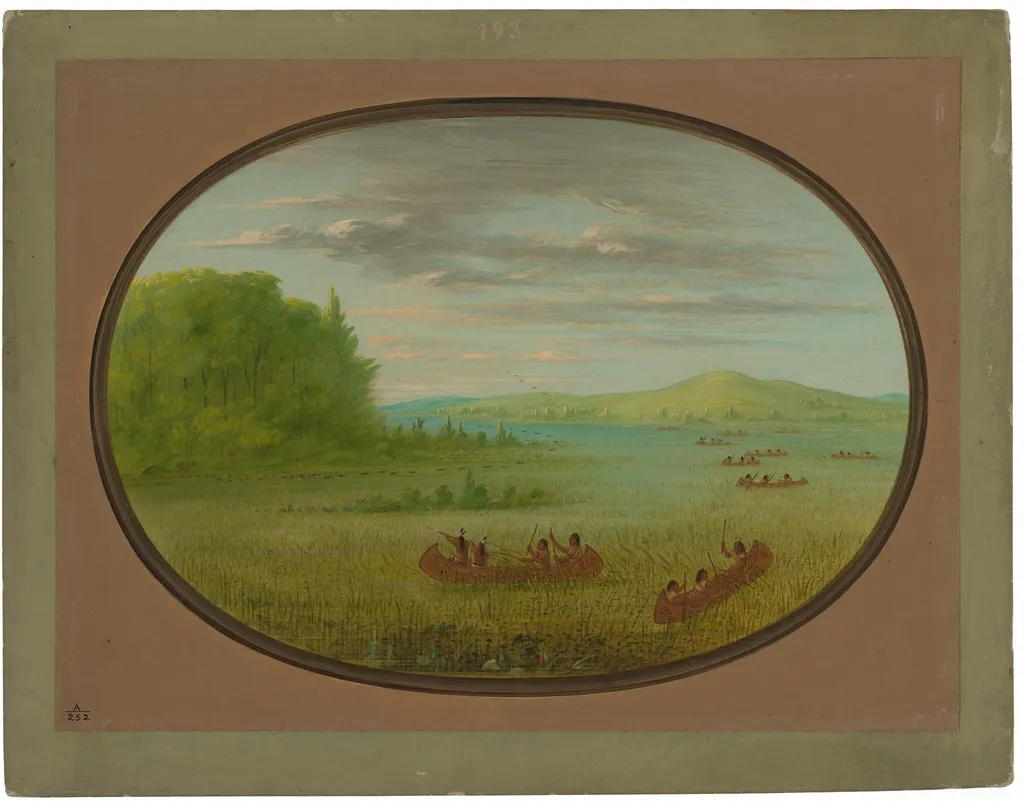
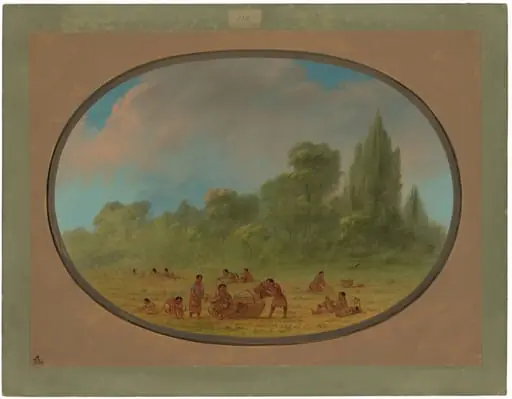
Gathering Wild Rice - Winnebago is an oil painting by the Impressionist artist George Catlin. It dates from 1865 and is held in the collection of the National Gallery of Art. Created in 1865, Gathering Wild Rice – Winnebago is an oil painting executed on a card that has been mounted onto paperboard.
About this work
Technique & Style
Executed in 1861, this work is an oil painting applied on a card support that has been mounted onto paperboard.
Executed in 1861, this work is an oil painting applied on a card support that has been mounted onto paperboard. The piece functions as a genre scene, visually characterized by the inclusion of a tree within its composition. Physically, the artwork measures 46.7 cm in height and 62.7 cm in width.
The specific handling of the oil medium on the card substrate reflects the artist's approach to creating portable yet detailed depictions of indigenous life during this period.
History & Provenance
George Catlin executed Gathering Wild Rice - Winnebago in 1861 as an oil painting on card mounted to paperboard. Following the artist's death in 1872, the work passed by descent to his daughters: Clara Gregory Catlin, Louise Catlin Kinney, and Elizabeth Wing Catlin. In 1912, the American Museum of Natural History purchased the piece directly from Elizabeth Wing Catlin.
The museum retained ownership until 1959, when it sold the painting through Kennedy Galleries of New York to Paul Mellon of Upperville, Virginia. Mellon subsequently donated the work to the National Gallery of Art in Washington, D.C., in 1965.
The painting Gathering Wild Rice - Winnebago is currently held by the National Gallery of Art in Washington, D.C. Its provenance traces from the artist George Catlin to his daughters, with the work purchased in 1912 by the American Museum of Natural History from Elizabeth Wing Catlin. The museum sold the piece in 1959 through Kennedy Galleries to Paul Mellon of Upperville, Virginia, who subsequently gifted it to the National Gallery of Art in 1965. The artwork is not listed in the provided sources as having a specific accession number or a recorded exhibition history.
Legacy
The painting influenced later ethnographic representations of Indigenous ceremonies, particularly through its dignified portrayal of a sacred rite. Its inclusion in the National Gallery of Art's collection ensured continued public access, reinforcing its role as a key reference for 20th-century scholarship on Plains Indian lifeways. The work's provenance highlights its transition from the artist's family to a major national institution, underscoring its recognized cultural significance.
Overview
Created in 1865, Gathering Wild Rice – Winnebago is an oil painting executed on a card that has been mounted onto paperboard. The work portrays a group of Winnebago individuals collecting wild rice beside a solitary tree, capturing a moment of ordinary labor rather than a staged tableau. The composition is modest in scale but offers a clear window into the daily activities of the tribe during the mid‑nineteenth century.
Subject & Meaning
The scene focuses on communal harvest, emphasizing cooperation among the participants as they bend over the water’s edge to gather the grain. By choosing this quiet episode, the artist highlights the rhythm of subsistence life and the intimate relationship between the Winnebago people and the natural resources of their environment, rather than dramatizing conflict or ceremony.
Own this work as a print
Artist & collection

Artist
George Catlin ( KAT-lin; July 26, 1796 – December 23, 1872) was an American lawyer, painter, author, and traveler, who specialized in portraits of Native Americans in the American frontier.

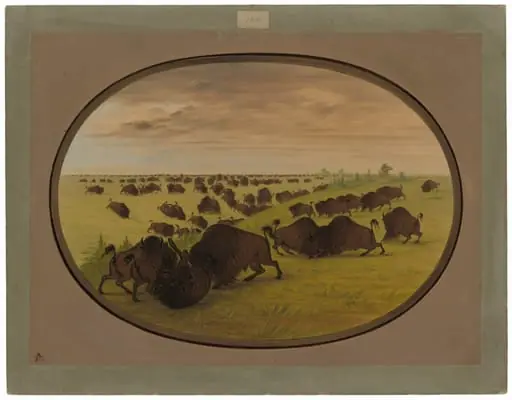 Bulls Fighting
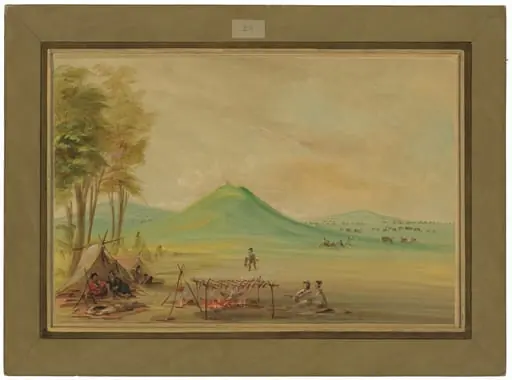 Expedition Encamped on a Texas Prairie. April 1686
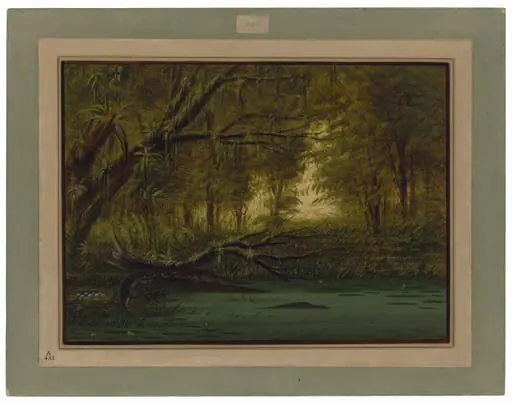 An Alligator's Nest
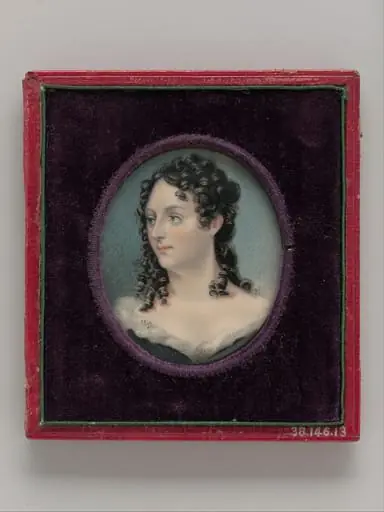 Mrs. George Catlin (Clara Bartlet Gregory)
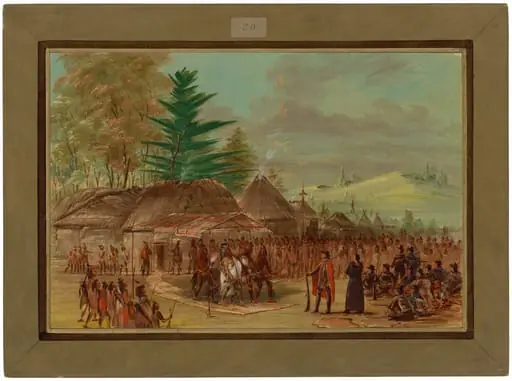 Chief of the Taensa Indians Receiving La Salle. March 20, 1682
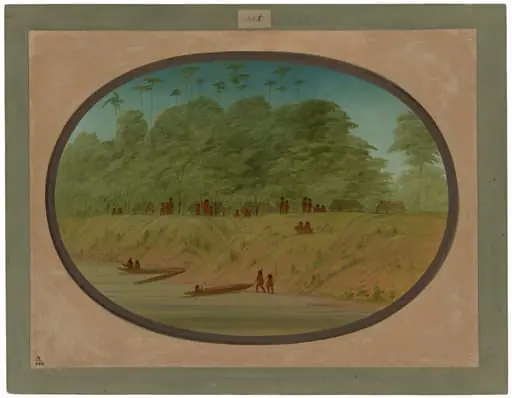 A Small Village - Payaguas Indians
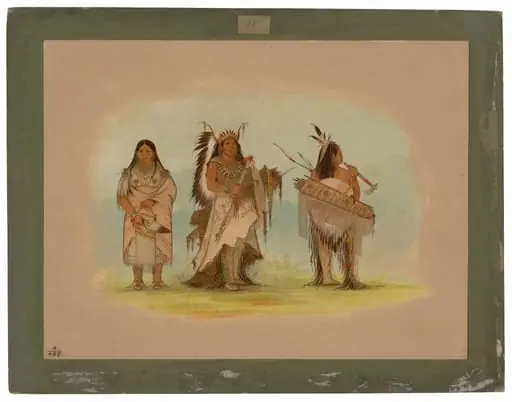 Omaha Chief, His Wife, and a Warrior
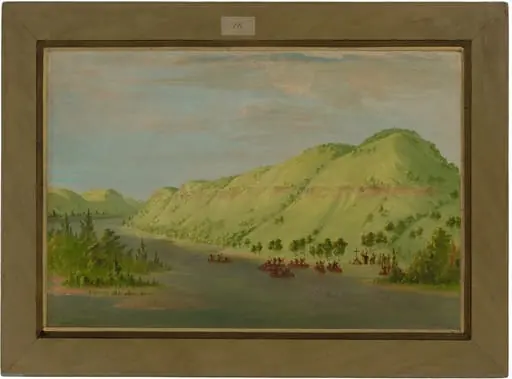 Father Hennepin Leaving the Mississippi to Join La Salle. May 8, 1680